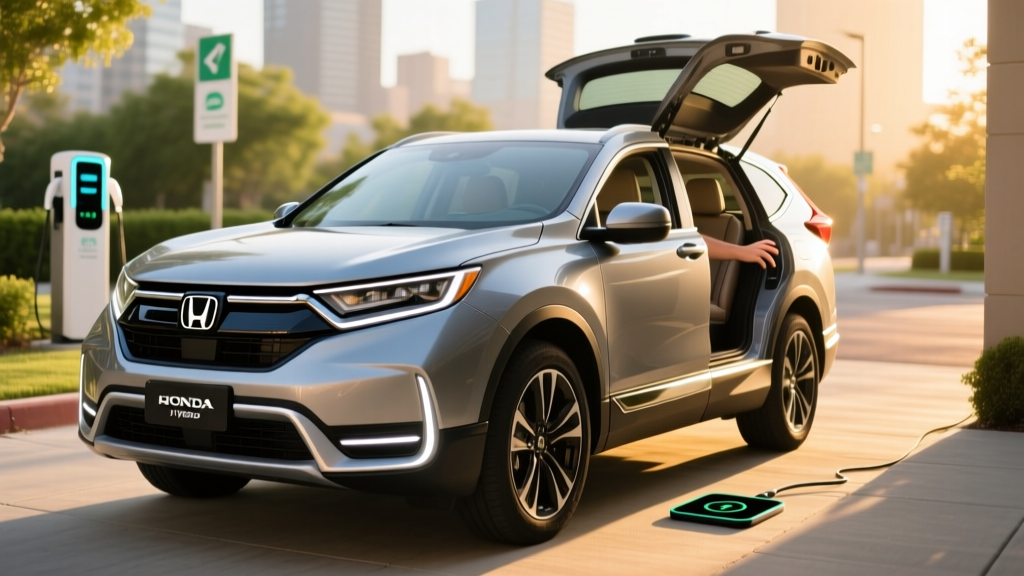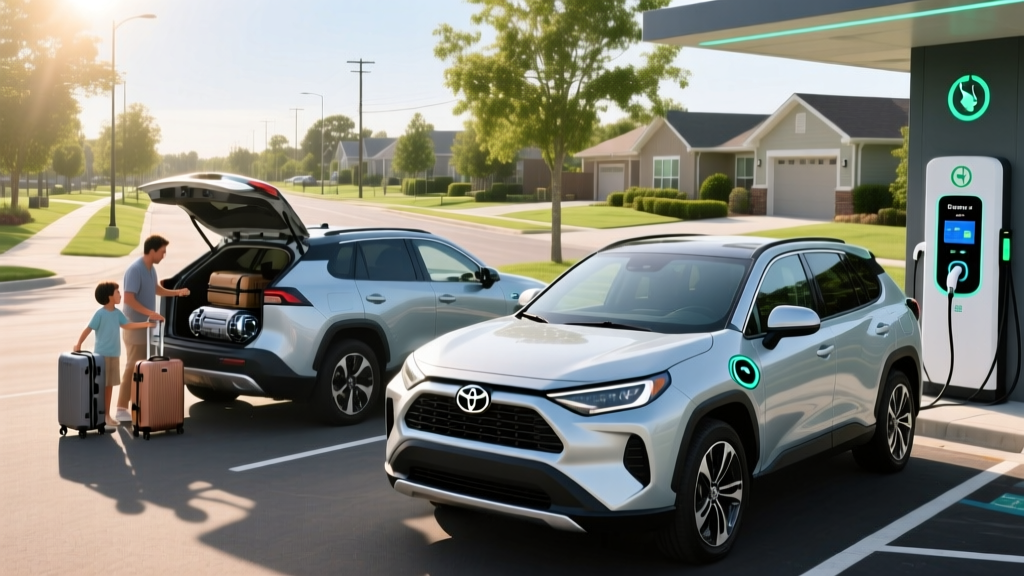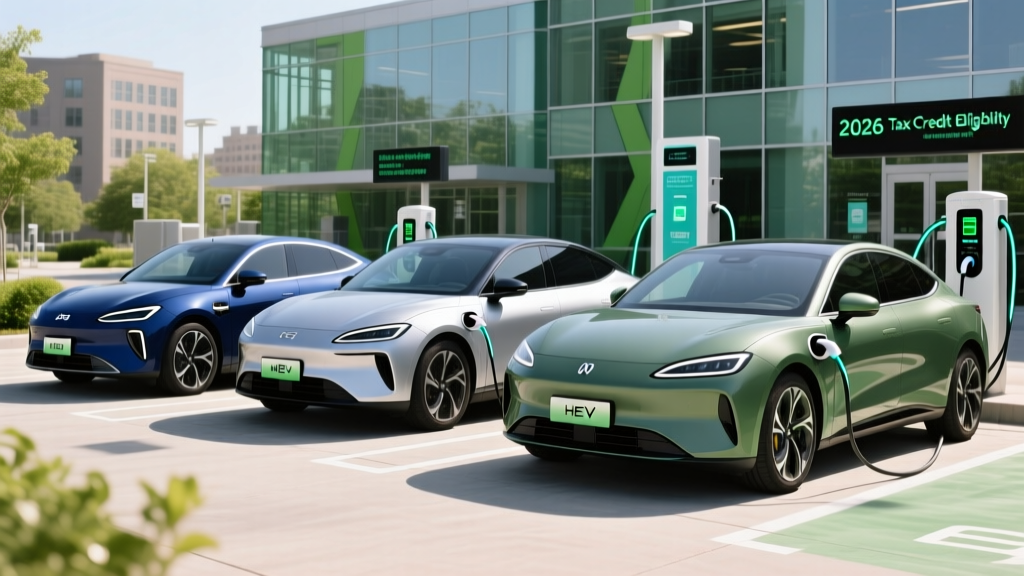
If you've been shopping for a fuel-efficient vehicle, you've likely asked: does EV tax credit apply to hybrids? The short answer is that conventional hybrids (HEVs) never qualify for the federal §30D clean vehicle credit, while some plug-in hybrids (PHEVs) do — but eligibility depends on battery capacity, sourcing requirements, MSRP caps, and buyer income limits that shift frequently under current IRS rules.
This guide breaks down exactly how the federal tax credit treats each electrified powertrain type in 2026, which PHEV models currently qualify, and whether a hybrid, PHEV, or full battery-electric vehicle (BEV) makes the most financial sense for your situation.
HEV vs PHEV vs BEV: Powertrain Definitions That Determine Credit Eligibility
| Attribute | HEV (Conventional Hybrid) | PHEV (Plug-In Hybrid) | BEV (Battery Electric) |
|---|---|---|---|
| Plugs in to charge? | No — charges via regenerative braking and engine | Yes — has a charge port | Yes — charge port only |
| Battery capacity | 0.5–2.0 kWh (small buffer) | 8–25 kWh usable | 50–120+ kWh usable |
| Electric-only driving | None (assists engine at low speed) | 20–50 miles typical | 200–400+ miles EPA range |
| Gas engine | Yes — primary power source | Yes — kicks in after battery depletes | None |
| Federal §30D tax credit? | Never | Sometimes (if battery ≥7 kWh + sourcing/MSRP/income rules met) | Sometimes (same sourcing/MSRP/income rules) |
The key distinction: the IRS §30D credit requires a minimum battery capacity of 7 kWh and the vehicle must be capable of being recharged from an external power source. Conventional hybrids like the Toyota Camry Hybrid or Honda CR-V Hybrid use small batteries (typically 1.0–1.6 kWh) that charge only through regenerative braking and the gasoline engine. They have no plug. This alone disqualifies them from the federal credit.
Plug-in hybrids, by contrast, carry larger battery packs (usually 13–22 kWh in current models), have a charge port, and can drive 20–50 miles on electricity alone before the gas engine takes over. This puts them in the running for §30D — but only if they clear the additional hurdles below.
How the Federal §30D Tax Credit Works for PHEVs in 2026
Under the Inflation Reduction Act provisions that remain in effect for 2026, the IRS clean vehicle credit offers up to $7,500 for qualifying new PHEVs and BEVs. However, the credit is not a blanket $7,500 for every plug-in vehicle. It's split into two halves:
- $3,750 — Battery Components: A percentage of battery components must be manufactured or assembled in North America. The required percentage increases each year.
- $3,750 — Critical Minerals: A percentage of critical minerals in the battery must be sourced from the U.S. or a free-trade-agreement partner. This threshold also increases annually.
A PHEV that meets only one requirement qualifies for $3,750; a PHEV meeting both qualifies for the full $7,500. A PHEV meeting neither gets $0.
Full §30D Eligibility Checklist for PHEVs (2026)
- Vehicle must have a battery capacity of at least 7 kWh
- Vehicle must have a gross vehicle weight rating (GVWR) under 14,000 lbs
- MSRP caps: Vans, SUVs, and pickups ≤ $80,000; sedans and other body styles ≤ $55,000
- Buyer income caps (modified AGI): $300,000 joint / $225,000 head of household / $150,000 single
- Battery components must meet North American manufacturing/assembly thresholds
- Critical minerals must meet U.S./FTA sourcing thresholds
- Vehicle must be assembled in North America (final assembly requirement)
- Buyer may elect to transfer the credit to the dealer as a point-of-sale discount
Because sourcing rules tighten yearly and automaker supply chains shift, a PHEV that qualified in 2024 may not qualify in 2026 — and vice versa. Always verify current eligibility on the fueleconomy.gov tax credit page before purchasing.
Which 2026 PHEVs Qualify for the Federal Tax Credit?
As of early 2026, the list of qualifying PHEVs is shorter than the list of qualifying BEVs because many plug-in hybrids use battery cells sourced from suppliers that don't meet the critical-minerals or component thresholds. Here are notable PHEVs and their current credit status:
| 2026 PHEV Model | Battery (kWh) | EV Range (mi) | Combined MPG (gas) | MSRP From | §30D Credit (Est.) |
|---|---|---|---|---|---|
| Toyota RAV4 Prime | 18.1 kWh | 42 mi | 38 MPG | $44,900 | $0–$3,750* |
| Jeep Wrangler 4xe | 17.3 kWh | 22 mi | 20 MPG | $51,795 | $3,750* |
| Chrysler Pacifica PHEV | 16.0 kWh | 32 mi | 30 MPG | $51,095 | $3,750* |
| Ford Escape PHEV | 14.4 kWh | 37 mi | 40 MPG | $39,500 | $0–$3,750* |
| Hyundai Tucson PHEV | 13.8 kWh | 33 mi | 35 MPG | $39,750 | $0* |
*Credit amounts are estimates based on available sourcing data and change frequently. Verify at point of sale or via IRS guidance. Many PHEVs qualify for only the $3,750 half-credit or none at all due to battery component or critical-mineral sourcing shortfalls.
Notable absence: the Toyota RAV4 Prime, despite its popularity and excellent specs, has historically struggled to meet both sourcing thresholds, often qualifying for only $3,750 or nothing. The Jeep Wrangler 4xe and Chrysler Pacifica PHEV have fared slightly better due to Stellantis' North American supply chain, but final assembly and sourcing verification are required per VIN.
Why Conventional Hybrids (HEVs) Never Qualify for §30D
The IRS guidance is explicit: to be eligible for the clean vehicle credit, the vehicle must have a battery capable of being recharged from an external source of electricity and must have a battery capacity of at least 7 kWh. Conventional hybrids fail both tests:
- No plug: HEVs like the Toyota Prius (non-Prime), Honda Accord Hybrid, and Hyundai Elantra Hybrid recharge their small batteries exclusively through regenerative braking and the internal combustion engine. There is no charge port.
- Tiny batteries: HEV battery packs range from roughly 0.5 kWh (mild hybrids) to about 1.6 kWh (Toyota's latest hybrid system). This is far below the 7 kWh floor.
This doesn't make conventional hybrids a bad buy. A 2026 Toyota Prius Hybrid achieves an EPA-estimated 57 MPG combined (57 city / 56 highway) and starts around $29,000 — often resulting in lower total cost of ownership than a PHEV that doesn't qualify for the credit. You just can't claim the federal tax incentive.
Real-World MPG and Efficiency: Hybrid vs PHEV vs EV
Sticker numbers only tell part of the story. Here's what to actually expect in daily driving:
| Vehicle | EPA Combined | Real-World Expectation | Notes |
|---|---|---|---|
| 2026 Toyota Prius (HEV) | 57 MPG | 50–58 MPG | Hybrids often exceed EPA in city due to regen; highway-heavy driving drops to ~48–52 MPG |
| 2026 Toyota RAV4 Prime (PHEV) | 94 MPGe (elec) / 38 MPG (gas) | 42 mi electric, then 33–36 MPG gas | Electric range drops ~15–20% in cold weather; highway gas MPG lower than EPA |
| 2026 Ford Escape PHEV | 105 MPGe (elec) / 40 MPG (gas) | 37 mi electric, then 35–38 MPG gas | Excellent city efficiency on electric; highway gas driving closer to 33–35 MPG |
| 2026 Tesla Model Y (BEV) | 117 MPGe / 320 mi range | 270–300 mi real-world | Highway + cold weather reduces range 15–30%; preconditioning helps |
A critical insight for PHEV buyers: your actual fuel consumption depends entirely on how often you charge. If you plug in nightly and your commute is under 30 miles, you may use gasoline only a handful of times per year. If you never plug in, a PHEV operates as a slightly heavier, less efficient conventional hybrid — negating the whole point.
Battery Warranty, Lifespan, and Replacement Costs
Hybrid & PHEV Battery Warranty Standards (2026)
Federal emissions regulations require that hybrid and PHEV batteries carry a minimum warranty of 8 years / 100,000 miles (10 years / 150,000 miles in CARB states like California, New York, and others that follow California emissions standards). Most automakers match or exceed this:
- Toyota: 10 years / 150,000 miles on hybrid battery (all 50 states for 2026 models)
- Hyundai/Kia: 10 years / 100,000 miles (lifetime in some model years for original owner)
- Ford: 8 years / 100,000 miles on PHEV/HEV battery
- Stellantis (Jeep/Chrysler): 8 years / 100,000 miles
Real-world data from fleet operators and long-term owners shows that modern hybrid batteries routinely last 150,000–200,000+ miles before significant degradation. The nickel-metal-hydride (NiMH) packs in older Toyota hybrids and the lithium-ion packs in newer models and PHEVs have proven remarkably durable because they operate within a narrow state-of-charge window — the car's management system never lets the battery fully charge or fully deplete, which dramatically extends cycle life.
If replacement is needed out of warranty:
- HEV battery replacement: $2,000–$4,500 (e.g., Toyota Prius: ~$3,000–$3,500 at a dealer; refurbished packs available for $1,500–$2,000)
- PHEV battery replacement: $5,000–$9,000 (larger pack, more complex; e.g., RAV4 Prime: ~$7,000–$8,500)
- BEV battery replacement: $10,000–$22,000+ (varies enormously by pack size)
For context, a conventional gas car's transmission replacement averages $3,000–$7,000 — so hybrid battery replacement cost is in a comparable range and, statistically, less likely to be needed within typical ownership periods.
Who Should Choose a Hybrid, PHEV, or Full EV?
Choose a Conventional Hybrid (HEV) If:
- You have no access to home or workplace charging (apartment, street parking, no garage outlet)
- You want maximum MPG with zero behavioral change — just fill up with gas as usual
- Your budget is under $35,000 and you don't want to rely on tax credits
- You frequently take long road trips and don't want to plan around charging stops
- Example: 2026 Toyota Prius at 57 MPG combined, ~$29,000 MSRP
Choose a Plug-In Hybrid (PHEV) If:
- You can charge at home (even a standard 120V outlet works — PHEV batteries are small enough to fully charge overnight on Level 1)
- Your daily commute is under 30–40 miles and you want electric-only driving most days
- You also need the flexibility for road trips without range anxiety
- You want to try electric driving before committing to a full BEV
- Example: 2026 Toyota RAV4 Prime at 42 mi electric range, ~$44,900 MSRP
Choose a Full BEV If:
- You have reliable Level 2 home charging and/or good public DC fast charging infrastructure nearby
- You want the lowest per-mile fuel cost and minimal maintenance (no oil changes, fewer moving parts)
- You drive under 300 miles per day and can charge overnight
- You want to maximize the federal tax credit (more BEVs currently qualify for the full $7,500)
- Example: 2026 Tesla Model Y at 320 mi EPA range, ~$44,990 MSRP
State and Utility Incentives That May Apply to Hybrids
While conventional hybrids don't qualify for the federal §30D credit, some states and utilities offer their own incentives that can include HEVs and PHEVs:
- State rebates: A handful of states have offered rebates for PHEVs (rarely HEVs). These programs change frequently — check your state energy office or AFDC incentive database for current programs.
- Utility rebates: Many electric utilities offer $250–$1,000 rebates for purchasing a PHEV or BEV, and separate rebates for installing a Level 2 home charger. These rarely apply to conventional hybrids.
- HOV lane access: Several states (California, Colorado, Virginia, and others) have offered HOV lane stickers or toll discounts for PHEVs and BEVs. Most have excluded conventional hybrids from these programs since approximately 2017.
Always verify current state and utility programs directly with the issuing agency — incentive availability, amounts, and eligibility change with legislative sessions and budget cycles.
Frequently Asked Questions
Does the EV tax credit apply to conventional hybrids like the Toyota Prius?
No. Conventional hybrids (HEVs) do not qualify for the federal §30D clean vehicle credit. They lack a plug and their battery capacity is far below the 7 kWh minimum required by the IRS. The Toyota Prius Hybrid, Honda Accord Hybrid, and similar vehicles are ineligible regardless of price or buyer income.
Do plug-in hybrids qualify for the full $7,500 tax credit?
Some do, but most current PHEVs qualify for only $3,750 or nothing at all. The credit is split into two $3,750 halves based on battery component sourcing and critical-mineral sourcing. Many PHEV battery supply chains don't yet meet both thresholds. Additionally, MSRP caps ($80,000 for SUVs/vans/pickups, $55,000 for sedans) and buyer income limits apply.
How many MPG does a typical hybrid get?
Conventional hybrids range from about 38 MPG combined (RAV4 Hybrid AWD) to 57 MPG combined (Toyota Prius). PHEVs achieve 94–114 MPGe when running on electricity and 30–40 MPG combined when the gas engine operates. Real-world city driving in a conventional hybrid often matches or exceeds EPA estimates thanks to regenerative braking; highway-heavy driving typically drops 5–10 MPG below the combined figure.
How far can a PHEV go on electric only?
Current 2026 PHEVs offer 20–50 miles of electric-only range. The Toyota RAV4 Prime leads at 42 miles; the Ford Escape PHEV achieves 37 miles; the Jeep Wrangler 4xe manages 22 miles. Expect 15–25% range reduction in cold weather (below 40°F) due to cabin heating demands and reduced battery efficiency.
Can I charge a PHEV on a regular household outlet?
Yes. PHEV batteries are small enough (13–18 kWh) that a standard 120V Level 1 outlet can fully recharge them in 5–8 hours. This is one of the biggest practical advantages of PHEVs over BEVs — you don't necessarily need a dedicated 240V Level 2 charger installation, though a Level 2 will cut charge time to 1.5–3 hours.
Is a hybrid battery expensive to replace?
Out-of-warranty HEV battery replacement runs $2,000–$4,500; PHEV batteries cost $5,000–$9,000. However, modern hybrid batteries are designed to last 150,000–200,000+ miles and are covered by warranties of 8–10 years / 100,000–150,000 miles. Most owners will never need a replacement.
Is a PHEV better than a full EV?
It depends on your charging access and driving patterns. If you can charge at home and mostly drive under 40 miles per day, a PHEV gives you electric commuting with gas-engine road-trip flexibility — the best of both worlds. If you have reliable charging and want the lowest operating cost and zero tailpipe emissions, a full BEV wins on economics and simplicity. If you can't charge at home at all, a conventional hybrid is the better choice.
Hybrid/PHEV Advantages
- No range anxiety — gas engine provides unlimited range
- PHEVs offer electric commuting without charging-infrastructure dependence
- HEVs require zero behavioral change from gas-car ownership
- Lower battery replacement cost and risk vs. BEVs
- Excellent reliability track records (Toyota hybrid system has 25+ years of data)
Hybrid/PHEV Limitations
- HEVs never qualify for the federal §30D tax credit
- Most PHEVs qualify for only half the credit ($3,750) or none
- PHEVs are more expensive upfront than comparable HEVs ($5,000–$10,000 premium)
- PHEVs that aren't plugged in regularly are less efficient than a standard hybrid (dead battery weight)
- Still require gas-engine maintenance (oil changes, spark plugs, emissions systems)