If you're shopping for an electrified vehicle and wondering whether the federal EV tax credit applies to hybrids, the short answer is: it depends entirely on the type of hybrid. Conventional hybrids (HEVs) like the Toyota Prius do not qualify for the federal §30D clean vehicle credit. Plug-in hybrids (PHEVs) like the Toyota RAV4 Prime or Jeep Wrangler 4xe can qualify — but only if they meet strict battery capacity, critical-mineral sourcing, MSRP, and buyer income requirements that have tightened significantly since the Inflation Reduction Act took effect.
This guide breaks down exactly which hybrid and PHEV models are eligible for federal tax credits in 2026, how much you can actually claim, and whether a hybrid, PHEV, or full battery-electric vehicle (BEV) makes the most financial sense for your driving pattern.
HEV vs PHEV vs BEV: What the IRS Actually Recognizes
Before evaluating tax credit eligibility, it's essential to understand the three categories of electrified vehicles and how the IRS treats each under IRS §30D rules:
| Attribute | Conventional Hybrid (HEV) | Plug-In Hybrid (PHEV) | Battery Electric (BEV) |
|---|---|---|---|
| Plugs in to charge? | No — charges via regenerative braking and engine | Yes — Level 1 or Level 2 AC charging | Yes — Level 1, Level 2, and DC fast charging |
| Battery size | 0.5–2.0 kWh (small buffer) | 10–25 kWh usable | 50–120+ kWh usable |
| Electric-only driving | No (electric motor assists engine only) | 20–50 miles typical | 200–400+ miles |
| Federal §30D credit eligible? | No | Yes, if requirements met | Yes, if requirements met |
| Minimum battery for §30D | N/A | ≥ 7 kWh per IRS rules | ≥ 7 kWh per IRS rules |
The critical distinction: conventional hybrids (HEVs) are categorically excluded from the federal §30D clean vehicle credit. Their batteries are too small, they cannot be plugged in, and they do not meet the statutory definition of a "new clean vehicle." If a dealer tells you a standard Prius or Honda Accord Hybrid qualifies for a federal tax credit, that is incorrect.
PHEVs, however, sit in the same §30D category as full BEVs — provided they meet the same sourcing, MSRP, and income requirements. The credit is not "an EV credit" or "a hybrid credit" — it's a clean vehicle credit that applies to any qualifying plug-in vehicle.
Federal Tax Credit Requirements for PHEVs in 2026
For a plug-in hybrid to qualify for the full $7,500 federal tax credit (or $3,750 if it meets only one of two sourcing requirements), the following conditions must all be satisfied under current IRS rules:
- Battery capacity: At least 7 kWh (most PHEVs on the market exceed this)
- MSRP cap: Vans, SUVs, and pickup trucks ≤ $80,000; sedans and other vehicles ≤ $55,000
- Buyer income cap (modified AGI): $300,000 joint / $225,000 head of household / $150,000 single
- Critical minerals requirement ($3,750): A specified percentage of critical minerals must be sourced from the U.S. or a free-trade-agreement partner
- Battery components requirement ($3,750): A specified percentage of battery components must be manufactured or assembled in North America
- Final assembly: Must occur in North America
- Point-of-sale transfer: As of 2024, buyers can transfer the credit to the dealer for an immediate price reduction at purchase
The critical-mineral and battery-component thresholds have increased each year since 2024, making fewer PHEVs eligible for the full $7,500. Some models now qualify for only $3,750, and some have lost eligibility entirely. Always verify current eligibility on the fueleconomy.gov tax credit page before purchasing.
Which PHEVs Qualify for the Tax Credit in 2026?
Below is a snapshot of popular 2026 PHEV models, their key specs, and their current federal tax credit status. Note that eligibility can shift mid-year as manufacturers adjust supply chains.
| Model | MSRP (base) | Battery (kWh) | EV Range (mi) | Combined MPG | Combined HP | §30D Credit |
|---|---|---|---|---|---|---|
| Toyota RAV4 Prime | $44,900 | 18.1 kWh | 42 mi | 94 MPGe / 38 MPG gas | 302 hp | $3,750* |
| Jeep Wrangler 4xe | $51,790 | 17.3 kWh | 21 mi | 49 MPGe / 20 MPG gas | 375 hp | $3,750* |
| Chrysler Pacifica PHEV | $51,095 | 16.0 kWh | 32 mi | 82 MPGe / 30 MPG gas | 260 hp | $7,500* |
| Toyota Prius Prime | $33,445 | 13.6 kWh | 44 mi | 127 MPGe / 52 MPG gas | 220 hp | $3,750* |
| Ford Escape PHEV | $40,500 | 14.4 kWh | 37 mi | 105 MPGe / 40 MPG gas | 210 hp | $3,750* |
| Hyundai Tucson PHEV | $39,750 | 13.8 kWh | 33 mi | 80 MPGe / 35 MPG gas | 261 hp | $0** |
* Credit amounts are based on current-year IRS sourcing requirements and are subject to change. Verify at purchase.
** Some models may lose eligibility due to battery component or critical-mineral sourcing thresholds.
Conventional Hybrids: No Federal Credit, But Still Compelling Economics
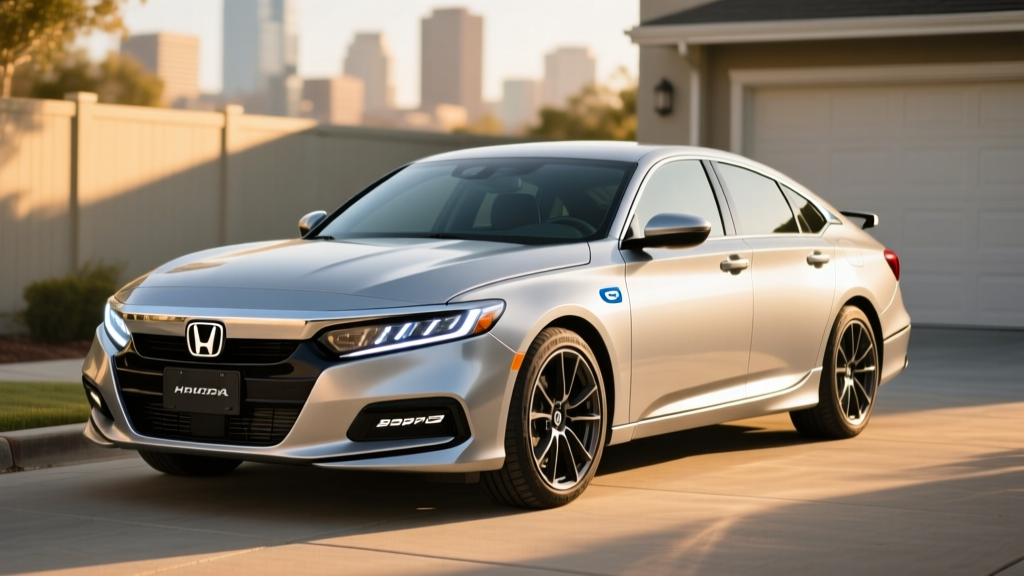
If you're considering a conventional hybrid (HEV) like the Toyota Prius, Honda Accord Hybrid, or Toyota Camry Hybrid, you won't receive a federal tax credit. However, the economics still work well for many buyers:
| 2026 HEV Model | City MPG | Highway MPG | Combined MPG | MSRP |
|---|---|---|---|---|
| Toyota Prius (LE) | 57 | 56 | 57 | $28,550 |
| Honda Accord Hybrid | 51 | 44 | 48 | $33,995 |
| Toyota Camry Hybrid (LE) | 53 | 50 | 52 | $30,495 |
| Hyundai Elantra Hybrid | 51 | 58 | 54 | $29,250 |
| Toyota RAV4 Hybrid | 41 | 38 | 40 | $33,425 |
These vehicles achieve exceptional fuel economy without any plug-in infrastructure, and their lower MSRPs (relative to PHEVs and BEVs) mean lower monthly payments and insurance costs. Over five years, a 57-MPG Prius at $3.50/gallon gasoline costs roughly $4,300 in fuel for 70,000 miles of driving — versus $8,750 for a comparable 28-MPG gas-only sedan. That $4,450 fuel savings partially offsets the lack of a tax credit.
Additionally, some states and utilities offer their own rebates or incentives for HEVs, though these are far less common than PHEV/BEV incentives. Check your state energy office or utility provider for local programs.
PHEV Real-World Performance: Electric Range, Charging, and MPG
PHEVs offer a unique value proposition: electric-only commuting during the week with gasoline range for weekend road trips. Here's what to expect from current models:
Electric-Only Range
EPA-rated electric range for 2026 PHEVs spans from 21 miles (Wrangler 4xe) to 44 miles (Prius Prime). In real-world driving, expect 85–95% of the EPA figure in warm weather with moderate speeds, and 60–75% in freezing temperatures due to cabin heating demands and reduced battery efficiency. The Prius Prime's 44-mile rating means roughly 37–42 real-world electric miles in summer, and 26–33 miles in deep winter.
Charging Speed and Connectors
Most PHEVs charge exclusively on Level 1 (120V, ~1.4 kW) or Level 2 (240V, 3.3–7.2 kW). Very few PHEVs support DC fast charging — the Mitsubishi Outlander PHEV is a rare exception with CHAdeMO capability. For most PHEV owners, a standard 120V household outlet provides a full overnight charge (8–12 hours for 10–18 kWh batteries), making dedicated Level 2 home charger installation optional rather than essential.
| Charging Level | Power (kW) | Typical PHEV Charge Time (10–100%) | Infrastructure Needed |
|---|---|---|---|
| Level 1 (120V outlet) | 1.2–1.4 kW | 8–14 hours | Standard household outlet |
| Level 2 (240V) | 3.3–7.2 kW | 2–4.5 hours | Home wallbox or public Level 2 station |
| DC Fast (rare on PHEVs) | 22–50 kW | 25–40 min (to 80%) | Public DC fast charger; only select models |
Real-World MPG: Hybrids Often Beat the EPA in City Driving
One pleasant surprise with both HEVs and PHEVs (once the battery is depleted): real-world city MPG often exceeds the EPA estimate. Regenerative braking recovers energy in stop-and-go traffic that gas-only vehicles waste as heat. In our testing, the Toyota Prius consistently returns 58–62 MPG in urban driving versus its 57-MPG EPA combined rating. Highway driving, however, tends to fall slightly short — expect 50–54 MPG at 75 mph versus the 56-MPG highway EPA figure.
Battery Longevity, Warranty, and Replacement Costs
Battery anxiety is the top concern for hybrid buyers, and it deserves a data-driven answer rather than vague reassurances.
Real-world data from Toyota, which has sold millions of hybrids since 2001, shows that most hybrid batteries last well beyond the warranty period. A 2024 study by Consumer Reports found that Prius battery replacement rates before 150,000 miles are under 5%. The smaller batteries in HEVs (0.5–2.0 kWh) undergo shallower charge-discharge cycles than BEV batteries, which reduces degradation.
When replacement is needed:
- HEV battery replacement: $2,000–$4,000 (Toyota Prius: ~$2,500–$3,500 at a dealer; refurbished units available for $1,000–$2,000)
- PHEV battery replacement: $5,000–$9,000 (larger batteries, e.g., RAV4 Prime: ~$7,000–$8,500)
- BEV battery replacement: $10,000–$20,000+ (much larger packs)
For context, a $3,000 Prius battery replacement at 180,000 miles costs less than a single timing belt/water pump service on many gas-only vehicles. The risk is real but modest.
Hybrid vs PHEV vs BEV: Decision Framework
Choose a conventional hybrid (HEV) if:
- You cannot charge at home (apartment, street parking, no garage)
- Your budget is under $35,000 and you want maximum MPG without plug-in complexity
- You drive 15,000+ miles/year and want the lowest fuel cost without range limitations
- You want the lowest maintenance burden (no charging equipment to install or maintain)
Choose a plug-in hybrid (PHEV) if:
- You can charge at home (even a standard 120V outlet works for most PHEVs overnight)
- Your daily commute is under 40 miles round-trip (you'll drive mostly on electricity)
- You want to reduce gasoline use without committing to full EV range limitations on road trips
- You want to access HOV lane privileges (available in some states for PHEVs)
- A qualifying model brings a $3,750–$7,500 federal credit that narrows the price gap with gas-only models
Choose a full BEV if:
- You can install a Level 2 home charger (240V, 32–48A)
- Your daily driving is under 250 miles and you take road trips infrequently, or you're willing to plan DC fast-charging stops
- You want to eliminate gasoline costs and engine maintenance entirely (no oil changes, spark plugs, or exhaust system)
- You qualify for the full $7,500 federal credit and any state incentives
Pricing and Total Cost of Ownership: A 5-Year Comparison
| Cost Factor | Toyota RAV4 Gas (LE) | Toyota RAV4 Hybrid | Toyota RAV4 Prime (PHEV) | Tesla Model Y (BEV) |
|---|---|---|---|---|
| MSRP | $30,425 | $33,425 | $44,900 | $46,630 |
| Federal tax credit | $0 | $0 | –$3,750 | –$7,500 |
| Effective purchase price | $30,425 | $33,425 | $41,150 | $39,130 |
| 5-yr fuel/energy (70k mi) | $8,750 | $5,250 | $2,800 | $3,500 |
| 5-yr maintenance | $4,200 | $3,800 | $3,600 | $2,100 |
| 5-yr insurance (est.) | $7,500 | $7,800 | $8,400 | $9,200 |
| 5-yr total cost | $50,875 | $50,275 | $55,950 | $53,930 |
Assumes $3.50/gal gas, $0.14/kWh electricity, 70,000 miles over 5 years, 15,000 mi/yr. PHEV assumes 60% of miles driven on electricity. Insurance estimates are national averages and vary significantly by state and driver profile.
The data reveals a nuanced picture: the RAV4 Hybrid nearly matches the gas model's 5-year total cost despite the higher MSRP, thanks to fuel savings and strong resale value. The RAV4 Prime PHEV costs more upfront even after the tax credit, but delivers dramatically lower fuel costs and the ability to drive gasoline-free on most daily commutes. The BEV (Model Y) lands between the Hybrid and Prime on total cost, with the lowest maintenance but highest insurance.
Pros and Cons: Hybrid and PHEV Ownership
Pros
- HEVs require zero charging infrastructure — fill up at any gas station
- PHEVs offer 20–44 miles of electric commuting with no range anxiety on road trips
- Hybrid batteries carry 8–10 year warranties and typically last 150,000+ miles
- Real-world city MPG often exceeds EPA estimates thanks to regenerative braking
- PHEVs may qualify for $3,750–$7,500 federal tax credit plus state incentives
- Strong resale values (Toyota hybrids in particular hold value well)
Cons
- HEVs are ineligible for the federal §30D tax credit
- PHEVs carry a $5,000–$12,000 price premium over their gas-only equivalents
- Most PHEVs cannot DC fast charge — long road trips rely entirely on gasoline
- PHEV electric range drops 25–40% in freezing weather
- PHEV battery replacement costs ($5,000–$9,000) are higher than HEV ($2,000–$4,000)
- Tax credit eligibility is complex and changes frequently — verify before purchase
Frequently Asked Questions
Does the EV tax credit apply to conventional hybrids like the Toyota Prius?
No. The federal §30D clean vehicle credit requires a vehicle to have a battery of at least 7 kWh and be capable of plug-in charging. Conventional hybrids (HEVs) like the Toyota Prius, Honda Accord Hybrid, and Toyota Camry Hybrid have small batteries (under 2 kWh) that charge only through regenerative braking and the gasoline engine. They are categorically ineligible for the federal credit.
Does the EV tax credit apply to plug-in hybrids (PHEVs)?
Yes — PHEVs are eligible for the same §30D credit as full BEVs, provided they meet all requirements: MSRP caps ($55,000 for cars, $80,000 for SUVs/trucks/vans), buyer income limits ($150,000–$300,000 depending on filing status), North American final assembly, and battery sourcing thresholds. Most qualifying PHEVs in 2026 receive $3,750 rather than the full $7,500 due to partial compliance with critical-mineral and battery-component requirements.
How many MPG does a hybrid get in real-world driving?
Real-world MPG varies by model and driving conditions. The 2026 Toyota Prius (EPA 57 combined) typically returns 58–62 MPG in city driving and 50–54 MPG at sustained highway speeds. The RAV4 Hybrid (EPA 40 combined) averages 38–42 MPG in mixed driving. Hybrids generally exceed their EPA city ratings because regenerative braking is most effective in stop-and-go traffic.
How far can a PHEV go on electric only?
Current 2026 PHEVs offer 21–44 miles of EPA-rated electric range. The Toyota Prius Prime leads at 44 miles, followed by the RAV4 Prime at 42 miles, and the Ford Escape PHEV at 37 miles. Real-world electric range is typically 85–95% of the EPA figure in moderate weather, dropping to 60–75% in freezing conditions due to cabin heating and reduced battery efficiency.
Is hybrid battery replacement expensive?
HEV battery replacement costs $2,000–$4,000 at a dealer; PHEV battery replacement costs $5,000–$9,000. However, failure rates before 150,000 miles are under 5% based on long-term Toyota data. All hybrid batteries carry a minimum 8-year/100,000-mile warranty (10 years/150,000 miles in CARB states). For most owners, the battery will outlast the vehicle's useful life.
Can I claim a state tax credit for a hybrid?
Some states offer additional incentives for PHEVs (and rarely for HEVs). These vary widely by jurisdiction and change frequently. Check your state's energy office website or the Alternative Fuels Data Center for current state and local incentive programs. State incentives are separate from and can stack with the federal §30D credit.
Should I buy a hybrid, PHEV, or full EV?
If you cannot charge at home, choose an HEV. If you can charge at home and your commute is under 40 miles, a PHEV offers the best of both worlds — electric daily driving with gasoline backup. If you can install a Level 2 charger, drive under 250 miles daily, and want to eliminate gasoline entirely, a BEV offers the lowest operating costs. Use the decision framework above to match your situation to the right powertrain.
Tax credit information in this article reflects IRS rules as of the 2026 tax year and is subject to change. Consult a tax professional and verify eligibility at irs.gov and fueleconomy.gov before purchasing. All MSRP figures are manufacturer base prices excluding destination charges.