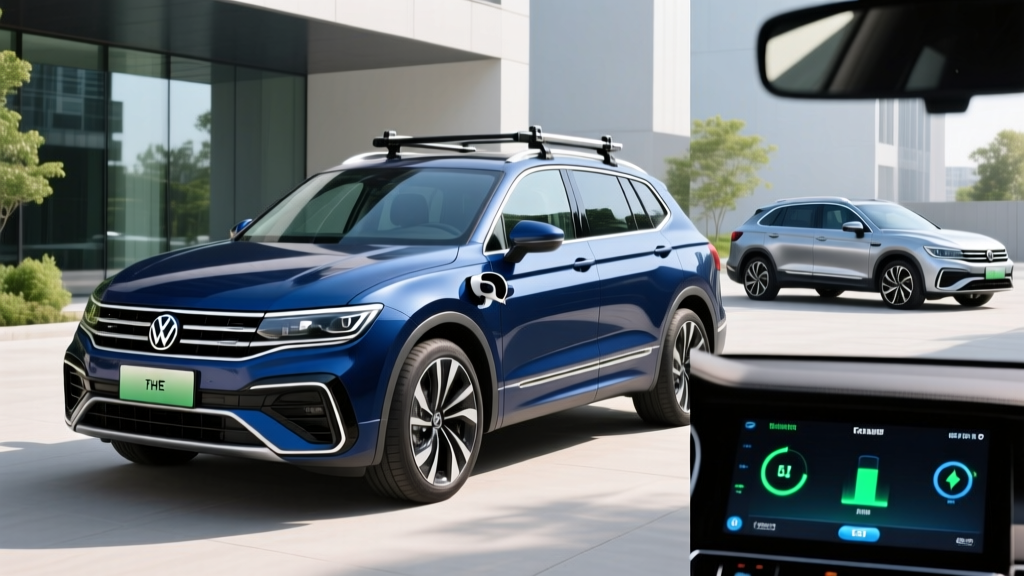
If you've been searching "does VW make a hybrid," the answer for 2026 is a definitive yes — but the landscape has shifted. Volkswagen discontinued the US-market Golf GTE and e-Golf years ago, and for a stretch, American VW showrooms lacked any electrified option. That changed with the reintroduction of the Tiguan plug-in hybrid (PHEV) and the confirmation of additional hybrid models on Volkswagen's MQB Evo platform.
Here's exactly what VW offers in the hybrid and plug-in hybrid space for 2026, with real numbers on range, MPG, charging, and whether these models qualify for federal tax incentives.
Volkswagen's 2026 Hybrid and PHEV Lineup
Volkswagen currently sells the Tiguan eHybrid (a plug-in hybrid) in the US market, with additional hybrid variants expected across the Passat and Transporter lines globally. For US buyers, the Tiguan eHybrid is the primary electrified VW you can walk into a dealership and buy today.
HEV vs PHEV — What VW Offers
| Feature | Conventional Hybrid (HEV) | Plug-In Hybrid (PHEV) |
|---|---|---|
| Plug-in charging? | No — charges via regen and engine | Yes — plug in for electric-only driving |
| Electric-only range | 0–1 mile at low speed | 30–40+ miles (Tiguan eHybrid: ~35 mi) |
| Battery size | ~1–2 kWh | ~19.7 kWh usable (Tiguan eHybrid) |
| Federal tax credit | Not eligible | Up to $3,750–$7,500 (sourcing dependent) |
| Best for | Drivers without home charging | Drivers with home/work charging access |
VW's current US offering is the PHEV variant. If you need a conventional HEV that never needs plugging in, you'll need to look at Toyota (RAV4 Hybrid) or Honda (CR-V Hybrid) competitors.
2026 VW Tiguan eHybrid: Powertrain and Performance Specs
The Tiguan eHybrid pairs a 1.5-liter turbocharged four-cylinder engine with an electric motor integrated into the DSG automatic transmission. Combined output makes it one of the quicker compact PHEV crossovers in its class.
| Specification | 2026 VW Tiguan eHybrid |
|---|---|
| Engine | 1.5L turbocharged I4 (EA211 Evo2) |
| Electric Motor | Integrated permanent-magnet synchronous |
| Combined Horsepower | 245 hp (system net) |
| Combined Torque | 295 lb-ft |
| Transmission | 6-speed DSG automatic |
| Drivetrain | Front-wheel drive |
| 0–60 mph | ~7.2 seconds |
| Battery (usable) | 19.7 kWh (NMC chemistry) |
| Electric-Only Range (EPA) | ~35 miles |
| Total Combined Range | ~430 miles |
| EPA MPGe (electric + gas) | ~80 MPGe |
| EPA MPG (gas only, battery depleted) | ~35 city / 33 highway / 34 combined |
| Level 2 Charge Time (0–100%) | ~3 hours 45 min at 3.6 kW |
| DC Fast Charging | Not available |
| Base MSRP | ~$40,490 (SE R-Line eHybrid) |
Fuel Economy: Real-World MPG vs EPA Estimates
The EPA rates the Tiguan eHybrid at approximately 80 MPGe when factoring in electric-only driving, and about 34 MPG combined once the battery is depleted and you're running purely on gasoline. But how does that translate to real-world ownership?
| Driving Scenario | EPA Estimate | Real-World Expectation |
|---|---|---|
| City (hybrid mode, battery depleted) | 35 MPG | 36–40 MPG (regen-heavy routes can exceed EPA) |
| Highway (70+ mph, battery depleted) | 33 MPG | 30–32 MPG (aerodynamic drag, less regen benefit) |
| Combined (battery depleted) | 34 MPG | 32–36 MPG (route dependent) |
| Electric-only range | 35 miles | 28–33 miles (highway/cold weather); 35–38 miles (city, mild weather) |
| MPGe (with regular charging) | 80 MPGe | 90–120+ MPGe if most trips are under 35 miles |
The PHEV ownership secret: If your daily commute is under 35 miles round-trip and you charge nightly, you may use almost zero gasoline for months. The 34 MPG gas-only figure only matters on road trips or if you can't charge regularly. Owners who charge diligently routinely report effective MPGe well above the EPA sticker.
Charging the Tiguan eHybrid: What You Need to Know
The Tiguan eHybrid uses a J1772 connector for Level 1 and Level 2 AC charging. Like most PHEVs, it does not support DC fast charging — the battery is too small to justify the hardware cost and weight, and overnight Level 2 charging easily replenishes it.
| Charging Level | Power (kW) | 0–100% Time | Setup |
|---|---|---|---|
| Level 1 (120V household) | ~1.4 kW | ~14 hours | Standard outlet, included cordset |
| Level 2 (240V home/work) | 3.6 kW (vehicle max) | ~3 hours 45 min | Home wallbox or public Level 2 station |
| DC Fast Charge | N/A | N/A | Not supported on Tiguan eHybrid |
Home charging reality: A 240V Level 2 home charger is strongly recommended. A standard 120V outlet technically works, but 14 hours to fill the battery means you can't fully recharge between an evening arrival and morning departure if you've depleted it. A basic Level 2 home installation typically costs $500–$1,500 depending on your electrical panel proximity. Consult a licensed electrician for a site-specific quote.
One advantage of the PHEV's small battery: you'll almost never rely on public charging infrastructure. Charge at home overnight, and the gas engine covers everything else.
Tax Credits and Incentives: Does the Tiguan eHybrid Qualify?
Federal tax credit eligibility for PHEVs falls under IRS §30D Clean Vehicle Credit rules, and the requirements are strict:
- MSRP cap: SUVs must be under $80,000 — the Tiguan eHybrid clears this easily at ~$40,490 base.
- Buyer income cap: AGI must not exceed $150,000 (single), $225,000 (head of household), or $300,000 (joint).
- Battery sourcing: Critical minerals and battery components must meet escalating percentages from US/free-trade-agreement partners. VW's sourcing compliance varies by model year — confirm current-year status on the fueleconomy.gov database before purchase.
- Assembly: Final assembly must occur in North America. The US-market Tiguan is assembled in Puebla, Mexico, which qualifies.
- Credit amount: Up to $3,750 (critical minerals only) or $7,500 (both critical minerals + battery components met). The Tiguan eHybrid's exact credit depends on VW's current supply chain compliance — expect $3,750–$7,500.
- Point-of-sale transfer: As of 2024+, you can transfer the credit to the dealer at purchase, reducing your out-of-pocket price directly rather than waiting for tax filing.
Important: Tax credit rules change frequently. Always verify current eligibility on the IRS website and consult a tax professional before relying on the credit in your purchase decision. Some states offer additional PHEV rebates — check your state's energy office or AFDC for local incentives.
Battery Longevity, Warranty, and Replacement Cost
2026 VW Tiguan eHybrid Battery Warranty
High-voltage battery: 8 years / 100,000 miles (whichever comes first), with a capacity retention threshold of 70% of original capacity.
Hybrid powertrain components: 8 years / 100,000 miles coverage on the electric motor, power electronics, and related hybrid systems.
Limited vehicle warranty: 4 years / 50,000 miles bumper-to-bumper.
PHEV battery degradation is generally modest because the battery is small and the vehicle's thermal management system actively protects it. Unlike full EVs where you might see 10–15% degradation over 8 years, PHEV batteries often retain 85–90%+ capacity in that same window because the engine seamlessly covers any shortfall.
Replacement cost if out of warranty: A Tiguan eHybrid high-voltage battery replacement is estimated at $6,000–$9,000 including labor, based on comparable VW/Audi PHEV battery pricing. This is significantly less than a full EV battery replacement ($12,000–$20,000+), because the pack is only ~19.7 kWh. However, PHEV battery failures within the warranty period are rare, and most owners will trade the vehicle long before the battery reaches end-of-life.
Who Should Buy the VW Tiguan eHybrid vs a Full EV or Gas Car?
Pros
- 35 miles electric covers most daily commutes gas-free
- No range anxiety — gas engine provides 430+ total miles
- 245 hp makes it one of the quicker compact PHEV crossovers
- Qualifies for federal tax credit (verify current sourcing compliance)
- No dependence on public charging infrastructure
- 35+ MPG even when battery is fully depleted
Cons
- No DC fast charging — irrelevant for most PHEV use, but limits flexibility
- FWD only — no AWD option (competitors like RAV4 Prime offer AWD)
- ~$40,490 base price is above gas-only Tiguan trims
- 3.6 kW onboard charger is slow compared to some PHEV rivals (RAV4 Prime: 6.6 kW)
- Cargo space slightly reduced vs gas Tiguan due to battery placement
Decision Framework: Is the Tiguan eHybrid Right for You?
Choose the VW Tiguan eHybrid if: You have home or workplace Level 2 charging, your daily driving is under 40 miles, you want to drive mostly on electricity without committing to a full EV, and you take 2–4 road trips per year where charging infrastructure might be sparse.
Choose a full EV (e.g., VW ID.4) if: You have reliable home charging, rarely drive more than 250 miles in a day, want zero gasoline expenses, and are ready to plan longer road trips around DC fast charging stops.
Choose a gas-only vehicle if: You cannot charge at home or work, drive very low annual miles (where fuel savings don't offset the PHEV price premium), or need AWD in a VW (currently unavailable on the eHybrid).
How the Tiguan eHybrid Compares to Rival PHEVs
The compact PHEV crossover segment is competitive. Here's how the Tiguan eHybrid stacks up against the most common cross-shopped alternatives:
| Model | Electric Range | Gas MPG (depleted) | HP | AWD? | Base MSRP |
|---|---|---|---|---|---|
| 2026 VW Tiguan eHybrid | ~35 mi | ~34 combined | 245 | No | ~$40,490 |
| Toyota RAV4 Prime | 42 mi | ~38 combined | 302 | Yes | ~$44,500 |
| Hyundai Tucson PHEV | 33 mi | ~35 combined | 261 | Yes | ~$39,000 |
| Ford Escape PHEV | 37 mi | ~40 combined | 210 | No | ~$39,500 |
The Tiguan eHybrid sits in the middle of the pack on electric range and efficiency. The RAV4 Prime leads on range and power (and offers AWD), but carries a price premium and has been plagued by limited dealer availability. The Tucson PHEV offers AWD at a lower price point. The Tiguan's advantage is its driving refinement, interior quality, and the VW brand's strong highway manners.
Frequently Asked Questions
Does VW make a conventional hybrid (not plug-in)?
As of the 2026 model year, Volkswagen does not sell a conventional HEV (non-plug-in hybrid) in the US market. Their electrified US offering is the Tiguan eHybrid PHEV, which requires plugging in to access its full electric-only range. If you need a hybrid you never plug in, look at the Toyota RAV4 Hybrid, Honda CR-V Hybrid, or Hyundai Tucson Hybrid.
How far can the VW Tiguan eHybrid go on electric only?
The EPA rates the Tiguan eHybrid at approximately 35 miles of electric-only range. In real-world driving, expect 28–33 miles on the highway or in cold weather, and up to 35–38 miles in mild-weather city driving where regenerative braking recaptures more energy.
What happens when the battery runs out on a PHEV?
Nothing dramatic — the gasoline engine seamlessly takes over and the vehicle operates as a conventional hybrid. You'll get approximately 34 MPG combined in this mode, and the total range exceeds 430 miles. You simply plug in at your convenience to restore electric-only capability.
Is the VW Tiguan eHybrid reliable?
VW's 1.5L EA211 Evo2 engine and DSG transmission are well-established powertrain components. The high-voltage battery is covered by an 8-year/100,000-mile warranty. PHEV systems have fewer stress points than full EVs because the battery is small and the engine shares the workload. Long-term reliability data for the current-generation Tiguan eHybrid is still accumulating, but VW's hybrid component warranty is competitive with the industry standard.
Does the Tiguan eHybrid qualify for the $7,500 federal tax credit?
It qualifies for a federal tax credit under IRS §30D, but the exact amount ($3,750 or $7,500) depends on VW's battery component and critical mineral sourcing compliance for the specific model year. Buyer income caps and the $80,000 SUV MSRP cap also apply. Always verify current eligibility at irs.gov and consult a tax professional before purchase.
Should I get the Tiguan eHybrid or the VW ID.4 electric SUV?
If you can charge at home, drive under 250 miles most days, and want to eliminate gas entirely, the ID.4 (275+ miles EPA range) offers lower running costs. If you regularly take long road trips, lack reliable charging, or want the flexibility of a gas engine as backup, the Tiguan eHybrid gives you electric commuting with gas-powered freedom.