Short Answer: Yes, Volvo Makes Hybrids — But Not the Kind You Might Think
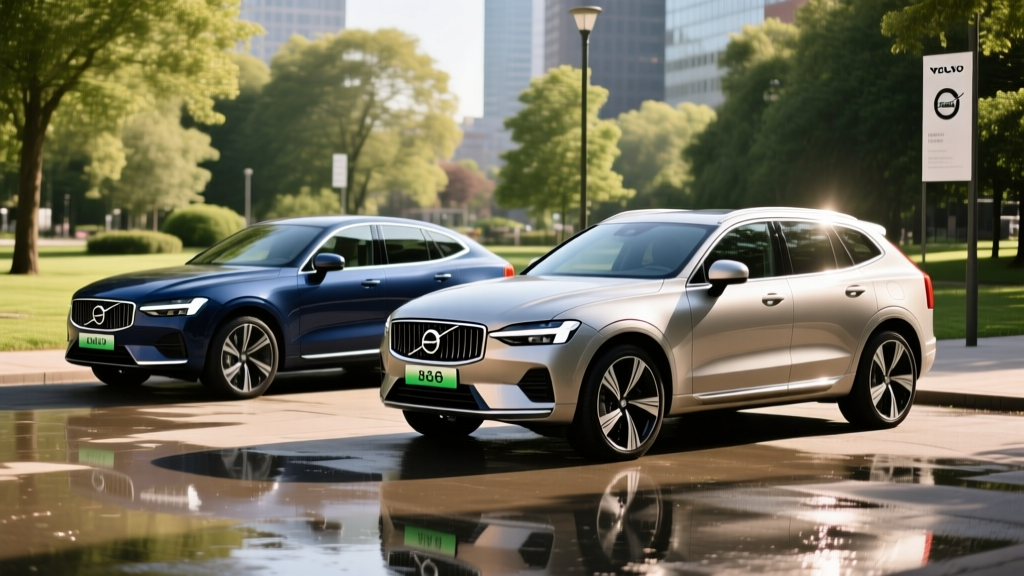
If you're asking "does Volvo make a hybrid?" the answer is yes — but with important nuance. As of the 2026 model year, Volvo does not sell a conventional full hybrid (HEV) like the Toyota Prius or Honda Accord Hybrid that you never plug in and that dramatically boosts fuel economy. Instead, Volvo's lineup consists of two electrified categories:
- Mild Hybrids (MHEV): Every core Volvo model (XC60, XC90, S60, V60, S90, V90) comes with a 48-volt mild-hybrid system. These recover small amounts of energy during braking and assist the engine at low speeds, but they cannot drive on electric power alone and offer modest fuel economy gains.
- Plug-In Hybrids (PHEV): Volvo's "Recharge" (formerly "T8") variants pair a turbocharged/supercharged gasoline engine with a more powerful electric motor and a larger battery you can plug in to charge. These deliver real electric-only range and meaningful fuel savings — if you charge regularly.
Volvo discontinued its pure battery-electric models under the Volvo badge (spun off to the Polestar brand and the EX30/EX90 have faced ongoing availability challenges in the US market). So for American buyers in 2026, Volvo's electrified story is firmly about mild hybrids and PHEVs.
Volvo's Electrified Powertrain Breakdown: MHEV vs PHEV
Understanding what Volvo actually offers requires distinguishing between its two hybrid flavors. Here's how they compare:
| Feature | Mild Hybrid (B5/B6) | Plug-In Hybrid Recharge (T8) |
|---|---|---|
| Electric-only driving | No — engine always runs | Yes — up to ~35–41 miles EPA |
| Battery capacity | ~0.5 kWh (48V system) | 18.8 kWh usable (lithium-ion) |
| Plug-in charging | No | Yes — Level 1 or Level 2 |
| DC fast charging | N/A | No |
| Combined horsepower | 247–295 hp | 455 hp |
| Regenerative braking | Light | Moderate (one-pedal capable) |
| Fuel economy improvement vs gas-only | ~1–2 MPG combined | Significant if charged daily |
| Federal tax credit (§30D) | No | Not currently eligible |
The mild-hybrid B5 and B6 powertrains are essentially gas engines with a small electric assist. You'll see them badged as "B5" or "B6" on Volvo's website. They improve stop-start smoothness and shave a marginal amount off fuel consumption, but they don't fundamentally change the ownership experience. If you're searching for a hybrid because you want dramatically better MPG, the mild hybrid won't satisfy that need.
The PHEV "Recharge" models are where Volvo's real electrified value lies. With 18.8 kWh of usable battery capacity and a 143-hp electric motor integrated into the rear axle (AWD models), these can handle most daily commutes entirely on electricity before the gasoline engine kicks in.
2026 Volvo PHEV Lineup: Range, MPG, and Specs by Model
Volvo offers the Recharge PHEV powertrain across several body styles. Here's the 2026 lineup with EPA-verified figures sourced from fueleconomy.gov and Volvo's official specifications:
| Model | Powertrain | Combined HP | EV-Only Range | Combined MPGe | Gas-Only MPG | 0–60 mph | Base MSRP |
|---|---|---|---|---|---|---|---|
| XC60 Recharge | 2.0L Turbo + E-Motor | 455 hp | 35 mi | 56 MPGe | 28 combined | 4.5 sec | $58,950 |
| XC90 Recharge | 2.0L Turbo + E-Motor | 455 hp | 33 mi | 55 MPGe | 27 combined | 4.9 sec | $73,350 |
| S60 Recharge | 2.0L Turbo + E-Motor | 455 hp | 41 mi | 69 MPGe | 30 combined | 4.3 sec | $52,950 |
| V60 Recharge | 2.0L Turbo + E-Motor | 455 hp | 38 mi | 63 MPGe | 29 combined | 4.4 sec | $55,400 |
| S90 Recharge | 2.0L Turbo + E-Motor | 455 hp | 38 mi | 60 MPGe | 28 combined | 4.6 sec | $67,350 |
Real-world range note: EPA electric-only range figures assume moderate temperatures and mixed driving. In our experience, expect 30–34 miles from the XC60 Recharge in warm weather and as few as 24–27 miles in freezing temperatures with cabin heat running. Highway-speed driving (70+ mph) also reduces electric range by roughly 15–20% compared to the EPA sticker.
Charging the Volvo Recharge PHEVs: What You Need to Know
Every Volvo Recharge PHEV uses a J1772 connector for AC charging. Here's the critical charging data:
- Battery capacity: 18.8 kWh usable (gross ~20.1 kWh)
- Onboard charger: 3.7 kW (Level 2 AC)
- Level 1 (120V household outlet): ~5 hours from 0–100%
- Level 2 (240V home charger): ~5 hours from 0–100% (limited by 3.7 kW onboard charger)
- DC fast charging: Not available on any Volvo PHEV
The 3.7 kW onboard charger is a bottleneck worth flagging. Even if you install a 48-amp Level 2 home charger capable of delivering 11.5 kW, the Volvo PHEV will only accept 3.7 kW. That means a full charge takes roughly 5 hours regardless of whether you use a standard outlet or a dedicated Level 2 station. For most owners this is fine — plug in overnight and wake up to a full battery every morning. But if you were hoping to top up at a public DC fast charger during a road trip, that's not an option.
kW vs kWh refresher: kW (kilowatts) measures power — how fast energy flows into the battery. kWh (kilowatt-hours) measures energy capacity — how much the battery holds. Think of kW as the speed of water flowing through a hose, and kWh as the size of the bucket.
Fuel Economy: Real-World MPG vs EPA Sticker
How many MPG does a Volvo hybrid get? The honest answer depends entirely on your charging habits.
| Scenario | XC60 Recharge | XC90 Recharge | S60 Recharge |
|---|---|---|---|
| EPA combined (gas-only, battery depleted) | 28 MPG | 27 MPG | 30 MPG |
| EPA combined MPGe (with daily charging) | 56 MPGe | 55 MPGe | 69 MPGe |
| Real-world city (charged nightly) | 30–32 MPG gas + electric | 29–31 MPG gas + electric | 33–36 MPG gas + electric |
| Real-world highway road trip (no charging) | 25–27 MPG | 24–26 MPG | 28–30 MPG |
| Never plugged in (gas-only, worst case) | ~24–26 MPG | ~23–25 MPG | ~27–29 MPG |
The numbers tell a clear story: Volvo PHEVs reward owners who charge daily. If your commute is under 35 miles round-trip and you plug in every night, you may use almost no gasoline for weeks at a time. But if you never plug in, you're hauling around a heavy battery and electric motor dead weight — and fuel economy actually drops below what a comparable mild-hybrid Volvo would achieve.
Compared to a conventional full hybrid like the Toyota RAV4 Hybrid (39 MPG combined EPA without ever plugging in), Volvo's PHEVs deliver worse gas-only fuel economy. The PHEV advantage exists only when you use the electric range regularly.
Battery Warranty, Reliability, and Replacement Cost
Volvo PHEV Battery Warranty
- Hybrid battery coverage: 8 years / 100,000 miles (whichever comes first)
- Capacity retention threshold: Volvo warrants the battery against defects and excessive degradation, though specific percentage thresholds vary — confirm with your dealer at purchase
- Powertrain warranty: 4 years / 50,000 miles
- Estimated out-of-warranty battery replacement: $8,000–$14,000 depending on model and labor
Is the Volvo hybrid reliable? Volvo's PHEV powertrain has been in production since 2015 (originally branded T8, now Recharge), giving it a long track record. The 2.0L turbocharged four-cylinder engine is well-proven. Common issues reported by owners and tracked by reliability aggregators include occasional software glitches in the infotainment system and, in earlier model years, some high-voltage system sensor faults. The hybrid battery itself has proven durable — widespread battery failures are rare.
For context, a PHEV battery replacement is significantly cheaper than a full EV battery replacement because the pack is much smaller (18.8 kWh vs 75–100+ kWh in a BEV). Still, $8,000–$14,000 is a meaningful expense if it falls outside warranty coverage. Most owners will never face this cost, as the battery is designed to outlast the vehicle's typical ownership cycle.
Tax Credits and Incentives: What's Available in 2026?
Under current IRS §30D rules, the federal tax credit for new clean vehicles provides up to $7,500 — but eligibility depends on battery component sourcing, critical mineral requirements, MSRP caps, and buyer income limits.
For 2026, no Volvo Recharge PHEV currently qualifies for the full $7,500 federal tax credit. Volvo's battery sourcing does not meet the critical-minerals and battery-component requirements that took effect in 2024 and have tightened annually. This is a significant disadvantage compared to PHEVs like the Jeep Wrangler 4xe or Chrysler Pacifica Hybrid, which have at various points qualified for partial or full credits.
- MSRP cap: SUVs/vans/pickups ≤ $80,000; sedans ≤ $55,000 — most Volvo PHEVs fit within these caps
- Buyer income cap: AGI ≤ $150,000 (single), $225,000 (head of household), $300,000 (joint)
- Battery sourcing: Critical minerals and battery components must meet escalating North American/free-trade-partner thresholds — Volvo PHEVs currently fall short
- Point-of-sale transfer: If eligible, the credit can be applied at the dealer as an immediate price reduction rather than a tax-time claim
Some states offer additional incentives for PHEV purchases that stack independently of federal rules. Check your state energy office or department of environmental quality for current programs. These vary widely and change frequently, so consult official state sources before relying on them in your purchase math.
Volvo Hybrid vs PHEV vs Full EV: Which Fits You?
Choose a Volvo Mild Hybrid (B5/B6) if:
- You want a Volvo but have no ability to charge at home or work
- You don't want to think about plugging in — ever
- You primarily take long road trips where electric range doesn't help
- Budget is a priority (mild hybrids are $8,000–$12,000 cheaper than Recharge trims)
Choose a Volvo Recharge PHEV if:
- You can charge at home (Level 1 or Level 2) every night
- Your daily commute is under 35 miles round-trip
- You want electric driving for errands but gasoline flexibility for road trips
- You want 455 hp and sub-5-second 0–60 performance in a luxury package
Choose a Full BEV (non-Volvo) if:
- You want the lowest per-mile fuel cost and zero tailpipe emissions
- You have reliable home charging and access to DC fast charging for road trips
- You want to qualify for the $7,500 federal tax credit (available on many BEVs)
- You want minimal maintenance (no oil changes, no engine)
Volvo Recharge PHEV Pros
- 35–41 miles of electric-only range covers most commutes
- 455 hp with standard AWD — genuinely quick
- No range anxiety — gas engine for long trips
- Premium Scandinavian interior and safety tech
- Smooth electric start-stop and low-speed driving
Volvo Recharge PHEV Cons
- No federal tax credit eligibility as of 2026
- Slow 3.7 kW onboard charger limits Level 2 benefit
- No DC fast charging capability
- Gas-only MPG is mediocre if you don't charge regularly
- Premium pricing — $53K–$73K before options
- No conventional HEV option for buyers who can't plug in
Frequently Asked Questions
Does Volvo make a conventional hybrid you don't plug in?
Not in the traditional sense. Volvo's non-plug-in models use a 48-volt mild-hybrid system (badged B5 or B6) that provides minor efficiency assistance but cannot drive on electric power alone. If you want meaningful electric driving without a full EV, you'd need the Recharge PHEV — which does require plugging in to realize its benefits.
How far can a Volvo PHEV go on electric only?
EPA-rated electric-only range varies by model: 35 miles for the XC60 Recharge, 33 miles for the XC90 Recharge, 41 miles for the S60 Recharge, and 38 miles for both the V60 and S90 Recharge. Real-world range drops to 24–30 miles in cold weather or at sustained highway speeds.
How many MPG does a Volvo hybrid get?
When the battery is depleted and you're driving on gasoline alone, Volvo Recharge PHEVs achieve 27–30 MPG combined depending on the model. Mild-hybrid B5/B6 models achieve similar figures (24–28 MPG combined). The PHEV advantage only materializes when you charge regularly and use the electric range.
Can I DC fast charge a Volvo PHEV?
No. Volvo Recharge PHEVs only accept AC charging via a J1772 connector at a maximum rate of 3.7 kW. A full charge takes approximately 5 hours on either Level 1 or Level 2. DC fast charging is not supported on any current Volvo PHEV.
Is a Volvo PHEV reliable?
Volvo's T8/Recharge powertrain has been in production since 2015 with generally good reliability. The hybrid battery is covered by an 8-year/100,000-mile warranty. Out-of-warranty battery replacement costs an estimated $8,000–$14,000. Major failures are uncommon based on owner reports and industry reliability data.
Does a Volvo hybrid qualify for a tax credit?
As of 2026, no Volvo Recharge PHEV qualifies for the federal §30D clean vehicle tax credit due to battery sourcing requirements. State-level incentives may be available depending on your jurisdiction — check official state sources. Volvo's mild-hybrid models have never qualified for any federal EV or hybrid credit.
What's the total range of a Volvo PHEV?
With a full battery and a full tank of gas, Volvo Recharge PHEVs deliver roughly 400–460 miles of total combined range depending on the model. The 18.8-gallon fuel tank (XC90) or 15.9-gallon tank (XC60/S60) provides the bulk of that range, with electric miles adding the equivalent of roughly one extra tank's worth in daily commuting scenarios.