If you've stood on a dealership lot wondering "does hybrid mean electric?" you aren't alone. The answer is both yes and no — and the distinction determines whether you'll plug in at home, how far you can drive on electrons alone, and whether you qualify for up to $7,500 in federal tax credits.
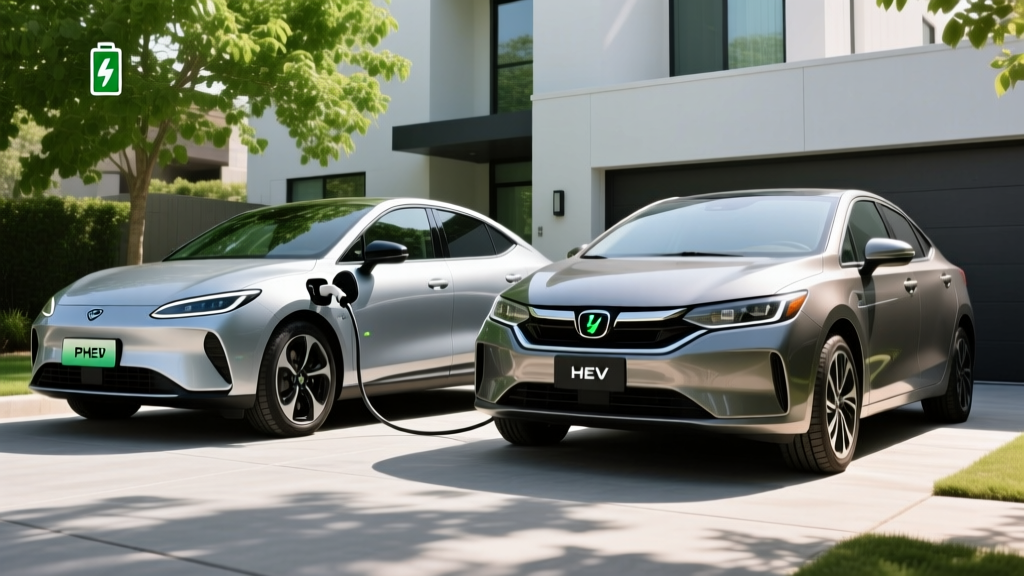
A hybrid pairs a gasoline engine with an electric motor and a small battery, but not all hybrids plug in. Conventional hybrids (HEVs) recharge their batteries entirely through regenerative braking and the engine. Plug-in hybrids (PHEVs) add a larger battery and a charge port, giving them a meaningful electric-only range before the engine kicks in. Full battery-electric vehicles (BEVs) ditch the gas engine entirely.
This guide cuts through the marketing jargon with exact EPA numbers, real-world ownership data, and a decision framework to help you pick the right electrified powertrain for your driving life in 2026.
Does Hybrid Mean Electric? The Short Answer
A hybrid is partially electric. Every hybrid — whether a Toyota Prius HEV or a Jeep Wrangler 4xe PHEV — uses an electric motor to assist or sometimes replace the gasoline engine. The electric motor draws energy from a battery pack, just like a full EV. The difference lies in battery size, how that battery recharges, and whether you can plug in.
| Attribute | HEV (Hybrid) | PHEV (Plug-in Hybrid) | BEV (Full Electric) |
|---|---|---|---|
| Plugs in? | No | Yes | Yes |
| Battery size | 0.5–2.0 kWh | 10–25 kWh | 50–120 kWh |
| Electric-only range | ~1 mi at low speed | 20–50 mi (EPA) | 200–400+ mi |
| Gas engine | Yes (primary) | Yes (backup + highway) | No |
| Fueling | Gas only | Gas + electricity | Electricity only |
| Federal tax credit (§30D) | Not eligible | Up to $7,500* | Up to $7,500* |
*§30D credit eligibility depends on MSRP caps, buyer income limits, and battery component/critical-mineral sourcing rules. Verify at IRS.gov and consult a tax professional.
Conventional Hybrid (HEV) MPG: What the EPA Says vs. Real Life
Conventional hybrids shine in stop-and-go city driving, where regenerative braking recovers energy and the electric motor handles low-speed propulsion. Many HEVs actually exceed their EPA city estimates in real-world commuting because the EPA test cycle includes aggressive acceleration that most drivers don't replicate in traffic.
| Model | EPA City | EPA Hwy | EPA Combined | Real-World Note |
|---|---|---|---|---|
| Toyota Prius (LE FWD) | 57 MPG | 56 MPG | 57 MPG | Many owners report 55–62 MPG in mixed city driving (fueleconomy.gov) |
| Honda Accord Hybrid | 51 MPG | 44 MPG | 48 MPG | Highway-heavy commutes may drop to low 40s |
| Toyota RAV4 Hybrid | 41 MPG | 38 MPG | 40 MPG | Cold-weather short trips can dip to mid-30s |
| Ford Maverick Hybrid | 42 MPG | 33 MPG | 38 MPG | Highway towing significantly reduces MPG |
| Hyundai Tucson Hybrid | 38 MPG | 38 MPG | 38 MPG | Consistent across seasons in moderate climates |
The Prius remains the MPG benchmark among non-plug-in hybrids, delivering sedan efficiency with enough cargo room for a weekend trip. SUV hybrids like the RAV4 Hybrid sacrifice a few MPG for ride height and available AWD, but still handily beat their gas-only counterparts by 10–15 MPG combined.
Plug-in Hybrid (PHEV) Electric-Only Range and Total Range
A PHEV's headline number is its electric-only range — the distance it can travel on battery power alone before the gasoline engine starts. For 2026, most new PHEVs deliver between 25 and 50 miles of EPA-rated electric range, which covers the daily round-trip commute for the majority of American drivers (the average one-way commute is roughly 16 miles, per Census Bureau data).
| Model | EV Range (EPA) | Battery (kWh) | Level 2 Charge (0–100%) | DC Fast Charge | Total Range (gas+elec) |
|---|---|---|---|---|---|
| Toyota Prius Prime | 44 mi | 13.6 kWh (NMC) | ~4 hours (3.3 kW) | No | ~600 mi |
| Toyota RAV4 Prime | 42 mi | 18.1 kWh (NMC) | ~2.5 hours (6.6 kW) | No | ~600 mi |
| Jeep Wrangler 4xe | 22 mi | 17.3 kWh (NMC) | ~5 hours (3.6 kW) | No | ~370 mi |
| Chrysler Pacifica Hybrid | 32 mi | 16.0 kWh (NMC) | ~2 hours (7.2 kW) | No | |
| Hyundai Tucson PHEV | 33 mi | 13.8 kWh (NMC) | ~3.5 hours (3.3 kW) | No | ~430 mi |
A critical detail many buyers miss: virtually no PHEVs support DC fast charging. You're limited to Level 2 (240V) charging at home or at public AC stations. That means a full charge takes 2–5 hours depending on the onboard charger's kW rating. For daily use, this isn't a problem — plug in overnight and wake up to a full battery. But on a road trip, you won't be topping up the battery at a DC fast charger in 20 minutes like you would in a BEV.
Once the battery depletes, a PHEV operates as a conventional hybrid, blending engine and motor. The total combined range (electric + gasoline) typically exceeds 400–600 miles, eliminating any range anxiety on long trips.
Hybrid Powertrains: How the Engine and Motor Work Together
Hybrids use different architectures to blend gas and electric power, and the approach affects both performance and efficiency:
- Series hybrid: The engine acts as a generator; only the electric motor drives the wheels. Rare in passenger cars but used in some EREVs (extended-range EVs).
- Parallel hybrid: Both the engine and motor can drive the wheels independently or together. Common in Honda and Hyundai systems.
- Series-parallel (power-split): A planetary gearset blends engine and motor output seamlessly. Toyota's Hybrid Synergy Drive is the best-known example, used in the Prius and RAV4 Hybrid.
Combined horsepower in 2026 hybrids ranges from roughly 140 HP (base Prius) to over 375 HP (RAV4 Prime), so efficiency doesn't mean slow. The RAV4 Prime hits 0–60 mph in about 5.7 seconds — quicker than many gas-only sport sedans — while still delivering 42 miles of electric range and 38 MPG combined once the battery depletes.
Tax Credits and Pricing: What Hybrids and PHEVs Actually Cost
This is where the HEV vs. PHEV distinction has real financial consequences. Conventional hybrids do not qualify for the federal §30D clean vehicle tax credit. The credit is reserved for plug-in vehicles — PHEVs and BEVs — that meet increasingly strict battery sourcing and critical-mineral requirements under the Inflation Reduction Act.
2026 §30D Tax Credit Eligibility for PHEVs
- Credit amount: Up to $7,500 ($3,750 for battery components + $3,750 for critical minerals)
- MSRP caps: Vans/SUVs/pickups ≤ $80,000; sedans ≤ $55,000
- Buyer income caps: AGI ≤ $150K (single), $225K (head of household), $300K (joint)
- Point-of-sale transfer: You can apply the credit as a down-payment reduction at the dealer
- Battery sourcing: Must meet phased-in critical-mineral and component requirements — check the latest eligible vehicle list at fueleconomy.gov
Rules are subject to change. Always confirm eligibility at IRS.gov before purchasing.
Base MSRPs for popular 2026 hybrids and PHEVs:
- Toyota Prius (HEV): from ~$28,550
- Toyota Prius Prime (PHEV): from ~$33,450 (potentially ~$25,950 after max §30D credit)
- Toyota RAV4 Hybrid (HEV): from ~$33,500
- Toyota RAV4 Prime (PHEV): from ~$44,500 (potentially ~$37,000 after credit, though high demand limits availability)
- Ford Maverick Hybrid (HEV): from ~$27,995
- Hyundai Tucson PHEV: from ~$38,725
Some states offer additional rebates for PHEVs (California's CVRP, for example, has offered up to $1,000–$2,000 for eligible PHEVs depending on income). Check your state energy office or DMV for current programs — these vary widely by jurisdiction and funding availability.
Hybrid Battery Reliability and Replacement Cost
Battery longevity is the top concern among hybrid shoppers, and the data is reassuring. Toyota's hybrid batteries have a proven track record spanning two decades, with many Prius taxis surpassing 300,000 miles on the original pack. Modern NMC and NiMH packs are engineered with conservative charge buffers (typically using only 60–80% of total capacity) to minimize degradation.
Federal law mandates a minimum hybrid battery warranty of 8 years/100,000 miles in most states, and 10 years/150,000 miles in CARB states (California, New York, Massachusetts, and others that follow California emissions standards). Toyota, Honda, and Hyundai all meet or exceed these thresholds.
| Brand | Warranty | Replacement Cost (Out of Warranty) |
|---|---|---|
| Toyota (Prius, RAV4 Hybrid) | 10 yr / 150,000 mi | $2,000–$4,000 (new OEM); $1,000–$2,000 (reconditioned) |
| Honda (Accord, CR-V Hybrid) | 8 yr / 100,000 mi (10/150K in CARB) | $2,000–$3,500 |
| Hyundai/Kia (Tucson, Sportage Hybrid) | 10 yr / 100,000 mi | $2,500–$4,500 |
| Ford (Maverick, Escape Hybrid) | 8 yr / 100,000 mi | $2,500–$4,000 |
For context, a hybrid battery replacement at $3,000 is comparable to a major transmission repair on a conventional gas car — and far less frequent. Most hybrid owners will trade or sell their vehicle long before the battery needs replacement.
Who Should Buy a Hybrid, a PHEV, or a Full EV?
The right electrified vehicle depends on your charging access, commute pattern, and road-trip habits. Here's a practical decision framework:
Choose a Conventional Hybrid (HEV) If:
- You cannot charge at home (apartment, street parking, no garage outlet)
- You want maximum MPG with zero behavior change — just fill up at any gas station
- Your budget is under $35,000 and you want proven reliability
- You drive mostly in the city where regen braking maximizes efficiency
Choose a Plug-in Hybrid (PHEV) If:
- You can install a Level 2 charger at home (240V outlet or hardwired station)
- Your daily commute is under 40 miles round-trip (most PHEV EV ranges cover this)
- You take regular road trips and don't want to plan around DC fast chargers
- You want to qualify for the §30D federal tax credit while keeping a gas-engine safety net
Choose a Full Electric Vehicle (BEV) If:
- You have reliable home charging and your daily driving is under 250 miles
- You want the lowest per-mile fuel cost (electricity at $0.13/kWh ≈ $0.04/mile vs. gas at $3.50/gal ≈ $0.14/mile at 25 MPG)
- You want minimal maintenance — no oil changes, no spark plugs, fewer moving parts
- You're ready to plan longer road trips around DC fast-charging infrastructure
Hybrid (HEV) Pros & Cons
Pros: No plug needed, excellent city MPG, lower purchase price, proven long-term reliability, no range anxiety
Cons: No federal tax credit, minimal electric-only driving, higher fuel cost than PHEV/BEV if electricity is cheap
Plug-in Hybrid (PHEV) Pros & Cons
Pros: Electric daily commute, gas-engine backup for road trips, §30D tax credit eligible, 400–600 mi total range
Cons: Higher purchase price, needs home charging to maximize value, no DC fast charging, heavier than HEV
Frequently Asked Questions
Does a hybrid car need to be plugged in?
No. A conventional hybrid (HEV) like the Toyota Prius or Honda Accord Hybrid charges its battery entirely through regenerative braking and the gasoline engine. You never plug it in. Only plug-in hybrids (PHEVs) require a charger to unlock their electric-only range.
How many MPG does a hybrid get compared to a regular gas car?
Typical 2026 hybrids deliver 38–57 MPG combined, compared to 25–32 MPG for their gas-only equivalents. The gap is largest in city driving. A Prius gets 57 MPG combined versus roughly 32 MPG for a comparable gas-only compact sedan — saving roughly $700–$900 per year in fuel at 15,000 miles driven.
How far can a PHEV go on electric only?
Most 2026 PHEVs deliver 22–44 miles of EPA-rated electric-only range. The Toyota Prius Prime leads at 44 miles, while the RAV4 Prime offers 42 miles. Once depleted, the vehicle seamlessly switches to hybrid mode with no driver intervention needed.
Is a hybrid battery expensive to replace?
Out-of-warranty hybrid battery replacement costs $2,000–$4,500 depending on the model, but most batteries last well beyond the 8–10 year / 100,000–150,000 mile warranty period. Many first-generation Prius packs have exceeded 200,000 miles with minimal degradation. Reconditioned replacement packs are also available for $1,000–$2,000.
Does a hybrid qualify for a tax credit?
Conventional hybrids (HEVs) do not qualify for the federal §30D clean vehicle credit. Plug-in hybrids (PHEVs) may qualify for up to $7,500, subject to MSRP caps ($55K sedans, $80K SUVs/trucks), buyer income limits, and battery sourcing requirements. Check the current eligible vehicle list at fueleconomy.gov and consult a tax professional.
Is a hybrid better than a full EV for me?
If you lack home charging access or regularly drive more than 300 miles in a single day, a hybrid or PHEV is likely a better fit. If you can charge at home and your daily driving stays under 250 miles, a full EV offers lower running costs and less maintenance. A PHEV is the best of both worlds for commuters who can charge nightly but still take gas-powered road trips.