If you're shopping for an electrified vehicle but aren't ready to commit to a full battery-electric car, a hybrid is likely on your shortlist. One of the most common questions we hear at AutoEdgeView is straightforward: does a hybrid car need to be charged? The answer depends entirely on which type of hybrid you choose, and the distinction has major implications for your daily routine, fuel costs, and tax-credit eligibility.
Let's separate the two categories clearly, then walk through the numbers that actually matter — EPA MPG, electric-only range, battery warranties, and real-world ownership economics — so you can decide which setup fits your driveway.
HEV vs PHEV: Which Hybrid Needs a Plug?
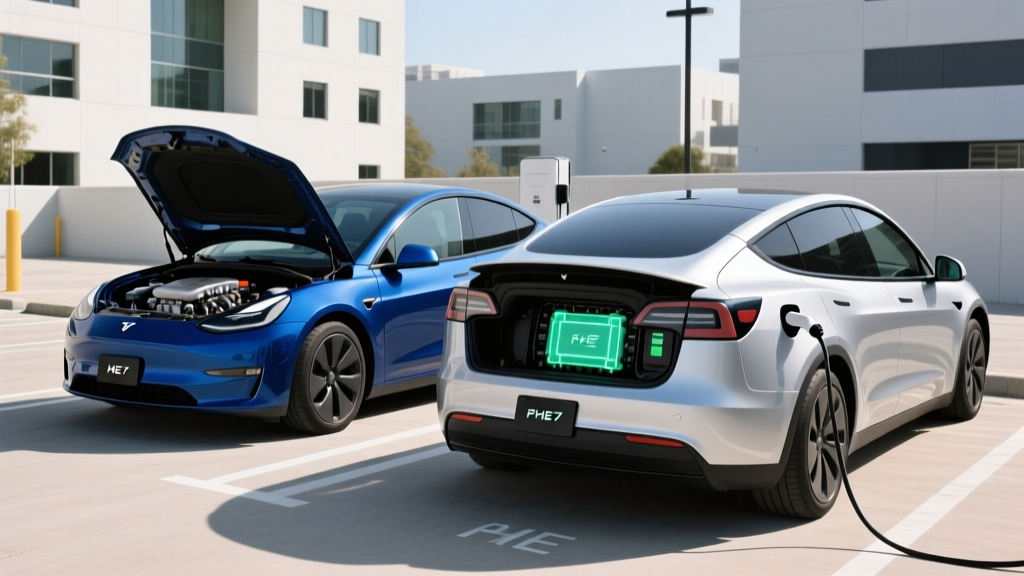
The hybrid market splits into two fundamentally different architectures. Conventional hybrids (HEVs) generate all their electricity onboard. Plug-in hybrids (PHEVs) add a larger battery and a charging port, letting you drive on grid electricity before the gas engine kicks in.
| Feature | Conventional Hybrid (HEV) | Plug-in Hybrid (PHEV) |
|---|---|---|
| Needs to be plugged in? | No | Yes (to access electric-only range) |
| Battery size | 0.6–1.6 kWh | 13–25+ kWh (usable) |
| Electric-only driving | Minimal (low-speed assist only) | 20–50+ miles EPA |
| Charging port | None | J1772 (Level 1/2); some offer DC fast charge |
| Federal tax credit (§30D) | Not eligible | Up to $7,500 (varies by sourcing/income) |
| Regenerative braking | Yes — charges small battery | Yes — charges larger battery more aggressively |
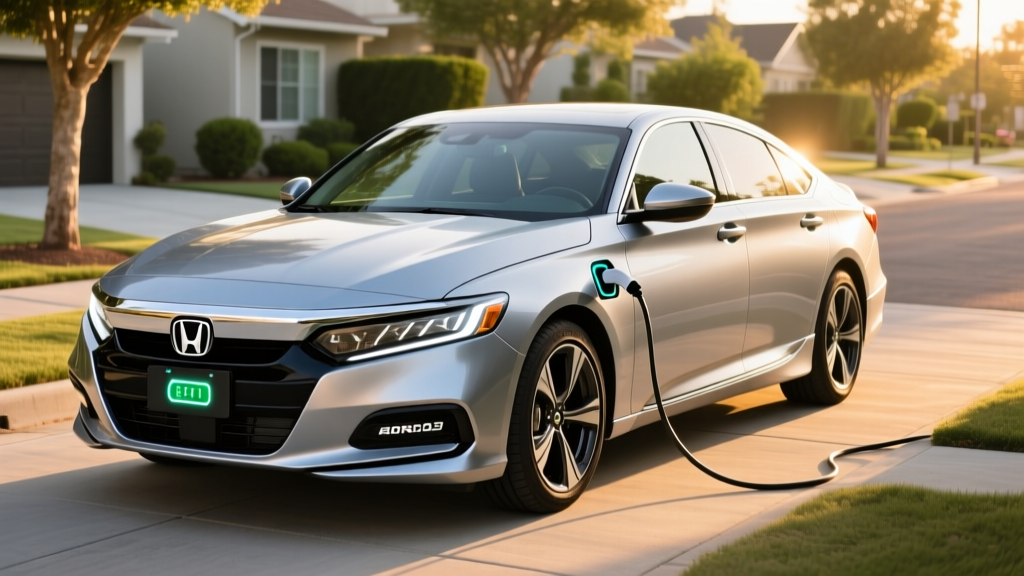
The bottom line: A conventional hybrid never needs to be plugged in. It charges its own small battery through regenerative braking and the gas engine. A PHEV can operate without plugging in — it will function as a regular hybrid once the battery depletes — but you forfeit the entire purpose of the larger battery if you never charge it.
How Hybrids Charge Without a Plug
Conventional hybrids like the Toyota Prius, Honda Accord Hybrid, and Hyundai Tucson Hybrid use two energy-recovery methods to keep their batteries charged:
- Regenerative braking: When you lift off the accelerator or brake, the electric motor reverses direction, acting as a generator that converts kinetic energy back into electricity. This is the same principle used in full EVs, but applied to a much smaller battery (typically 0.6–1.6 kWh).
- Engine-driven generation: When the battery state of charge drops below a threshold, the gasoline engine spins the motor-generator to replenish it. This happens seamlessly — you won't notice it during normal driving.
Because the battery is small, the system only needs brief bursts of regeneration to keep it topped up. There's no plug, no charging cable, and no change to your fueling routine. You simply fill up at a gas station as you always have.
How Many MPG Does a Hybrid Get? EPA Numbers vs Real World
Hybrids excel in city driving, where frequent braking maximizes regenerative energy capture. Highway MPG is typically lower because there's less braking to recover energy and aerodynamic drag dominates. Here's how current popular hybrids stack up according to EPA estimates:
| Vehicle (2026 MY) | Type | City MPG | Highway MPG | Combined MPG |
|---|---|---|---|---|
| Toyota Prius LE | HEV | 57 | 56 | 57 |
| Toyota Prius Prime SE | PHEV | 52 (hybrid mode) | 48 | 50 |
| Honda Accord Hybrid | HEV | 51 | 44 | 48 |
| Hyundai Tucson Hybrid | HEV | 38 | 38 | 38 |
| Toyota RAV4 Hybrid | HEV | 41 | 38 | 40 |
| Ford Escape PHEV | PHEV | 42 (hybrid mode) | 37 | 40 |
| Toyota RAV4 Prime | PHEV | 40 (hybrid mode) | 36 | 38 |
PHEV Electric-Only Range: How Far Can You Go Without Gas?
If you're considering a plug-in hybrid, electric-only range is the number that determines how much gasoline you'll actually burn. A PHEV with 40 miles of electric range can cover most commutes without the engine ever starting — provided you charge it.
| 2026 PHEV Model | Battery (kWh usable) | EPA Electric Range | Total Range (elec + gas) | Level 2 Charge Time | DC Fast Charge |
|---|---|---|---|---|---|
| Toyota Prius Prime SE | 13.6 kWh | 44 miles | ~510 miles | ~4 hrs (240V) | No |
| Toyota RAV4 Prime | 18.1 kWh | 42 miles | ~600 miles | ~2.5 hrs (240V) | No |
| Ford Escape PHEV | 14.4 kWh | 37 miles | ~520 miles | ~3.5 hrs (240V) | No |
| Hyundai Tucson PHEV | 13.8 kWh | 33 miles | ~440 miles | ~2 hrs (240V/7.2 kW) | No |
| Jeep Wrangler 4xe | 17.3 kWh | 22 miles | ~370 miles | ~2 hrs (240V) | No |
| BMW X5 xDrive50e | 25.7 kWh | 38 miles | ~460 miles | ~3 hrs (240V/7.4 kW) | No |
A few important realities about PHEV electric range:
- Cold weather cuts range by 20–35%. Battery chemistry is less efficient in the cold, and cabin heating draws significant power. A PHEV rated at 40 electric miles may deliver only 25–30 in January in northern states.
- Highway speeds drain the battery faster. Electric-only range is rated on a mixed driving cycle. Sustained 70+ MPH driving can reduce it by 15–25%.
- Most PHEVs do not support DC fast charging. You're limited to Level 1 (120V household outlet, ~8–12 hours for a full charge) or Level 2 (240V, 2–4 hours). This is because PHEV batteries are small enough that overnight Level 2 charging is sufficient, and adding DC fast-charge hardware increases cost and weight.
- Level 1 charging is viable for PHEVs. Unlike full EVs with 60–100 kWh batteries, a PHEV's 14–18 kWh battery can be fully replenished overnight on a standard 120V outlet. If you drive 30 electric miles daily and plug in each evening, Level 1 may be all you need.
Powertrain Output: Hybrid Performance by the Numbers
Modern hybrids are no longer slow. The latest generation pairs downsized turbocharged or naturally aspirated engines with powerful electric motors for combined outputs that rival turbocharged gas cars.
| Vehicle | Engine | Combined HP | 0–60 MPH | Drivetrain |
|---|---|---|---|---|
| Toyota Prius | 2.0L I4 + 2 motors | 194 hp | 7.2 sec | FWD / AWD |
| Toyota RAV4 Prime | 2.5L I4 + 3 motors | 302 hp | 5.7 sec | AWD |
| Honda Accord Hybrid | 2.0L I4 + 2 motors | 204 hp | 7.0 sec | FWD |
| Hyundai Tucson Hybrid | 1.6L turbo I4 + motor | 226 hp | 7.1 sec | AWD |
| Ford Escape PHEV | 2.5L I4 + motor | 210 hp | 7.5 sec | FWD |
The RAV4 Prime's 302 hp stands out — it's the quickest RAV4 Toyota sells, faster than the gas-only turbo model. This is a common pattern: PHEVs often become the performance variant in a lineup because the electric motor adds instant torque at low RPM.
Pricing and Tax Credit Eligibility for 2026
Hybrid pricing has become competitive with gas-only models, especially in Toyota's lineup. PHEVs carry a premium due to the larger battery but can offset it through the federal §30D Clean Vehicle Credit.
| Vehicle | Base MSRP (2026) | Federal Tax Credit | Effective Price After Credit |
|---|---|---|---|
| Toyota Prius LE (HEV) | ~$28,550 | $0 (HEV ineligible) | ~$28,550 |
| Toyota Prius Prime SE (PHEV) | ~$33,450 | Up to $3,750* | ~$29,700 |
| Toyota RAV4 Hybrid (HEV) | ~$32,900 | $0 | ~$32,900 |
| Toyota RAV4 Prime (PHEV) | ~$44,500 | Up to $7,500* | ~$37,000 |
| Ford Escape PHEV | ~$40,500 | Up to $3,750* | ~$36,750 |
*Federal §30D credit amounts depend on battery component sourcing and critical mineral requirements, which change annually under the Inflation Reduction Act. As of 2026, many PHEVs qualify for $3,750 (critical minerals only) rather than the full $7,500. Eligibility also requires meeting MSRP caps ($55,000 for sedans, $80,000 for SUVs/vans/pickups) and buyer income limits ($150K single / $300K joint AGI). The credit can be transferred to the dealer as a point-of-sale discount. Consult IRS.gov or a tax professional for your specific situation.
Conventional hybrids (HEVs) do not qualify for the federal §30D credit because they cannot be plugged in. However, some states offer rebates for any electrified vehicle — check your state energy office for local programs.
Battery Longevity, Warranty, and Replacement Costs
Hybrid battery anxiety is the most common concern we hear from buyers considering their first hybrid. The data is reassuring: modern hybrid batteries are among the most durable components in the vehicle.
Real-world longevity data supports the warranty terms:
- Toyota Prius: Tens of thousands of Prius taxis have exceeded 300,000 miles on original hybrid batteries. The NiMH and newer lithium-ion packs are designed with conservative charge/discharge windows — the system never uses the full battery capacity, which dramatically extends cycle life.
- Failure rates are low: Consumer Reports and iSeeCars data show hybrid battery replacement rates under 5% within the first 10 years for most models.
- Replacement cost if out of warranty: A new OEM hybrid battery pack typically costs $2,000–$4,000 for a conventional hybrid (small 1–1.6 kWh pack) and $4,000–$8,000 for a PHEV (larger 13–25 kWh pack). Refurbished and aftermarket options are available for 40–60% less.
- Individual cell replacement: Some independent shops can replace failed cells within a hybrid battery for $500–$1,500 rather than swapping the entire pack.
The key insight: hybrid batteries are stressed far less than EV batteries because the system operates within a narrow state-of-charge window (typically 40–80%). This "buffer" strategy is why they last 15+ years in normal use.
Hybrid vs PHEV vs EV: Which Fits Your Life?
Choose a conventional hybrid (HEV) if:
- You don't have access to home or workplace charging
- You want maximum MPG with zero change to your routine
- You drive a mix of city and highway with no predictable short commute
- You want the lowest upfront cost among electrified options
- You frequently take long road trips and don't want to plan charging stops
Choose a plug-in hybrid (PHEV) if:
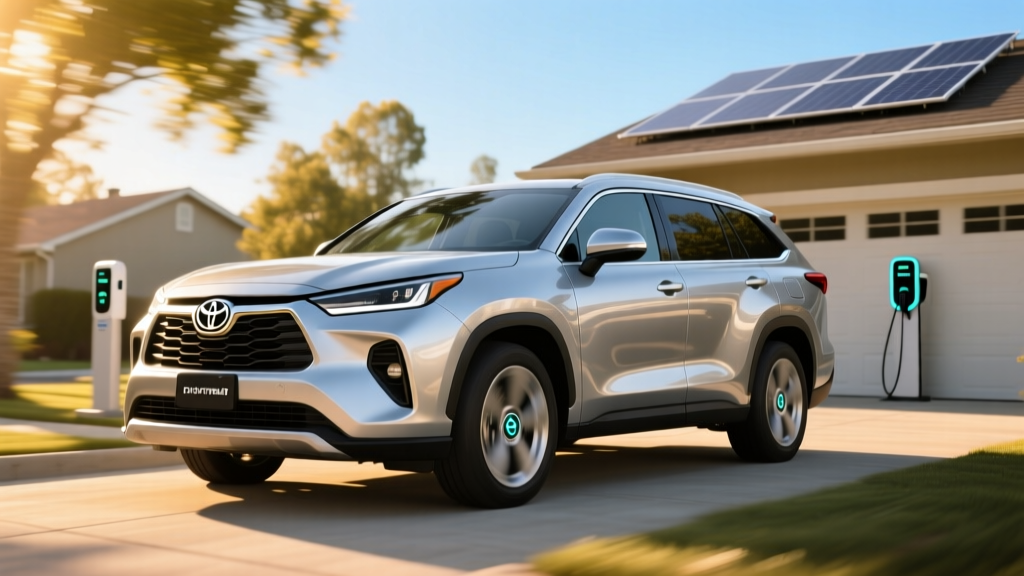
- You have home charging (even a 120V outlet is sufficient for overnight)
- Your daily commute is under 30–40 miles round trip
- You want electric-only daily driving but gas flexibility for road trips
- You want to reduce (not eliminate) gasoline consumption
- You want access to the federal tax credit (up to $7,500)
Choose a full EV (BEV) if:
- You have reliable home Level 2 charging
- Your daily driving is within the vehicle's real-world range
- You want zero tailpipe emissions and minimal maintenance
- You want the lowest per-mile fuel cost (electricity vs. gasoline)
- You qualify for the full $7,500 federal credit and any state rebates
Real-World Ownership: What Hybrids Actually Cost Per Mile
Let's run a practical comparison. Assume 15,000 miles per year, $3.30/gallon regular gasoline, and for the PHEV, 70% of driving on electricity at $0.14/kWh:
| Vehicle | Annual Fuel Cost | 5-Year Fuel Cost | Maintenance (5-yr est.) |
|---|---|---|---|
| Gas-only compact SUV (27 MPG combined) | ~$1,833 | ~$9,167 | ~$3,500 |
| Toyota RAV4 Hybrid (40 MPG combined) | ~$1,238 | ~$6,188 | ~$3,000 |
| Toyota RAV4 Prime (PHEV, 70% electric) | ~$580 | ~$2,900 | ~$2,800 |
| Full EV (e.g., Tesla Model Y, 3.5 mi/kWh) | ~$429 | ~$2,143 | ~$1,800 |
The PHEV's fuel cost advantage depends entirely on how often you charge it. Drive a RAV4 Prime without ever plugging in, and you'll get roughly 38 MPG — still good, but not dramatically better than the standard hybrid's 40 MPG, and you'll have paid a significant upfront premium for battery capacity you never use.
Hybrid (HEV) Pros
- No plug-in charging required
- Lower purchase price than PHEV/EV
- Proven long-term reliability
- Excellent city MPG (often beats EPA)
- No range anxiety whatsoever
Hybrid (HEV) Cons
- No electric-only driving mode
- No federal tax credit eligibility
- Still 100% gasoline-dependent
- Higher emissions than PHEV/EV
- Less performance benefit vs. PHEV variants
PHEV Pros
- 20–50 miles electric-only daily driving
- Federal tax credit (up to $7,500)
- Gas engine eliminates range anxiety on trips
- Level 1 outlet sufficient for overnight charging
- Strongest performance in many lineups
PHEV Cons
- $5,000–$10,000 premium over HEV equivalent
- Worthless if you never plug it in
- No DC fast charging (most models)
- Heavier than HEV (larger battery)
- Electric range drops significantly in cold weather
Frequently Asked Questions
Do I need to install a home charger for a hybrid?
For a conventional hybrid (HEV): No. There is no plug and no charger to install. For a PHEV: You don't need a dedicated Level 2 charger. A standard 120V household outlet will fully charge most PHEV batteries overnight (8–12 hours). However, a 240V Level 2 charger reduces that to 2–4 hours and is recommended if you want to top up between daily trips. A Level 2 installation typically costs $500–$2,000 depending on your electrical panel and wiring run.
How long do hybrid batteries actually last?
Most hybrid batteries last 12–15 years or 150,000–200,000+ miles before significant degradation. Toyota's hybrid system is particularly well-proven, with many Prius vehicles exceeding 300,000 miles on the original battery. The federal warranty mandate requires a minimum 8-year/100,000-mile coverage, and CARB states mandate 10 years/150,000 miles. Battery failures within the warranty period are replaced at no cost.
Is a PHEV worth it if I can't charge at home?
Generally, no. A PHEV that's never plugged in operates as a heavier, more expensive conventional hybrid. You'll get similar or slightly worse MPG than a purpose-built HEV and will have paid thousands more for battery capacity you never use. If home or workplace charging isn't available, a conventional hybrid is the smarter financial choice.
Do hybrids cost more to maintain than gas cars?
No — they typically cost less. The regenerative braking system reduces wear on brake pads (many hybrid owners report 80,000+ miles on original brake pads). There's no traditional starter motor or alternator to fail. The engine runs less often, which can extend oil-change intervals and reduce overall engine wear. The main additional cost risk is battery replacement after warranty expiration, but this is uncommon within the vehicle's typical ownership period.
Which is cheaper to own long-term: hybrid, PHEV, or EV?
Over a 5-year period, a full EV typically has the lowest total cost of ownership when you factor in fuel, maintenance, and the federal tax credit — assuming you have home charging. A PHEV ranks second if you charge daily. A conventional hybrid ranks third but wins if you lack charging access, because it requires no infrastructure investment. Gas-only vehicles consistently cost the most per mile to operate. Use the DOV's fuel-economy tool to compare specific models side by side with your local electricity and gas prices.
The answer to "does a hybrid car need to be charged" is simple: conventional hybrids do not, and plug-in hybrids benefit enormously from charging but can operate without it. Your choice between the two should come down to one practical question — can you plug in at home or work? If yes, a PHEV gives you the best of both worlds. If no, a conventional hybrid delivers exceptional fuel economy with zero lifestyle change.