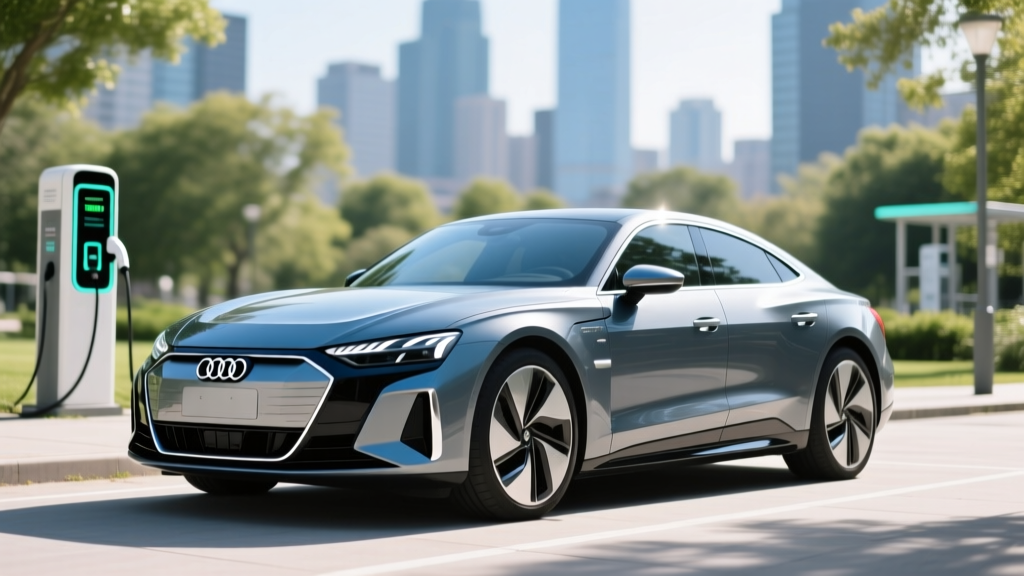
If you've been asking "does Audi make a hybrid?" the answer is yes — but with an important caveat. Audi does not currently sell a conventional hybrid (HEV) in the United States. Instead, the brand focuses exclusively on plug-in hybrid electric vehicles (PHEVs) under its "TFSI e" badge. For the 2026 model year, Audi's PHEV lineup centers on the Q5 TFSI e, with the larger Q7 and Q8 offering PHEV variants in select configurations.
This guide breaks down exactly what Audi's plug-in hybrids deliver in real-world driving: electric-only range, fuel economy, charging requirements, pricing, and whether the federal tax credit applies. If you're cross-shopping a PHEV against a full battery-electric vehicle (BEV) like the Audi Q4 e-tron or a conventional gas car, this is the data you need.
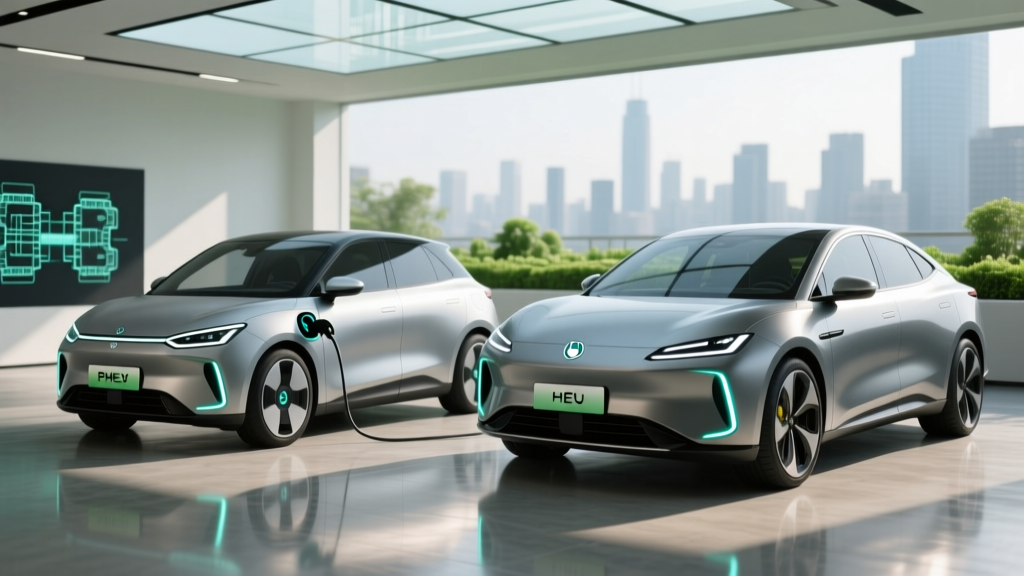
HEV vs PHEV: What Audi Actually Offers
Before diving into specs, it's critical to understand the distinction between the two hybrid types, because it affects everything from daily driving to your electric bill.
| Feature | Conventional Hybrid (HEV) | Plug-In Hybrid (PHEV) — Audi TFSI e |
|---|---|---|
| Plugs in to charge? | No — charges via regenerative braking and engine | Yes — Level 1 or Level 2 AC charging |
| Battery size | ~1–2 kWh | ~17.9 kWh usable (Q5 TFSI e) |
| Electric-only driving | Very short distances at low speed | EPA-est. 23 miles (Q5 TFSI e) |
| Gas engine | Primary power source, assisted by electric motor | Turbo 2.0L + electric motor, either or both can drive |
| Federal tax credit | Not eligible | Up to $7,500 (subject to §30D eligibility rules) |
| Examples | Toyota RAV4 Hybrid, Honda CR-V Hybrid | Audi Q5 TFSI e, Chrysler Pacifica PHEV |
Audi's strategy is clear: skip the small-battery HEV approach and go straight to a larger-battery PHEV that can handle most daily commutes on electricity alone, with a gas engine for longer trips. This means you will need access to a plug — whether a standard 120V outlet (Level 1) or a 240V home charger (Level 2) — to get the benefit of the electric range.
2026 Audi Q5 TFSI e: Specs, Range, and MPG
The Q5 TFSI e is Audi's volume PHEV and the model most buyers encounter. Here's the full spec breakdown for the 2026 model year:
| Specification | 2026 Audi Q5 55 TFSI e |
|---|---|
| Powertrain | 2.0L turbocharged 4-cyl + electric motor |
| Combined horsepower | 362 hp / 369 lb-ft torque |
| Battery (usable) | 17.9 kWh lithium-ion |
| EPA electric-only range | 23 miles |
| EPA MPGe (electric + gas) | 61 MPGe combined |
| EPA MPG (gas only, battery depleted) | 25 city / 27 highway / 26 combined |
| Total range (electric + gas) | ~380 miles |
| 0–60 mph | 5.0 seconds |
| AC charging (Level 2) | 7.4 kW max, ~2.5 hours 0–100% |
| DC fast charging | Not supported |
| Drivetrain | quattro AWD |
| Base MSRP | ~$58,900 (Premium trim) |
| Battery warranty | 8 years / 100,000 miles |
Real-world range reality: The EPA estimates 23 miles of electric-only range, but expect 18–20 miles in mixed highway driving, and potentially as low as 15 miles in freezing temperatures when cabin heating draws from the battery. For a 15-mile round-trip commute, the Q5 TFSI e can handle it fully electric in mild weather — but it's tight for longer commutes.
How Many MPG Does the Audi Q5 Hybrid Get?
This depends entirely on whether you're driving on electricity or gas:
| Mode | City | Highway | Combined |
|---|---|---|---|
| Electric (MPGe) | 65 MPGe | 57 MPGe | 61 MPGe |
| Gas only (battery depleted) | 25 MPG | 27 MPG | 26 MPG |
Once the battery is depleted, the Q5 TFSI e operates as a heavy luxury SUV with a turbocharged four-cylinder. The 26 MPG combined figure is respectable for a 4,700-lb vehicle, but it doesn't match a conventional hybrid like the Toyota RAV4 Hybrid (39 MPG combined). The PHEV advantage is the 23 miles of zero-gas driving upfront — if you plug in daily, you may use very little gasoline on typical commutes.
Real-world MPG tip: Owners who charge nightly and drive under 25 miles per day report using gasoline only on weekend road trips. Those who don't plug in regularly will see fuel economy essentially equal to the gas-only figure of ~26 MPG combined — which defeats the purpose of buying a PHEV.
Charging the Audi Q5 TFSI e: What You Need to Know
The Q5 TFSI e uses a standard J1772 connector for AC charging. Here's the charging speed breakdown:
| Charging Level | Power (kW) | Time (0–100%) | Setup |
|---|---|---|---|
| Level 1 (120V household) | ~1.4 kW | ~13 hours | Standard outlet, included cordset |
| Level 2 (240V home) | 7.4 kW | ~2.5 hours | Requires 240V outlet or hardwired charger |
| DC Fast Charge | N/A | N/A | Not supported on Q5 TFSI e |
Key limitation: The Q5 TFSI e does not support DC fast charging. This is common for PHEVs — the battery is small enough that Level 2 AC charging replenishes it quickly. A 2.5-hour Level 2 charge is practical for overnight top-ups, but it means you won't be adding electric range during a quick road-trip stop.
For Level 2 home charging, you'll need a 240V circuit (typically NEMA 14-50 or hardwired). Installation costs range from $500–$1,500 if your electrical panel has capacity, or $2,000–$4,000+ if a panel upgrade is needed. Always consult a licensed electrician for your specific home setup.
Pricing, Trims, and Federal Tax Credit Eligibility
The 2026 Audi Q5 55 TFSI e starts at approximately $58,900 for the Premium trim, with Premium Plus and Prestige trims climbing to $63,000–$68,000.
Does the Audi Q5 TFSI e Qualify for the Federal Tax Credit?
Under IRS §30D Clean Vehicle Credit rules, the Q5 TFSI e may qualify for up to $7,500 in federal tax credits — but eligibility is not automatic. You must meet all of the following:
- MSRP cap: Vehicle MSRP must not exceed $80,000 for SUVs (Q5 TFSI e qualifies)
- Buyer income cap: Modified AGI ≤ $150,000 (single) / $300,000 (joint filers)
- Battery sourcing: Critical minerals and battery components must meet phased-in domestic/FAL content thresholds (varies by model year — verify with your dealer)
- Assembly: Final assembly must occur in North America (the Q5 for the US market is assembled in San José Chiapa, Mexico — verify current eligibility as IRS updates sourcing lists)
- Point-of-sale transfer: As of 2024+, you can transfer the credit to the dealer at purchase for an immediate price reduction, rather than waiting to claim it on your tax return
Critical caveat: Battery sourcing requirements tighten annually. A vehicle eligible in one model year may lose eligibility the next. Always verify current eligibility on the IRS clean vehicle credit page and with your Audi dealer before purchasing. Consult a tax professional for your specific situation.
Is the Audi Q5 Hybrid Reliable? Battery Warranty and Replacement Cost
Audi PHEV Battery Warranty: 8 years / 100,000 miles (whichever comes first), covering defects and capacity loss below a specified threshold (typically 70% of original capacity). This is the federal minimum mandate for hybrid/PHEV battery packs.
Audi's PHEV powertrain is derived from the well-established EA888 2.0L turbo engine paired with an electric motor integrated into the transmission. The engine itself has a long service history across the VW Group. The electric motor adds fewer moving parts than a traditional transmission, and PHEV regenerative braking reduces wear on friction brakes.
Battery replacement cost: Out of warranty, a Q5 TFSI e battery pack replacement is estimated at $8,000–$12,000 including labor, based on current VW Group PHEV parts pricing. However, PHEV batteries experience less stress than BEV batteries because they operate in a narrower state-of-charge window and are smaller. Degradation data from earlier-generation Audi PHEVs (2019–2022 Q5 TFSI e) shows modest capacity loss of roughly 5–10% over 5 years of normal use.
Is This Hybrid Reliable Compared to a Full EV or Gas Car?
PHEVs occupy a middle ground. They carry the complexity of two powertrains (engine + electric motor + battery + power electronics), which means more potential failure points than either a pure BEV or a simple gas car. However, the engine runs less frequently in daily electric driving, potentially extending its lifespan. Reliability ratings for the Q5 TFSI e from major sources have been average to above-average for the luxury compact SUV segment.
Audi Q5 TFSI e vs the Competition
The Q5 TFSI e competes with other luxury PHEVs and is often cross-shopped against Audi's own all-electric models. Here's how it stacks up:
| Spec | Audi Q5 55 TFSI e | BMW X3 xDrive30e | Volvo XC60 Recharge | Audi Q4 e-tron (BEV) |
|---|---|---|---|---|
| Powertrain | PHEV | PHEV | PHEV | BEV |
| Combined HP | 362 hp | 288 hp | 455 hp | 295 hp |
| Electric-only range | 23 mi | ~22 mi | ~35 mi | EPA 242 mi |
| Battery (usable) | 17.9 kWh | ~17 kWh | ~18.8 kWh | 77 kWh |
| Gas MPG (depleted) | 26 combined | ~28 combined | ~25 combined | N/A (electric) |
| 0–60 mph | 5.0 sec | 6.0 sec | 4.5 sec | 5.8 sec |
| Base MSRP | ~$58,900 | ~$53,000 | ~$58,000 | ~$49,800 |
| DC fast charging | No | No | No | Yes (175 kW) |
The Volvo XC60 Recharge leads in electric-only range (35 miles) and horsepower, but at a fuel-economy penalty once the battery is depleted. The BMW X3 xDrive30e is the most affordable entry point. The Audi Q4 e-tron, as a full BEV, eliminates gas entirely with 242 miles of range and DC fast charging — but requires commitment to charging infrastructure.
Pros: Audi Q5 TFSI e
- 362 hp with quattro AWD — genuinely quick (5.0s 0–60)
- 23 miles electric covers many daily commutes
- No range anxiety — gas engine for road trips
- Premium interior, build quality, and tech
- May qualify for up to $7,500 federal tax credit
- 8-year / 100,000-mile battery warranty
Cons: Audi Q5 TFSI e
- Only 23 miles electric — short for a PHEV in 2026
- No DC fast charging capability
- 26 MPG on gas alone trails conventional hybrids
- $58,900+ starting price before options
- PHEV complexity: two powertrains to maintain
- Mexico assembly may affect tax credit sourcing eligibility
Who Should Buy the Audi PHEV vs a Full EV or Gas Car?
Choose the Audi Q5 TFSI e (PHEV) if:
- Your daily commute is under 25 miles round-trip and you can charge at home nightly
- You take regular road trips and don't want to plan around charging stations
- You want Audi's luxury, quattro AWD, and performance without going full electric
- You live in an apartment or area with unreliable public charging — home Level 2 is all you need
Choose a full BEV (like the Audi Q4 e-tron) if:
- You want zero gasoline expenses and minimal maintenance
- Your daily driving exceeds 25 miles and you want to maximize electric driving
- You have reliable home and/or workplace charging
- You plan to keep the vehicle 8+ years and want fewer powertrain components to service
Choose a conventional gas car if:
- You cannot install or access any charging (no garage, no workplace plug)
- Your budget is under $45,000 and you prioritize lowest purchase price
- You drive predominantly long highway miles where PHEV electric range provides minimal benefit
Frequently Asked Questions
Does Audi make a conventional hybrid (HEV) that doesn't need to be plugged in?
No. As of the 2026 model year, Audi does not sell a conventional self-charging hybrid (HEV) in the US market. All Audi electrified options are either plug-in hybrids (TFSI e) or full battery-electric vehicles (e-tron). If you want a luxury hybrid that never needs plugging in, you'd need to look at competitors like the Lexus RX 500h or the BMW X5 xDrive45e in hybrid mode.
How far can the Audi Q5 hybrid go on electric only?
The EPA rates the 2026 Audi Q5 55 TFSI e at 23 miles of electric-only range. In real-world conditions, expect 18–20 miles in mixed driving and potentially 15 miles in cold weather (below 32°F). Highway speeds above 65 mph drain the battery faster due to increased energy demand.
What happens when the Q5 TFSI e battery runs out?
The vehicle seamlessly switches to hybrid mode, using the 2.0L turbocharged gas engine and regenerative braking. You'll get approximately 26 MPG combined in this mode — similar to a conventional gas-powered Q5. You won't be stranded; the gas tank holds ~18.5 gallons for a total system range of around 380 miles.
Is the Audi PHEV battery expensive to replace?
Out of warranty, replacement is estimated at $8,000–$12,000. However, the battery is covered for 8 years / 100,000 miles under federal mandate, and PHEV batteries typically degrade slowly (5–10% over 5 years) because they operate in a partial state-of-charge window, which reduces stress on the cells.
Can I charge the Audi Q5 TFSI e at a public DC fast charger?
No. The Q5 TFSI e only supports AC charging (Level 1 at 120V or Level 2 at 240V / 7.4 kW). It does not have a DC fast-charge port. This is typical for PHEVs — the battery is small enough that Level 2 charging fills it in about 2.5 hours.
Does the Audi Q5 TFSI e qualify for the $7,500 federal tax credit?
It may, but eligibility depends on current IRS §30D rules including battery sourcing requirements, buyer income limits (≤$150K single / ≤$300K joint), MSRP caps ($80K for SUVs), and North American final assembly. Because sourcing rules tighten annually and the Q5 is assembled in Mexico, verify current eligibility on the IRS clean vehicle credit page and with your dealer before purchasing. The credit can be transferred to the dealer at point of sale for an immediate price reduction.
How does the Audi Q5 TFSI e compare to the Audi Q4 e-tron?
The Q4 e-tron is a full BEV with 242 miles of EPA range, DC fast charging at up to 175 kW, and a lower starting price (~$49,800). It's the better choice if you have reliable charging access and want zero gasoline use. The Q5 TFSI e is the better choice if you need gas-engine flexibility for road trips, want more cargo space, or can't commit to full electric driving.