The 2026 Dodge Hybrid Lineup: What's Actually Available
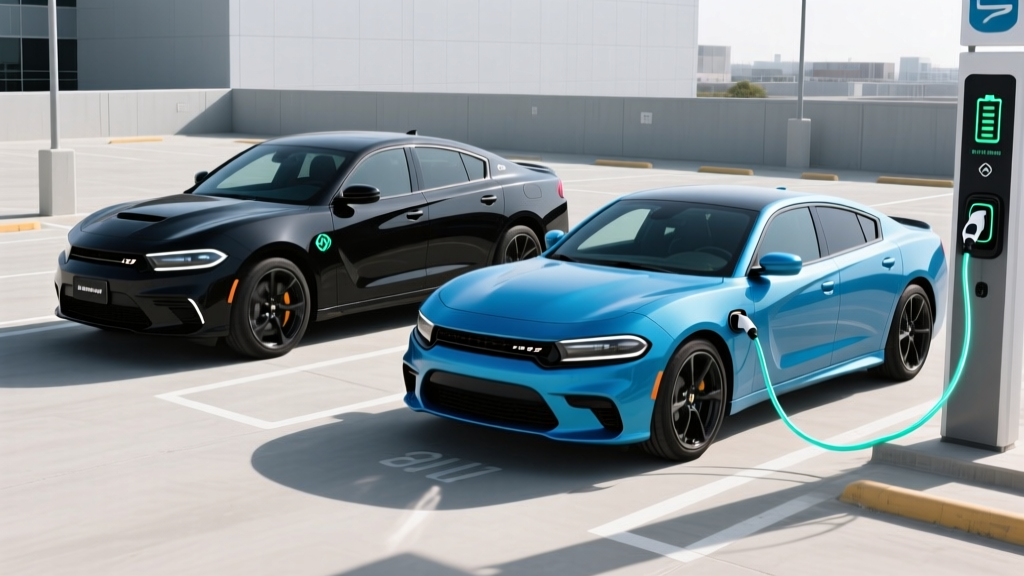
Dodge has never been a hybrid-first brand, and the 2026 model year continues that tradition — but with important nuance. The lineup includes two electrified options that serve very different buyers: the Dodge Hornet R/T Plug-In Hybrid (a compact crossover PHEV carried over with minor updates) and the newly redesigned Dodge Charger Sixpack, which introduces a mild-hybrid system on its twin-turbo inline-six powertrain. Neither is a Prius competitor, and neither pretends to be. But for buyers who want Dodge performance with a measurable efficiency bump, these two vehicles deserve a close look.
This guide breaks down exact EPA fuel economy figures, electric-only range, battery specs, powertrain output, pricing, tax credit eligibility, and real-world ownership considerations for every 2026 Dodge hybrid model.
HEV vs. PHEV: The Critical Distinction
Conventional Hybrid (HEV): The Charger Sixpack uses a 48-volt mild-hybrid system. It cannot plug in. The small battery recovers energy during braking and assists the gas engine during acceleration. You never charge it externally — it manages itself. Expect modest MPG gains (2-4 MPG combined) and smoother stop/start behavior, not electric-only driving.
Plug-In Hybrid (PHEV): The Hornet R/T has a larger 15.5 kWh battery pack and a dedicated electric motor that can propel the vehicle on electricity alone for a limited range. You plug it into a Level 1 (120V) or Level 2 (240V) charger to replenish the battery. Once the electric range depletes, it operates as a conventional hybrid.
2026 Dodge Hornet R/T Plug-In Hybrid: Specs & Real-World Performance
The Hornet R/T PHEV is the most electrified vehicle Dodge currently sells. Built on the same platform as the Alfa Romeo Tonale, it pairs a 1.3-liter turbocharged four-cylinder engine with a rear-axle electric motor for all-wheel drive and legitimate electric-only commuting capability.
| Spec | Value |
|---|---|
| Powertrain | 1.3L turbo I-4 + rear P2 electric motor (AWD) |
| Combined Horsepower | 288 hp / 383 lb-ft torque |
| Battery (usable) | 15.5 kWh (NMC lithium-ion) |
| EPA Electric-Only Range | 32 miles |
| EPA Combined MPGe (EV mode) | 77 MPGe |
| EPA MPG (gas hybrid mode) | 29 city / 29 hwy / 29 combined |
| Total Combined Range | ~380 miles (electric + gas) |
| Level 2 Charge Time (0–100%) | ~2.5 hours at 7.4 kW |
| DC Fast Charging | Not supported |
| 0–60 mph | 5.6 seconds |
| Base MSRP | $41,995 (R/T trim, incl. destination) |
Electric-Only Range: EPA vs. Real World
EPA Electric Range: 32 miles
Real-World Expectation: 24–30 miles in mixed driving. Highway speeds above 65 mph, cold weather below 40°F, and aggressive acceleration will push this toward the low end. In mild city driving with regen braking, some owners report hitting the full 32 miles. This range covers the average American one-way commute (16 miles per the FHWA) with margin, but it's not a 50-mile EV commuter.
The Hornet PHEV does not support DC fast charging. This is typical for PHEVs in this class — the 15.5 kWh battery is small enough that a Level 2 home charger replenishes it fully overnight or during a workday. At 7.4 kW (the onboard charger's max rate), you'll add roughly 12–15 miles of electric range per hour of Level 2 charging. On a standard 120V household outlet (Level 1), expect roughly 4 miles of range per hour, meaning a full charge takes about 8 hours.
2026 Dodge Charger Sixpack: Mild-Hybrid Muscle
The redesigned Charger ditches the HEMI V8 for Stellantis's Hurricane twin-turbo inline-six, available in standard-output (420 hp) and high-output (550 hp) variants. Both versions incorporate a 48-volt mild-hybrid system — but this is fundamentally different from the Hornet's plug-in setup.
| Spec | Value |
|---|---|
| Powertrain | 3.0L twin-turbo I-6 (Hurricane) + 48V mild-hybrid |
| Horsepower | 420 hp (std) / 550 hp (HO) |
| EPA MPG (est., std output) | 19 city / 27 hwy / 22 combined |
| EPA MPG (est., HO) | 16 city / 24 hwy / 19 combined |
| 48V Battery | ~0.5 kWh (not plug-in capable) |
| Electric-Only Driving | Not possible |
| 0–60 mph (HO) | ~3.9 seconds |
| Base MSRP (R/T, std output) | $51,990 |
| Base MSRP (Scat Pack, HO) | $59,990 |
Note: EPA figures for the 2026 Charger Sixpack are preliminary estimates based on pre-production testing. Final EPA-certified numbers may vary. Check fueleconomy.gov for official ratings once published.
The 48V mild-hybrid system provides three benefits: it enables a smoother engine stop/start function (eliminating the jarring restart common in non-hybrid vehicles), adds brief torque fill during hard acceleration, and recovers a small amount of energy during deceleration. It does not provide electric-only propulsion, and you cannot plug it in. The MPG improvement over a non-hybrid equivalent is typically 1–3 MPG combined — meaningful on a long highway trip, invisible on the spec sheet.
Fuel Economy Breakdown: EPA Numbers vs. Real-World MPG
| Model | City MPG | Hwy MPG | Combined MPG | EV Range |
|---|---|---|---|---|
| Hornet R/T PHEV (gas mode) | 29 | 29 | 29 | 32 mi |
| Charger Sixpack (std) | 19 | 27 | 22 | N/A |
| Charger Sixpack HO | 16 | 24 | 19 | N/A |
Real-world MPG notes for the Hornet PHEV: Hybrids often exceed their EPA city rating in stop-and-go traffic because regenerative braking recovers energy that gas cars waste as heat. Expect 31–34 MPG in urban driving if you're not regularly plugging in. Highway MPG tends to run 1–2 MPG below the EPA sticker at sustained 75+ mph speeds. If you charge daily and your commute falls within the 32-mile electric range, your actual gasoline consumption could drop to near zero on weekdays — making the effective cost-per-mile dramatically lower than the combined MPG suggests.
Real-world notes for the Charger Sixpack: The mild-hybrid system won't transform your fuel bill. In aggressive driving (this is a 420–550 hp muscle car, after all), expect 15–18 MPG combined. Highway cruising at 70 mph with the standard-output engine is where you'll see the best numbers, potentially touching 28–29 MPG on flat terrain.
Battery Warranty, Longevity, and Replacement Cost
Battery Warranty Coverage
Hornet PHEV High-Voltage Battery: 8 years / 100,000 miles (10 years / 150,000 miles in CARB states including CA, NY, MA, and others adopting California emissions standards). Warranty covers defects and capacity loss below 70% of original capacity.
Charger Sixpack 48V Battery: 8 years / 100,000 miles. This is a small, relatively inexpensive component compared to a full EV or PHEV traction battery.
Source: Dodge official warranty documentation and Stellantis powertrain coverage terms.
How Long Will the Hybrid Battery Last?
PHEV and HEV batteries from major manufacturers have demonstrated strong longevity in real-world data. Toyota's hybrid batteries routinely exceed 150,000 miles with less than 15% degradation. Stellantis's PHEV platform (shared with the Alfa Romeo Tonale and Jeep Wrangler 4xe) is newer, so long-term data is more limited — but the NMC chemistry and active thermal management system are engineered for a 10–15 year service life under normal use.
Battery Replacement Cost
If the Hornet PHEV's high-voltage battery requires replacement outside warranty, expect a parts-and-labor cost between $6,500 and $9,000 based on current Stellantis PHEV battery pricing. The Charger Sixpack's 48V battery is significantly cheaper to replace — typically $800 to $1,500 — because it's a small, low-voltage unit similar in concept to a conventional 12V starter battery but at higher voltage.
For context, hybrid battery failure before 100,000 miles is statistically rare. The NHTSA and consumer complaint databases show very low failure rates for modern lithium-ion hybrid packs with active thermal management.
Pricing, Tax Credits, and Total Cost of Ownership
| Model / Trim | MSRP | §30D Federal Credit | Effective Price |
|---|---|---|---|
| Hornet R/T PHEV | $41,995 | $3,750 (partial)* | ~$38,245 |
| Charger Sixpack R/T | $51,990 | $0 (mild hybrid) | $51,990 |
| Charger Sixpack Scat Pack | $59,990 | $0 (mild hybrid) | $59,990 |
*Hornet PHEV tax credit detail: Under current IRS §30D rules, the Hornet PHEV qualifies for a partial credit. The credit amount depends on critical-mineral sourcing and battery-component manufacturing requirements, which phase in stricter thresholds each year. For 2026, vehicles must meet both critical-mineral and battery-component sourcing thresholds to receive the full $7,500. The Hornet PHEV's battery sourcing currently qualifies for the $3,750 battery-component half of the credit. This is subject to change — always verify current eligibility on IRS.gov before purchase. Additionally, buyer income caps apply ($150K single / $300K joint AGI), and the credit can now be transferred to the dealer as a point-of-sale discount.
The Charger Sixpack does not qualify for any federal EV tax credit. Mild-hybrid vehicles (48V systems without plug-in capability) are not eligible under §30D. They are classified as conventional internal-combustion vehicles by the IRS for credit purposes.
State Incentives
Several states offer additional rebates or HOV-lane access for PHEVs. California's CVRP program, Colorado's innovative motor vehicle credit, and New York's Drive Clean rebate may provide $1,000–$2,000 additional savings on the Hornet PHEV. Check your state's energy office or DMV for current programs — these vary by jurisdiction and funding availability.
Who Should Buy a 2026 Dodge Hybrid?
Hornet R/T PHEV — Pros
- 32 miles electric covers most daily commutes gas-free
- 288 hp / 383 lb-ft is genuinely quick for a compact crossover
- No range anxiety — gas engine provides 380+ total miles
- Partial federal tax credit reduces effective price
- AWD standard via rear electric motor
Hornet R/T PHEV — Cons
- No DC fast charging — public charging is impractical
- 29 MPG in gas mode is average, not class-leading
- Cargo space reduced vs. gas-only Hornet (~22 cu ft)
- $41,995 starting price is steep for a compact crossover
- Real-world EV range drops to ~24 mi in cold weather
Hybrid vs. PHEV vs. EV — Which Fits You?
Choose the Hornet PHEV if: You have home or workplace Level 2 charging, your daily round-trip commute is under 30 miles, you want to eliminate most weekday gasoline use, but you also take regular road trips where charging infrastructure is uncertain. The PHEV is the bridge vehicle — electric daily, gas when needed.
Choose the Charger Sixpack if: You want muscle-car performance (420–550 hp, sub-4-second 0–60) and accept that fuel economy is a secondary concern. The mild-hybrid system is a refinement upgrade, not an efficiency revolution. This is for the enthusiast who wants the Hurricane I-6's torque curve, not the buyer chasing MPG.
Choose a full EV instead if: You have reliable home charging, your daily driving exceeds 32 miles (making a PHEV's small battery feel limiting), and you want zero tailpipe emissions with lower per-mile energy costs. Vehicles like the Tesla Model Y, Hyundai Ioniq 5, or Ford Mustang Mach-E offer 270–320 miles of range, DC fast charging at 150–250 kW, and full $7,500 tax credit eligibility (model-dependent).
Reliability and Long-Term Ownership
Dodge's parent company Stellantis has faced mixed reliability ratings from Consumer Reports and J.D. Power across its brand portfolio. The Hornet, as a newer model sharing its platform with the Alfa Romeo Tonale, has limited long-term reliability data — though the 1.3L turbo engine and PHEV powertrain have been in production in European-market Stellantis vehicles since 2020, providing a meaningful track record.
The Charger Sixpack's Hurricane inline-six is newer to the market (introduced in 2022 for the Jeep Wagoneer and Grand Cherokee). Early data from those applications shows no systemic powertrain issues, and the 48V mild-hybrid system is mechanically simple compared to full-hybrid or PHEV architectures. The belt-starter-generator design has fewer failure points than earlier mild-hybrid implementations from other manufacturers.
For both models, the hybrid battery warranty (8 years / 100,000 miles minimum, extended in CARB states) provides substantial protection. Routine hybrid-system maintenance is minimal — there are no additional fluid changes or service intervals specific to the hybrid components beyond what the standard powertrain requires.
Frequently Asked Questions
How many MPG does the 2026 Dodge Hornet PHEV get?
The Hornet R/T PHEV achieves an EPA-rated 29 MPG combined (29 city / 29 highway) when operating in hybrid mode after the electric range is depleted. In real-world city driving with regenerative braking, owners often see 31–34 MPG. Highway driving at 75+ mph typically yields 27–28 MPG. When the battery is charged, the first 32 miles use no gasoline at all, making the effective fuel economy for short commutes essentially infinite.
How far can the Dodge Hornet PHEV go on electric only?
The EPA rates the Hornet R/T PHEV at 32 miles of electric-only range. In real-world conditions, expect 24–30 miles depending on temperature, terrain, and driving style. Cold weather (below 40°F) and sustained highway speeds above 65 mph reduce electric range the most. This is sufficient for most daily commutes but not enough for longer errands without engaging the gas engine.
Does the 2026 Dodge Charger Sixpack qualify for a tax credit?
No. The Charger Sixpack's 48-volt mild-hybrid system does not meet the IRS §30D definition of a qualified plug-in electric vehicle. Only vehicles with a plug-in capable battery of at least 7 kWh are eligible. The mild-hybrid system improves refinement and provides minor efficiency gains but does not unlock any federal purchase incentives.
Is the Dodge Hornet PHEV reliable, and what does battery replacement cost?
Long-term reliability data for the Hornet specifically is still accumulating (the model launched for the 2023 model year). The powertrain has been used in other Stellantis products globally since 2020 with no widespread failure patterns. The high-voltage battery is warrantied for 8 years / 100,000 miles (10 years / 150,000 in CARB states). Out-of-warranty replacement is estimated at $6,500–$9,000, though battery failure before 150,000 miles is statistically uncommon for modern NMC packs with thermal management.
Can I DC fast charge the Dodge Hornet PHEV?
No. The Hornet PHEV does not have a DC fast-charge port. It accepts up to 7.4 kW on a Level 2 (240V) AC charger, fully replenishing the 15.5 kWh battery in approximately 2.5 hours. On a standard 120V household outlet, a full charge takes about 8 hours. This is standard for PHEVs — the battery is small enough that overnight Level 1 or Level 2 charging is practical, and DC fast-charging hardware would add cost and weight for minimal benefit.
Should I buy the Hornet PHEV or just get a full EV?
If you have reliable home charging, your daily driving is under 30 miles round-trip, and you take road trips to areas with sparse charging infrastructure, the Hornet PHEV offers the best of both worlds. If you rarely drive more than 250 miles in a day, have home charging, and want lower operating costs with no gasoline dependency, a full EV (like the Tesla Model Y or Hyundai Ioniq 5) will save you more money over 5 years and provide a smoother, quieter driving experience. The PHEV is the pragmatic choice for one-car households that can't yet commit to full electrification.