The Short Answer: It Depends on Which Hybrid You Mean
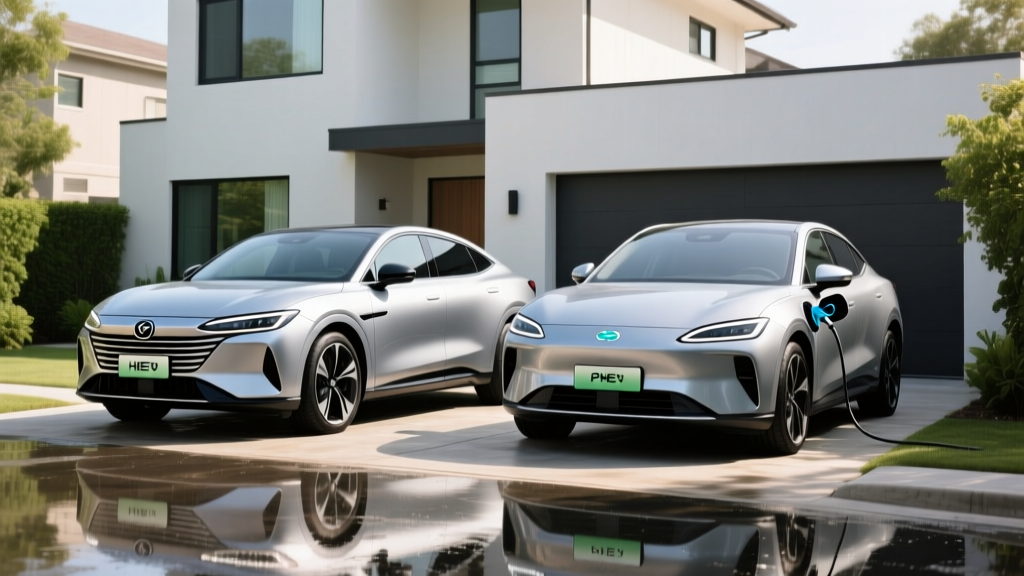
The question "do you have to plug in a hybrid" comes up in nearly every EV-curious conversation — and the answer hinges entirely on which type of hybrid you're talking about. The automotive market in 2026 offers two fundamentally different electrified powertrains that share the "hybrid" label:
- Conventional Hybrid (HEV): No plug required. The battery charges itself through regenerative braking and the gasoline engine.
- Plug-In Hybrid (PHEV): Requires plugging in to unlock its full electric-only range and efficiency potential.
Both use a combination of a gasoline engine and an electric motor, but how they manage energy — and whether you need a garage outlet or a dedicated Level 2 charger — couldn't be more different. Let's break down exactly what each type delivers in real-world driving.
HEV vs PHEV: What's Actually Under the Hood
| Attribute | Conventional Hybrid (HEV) | Plug-In Hybrid (PHEV) |
|---|---|---|
| Plug-in required? | No | Yes (for full benefit) |
| Battery size | 0.5–2.0 kWh | 10–30 kWh (typical 2026 models) |
| Electric-only range | None (motor assists only) | 20–50 miles EPA |
| DC fast charging | No | Rare; most are Level 2 only |
| Level 2 charge time | N/A | 2–5 hours (varies by kWh) |
| Federal tax credit (§30D) | No | Up to $7,500 (if eligible) |
| Typical starting price premium vs gas | $1,000–$3,000 | $4,000–$8,000 |
| Best for | No home charging access | Short commutes + home charging |
A conventional hybrid like the Toyota RAV4 Hybrid uses a small 1.6 kWh nickel-metal hydride battery that never needs external charging. The gasoline engine and regenerative braking keep it topped up. You simply fill up at a gas station and drive — the electric motor assists during acceleration and low-speed operation, cutting fuel consumption without any behavioral change.
A PHEV like the Toyota RAV4 Prime (badged as the RAV4 Plug-In Hybrid for 2026) carries a much larger 18.1 kWh lithium-ion battery. Plug it in overnight on a standard 120V outlet or a 240V Level 2 charger, and you unlock up to 42 miles of pure electric driving before the gas engine ever starts. That covers the average American's one-way commute entirely on electricity.
Fuel Economy: EPA MPG and Real-World Numbers
Fuel economy is where hybrid buyers focus — and where the HEV vs PHEV distinction matters most. Here's how several popular 2026 models stack up, with EPA data sourced from fueleconomy.gov:
| Model (2026) | Type | City MPG | Highway MPG | Combined MPG | EV-Only Range (mi) | Total Range (mi) |
|---|---|---|---|---|---|---|
| Toyota RAV4 Hybrid | HEV | 41 | 38 | 40 | N/A | ~580 |
| Toyota RAV4 Plug-In Hybrid | PHEV | 40 (gas) | 36 (gas) | 38 (gas) / 94 MPGe | 42 | ~600 |
| Honda CR-V Hybrid | HEV | 43 | 36 | 40 | N/A | ~530 |
| Hyundai Tucson Plug-In Hybrid | PHEV | 35 (gas) | 35 (gas) | 35 (gas) / 80 MPGe | 33 | ~440 |
| Toyota Prius | HEV | 57 | 56 | 57 | N/A | ~600 |
| Jeep Wrangler 4xe | PHEV | 20 (gas) | 20 (gas) | 20 (gas) / 49 MPGe | 22 | ~370 |
Real-world MPG note: Conventional hybrids frequently exceed their EPA city estimates in stop-and-go traffic because regenerative braking works hardest at low speeds. On the highway, where the gas engine does most of the work, expect real-world MPG to land 2–5 MPG below the EPA sticker. PHEVs are more variable: if you charge daily and commute within the electric-only range, you may use almost no gasoline for weeks. If you never plug in, a PHEV operates as a heavier, less efficient conventional hybrid — which is why plugging in matters.
Powertrain Specs: How Much Power Are You Getting?
Modern hybrids aren't just about efficiency — many deliver serious performance. Here's a snapshot of combined system output for popular 2026 models:
| Model | Engine | Electric Motor | Combined HP | 0-60 mph | Drivetrain |
|---|---|---|---|---|---|
| Toyota RAV4 Hybrid | 2.5L I4 | Front + rear motors | 219 hp | 7.4 sec | AWD (e-AWD) |
| Toyota RAV4 Plug-In Hybrid | 2.5L I4 | Front + rear motors | 302 hp | 5.7 sec | AWD (e-AWD) |
| Honda CR-V Hybrid | 2.0L I4 | Two front motors | 204 hp | 7.6 sec | FWD / AWD |
| Hyundai Tucson PHEV | 1.6L Turbo I4 | Single front motor | 261 hp | 6.9 sec | AWD |
| Toyota Prius | 2.0L I4 | Front motor | 196 hp | 7.0 sec | FWD / AWD |
The RAV4 Plug-In Hybrid's 302 hp makes it one of the quickest compact SUVs in its class — a direct result of the larger electric motor paired with the bigger battery. This is a pattern across PHEVs: the larger battery enables more aggressive electric assist, which translates to faster acceleration.
Charging a PHEV: What You Actually Need
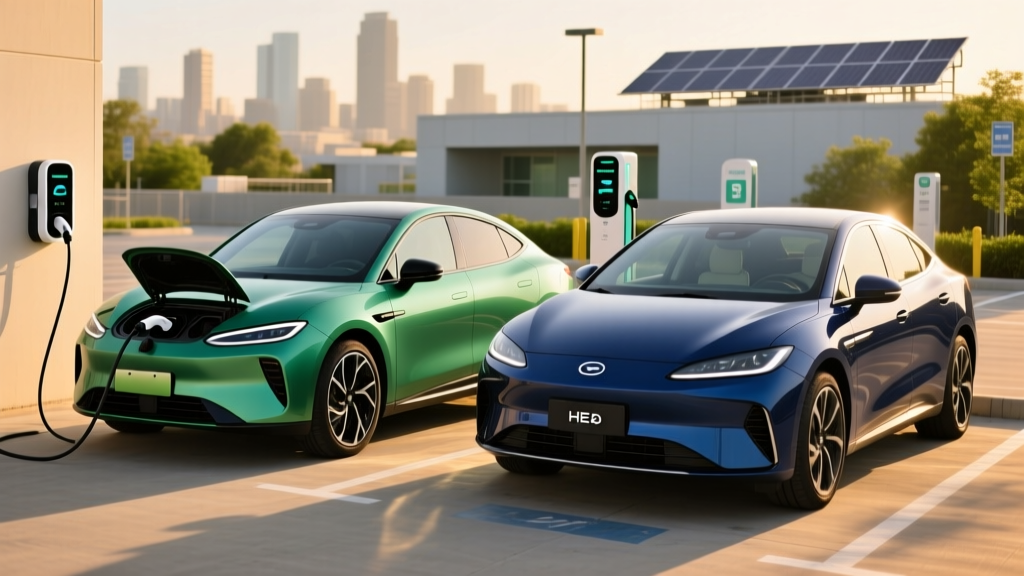
If you choose a PHEV, here's what charging looks like in practice. Most PHEV batteries are small enough that even a standard household outlet works overnight:
| Charging Level | Power (kW) | Connector | Time to Full (typical 18 kWh battery) | Cost to Install |
|---|---|---|---|---|
| Level 1 (120V outlet) | ~1.4 kW | Standard J1772 | 12–14 hours | $0 (use existing outlet) |
| Level 2 (240V) | 3.3–7.2 kW | J1772 or NACS | 2.5–5 hours | $500–$2,000 (electrician + equipment) |
| DC Fast Charging | 50+ kW | CCS / NACS | N/A for most PHEVs* | Public stations only |
*Very few PHEVs support DC fast charging. The Mitsubishi Outlander PHEV is a rare exception, accepting up to 50 kW DC. Most PHEVs — including Toyota, Hyundai, and Jeep models — max out at Level 2 AC charging. Given their small batteries, this is rarely a limitation.
Practical tip: A PHEV with an 18 kWh battery only needs about 15–16 kWh of actual energy to recharge (accounting for the buffer). On a Level 1 outlet delivering ~1.4 kW, that's roughly 11 hours — plug in at 8 PM, and you're full by 7 AM. A Level 2 home charger cuts that to under 3 hours, which is useful if you make multiple short trips throughout the day and want to recharge between drives.
Pricing and Tax Credit Eligibility
Pricing for hybrids and PHEVs varies significantly by trim. Here's a 2026 snapshot of base MSRPs:
- Toyota RAV4 Hybrid: Starting at ~$33,500
- Toyota RAV4 Plug-In Hybrid: Starting at ~$44,500
- Honda CR-V Hybrid: Starting at ~$35,500
- Hyundai Tucson PHEV: Starting at ~$39,500
- Toyota Prius (HEV): Starting at ~$29,000
Federal tax credit for PHEVs (§30D): Plug-in hybrids may qualify for up to $7,500 under the IRS §30D Clean Vehicle Credit, but eligibility is far from guaranteed. The requirements include:
- MSRP cap: SUVs, vans, and pickups must be under $80,000; sedans under $55,000
- Buyer income cap: AGI must not exceed $150,000 (single), $225,000 (head of household), or $300,000 (joint)
- Battery sourcing: Critical minerals and battery components must meet phased-in domestic/free-trade sourcing thresholds (stricter each year through 2026)
- Point-of-sale transfer: As of 2024, eligible buyers can transfer the credit to the dealer for an immediate price reduction at purchase
- Conventional HEVs do NOT qualify for §30D — only plug-in vehicles with at least 7 kWh of battery capacity
Always verify eligibility on fueleconomy.gov and consult a tax professional before relying on credit amounts, as sourcing rules tighten annually and model eligibility can change mid-year.
Battery Reliability, Warranty, and Replacement Costs
Hybrid battery reliability is one of the most well-documented areas in modern automotive ownership. Toyota's hybrid system, now in its fifth generation, has accumulated billions of real-world miles. Failures before 150,000 miles are uncommon.
Battery replacement costs (out of warranty):
- Conventional HEV (e.g., Prius, RAV4 Hybrid): $2,000–$4,000 for the battery pack
- PHEV (e.g., RAV4 Prime, Tucson PHEV): $5,000–$9,000 due to larger capacity
- Refurbished/remanufactured options: 30–50% less than new OEM packs
For context, a conventional hybrid battery replacement at $3,000 is comparable to a major transmission repair on a gas-only vehicle — and hybrid batteries typically outlast the vehicles they're installed in. Data from Consumer Reports consistently ranks Toyota and Lexus hybrids among the most reliable vehicles in their lineup, with the hybrid powertrain adding durability rather than subtracting from it.
Degradation reality: HEV batteries are small and rarely cycled deeply (they operate in a narrow 40–80% state of charge window), which minimizes degradation. PHEV batteries are larger and cycle more, but still far less than a full BEV. Expect 10–15% capacity loss over 10 years in a PHEV — meaning a 33-mile electric range might drop to 28–30 miles after a decade.
HEV vs PHEV vs Full EV: Which Is Right for You?
Choose a Conventional Hybrid (HEV) If:
- You have no access to home or workplace charging
- You want maximum simplicity — no plugs, no apps, no charging planning
- Your budget is tight and you want a $1,000–$3,000 premium over gas
- You frequently take long road trips and don't want to think about range
Choose a Plug-In Hybrid (PHEV) If:
- You can charge at home (even a 120V outlet works overnight)
- Your daily round-trip commute is under 30–40 miles
- You want electric daily driving but gas flexibility for road trips
- You may qualify for the §30D tax credit, narrowing the price gap
Choose a Full EV (BEV) If:
- You have reliable home Level 2 charging
- Your daily driving is under 200 miles and you rarely exceed 300 miles without stopping
- You want the lowest per-mile fuel cost and minimal maintenance
- You qualify for the full $7,500 federal credit and applicable state incentives
The PHEV occupies a specific niche: it's the bridge for buyers who want electric commuting but aren't ready to commit to a full EV due to road-trip needs, apartment living without charging, or cold-climate range concerns. If you can charge at home and your commute is short, a PHEV can operate as an EV 90% of the time while burning zero gas on most days. If you never plug it in, you're carrying hundreds of pounds of dead battery weight and paying a premium for capability you're not using — in that case, a conventional HEV is the smarter buy.
Pros and Cons at a Glance
Pros of Hybrids & PHEVs
- No range anxiety — gas stations everywhere
- HEV requires zero behavior change
- PHEV delivers EV-like commuting with gas backup
- Strong reliability track record (especially Toyota/Honda)
- 8–10 year battery warranty provides peace of mind
- Lower fuel costs vs gas-only equivalents
- Regenerative braking reduces brake wear
Cons of Hybrids & PHEVs
- HEVs do not qualify for federal tax credits
- PHEVs cost $4,000–$8,000 more than gas equivalents
- PHEV electric range is limited (20–50 mi)
- PHEV efficiency drops sharply if you never plug in
- Most PHEVs lack DC fast charging
- Two powertrains = more components that could need service
- Heavier than gas-only counterparts (tire wear, braking distance)
Frequently Asked Questions
Do you have to plug in a hybrid car?
No — if it's a conventional hybrid (HEV) like the Toyota Prius or Honda CR-V Hybrid, you never plug it in. The battery charges through regenerative braking and the gasoline engine. If it's a plug-in hybrid (PHEV) like the RAV4 Plug-In Hybrid or Tucson PHEV, you can drive it without plugging in, but you'll miss the entire electric-only range benefit and operate at reduced efficiency.
How many MPG does a hybrid get?
It varies widely by model. The 2026 Toyota Prius achieves an EPA-estimated 57 MPG combined, while larger hybrid SUVs like the RAV4 Hybrid land around 40 MPG combined. Real-world city driving often exceeds EPA estimates in hybrids due to regenerative braking. Highway MPG tends to run 2–5 MPG below the sticker.
How far can a PHEV go on electric only?
Most 2026 PHEVs deliver between 20 and 50 miles of EPA-rated electric-only range. The RAV4 Plug-In Hybrid leads at 42 miles, while the Hyundai Tucson PHEV offers 33 miles. Cold weather (below 35°F) reduces this by 15–25%. Once the battery depletes, the gas engine takes over seamlessly.
Is a hybrid reliable, and what does battery replacement cost?
Hybrid systems are among the most reliable powertrains on the road, particularly from Toyota and Honda. Federal law mandates an 8-year/100,000-mile battery warranty (10 years/150,000 miles in CARB states). Out-of-warranty replacement runs $2,000–$4,000 for HEVs and $5,000–$9,000 for PHEVs, though many batteries last the life of the vehicle.
Does a hybrid qualify for any tax credit?
Conventional hybrids (HEVs) do not qualify for the federal §30D Clean Vehicle Credit. Plug-in hybrids (PHEVs) may qualify for up to $7,500, subject to MSRP caps ($80,000 for SUVs), buyer income limits, and battery sourcing requirements. Check current eligibility at fueleconomy.gov and consult a tax professional. Some states offer additional rebates for PHEVs — check your state energy office.
Can I charge a PHEV on a regular household outlet?
Yes. All PHEVs come with a Level 1 charging cord that plugs into a standard 120V household outlet. With typical PHEV batteries (10–20 kWh), a full overnight charge takes 8–14 hours — sufficient for daily commuting. A Level 2 (240V) home charger reduces this to 2–5 hours.
What happens if I never plug in my PHEV?
The vehicle will still drive normally using its gasoline engine, functioning as a heavier conventional hybrid. However, you'll get worse fuel economy than a purpose-built HEV because you're carrying 300–500 lbs of battery and electric motor weight without using the electric range. You'll also miss the per-mile cost savings of electricity vs gasoline.