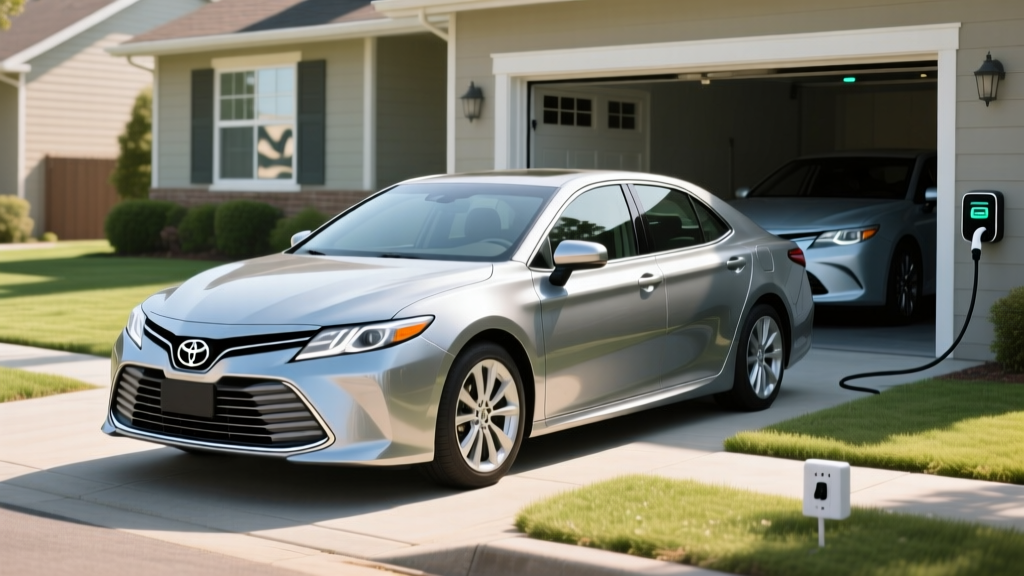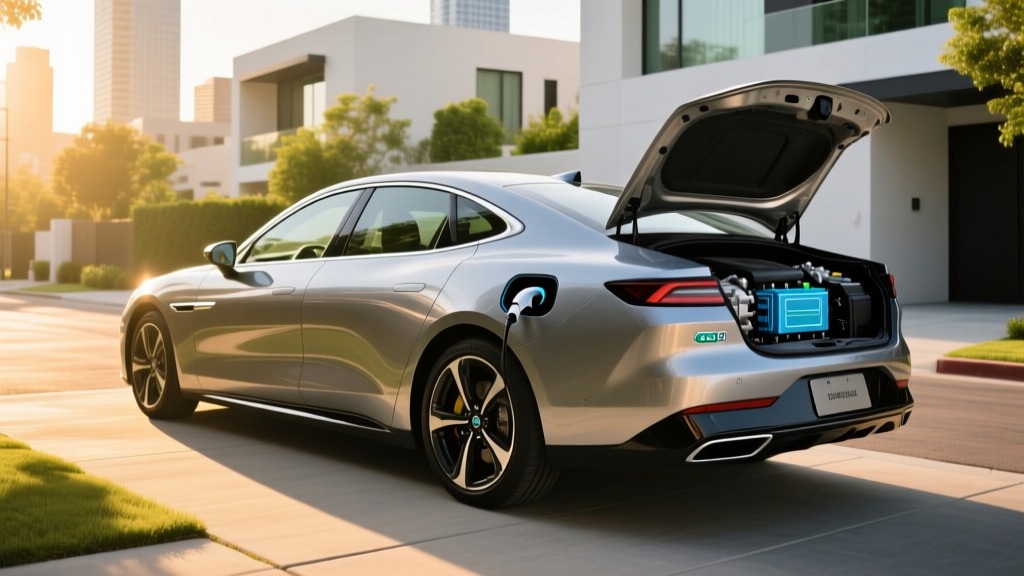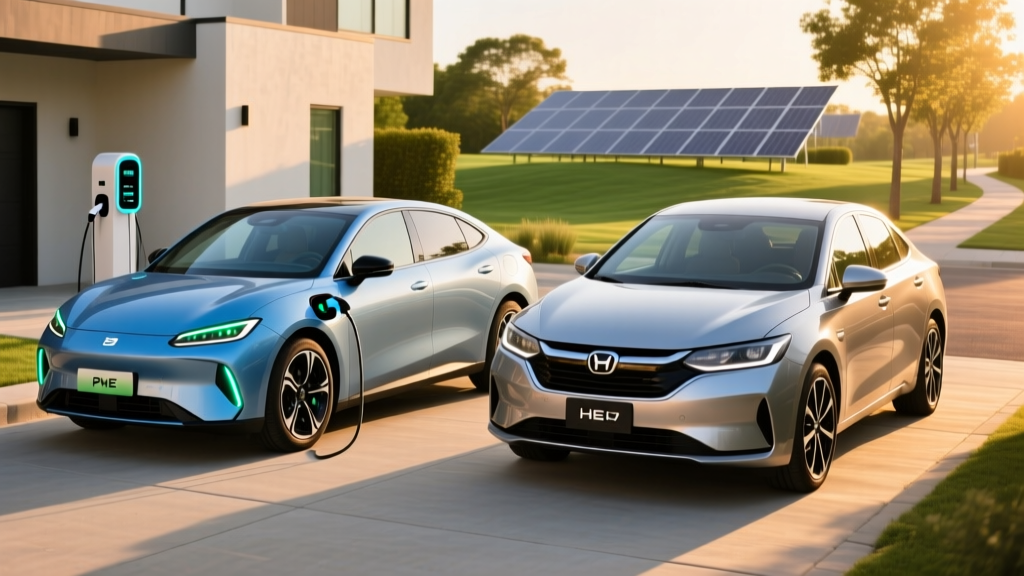
If you've been browsing dealership lots or online configurators lately, you've likely noticed the growing number of electrified options wearing hybrid badges — and wondered: do you have to charge a hybrid car? The answer depends entirely on which type of hybrid you're talking about. The term "hybrid" covers two fundamentally different powertrain architectures, and confusing them is one of the most common mistakes first-time electrified-car buyers make.
In this guide, we'll clarify exactly when plugging in is required, when it's optional, and when it's completely unnecessary — then help you figure out which setup actually fits your driving life in 2026.
The Short Answer: It Depends on the Hybrid Type
There are two kinds of hybrid vehicles sold in the U.S. today, and their charging requirements couldn't be more different:
Conventional Hybrid (HEV)
Do you plug it in? No. Never.
A conventional hybrid generates all its electricity internally through regenerative braking and its gasoline engine. You fuel it like any other car at a gas station. The small battery (typically 1–2 kWh) is never plugged into a wall or charger.
Examples: Toyota Prius, Honda Accord Hybrid, Hyundai Tucson Hybrid, Ford Maverick Hybrid.
Plug-In Hybrid (PHEV)
Do you plug it in? Yes — to unlock its full benefit.
A PHEV has a larger battery (typically 12–25+ kWh) and an electric motor powerful enough to drive the car on electricity alone for a meaningful distance. You plug it in at home or at a public charger to replenish that battery. If you don't plug in, it operates as a conventional hybrid — but you're carrying around dead battery weight and wasting the electric range you paid for.
Examples: Toyota RAV4 Prime, Jeep Wrangler 4xe, Chrysler Pacifica Hybrid, Hyundai Tucson PHEV.
The confusion is understandable. Automakers sometimes market both under the generic "hybrid" umbrella, and some PHEV owners never plug in at all (more on why that's a problem below). Let's dig into the specifics of each type.
How Conventional Hybrids (HEVs) Work Without Plugging In
A conventional hybrid pairs a gasoline engine with one or more electric motors and a small traction battery — usually between 1.0 and 2.0 kWh. The system is entirely self-sustaining. Here's how it keeps the battery charged without ever touching a plug:
- Regenerative braking: When you lift off the accelerator or press the brake, the electric motor reverses direction and acts as a generator, converting kinetic energy back into electricity stored in the battery.
- Engine-driven generation: The gasoline engine can spin a generator to top up the battery when needed, particularly during steady-state cruising.
- Start-stop optimization: The battery powers accessories and launches the car from a stop, allowing the engine to shut off at lights and in traffic — saving fuel without any external power source.
The result is a vehicle that achieves significantly better fuel economy than a gas-only equivalent, with zero change to your fueling routine. You just buy less gas.
Real-World MPG: Hybrids Often Beat the EPA Sticker in the City
One of the most pleasant surprises for new hybrid owners is that real-world city MPG often exceeds the EPA estimate. Because regenerative braking recovers more energy in stop-and-go traffic, urban driving plays to a hybrid's strengths. On the highway, where regen opportunities are fewer and aerodynamic drag dominates, you may see slightly lower numbers than the EPA highway rating.
| Model | City MPG | Highway MPG | Combined MPG | Real-World Expectation |
|---|---|---|---|---|
| 2026 Toyota Prius (LE AWD) | 53 | 54 | 54 | 50–57 (city-biased driving favors higher) |
| 2026 Honda Accord Hybrid | 51 | 44 | 48 | 45–52 (strong city regen) |
| 2026 Hyundai Tucson Hybrid (Blue) | 38 | 38 | 38 | 35–40 |
| 2026 Ford Maverick Hybrid | 42 | 33 | 37 | 34–43 (city-heavy routes shine) |
For context, a comparable gas-only midsize sedan averages around 28–32 MPG combined. The hybrid premium — typically $1,000–$2,500 at purchase — pays for itself in fuel savings within 2–4 years for most drivers covering 12,000+ miles annually.
Plug-In Hybrids (PHEVs): When You Must Plug In
A plug-in hybrid is essentially two cars in one: a short-range electric vehicle for daily commuting and a conventional hybrid for longer trips. The key specs that differentiate a PHEV from an HEV:
| Model | Battery (kWh) | EV Range (mi) | Combined HP | MPG (hybrid mode) | DC Fast Charge |
|---|---|---|---|---|---|
| 2026 Toyota RAV4 Prime | 18.1 | 42 | 302 | 38 | No |
| 2026 Jeep Wrangler 4xe | 17.3 | 22 | 375 | 20 | No |
| 2026 Chrysler Pacifica Hybrid | 16.0 | 32 | 260 | 30 | No |
| 2026 Hyundai Tucson PHEV | 13.8 | 33 | 261 | 35 | No |
A few critical observations from this data:
Electric-Only Range: The Daily Commute Sweet Spot
Most current PHEVs deliver between 22 and 42 miles of electric-only range. For the average American commute of roughly 16 miles each way (per FHWA data), a fully charged PHEV can handle a full day of commuting without burning a drop of gasoline. Once the battery depletes, the vehicle seamlessly transitions to hybrid mode — no range anxiety, no stranded feeling.
Charging Time: What to Expect at Home
Most PHEV batteries fall in the 13–18 kWh range, which means charging is relatively quick compared to a full EV:
- Level 1 (120V household outlet): 5–8 hours for a full charge. Plug in when you get home, wake up to a full battery. This is sufficient for most PHEV owners.
- Level 2 (240V home charger or public station): 2–3 hours for a full charge. Useful if you need a midday top-up or want faster turnaround.
- DC Fast Charging: The vast majority of PHEVs do not support DC fast charging. The batteries are small enough that Level 2 is adequate, and adding DC fast-charge hardware would increase cost and weight. A few older models like the Mitsubishi Outlander PHEV offered CHAdeMO DC charging, but this is increasingly rare in 2026.
The consequence of never plugging in: Some PHEV owners never charge their vehicles, treating them like conventional hybrids. While the car will still function, you're carrying 300–500 lbs of battery you're not using, reducing fuel economy compared to a lighter HEV. Data from the International Council on Clean Transportation (ICCT) has shown that PHEVs driven without regular charging achieve real-world fuel economy significantly below their rated potential — sometimes worse than a comparable HEV.
Hybrid vs PHEV vs EV: Which Fits Your Life?
Choosing between a conventional hybrid, a plug-in hybrid, and a full battery-electric vehicle comes down to three practical factors: your access to charging, your daily mileage, and your road-trip habits.
Choose a Conventional Hybrid (HEV) If:
- You lack access to home or workplace charging (apartment, street parking, no garage)
- You want maximum MPG with zero change to your fueling routine
- Your budget is tighter — HEVs carry a smaller price premium over gas models
- You drive high annual mileage and want proven, simple reliability
Choose a Plug-In Hybrid (PHEV) If:
- You can charge at home (garage or driveway with a 120V or 240V outlet)
- Your daily round-trip commute is under ~40 miles — you'll drive mostly on electricity
- You take road trips several times a year and don't want to plan around public chargers
- You want to reduce gasoline consumption significantly without committing to full electric
Choose a Full EV If:
- You have reliable home Level 2 charging and your daily driving is under ~250 miles
- You want the lowest per-mile fuel cost (electricity is typically $0.03–$0.05/mile vs $0.10–$0.15/mile for gas)
- You're ready to plan longer road trips around DC fast-charging stops
- You want zero tailpipe emissions and minimal maintenance (no oil changes, fewer moving parts)
Pricing, Tax Credits, and the Incentive Landscape
The financial picture for hybrids and PHEVs in 2026 requires careful attention to the details — particularly because the federal tax credit landscape has shifted significantly.
Conventional Hybrids: No Federal Tax Credit
Standard HEVs like the Prius, Accord Hybrid, and Maverick Hybrid do not qualify for the federal §30D clean vehicle tax credit. That credit is reserved for plug-in vehicles with battery capacities above 7 kWh. Some states and local utilities offer modest rebates for hybrids, but these vary widely by jurisdiction — check your state energy office and local utility for specifics.
PHEVs: Federal Credit Eligibility Is Complex
Qualifying PHEVs may be eligible for up to $7,500 under the IRS §30D Clean Vehicle Credit, but eligibility hinges on several requirements that eliminate many models:
- MSRP caps: Vans, SUVs, and pickup trucks must be under $80,000 MSRP; sedans and other body styles under $55,000.
- Buyer income limits: Modified adjusted gross income must not exceed $300,000 (joint filers), $225,000 (head of household), or $150,000 (single).
- Battery sourcing requirements: Increasingly strict critical-mineral and battery-component sourcing rules phase out vehicles with supply chains tied to certain foreign entities of concern. This has disqualified several popular PHEVs for 2026.
- North American final assembly: The vehicle must undergo final assembly in North America.
- Point-of-sale transfer: As of 2024, you can transfer the credit to the dealer at purchase, reducing your out-of-pocket cost immediately rather than waiting for a tax refund.
As a rough price guide, popular PHEVs in 2026 start in the $36,000–$46,000 range (before credits), while their HEV counterparts typically run $28,000–$38,000. The PHEV premium of $5,000–$8,000 can be partially or fully offset by the tax credit if you qualify — making the PHEV a compelling value proposition for eligible buyers with home charging.
Battery Reliability, Warranties, and Replacement Costs
Battery longevity is consistently the top concern among hybrid buyers, and it's an area where the data is reassuring. Hybrid battery technology has matured significantly since the first Prius launched in the U.S. over two decades ago.
Hybrid Battery Warranty Standards (2026 Models)
Federal emissions regulations require hybrid and PHEV batteries to carry a minimum warranty of 8 years/100,000 miles (10 years/150,000 miles in California Air Resources Board states). Most manufacturers meet or exceed this baseline:
- Toyota: 10 years / 150,000 miles (hybrid battery, all 50 states)
- Hyundai/Kia: 10 years / 100,000 miles (original owner); coverage may differ for subsequent owners
- Honda: 8 years / 100,000 miles (10/150k in CARB states)
- Ford: 8 years / 100,000 miles
The warranty covers battery capacity falling below a defined threshold — typically 60–70% of original capacity — not just total failure.
Real-World Battery Lifespan Data
Independent fleet data and long-term ownership reports show that modern hybrid batteries routinely last 150,000–200,000+ miles before significant degradation. Nickel-metal hydride (NiMH) batteries in older HEVs have demonstrated remarkable longevity, while the lithium-ion packs in modern PHEVs benefit from sophisticated thermal management systems that prevent the extreme heat and cold exposure that accelerates degradation.
Key factors that extend hybrid battery life:
- Shallow cycling: HEV batteries rarely discharge below 40% or charge above 80% state of charge — the system manages this automatically. This shallow depth of discharge dramatically extends cycle life.
- Thermal management: Most modern hybrids use active air or liquid cooling to keep battery temperatures in the optimal 20–35°C range.
- Conservative power limits: Hybrid systems limit maximum charge and discharge rates to protect cell health.
Battery Replacement Cost: The Worst-Case Scenario
If your hybrid battery does fail outside of warranty, replacement costs in 2026 typically fall in these ranges:
- Conventional HEV (Prius, Accord Hybrid): $2,000–$4,000 for a new OEM battery pack; $1,000–$2,000 for a refurbished/remanufactured unit
- PHEV (RAV4 Prime, Wrangler 4xe): $6,000–$10,000+ for a new OEM battery pack, reflecting the larger capacity
Independent hybrid specialists and refurbished battery providers have driven costs down considerably. In practice, the percentage of hybrid owners who ever need a battery replacement remains low — well under 5% based on long-term reliability surveys.
Who Should Buy a Hybrid in 2026 — and Who Shouldn't?
✓ A Hybrid Is Right for You If:
- You want lower fuel costs without any lifestyle change (HEV)
- You lack home charging access but want better MPG (HEV)
- You want to reduce gas consumption and have home charging, but take frequent long road trips (PHEV)
- You live in a cold climate where EV range loss is a concern (hybrids are less affected)
- You want proven reliability with decades of real-world track record
- You're not ready to commit to EV charging infrastructure planning
✗ Look at a Full EV Instead If:
- You have home Level 2 charging and a predictable daily commute under 200 miles
- You want the lowest possible per-mile operating cost
- You want zero tailpipe emissions (hybrids still burn gasoline)
- You want minimal maintenance — no oil changes, no spark plugs, fewer fluids
- You're eligible for the full $7,500 federal credit on a qualifying EV
- You find the idea of regenerative one-pedal driving appealing
Frequently Asked Questions
Do you have to charge a hybrid car?
It depends on the type. A conventional hybrid (HEV) like the Toyota Prius or Honda Accord Hybrid never needs to be plugged in — it charges its own small battery through regenerative braking and the gasoline engine. A plug-in hybrid (PHEV) like the RAV4 Prime or Wrangler 4xe should be plugged in to take advantage of its electric-only range, but will still function as a regular hybrid if you don't charge it.
What happens if I never plug in my PHEV?
The car will still drive normally — it simply operates in hybrid mode, using the gasoline engine and regenerative braking just like an HEV. However, you'll get worse fuel economy than a dedicated HEV because you're hauling the extra weight of a large battery you're not using. You'll also miss out on the cost savings of electric driving and the environmental benefit. If you can't commit to regular charging, a conventional HEV is a better purchase.
How long do hybrid batteries last?
Modern hybrid batteries are designed to last the life of the vehicle. Real-world data shows most last 150,000–200,000+ miles. Federal law mandates a minimum warranty of 8 years/100,000 miles, and many manufacturers offer 10 years/150,000 miles. Battery failure rates within the warranty period are very low — typically under 5%.
How much does it cost to replace a hybrid battery?
For a conventional HEV, expect $2,000–$4,000 for a new OEM battery or $1,000–$2,000 for a refurbished unit. PHEV batteries are larger and cost more: $6,000–$10,000+. However, the vast majority of hybrid owners never need a battery replacement. The warranty covers premature degradation in most cases.
Do hybrids qualify for a federal tax credit?
Conventional hybrids (HEVs) do not qualify for the federal §30D Clean Vehicle Credit. Qualifying plug-in hybrids (PHEVs) may be eligible for up to $7,500, but eligibility depends on MSRP caps, buyer income limits, battery sourcing requirements, and North American assembly rules. Check fueleconomy.gov for current qualifying vehicles and consult a tax professional for your specific situation.
Can I use a regular household outlet to charge a PHEV?
Yes. Level 1 charging on a standard 120V household outlet will fully recharge most PHEV batteries in 5–8 hours — plug in when you get home and the battery will be full by morning. Because PHEV batteries are relatively small (13–18 kWh), Level 1 is often sufficient and avoids the $500–$2,000 cost of installing a dedicated 240V Level 2 circuit.
Is a hybrid better than a gas car in 2026?
For most buyers, yes — the fuel savings are substantial (30–50% improvement in MPG), the price premium has narrowed to $1,000–$2,500, and long-term reliability data is excellent. The payback period is typically 2–4 years at current fuel prices. If you drive 12,000+ miles per year, a hybrid almost always saves money over a gas-only equivalent within the ownership period.