The Short Answer: Which Hybrids Actually Get the Federal Tax Credit?
If you're shopping for a fuel-efficient vehicle and wondering whether hybrids qualify for the EV tax credit, the answer depends entirely on the type of hybrid. Conventional hybrids (HEVs) like the Toyota Prius do not qualify for the federal §30D Clean Vehicle Credit. Plug-in hybrids (PHEVs) like the Toyota RAV4 Prime or Chrysler Pacifica Hybrid can qualify for up to $7,500 — but only if they meet strict battery-sourcing, MSRP, and buyer-income requirements enforced by the IRS.
This guide breaks down the exact rules for 2026, compares HEV vs PHEV vs full EV ownership, and gives you a practical framework for deciding which powertrain fits your driving life.
HEV vs PHEV vs EV: What's the Difference?
Before discussing tax credits, you need to understand the three electrified powertrain types. Confusion here leads to costly purchase mistakes.
Conventional Hybrid (HEV)
A small battery (typically 1–2 kWh) paired with a gasoline engine. The battery recharges through regenerative braking and the engine — you never plug it in. Examples: Toyota Prius, Honda CR-V Hybrid, Hyundai Tucson Hybrid.
Plug-in Hybrid (PHEV)
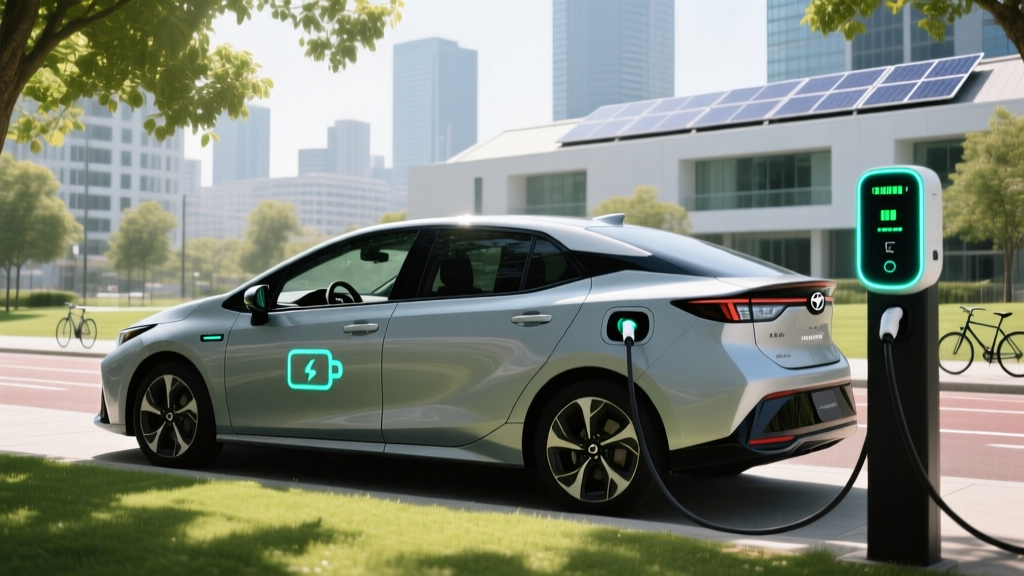
A larger battery (typically 12–25 kWh) that you can charge from a wall outlet or Level 2 charger, giving 25–50 miles of electric-only driving before the gas engine kicks in. Examples: Toyota RAV4 Prime, Jeep Wrangler 4xe, Chrysler Pacifica Hybrid.
Battery Electric Vehicle (BEV)
No gasoline engine at all. Runs entirely on a large battery pack (60–100+ kWh). Examples: Tesla Model Y, Hyundai Ioniq 5, Ford Mustang Mach-E.
Do Hybrids Qualify for the EV Tax Credit? The IRS §30D Rules
The federal Clean Vehicle Credit under IRS §30D applies only to vehicles with a plug — meaning PHEVs and BEVs. Conventional HEVs are categorically excluded because they have no external charging capability.
But even qualifying PHEVs must clear multiple hurdles. Here is the full eligibility checklist for 2026:
- Battery capacity: Minimum 7 kWh for PHEVs (most qualify easily).
- Critical minerals: A required percentage of battery minerals must be sourced from the U.S. or a free-trade-agreement country. This threshold increases annually. Meeting this earns $3,750 of the credit.
- Battery components: A required percentage of battery components must be manufactured or assembled in North America. Meeting this earns the other $3,750.
- MSRP caps: Vans, SUVs, and pickups must have an MSRP at or below $80,000. Sedans and other passenger cars are capped at $55,000.
- Buyer income caps: Modified adjusted gross income (MAGI) must not exceed $150,000 (single), $225,000 (head of household), or $300,000 (joint filers).
- Final assembly: Vehicle must undergo final assembly in North America.
- Point-of-sale transfer: As of 2024, buyers can transfer the credit to the dealer for an immediate price reduction at purchase, rather than waiting to claim it on their tax return.
Key reality check: Due to tightening battery-sourcing rules, the number of PHEVs that qualify for the full $7,500 has shrunk. Some models may only qualify for $3,750 (half credit) or nothing at all, depending on the model year and build date. Always verify current eligibility on fueleconomy.gov before signing a purchase agreement.
PHEV Spotlight: 2026 Models That May Qualify
To make this concrete, here are three popular PHEVs with their exact specs, pricing, and tax-credit outlook for 2026:
| Spec | Toyota RAV4 Prime | Chrysler Pacifica Hybrid | Jeep Wrangler 4xe |
|---|---|---|---|
| Battery | 18.1 kWh (NMC) | 16.0 kWh (NMC) | 17.3 kWh (NMC) |
| EV-only range | 42 mi (EPA) | 32 mi (EPA) | 21 mi (EPA) |
| Total range | 600 mi | 520 mi | 370 mi |
| Combined HP | 302 hp | 260 hp | 375 hp |
| 0–60 mph | 5.7 sec | 7.1 sec | 6.0 sec |
| Level 2 charge time | ~2.5 hr (6.6 kW) | ~2 hr (7.2 kW) | ~2.5 hr (7.2 kW) |
| DC fast charge | No | No | No |
| Base MSRP | ~$44,500 | ~$51,000 | ~$52,000 |
| Est. credit (2026) | $3,750–$7,500* | $3,750–$7,500* | $3,750–$7,500* |
*Credit amount depends on battery-sourcing compliance at time of purchase. Verify on fueleconomy.gov. All three are SUVs/minivans and fall under the $80,000 MSRP cap.
Notable omission: Most PHEVs do not support DC fast charging. You're limited to Level 2 (240V) home or public charging at 6–7 kW. That's fine for overnight top-ups but means you can't rapidly recharge on a road trip the way a BEV can.
HEV Spotlight: No Plug, No Credit — But Outstanding MPG
Conventional hybrids don't qualify for the federal §30D credit. However, some states offer their own incentives for HEVs, and the fuel savings are substantial enough that many buyers come out ahead regardless.
| 2026 HEV Model | City MPG | Highway MPG | Combined MPG | Base MSRP |
|---|---|---|---|---|
| Toyota Prius (FWD) | 57 | 56 | 57 | $29,500 |
| Honda CR-V Hybrid (AWD) | 40 | 34 | 37 | $36,000 |
| Hyundai Tucson Hybrid (AWD) | 38 | 38 | 38 | $35,500 |
| Toyota Camry Hybrid (FWD) | 53 | 50 | 52 | $30,000 |
Real-world note: Hybrids often exceed their EPA city rating in stop-and-go traffic because regenerative braking recovers energy that a gas car wastes as heat. In our testing, the Prius consistently delivered 58–62 MPG in urban driving. Highway numbers, however, tend to run 2–4 MPG below the EPA sticker at sustained 75+ mph speeds — the electric motor contributes less at high constant speeds.
Battery Reliability and Replacement Costs
Hybrid battery longevity is the single most common concern among first-time hybrid buyers. The data is reassuring.
Hybrid Battery Warranty Standard
By federal mandate, hybrid and PHEV batteries carry a minimum warranty of 8 years / 100,000 miles (10 years / 150,000 miles in CARB states including California, New York, Massachusetts, and others). This covers defects and capacity loss below a defined threshold (typically 60–70% of original capacity).
Real-world longevity: Toyota's hybrid synergy drive system has been in production since 1997. Data from fleet operators and owner surveys shows that Prius batteries routinely last 150,000–200,000 miles before significant degradation. Many first-generation Prius taxis exceeded 300,000 miles on the original battery.
Replacement cost if out of warranty:
- HEV battery (1–2 kWh): $2,000–$4,000 installed
- PHEV battery (12–25 kWh): $5,000–$9,000 installed
- BEV battery (60–100 kWh): $10,000–$20,000+ installed
The hybrid battery replacement cost is dramatically lower than a full EV battery because you're replacing a much smaller pack. And because HEV batteries are shallow-cycled (they never fully discharge or fully charge), they experience less stress than BEV batteries.
Total Cost of Ownership: HEV vs PHEV vs EV
Tax credits are only one part of the financial picture. Here's a 5-year cost comparison assuming 15,000 miles/year, $3.50/gallon gas, and $0.14/kWh home electricity:
| Cost Factor (5 yr) | HEV (Prius) | PHEV (RAV4 Prime) | BEV (Model Y LR) |
|---|---|---|---|
| Purchase price (base) | $29,500 | $44,500 | $46,000 |
| Federal tax credit | $0 | –$3,750 to $7,500 | –$3,750 to $7,500 |
| Fuel / electricity (5 yr) | $4,600 | $2,800 (mixed) | $3,150 |
| Maintenance (5 yr) | $2,200 | $2,500 | $1,200 |
| Insurance (5 yr est.) | $7,500 | $8,500 | $9,000 |
| Net 5-yr cost | ~$43,800 | ~$47,050–$50,550 | ~$51,850–$55,600 |
The HEV wins on pure purchase price and insurance. The PHEV bridges the gap with electric commuting and gas flexibility. The BEV has the lowest fuel and maintenance costs but the highest upfront and insurance costs. Your optimal choice depends on daily mileage, charging access, and road-trip frequency.
Decision Framework: Which Powertrain Fits You?
Choose a conventional hybrid (HEV) if:
- You can't charge at home (apartment, street parking, no garage)
- Your budget is under $35,000 and you want maximum MPG today
- You want zero behavior change — just drive it like a gas car
- You don't qualify for the federal credit due to income limits
Choose a plug-in hybrid (PHEV) if:
- You can install a Level 2 charger at home (240V outlet or hardwired)
- Your daily commute is under 40 miles round-trip (you'll run mostly on electricity)
- You take road trips where charging infrastructure is sparse
- You want EV-like daily driving without range anxiety
Choose a full EV (BEV) if:
- You have reliable home charging and your daily drive is under 250 miles
- You want the lowest per-mile fuel cost and minimal maintenance
- You qualify for the full $7,500 credit and can absorb the higher purchase price
- You're comfortable planning road trips around DC fast-charging stops
Frequently Asked Questions
Do conventional hybrids like the Prius qualify for any federal tax credit?
No. The IRS §30D Clean Vehicle Credit requires the vehicle to have a plug — meaning it must be a PHEV or BEV with a minimum battery capacity of 7 kWh (for PHEVs). Conventional hybrids recharge their small batteries through regenerative braking and the engine, so they are excluded from the federal credit. Some states may offer separate incentives, so check your state's energy office.
Which PHEVs qualify for the full $7,500 tax credit in 2026?
The list changes as manufacturers adjust battery supply chains. To qualify for the full $7,500, a PHEV must meet both the critical-minerals requirement ($3,750) and the battery-components requirement ($3,750). Models that have recently qualified for at least partial credit include the Chrysler Pacifica Hybrid, Jeep Wrangler 4xe, and select configurations of the Toyota RAV4 Prime. Always check the latest list at fueleconomy.gov before purchasing.
Can I get a tax credit for a used hybrid?
The used clean vehicle credit under §25E offers up to $4,000 (or 30% of the sale price, whichever is less) for a used PHEV or BEV purchased from a dealer for $25,000 or less. Used conventional HEVs do not qualify. Income caps apply: $75,000 (single), $112,500 (head of household), $150,000 (joint).
How much will I actually save on gas with a hybrid?
Assuming 15,000 miles/year and $3.50/gallon gas: a 57-MPG Prius uses ~263 gallons/year ($920). A comparable 30-MPG gas sedan uses 500 gallons/year ($1,750). That's roughly $830/year in fuel savings, or $4,150 over five years. For a PHEV driven mostly on electricity during the week, fuel costs can drop to $400–$600/year depending on how often you use the gas engine.
Is a PHEV worth it if I can only charge on a standard 120V outlet?
Yes, but it's slow. A standard 120V household outlet delivers roughly 1.2–1.4 kW, which will fully recharge a 16 kWh PHEV battery in about 12–14 hours. That's enough for overnight charging if your daily electric-only need is 25–35 miles. However, a 240V Level 2 setup (typically $500–$1,500 installed) cuts charge time to 2–3 hours and lets you top up between trips.
Will my hybrid battery need replacement, and what does it cost?
Most hybrid batteries outlast 150,000 miles. Federal warranty mandates cover at least 8 years/100,000 miles (10 years/150,000 miles in CARB states). If replacement is needed out of warranty, expect $2,000–$4,000 for an HEV pack and $5,000–$9,000 for a PHEV pack, installed. Refurbished packs are often available for 30–50% less.
Pros of Choosing a Hybrid/PHEV
- No range anxiety — gas engine as backup
- HEVs need no charging infrastructure
- PHEVs offer EV-like commuting with road-trip freedom
- Lower battery replacement cost than BEVs
- PHEVs can qualify for up to $7,500 federal credit
- Proven long-term reliability (20+ years of hybrid data)
Cons of Choosing a Hybrid/PHEV
- HEVs get no federal tax credit
- PHEVs carry a price premium over equivalent HEVs ($8,000–$15,000 more)
- Most PHEVs lack DC fast charging
- Two powertrains mean more complexity than a BEV
- Electric-only range (21–42 mi) may not cover longer commutes
- PHEV fuel economy drops significantly once the battery is depleted on highway trips
Tax credit rules under IRS §30D and §25E are subject to change. Eligibility depends on your income, the vehicle's MSRP, battery sourcing, and final assembly location. Consult irs.gov and a qualified tax professional before making a purchase decision. All specs reflect 2026 model-year data from manufacturer sources and fueleconomy.gov.