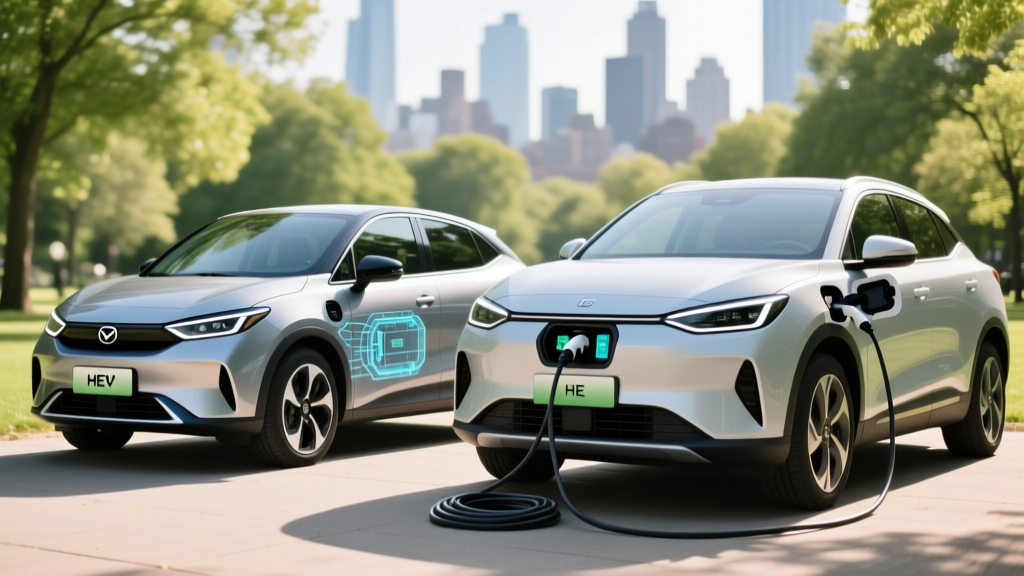
If you're shopping for an electrified vehicle but aren't ready to commit to a full battery-electric car, you've probably encountered two very different acronyms: HEV (hybrid electric vehicle) and PHEV (plug-in hybrid electric vehicle). The most common question we hear from buyers is straightforward: do hybrids need to be plugged in?
The short answer depends entirely on which type of hybrid you choose. A conventional hybrid (HEV) never needs to be plugged in — it generates all its own electricity from regenerative braking and its gasoline engine. A plug-in hybrid (PHEV) can be plugged in to unlock a meaningful electric-only driving range, but it will still operate as a regular hybrid if you never plug it in.
Below, we break down exactly how each system works, what you'll spend on fuel, how the batteries hold up, and which one actually fits your daily driving life.
HEV vs PHEV: The Fundamental Charging Difference
Understanding whether a hybrid needs to be plugged in starts with how the vehicle captures and stores energy.
Conventional Hybrid (HEV)
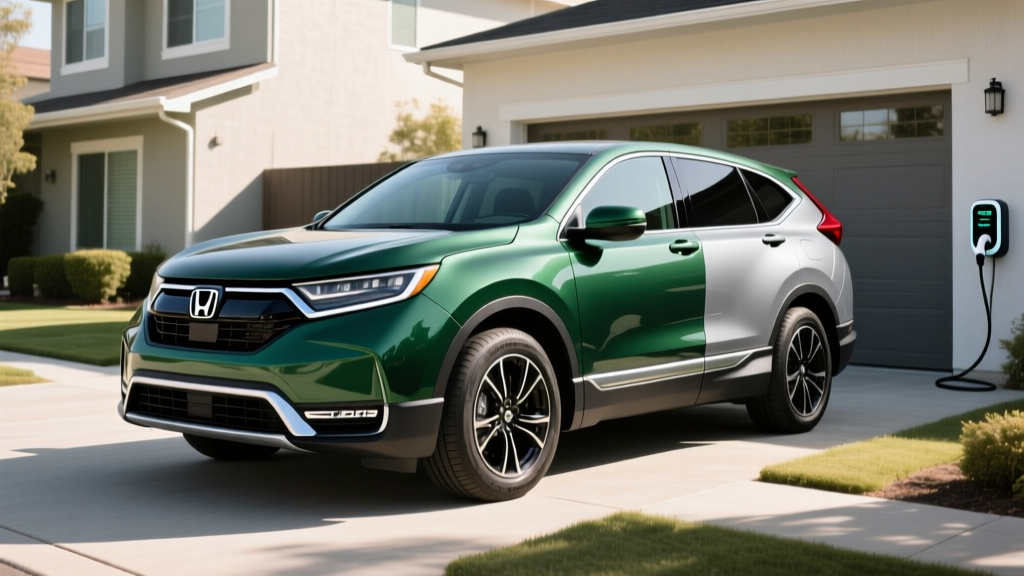
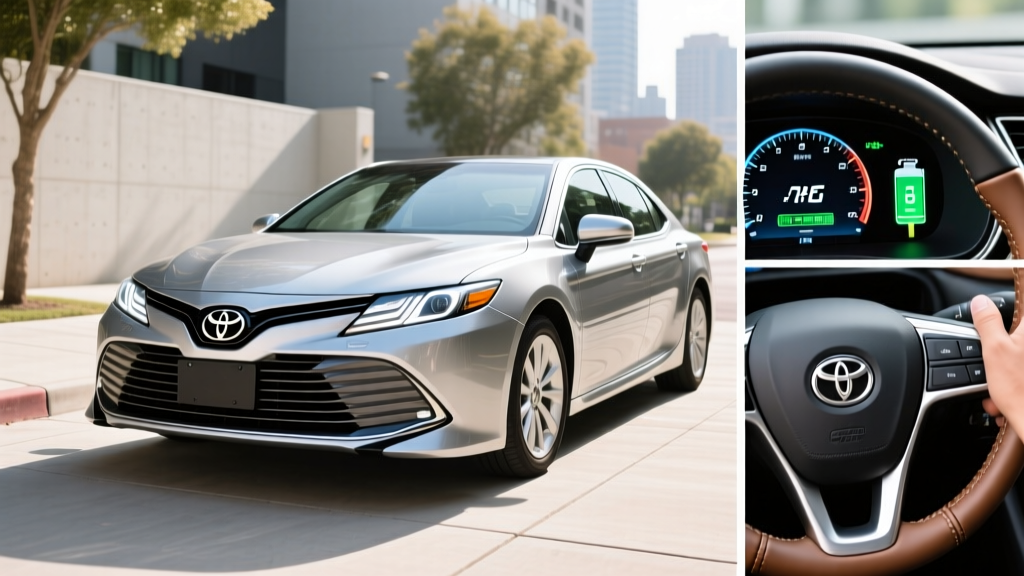
A conventional hybrid like the Toyota Prius or Honda CR-V Hybrid has a small battery pack (typically 0.6–1.6 kWh) that charges exclusively through regenerative braking and the internal combustion engine. You never plug it in. There is no charging port, no cable, and no dependency on the electrical grid. The electric motor assists the gas engine during acceleration and low-speed driving, but the vehicle cannot drive on electricity alone for more than about a mile at very low speeds.
Plug-In Hybrid (PHEV)
A plug-in hybrid like the Toyota RAV4 Prime or Chrysler Pacifica Hybrid carries a much larger battery (typically 13–22 kWh) and comes equipped with a charging port. You can plug it into a standard 120V household outlet (Level 1) or a 240V Level 2 home or public charger to replenish the battery. When fully charged, a PHEV can drive 25–50 miles on electricity alone before the gas engine kicks in. If you never plug it in, it simply operates as a conventional (though heavier and less efficient) hybrid.
The practical takeaway: conventional hybrids are entirely self-charging; plug-in hybrids are optionally plug-in. Neither will leave you stranded if you skip the charger.
How Hybrids Charge Without a Plug
If a conventional hybrid never plugs in, where does its electricity come from? Two sources:
- Regenerative braking: When you lift off the accelerator or press the brake pedal, the electric motor reverses direction and acts as a generator, converting kinetic energy back into electrical energy stored in the battery. This is the same principle used in full EVs, just applied to a smaller battery.
- Engine-driven generation: The gasoline engine can spin the motor/generator to produce electricity when the battery state of charge drops below a threshold. This happens seamlessly — you won't notice it.
Because the battery in an HEV is small, it charges quickly and frequently throughout a drive cycle. The system's goal isn't to drive on electricity alone for long distances; it's to assist the engine during its least efficient moments (stop-and-go traffic, initial acceleration) and to enable engine-off coasting and low-speed electric creep.
Fuel Economy: EPA MPG for Top 2026 Hybrids and PHEVs
Fuel economy is where both hybrid types earn their keep, but the numbers look very different on paper. Here's a snapshot of popular 2026 models with EPA data from fueleconomy.gov:
| Vehicle | Type | City MPG | Hwy MPG | Combined MPG | EV-Only Range |
|---|---|---|---|---|---|
| Toyota Prius (LE) | HEV | 57 | 56 | 57 | N/A |
| Toyota Prius Prime (SE) | PHEV | — | — | 52 (gas) / 127 MPGe | 44 mi |
| Honda CR-V Hybrid (Sport) | HEV | 43 | 36 | 40 | N/A |
| Toyota RAV4 Prime (SE) | PHEV | — | — | 38 (gas) / 94 MPGe | 42 mi |
| Ford Escape PHEV | PHEV | — | — | 39 (gas) / 105 MPGe | 37 mi |
| Hyundai Tucson Hybrid (Blue) | HEV | 38 | 38 | 38 | N/A |
| Chrysler Pacifica Hybrid | PHEV | — | — | 30 (gas) / 82 MPGe | 32 mi |
Real-World MPG vs. EPA Estimates
One of the most pleasant surprises with conventional hybrids is that real-world city driving often exceeds the EPA city estimate. Because regenerative braking recovers the most energy in stop-and-go traffic, hybrids like the Prius routinely deliver 55–60 MPG in urban commuting. Highway driving is where hybrids lose their advantage somewhat — at steady 70+ mph speeds, the electric motor contributes less and aerodynamic drag dominates. Expect highway MPG to run 2–5 MPG below the EPA sticker in a conventional hybrid.
For PHEVs, the real-world picture depends entirely on your charging habits. If you charge nightly and your commute is under the electric-only range, you might burn zero gasoline for weeks. If you never charge, a PHEV's gas-only MPG is often lower than a comparable HEV because of the extra weight from the larger battery. The RAV4 Prime, for example, returns about 38 MPG combined on gas alone — solid, but below the standard RAV4 Hybrid's 41 MPG combined.
PHEV Electric-Only Range, Battery Size, and Charging Times
If you're considering a plug-in hybrid, the electric-only range is the number that determines whether you can commute gas-free. Here's how the major 2026 PHEVs stack up:
| PHEV Model | Battery (kWh) | EV Range (mi) | Total Range (mi) | L2 Charge Time | DC Fast Charge |
|---|---|---|---|---|---|
| Toyota Prius Prime SE | 13.6 | 44 | ~600+ | ~4.0 hrs (3.3 kW) | No |
| Toyota RAV4 Prime SE | 18.1 | 42 | ~600+ | ~2.5 hrs (6.6 kW) | No |
| Ford Escape PHEV | 14.4 | 37 | ~520 | ~3.5 hrs (3.7 kW) | No |
| Chrysler Pacifica Hybrid | 16.0 | 32 | ~520 | ~2.0 hrs (7.2 kW) | No |
| Jeep Wrangler 4xe | 17.3 | 22 | ~370 | ~2.5 hrs (7.2 kW) | No |
A critical detail most buyers miss: nearly all current PHEVs lack DC fast charging capability. You'll charge at home on a Level 2 (240V) outlet or a standard 120V wall plug. Level 1 charging from a regular outlet typically takes 8–14 hours for a full charge — fine if you park overnight, but impractical for mid-day top-ups. If fast public charging is important to your lifestyle, that's a meaningful advantage full EVs hold over PHEVs.
Powertrain Specs: Engine + Motor Combined Output
Hybrids pair a gasoline engine with one or more electric motors. The combined system horsepower is typically higher than either source alone, and electric torque fills in the low-RPM gap where gas engines are weakest.
Here's a representative look at 2026 powertrain outputs:
- Toyota Prius (HEV): 2.0L 4-cylinder + 2 motor/generators → 196 hp combined. 0–60 mph in ~7.0 seconds.
- Toyota Prius Prime (PHEV): 2.0L 4-cylinder + 2 motor/generators → 220 hp combined. 0–60 mph in ~6.6 seconds.
- Toyota RAV4 Prime (PHEV): 2.5L 4-cylinder + front/rear motors → 302 hp combined. 0–60 mph in ~5.7 seconds. AWD standard.
- Honda CR-V Hybrid (HEV): 2.0L 4-cylinder + 2 motors → 204 hp combined. 0–60 mph in ~7.6 seconds.
- Chrysler Pacifica Hybrid (PHEV): 3.6L V6 + 2 motors → 260 hp combined. 0–60 mph in ~7.0 seconds.
The RAV4 Prime deserves a specific callout: its 302 hp and standard AWD make it one of the quickest compact SUVs on the market, gas or electric. That's the performance upside of a plug-in hybrid's larger battery and more powerful motors.
Pricing, Tax Credits, and the PHEV Advantage
Conventional hybrids carry a modest price premium over their gas-only counterparts — typically $1,500–$3,000. Plug-in hybrids are more expensive, with premiums of $5,000–$10,000 over the gas version due to the larger battery and charging hardware.
| Model (2026) | Base MSRP | Federal Tax Credit | Effective Price |
|---|---|---|---|
| Toyota Prius LE (HEV) | ~$29,500 | $0 | ~$29,500 |
| Toyota Prius Prime SE (PHEV) | ~$34,000 | Up to $3,750* | ~$30,250* |
| Toyota RAV4 Prime SE (PHEV) | ~$44,500 | Up to $3,750* | ~$40,750* |
| Ford Escape PHEV | ~$41,500 | Up to $3,750* | ~$37,750* |
| Honda CR-V Hybrid Sport (HEV) | ~$37,000 | $0 | ~$37,000 |
*Federal tax credit amounts reflect IRS §30D rules for 2026. PHEVs with battery capacities of at least 7 kWh may qualify for partial credits ($3,750 for meeting either the critical-minerals or battery-component requirement, $7,500 for meeting both). Eligibility depends on MSRP caps ($80,000 for SUVs/vans/pickups; $55,000 for sedans), buyer income limits ($150K single / $300K joint for modified AGI), and North American final assembly. Many PHEVs from Japanese and Korean automakers do not meet the full sourcing requirements. Always verify current eligibility with a tax professional or the IRS before purchasing. Credits can be transferred to the dealer as a point-of-sale discount.
Conventional hybrids do not qualify for the federal §30D new clean vehicle credit. Some states offer their own hybrid incentives — check your state energy office or DMV for local programs.
Battery Reliability, Warranty, and Replacement Costs
Hybrid Battery Warranty: The Industry Standard
Under federal emissions regulations, hybrid battery packs are covered for a minimum of 8 years / 100,000 miles. Many manufacturers extend this to 10 years / 150,000 miles in states that follow California Air Resources Board (CARB) standards — which includes 15+ states.
Toyota, Honda, and Hyundai all warranty their hybrid batteries for 10 years / 150,000 miles in CARB states and 8 years / 100,000 miles in non-CARB states.
How Long Do Hybrid Batteries Actually Last?
The data from two decades of Toyota Prius taxis, Uber vehicles, and high-mileage commuters tells a reassuring story: most hybrid batteries last 150,000–250,000 miles before significant capacity loss. The battery management system in an HEV keeps the state of charge in a narrow middle band (typically 40–80%), which dramatically reduces stress on the cells. Unlike full EVs that regularly charge to 100% and discharge to near-zero, hybrid batteries are babied by design.
PHEV batteries see slightly more stress because they cycle through deeper charge/discharge ranges to deliver their electric-only miles. Even so, reports of premature PHEV battery failure are rare in current-generation models.
Battery Replacement Cost
If your hybrid battery does eventually fail out of warranty, replacement costs vary significantly by model:
- Toyota Prius (HEV): $2,000–$3,500 for a new OEM pack; refurbished packs available for $1,000–$2,000.
- Toyota RAV4 Prime (PHEV): $6,000–$9,000 (larger battery pack).
- Chrysler Pacifica Hybrid (PHEV): $7,000–$10,000.
- Honda CR-V Hybrid (HEV): $2,500–$4,000.
The smaller batteries in conventional HEVs are meaningfully cheaper to replace than the larger packs in PHEVs — another factor to weigh if you plan to keep the vehicle past the warranty period.
Hybrid vs PHEV vs Full EV: Which Should You Choose?
Choose a Conventional Hybrid (HEV) If:
- You cannot charge at home (apartment, street parking, no garage outlet)
- You want maximum MPG with zero behavior change
- Your budget is tighter and you don't want to pay the PHEV premium
- You take frequent long road trips and want the simplest, lightest solution
- You plan to keep the car 10+ years and want the cheapest out-of-warranty battery replacement
Choose a Plug-In Hybrid (PHEV) If:
- You can charge at home (Level 1 or Level 2) every night
- Your daily commute is under 30–45 miles round-trip
- You want to drive mostly on electricity but need gas for weekend road trips
- You want the performance boost of a larger electric motor (e.g., RAV4 Prime's 302 hp)
- You want to partially qualify for a federal tax credit
Choose a Full EV (BEV) If:
- You have reliable home Level 2 charging and access to DC fast chargers for road trips
- You want zero tailpipe emissions and minimal maintenance (no oil changes, no spark plugs)
- You want the maximum federal tax credit ($7,500 on qualifying models)
- Your daily driving is under 250 miles and you're comfortable planning road-trip charging stops
- You want the lowest cost-per-mile for fuel (electricity vs. gasoline)
Frequently Asked Questions
Do I need a special charger for a plug-in hybrid?
No. All PHEVs sold in the U.S. use the standard J1772 connector for Level 1 (120V) and Level 2 (240V) charging. You can plug into any standard household outlet for overnight charging, though it will take 8–14 hours for a full charge. A dedicated 240V Level 2 home charger reduces that to 2–4 hours and typically costs $500–$1,500 installed. No PHEV currently supports DC fast charging, so you won't use public CCS or NACS fast chargers.
What happens if I never plug in my PHEV?
The vehicle will operate as a conventional hybrid, using the gasoline engine and regenerative braking to manage the battery. However, you'll get worse fuel economy than a dedicated HEV because you're carrying the dead weight of a large battery you're not utilizing. A PHEV that never plugs in is a less efficient, more expensive hybrid.
How many MPG does a hybrid really get in everyday driving?
For conventional hybrids like the Toyota Prius, real-world city driving often matches or exceeds the EPA city estimate of 57 MPG because regenerative braking thrives in stop-and-go conditions. Highway driving at 70+ mph typically yields 50–54 MPG — a few MPG below the EPA highway sticker. For PHEVs in charge-sustaining (gas-only) mode, expect 30–40 MPG combined depending on the model, which is lower than a purpose-built HEV.
Is a hybrid battery expensive to replace?
For conventional HEVs, replacement runs $2,000–$4,000 out of warranty. For PHEVs with larger packs, expect $6,000–$10,000. However, hybrid batteries are designed to last 150,000+ miles, and the vast majority of owners will never need a replacement. The 8-year/100,000-mile minimum warranty (10 years/150,000 miles in CARB states) provides substantial coverage.
Do hybrids qualify for any tax credits in 2026?
Conventional hybrids (HEVs) do not qualify for the federal §30D new clean vehicle credit. Plug-in hybrids (PHEVs) with battery capacities of at least 7 kWh may qualify for a partial credit of $3,750 or $7,500, depending on whether the vehicle meets critical-mineral and battery-component sourcing requirements, MSRP caps, and buyer income limits. Many popular PHEVs from Toyota and Honda currently qualify for $3,750 (partial credit). Always check the latest IRS guidance and consult a tax professional before relying on credit eligibility.
Can I tow with a hybrid or PHEV?
Yes, but capacity varies. The RAV4 Prime can tow up to 1,500 lbs. The Chrysler Pacifica Hybrid can tow up to 3,600 lbs. The standard RAV4 Hybrid is rated for 1,750 lbs. Towing significantly reduces fuel economy in any hybrid, and in a PHEV it will deplete the electric range faster. For heavy towing (5,000+ lbs), most buyers still look to body-on-frame trucks and SUVs, where hybrid options remain limited.