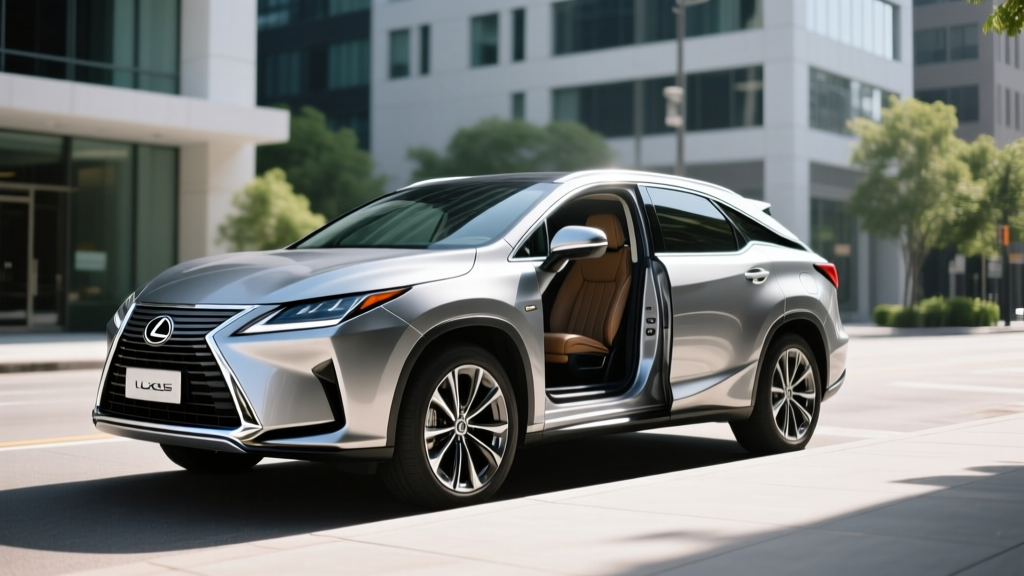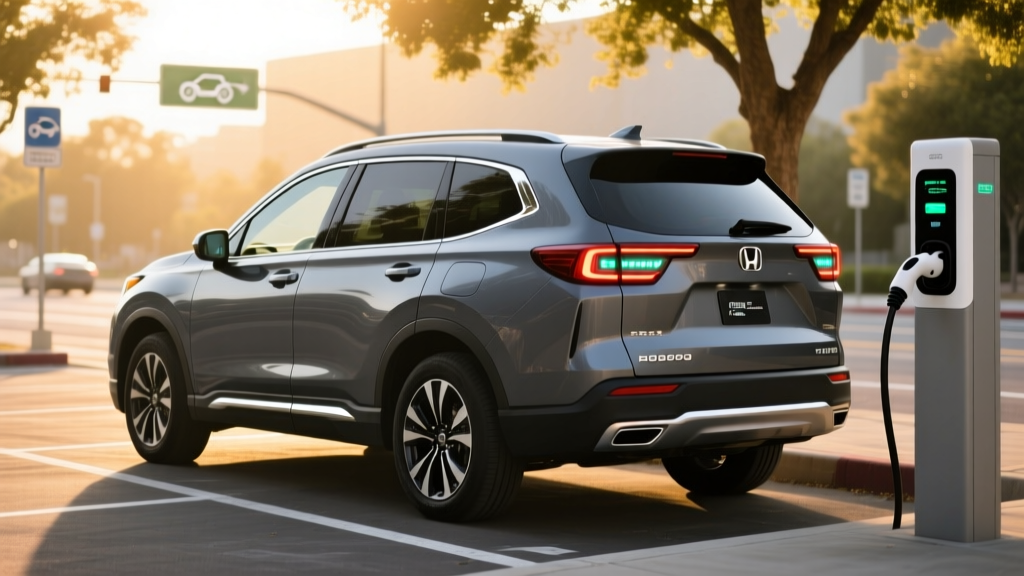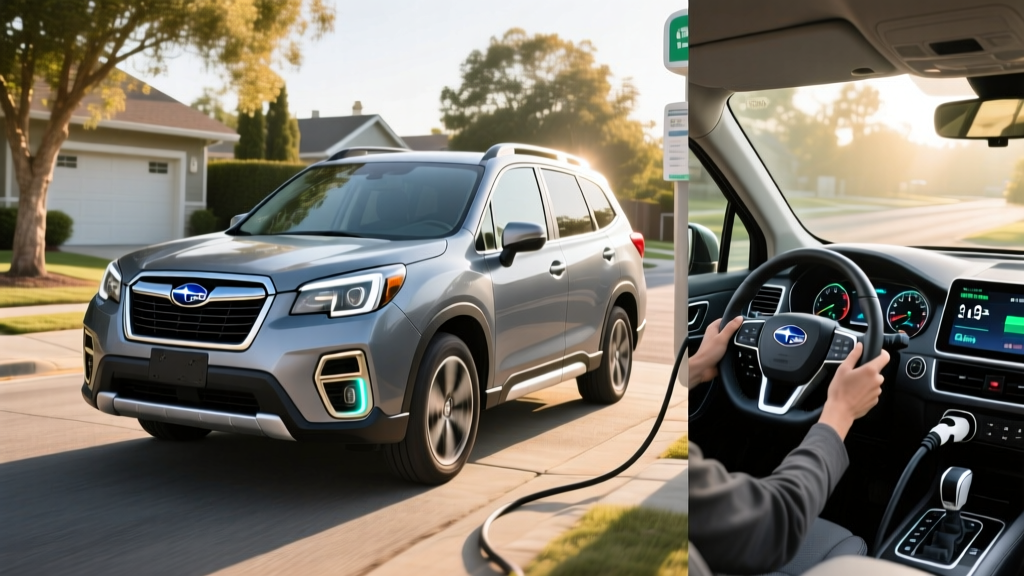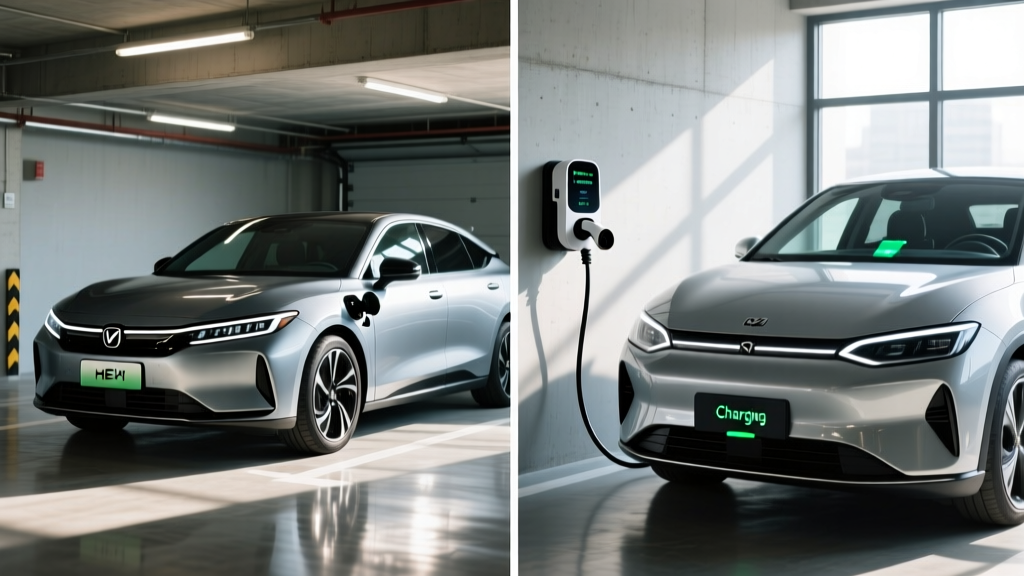
If you've browsed hybrid listings online, you've likely noticed two very different vehicles sharing the same badge: the conventional hybrid and the plug-in hybrid. They share a gas engine and an electric motor, but the question every new buyer asks is straightforward: do hybrid vehicles need to be charged?
The short answer depends entirely on which type of hybrid you're looking at. A conventional hybrid (HEV) never needs to be plugged in — it generates all its own electricity. A plug-in hybrid (PHEV) can be plugged in to unlock its full electric-only range, but will still drive as a regular hybrid if you skip charging. Below, we break down exactly how each system works, what it costs, and which one actually fits your daily routine.
HEV vs PHEV: The Charging Question, Settled
Conventional Hybrid (HEV)
Do you need to plug it in? No. Never.
A conventional hybrid like the Toyota RAV4 Hybrid or Honda CR-V Hybrid uses a small battery pack (typically 1–2 kWh) that charges itself through regenerative braking and the gas engine. You fuel it like any other car and never touch a charging cable. The electric motor assists the engine during acceleration and enables brief low-speed electric-only driving (usually under 1 mile at low speeds).
Plug-In Hybrid (PHEV)
Do you need to plug it in? Not required, but strongly recommended.
A PHEV like the Toyota RAV4 Prime or Jeep Wrangler 4xe carries a much larger battery (typically 12–25 kWh) and a more powerful electric motor. Plug it in and you get 25–45 miles of pure electric driving before the gas engine kicks in. Skip the plug and it operates as a heavier, less efficient conventional hybrid. You can drive a PHEV without ever charging it — but you'll miss the point of owning one.
How Many MPG Does a Hybrid Get? EPA and Real-World Numbers
Hybrids earn their reputation in stop-and-go city driving, where regenerative braking recaptures energy that a gas car wastes as heat. This is why hybrids often exceed their EPA city estimates in real-world urban commutes — a dynamic you rarely see with conventional vehicles.
| Model | Type | City MPG | Highway MPG | Combined MPG | PHEV EV Range | PHEV Combined MPGe |
|---|---|---|---|---|---|---|
| Toyota Prius | HEV | 57 | 56 | 57 | — | — |
| Toyota Prius PHEV (Prime) | PHEV | 52 (hybrid mode) | 48 | 50 | 44 mi | 127 MPGe |
| Honda CR-V Hybrid | HEV | 43 | 36 | 40 | — | — |
| Toyota RAV4 Hybrid | HEV | 41 | 38 | 40 | — | — |
| Toyota RAV4 Prime (PHEV) | PHEV | 40 (hybrid mode) | 36 | 38 | 42 mi | 94 MPGe |
| Hyundai Tucson PHEV | PHEV | 35 (hybrid mode) | 33 | 34 | 33 mi | 80 MPGe |
| Ford Escape PHEV | PHEV | 42 (hybrid mode) | 38 | 40 | 37 mi | 105 MPGe |
Source: fueleconomy.gov — EPA estimates. Real-world results vary with temperature, terrain, and driving style.
Real-World MPG vs. EPA Sticker
For HEVs, expect EPA numbers or slightly better in city driving. Highway-heavy commutes may drop 3–5 MPG below the combined rating. For PHEVs in hybrid mode (battery depleted), real-world highway MPG can fall 10–15% below EPA due to the added battery weight. Cold weather (below 32°F) reduces MPG by roughly 10–15% across both types as the engine runs more frequently for cabin heat.
PHEV Electric Range, Battery Size, and Charging Times
If you're considering a PHEV, the electric-only range is the number that matters most for your daily commute. Here's how the major 2026 PHEVs stack up on battery capacity and charging speed.
| Model | Battery (kWh) | EPA EV Range | Level 1 (120V) Charge | Level 2 (240V) Charge | DC Fast Charge |
|---|---|---|---|---|---|
| Toyota Prius Prime | 13.6 kWh | 44 mi | ~11 hours | ~4 hours | No |
| Toyota RAV4 Prime | 18.1 kWh | 42 mi | ~12 hours | ~2.5 hours | No |
| Hyundai Tucson PHEV | 13.8 kWh | 33 mi | ~11 hours | ~3.5 hours | No |
| Jeep Wrangler 4xe | 17.3 kWh | 21 mi | ~14 hours | ~3 hours | No |
| Ford Escape PHEV | 14.4 kWh | 37 mi | ~12 hours | ~3.5 hours | No |
| Chrysler Pacifica PHEV | 16.0 kWh | 32 mi | ~13 hours | ~2 hours | No |
Key distinction: kW vs kWh. The battery capacity is measured in kWh (kilowatt-hours — how much energy it stores). The charge rate is measured in kW (kilowatts — how fast energy flows in). A 13.6 kWh battery charging at 3.3 kW takes roughly 4 hours from empty.
Notably, virtually no current PHEV supports DC fast charging. The batteries are small enough that Level 2 (240V) charging overnight or during a workday fully replenishes them. If you only have a standard 120V outlet, expect an overnight charge to add roughly 3–5 miles per hour of charging — enough for some PHEVs to recover a full charge over a long night, but tight for larger packs like the RAV4 Prime's.
Powertrain Specs: What's Under the Hood
Hybrid powertrains pair a gasoline engine with one or more electric motors. The combined output often exceeds what either system produces alone, because the electric motor fills in the torque gap at low RPMs where gas engines are weakest.
| Model | Engine | Motor Output | Combined HP | 0-60 mph | Drivetrain |
|---|---|---|---|---|---|
| Toyota Prius | 2.0L 4-cyl | 83 hp | 196 hp | 7.2 sec | FWD / AWD |
| Toyota Prius Prime | 2.0L 4-cyl | 161 hp | 220 hp | 6.6 sec | FWD |
| Honda CR-V Hybrid | 2.0L 4-cyl | 181 hp (dual motor) | 204 hp | 7.6 sec | FWD / AWD |
| Toyota RAV4 Prime | 2.5L 4-cyl | 181 hp (rear motor) | 302 hp | 5.7 sec | AWD |
| Hyundai Tucson PHEV | 1.6L turbo 4-cyl | 90 hp | 261 hp | 6.9 sec | AWD |
| Jeep Wrangler 4xe | 2.0L turbo 4-cyl | 134 hp | 375 hp | 6.0 sec | 4WD |
The RAV4 Prime's 302 combined horsepower is a standout — it's one of the quickest vehicles in the Toyota lineup, not just the quickest RAV4. That's the hidden performance advantage of PHEV powertrains: the electric motor's instant torque makes them surprisingly quick off the line.
Pricing, Tax Credits, and Total Cost of Ownership
Hybrids and PHEVs carry a price premium over their gas-only siblings, but the gap has narrowed significantly. The 2026 Prius starts around $28,550, while the Prius Prime begins at approximately $33,475. The RAV4 Prime commands a steeper premium at roughly $44,500 — and dealer markups on that model remain common in many markets.
Federal Tax Credit Eligibility (IRS §30D)
Under current IRS rules, only PHEVs qualify for the federal clean vehicle credit — conventional HEVs do not. The credit can reach up to $7,500, but eligibility depends on:
- Battery sourcing: Critical minerals and battery components must meet phased-in domestic-content thresholds that tighten annually through 2029.
- MSRP caps: Vans, SUVs, and pickups must be under $80,000; sedans under $55,000.
- Buyer income limits: Modified AGI must not exceed $150,000 (single), $225,000 (head of household), or $300,000 (joint).
- Point-of-sale transfer: Eligible buyers can transfer the credit to the dealer for an immediate price reduction at purchase.
Important: Battery-sourcing requirements disqualify many PHEVs in 2026. Always verify a specific VIN's eligibility on the IRS portal before purchasing. Consult a tax professional for your situation.
Conventional hybrids receive no federal purchase incentive, though some states offer rebates or HOV-lane access for PHEVs. Check your state's energy office for local programs.
Battery Warranty, Reliability, and Replacement Costs
Battery longevity is the number-one concern for hybrid buyers — and it's the area where the data is most reassuring. Modern hybrid batteries are engineered for the life of the vehicle, with warranties that reflect that confidence.
Hybrid Battery Warranty Coverage (2026 Models)
| Manufacturer | Warranty Term | Coverage |
|---|---|---|
| Toyota | 10 years / 150,000 miles | Hybrid battery & hybrid system components |
| Honda | 8 years / 100,000 miles (10/150k in CARB states) | Hybrid battery & IMA system |
| Hyundai / Kia | 10 years / 100,000 miles | Hybrid/EV battery & powertrain |
| Ford | 8 years / 100,000 miles | Hybrid battery & electric drivetrain components |
| Jeep / Stellantis | 8 years / 100,000 miles | PHEV battery & powertrain |
Federal law mandates a minimum 8-year/80,000-mile warranty on hybrid and EV batteries. Many manufacturers exceed this baseline.
Replacement cost if out of warranty: A hybrid battery replacement typically runs $2,000–$4,000 for a conventional HEV and $5,000–$9,000 for a PHEV, depending on the model and whether you use OEM or refurbished cells. Toyota's Prius battery, for example, can be replaced for roughly $2,500–$3,500 at a dealer. However, widespread data from fleet operators and Consumer Reports reliability surveys show that hybrid battery failures before 150,000 miles are uncommon. Many original Prius batteries from the mid-2000s are still in service past 200,000 miles.
Overall hybrid reliability ratings are strong. Toyota and Lexus consistently rank at the top of long-term dependability studies, with Honda and Hyundai close behind. The hybrid system itself (inverter, motor, control electronics) is generally simpler and less failure-prone than a traditional automatic transmission.
Hybrid vs PHEV vs EV: Which One Fits You?
Choose a Conventional Hybrid (HEV) If:
- You don't have access to home or workplace charging (apartment, street parking, no garage).
- You want maximum fuel efficiency with zero change to your fueling habits.
- Your budget is tighter — HEVs typically cost $3,000–$6,000 less than their PHEV counterparts.
- You drive a mix of city and highway with no single dominant commute pattern.
Choose a Plug-In Hybrid (PHEV) If:
- You can charge at home (even a standard 120V outlet works for most PHEVs overnight).
- Your daily round-trip commute is under 40 miles — you could drive months without burning gas.
- You want electric-only driving for errands but need gas flexibility for road trips.
- You qualify for the federal tax credit or a state PHEV incentive, narrowing the price gap.
Choose a Full Battery EV (BEV) If:
- You have reliable home Level 2 charging and your daily driving stays under 250 miles.
- You want zero tailpipe emissions and the lowest per-mile fuel cost.
- You're ready to plan around DC fast charging for longer road trips.
- You want to eliminate oil changes, spark plugs, and transmission maintenance entirely.
Hybrid (HEV) Pros & Cons
Pros:
- No plug-in charging needed — fuel at any gas station
- 40–57 MPG combined in real-world driving
- Lower purchase price than PHEV or BEV
- Proven long-term reliability (20+ years of data)
- No range anxiety whatsoever
Cons:
- No federal tax credit
- No electric-only highway driving
- Still 100% dependent on gasoline prices
- Higher emissions than PHEV or BEV
Plug-In Hybrid (PHEV) Pros & Cons
Pros:
- 25–44 miles electric-only covers most commutes
- Potential $7,500 federal tax credit (eligibility varies)
- Gas engine eliminates range anxiety on road trips
- Combined MPGe of 80–127 when charged regularly
- Strong performance (electric torque boost)
Cons:
- Higher upfront cost ($5,000–$10,000 more than HEV)
- Requires home charging to realize full value
- Heavier = lower MPG once battery is depleted
- No DC fast charging on current models
- More complex powertrain (two full systems)
Frequently Asked Questions
Do I have to plug in a hybrid car?
No — if it's a conventional hybrid (HEV), you never plug it in. The battery charges through regenerative braking and the gas engine. If it's a plug-in hybrid (PHEV), plugging in is optional but highly recommended to access the 25–44 miles of electric-only range. A PHEV driven without charging operates as a less-efficient conventional hybrid.
How long do hybrid batteries last?
Modern hybrid batteries are designed to last 150,000–200,000+ miles under normal use. Toyota, Hyundai, and Kia back their hybrid batteries for 10 years/100,000–150,000 miles. Real-world data shows that premature hybrid battery failure is rare, and many first-generation Prius batteries exceeded 200,000 miles on the original pack.
How much does it cost to replace a hybrid battery?
Conventional hybrid (HEV) battery replacement typically costs $2,000–$4,000 at a dealership. PHEV battery replacement runs $5,000–$9,000 due to the larger pack size. Third-party and refurbished options can reduce these costs by 30–50%. Given the 8–10 year warranty coverage, most owners will never pay for a replacement out of pocket.
Can a PHEV charge itself while driving?
Partially. A PHEV recaptures some energy through regenerative braking, and the gas engine can maintain the battery at a low charge level. However, it cannot fully recharge the larger PHEV battery through driving alone — that requires plugging in. Some PHEVs offer a "charge mode" that uses the engine to build battery reserve, but this significantly reduces fuel economy.
Is a hybrid better than a gas car in 2026?
For most buyers, yes. A modern hybrid like the Prius (57 MPG combined) uses roughly half the fuel of a comparable gas-only compact SUV (28–30 MPG combined). At $3.30/gallon and 12,000 miles/year, that's approximately $700–$900 in annual fuel savings. The hybrid premium of $1,500–$3,000 over a gas model typically pays for itself within 2–4 years, after which you save money every month.
Do hybrids qualify for any tax credit?
Conventional hybrids (HEVs) do not qualify for the federal §30D clean vehicle credit. Only plug-in hybrids (PHEVs) and battery EVs are eligible, with credits up to $7,500 depending on battery sourcing, MSRP caps, and buyer income limits. Check current eligibility on irs.gov and verify your specific VIN before purchasing.
What happens if my hybrid battery dies while driving?
In a conventional hybrid, the gas engine is the primary power source — the battery assists it. If the hybrid battery fails completely, the vehicle will typically enter a reduced-power "limp mode" and can still be driven to a service center, though acceleration will be noticeably diminished. In a PHEV, the gas engine can operate independently of the battery in most designs, so a battery fault generally doesn't strand you.