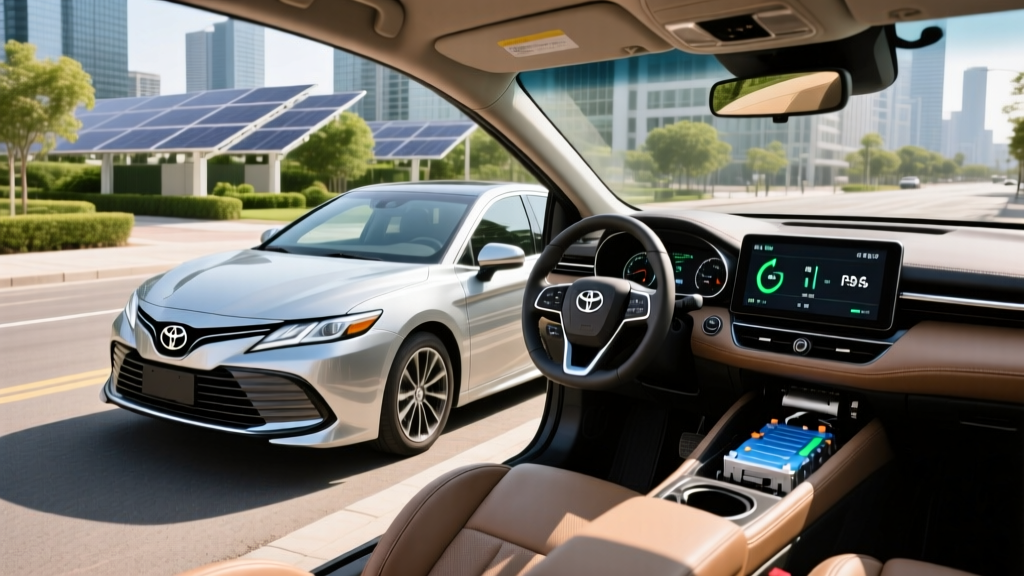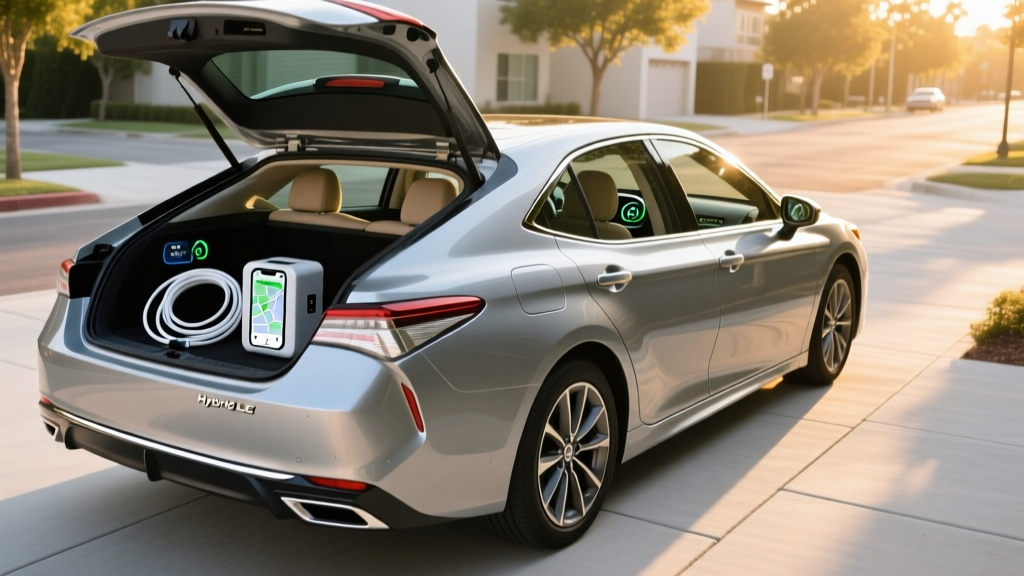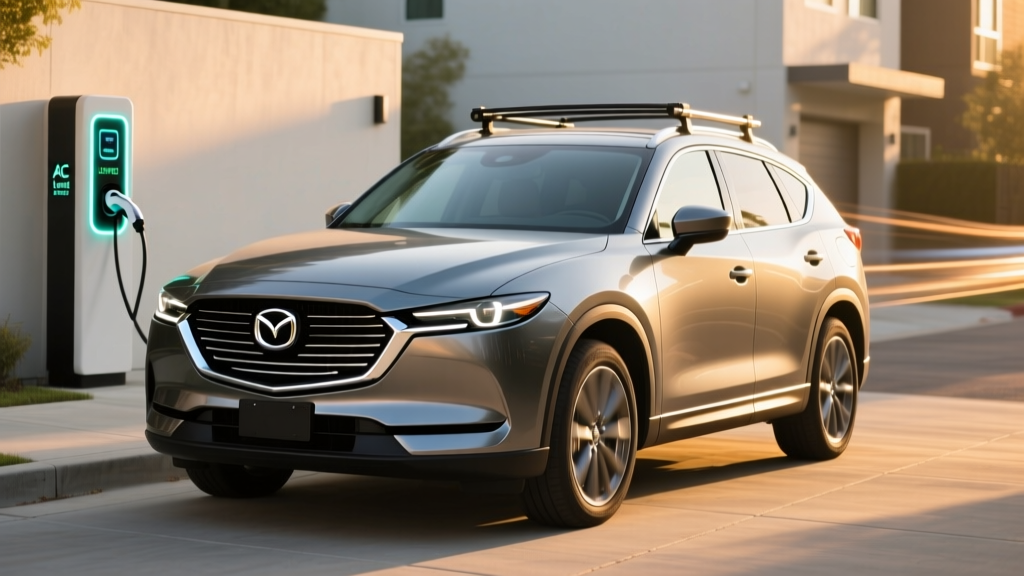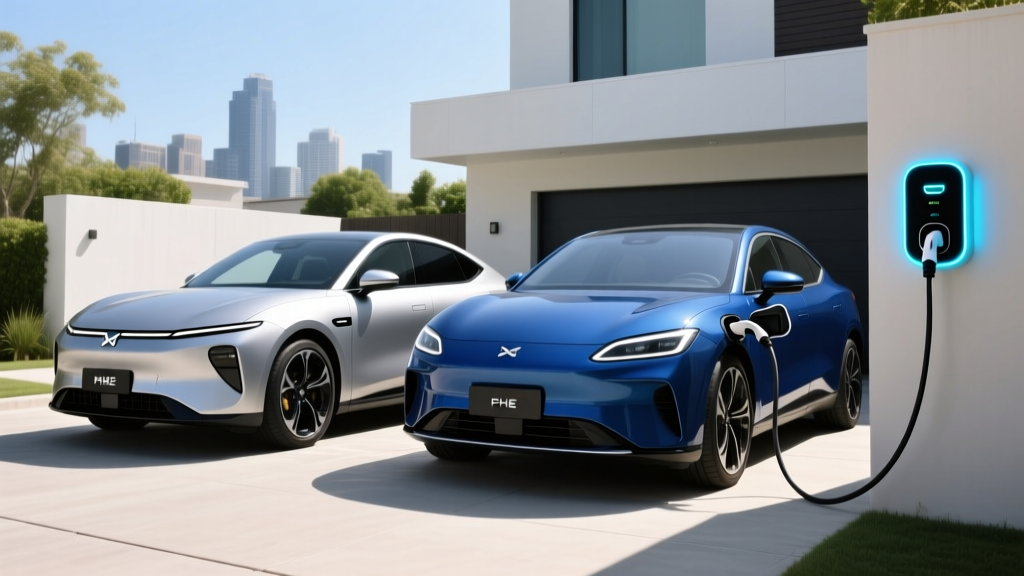
If you've ever stood in a dealership lot wondering whether that shiny hybrid needs a charging cable, you're not alone. The short answer depends entirely on which type of hybrid you're looking at. Conventional hybrids (HEVs) never need plugging in — they generate all their electricity onboard. Plug-in hybrids (PHEVs), on the other hand, can be plugged in for electric-only driving, though they'll still run on gas if you never charge them.
Understanding this distinction is the single most important thing to get right before you buy. The wrong choice means either paying a premium for electric range you can't use, or missing out on 30–40 miles of gas-free commuting that could save you hundreds of dollars a year. Let's break down exactly how each system works, what the real-world MPG looks like, and which one fits your life.
HEV vs PHEV: The Charging Question, Settled
Hybrid vehicles come in two fundamentally different architectures. Both use a gasoline engine paired with an electric motor and a battery pack, but how they acquire and use electricity is completely different.
Conventional Hybrid (HEV)
Do you need to plug it in? No. Never. An HEV charges its small battery (typically 1–2 kWh) entirely through regenerative braking and the gasoline engine. You fuel it like any normal car and the hybrid system handles the rest, shuttling between electric motor and engine to maximize efficiency.
Examples: Toyota Prius (HEV trim), Honda CR-V Hybrid, Toyota RAV4 Hybrid, Hyundai Tucson Hybrid.
Plug-in Hybrid (PHEV)
Do you need to plug it in? No — but you should. A PHEV has a much larger battery (typically 12–25 kWh) that can be charged from a wall outlet or charging station. When charged, it delivers 25–50 miles of pure electric driving before the gas engine kicks in. If you never plug it in, it operates as a conventional hybrid, but you're carrying around dead weight (the larger battery) and missing the whole point.
Examples: Toyota RAV4 Prime, Jeep Wrangler 4xe, Chrysler Pacifica Hybrid, Toyota Prius Prime.
Real-World MPG: What the EPA Numbers Actually Mean
Hybrids — especially conventional HEVs — frequently exceed their EPA combined estimates in city driving, where regenerative braking and low-speed electric operation shine. Highway driving is a different story, where the gas engine does most of the work and aerodynamic drag eats efficiency. Here's how current popular models stack up:
| Vehicle | Type | City MPG | Hwy MPG | Combined | PHEV EV Range |
|---|---|---|---|---|---|
| Toyota Prius (HEV) | HEV | 57 | 56 | 57 | — |
| Toyota Prius Prime (PHEV) | PHEV | — | — | 52 (hybrid mode) | 44 mi |
| Toyota RAV4 Hybrid | HEV | 41 | 38 | 40 | — |
| Toyota RAV4 Prime (PHEV) | PHEV | — | — | 38 (hybrid mode) | 42 mi |
| Honda CR-V Hybrid | HEV | 43 | 36 | 40 | — |
| Hyundai Tucson PHEV | PHEV | — | — | 35 (hybrid mode) | 33 mi |
| Ford Escape PHEV | PHEV | — | — | 39 (hybrid mode) | 37 mi |
Source: fueleconomy.gov (EPA estimates). PHEV combined MPG reflects charge-sustaining (hybrid) mode after EV range is depleted.
PHEV Electric-Only Range and Charging Explained
If you're considering a PHEV, the electric-only range is the number that matters most. Here's what current models deliver and what charging looks like:
| PHEV Model | Battery (kWh) | EV Range | L2 Charge Time | DC Fast Charge? | Total Range |
|---|---|---|---|---|---|
| Toyota Prius Prime | 13.6 kWh | 44 mi | ~4 hr (Level 2) | No | ~440 mi |
| Toyota RAV4 Prime | 18.1 kWh | 42 mi | ~2.5 hr (Level 2) | No | ~600 mi |
| Jeep Wrangler 4xe | 17.3 kWh | 22 mi | ~2 hr (Level 2) | No | ~370 mi |
| Chrysler Pacifica Hybrid | 16.0 kWh | 32 mi | ~2 hr (Level 2) | No | ~430 mi |
| Ford Escape PHEV | 14.4 kWh | 37 mi | ~3.5 hr (Level 2) | No | ~520 mi |
A few critical things to notice:
- No PHEVs listed here support DC fast charging. Almost all PHEVs max out at Level 2 (240V) charging, typically between 3.3 kW and 6.6 kW. That's perfectly fine — the batteries are small enough that overnight charging on a standard Level 2 home charger fills them completely.
- Level 1 (120V) charging works for most PHEVs, taking roughly 8–12 hours for a full charge. If you have a standard garage outlet and a short commute, you may not even need to install a Level 2 station.
- Total combined range (EV + gasoline tank) typically exceeds 400 miles, eliminating range anxiety entirely.
Powertrain Specs: Where the Horsepower Comes From
Hybrid powertrains blend a gasoline engine with one or more electric motors. The combined output is often higher than the gas engine alone, and the instant torque from the electric motor makes hybrids feel punchier than their engine displacement suggests.
| Model | Engine | Combined HP | 0–60 mph |
|---|---|---|---|
| Toyota Prius (HEV) | 2.0L I-4 + motor | 194 hp (AWD: 196 hp) | 7.2 sec |
| Toyota Prius Prime (PHEV) | 2.0L I-4 + motor | 220 hp | 6.6 sec |
| Toyota RAV4 Prime (PHEV) | 2.5L I-4 + 2 motors | 302 hp | 5.7 sec |
| Honda CR-V Hybrid | 2.0L I-4 + 2 motors | 204 hp | 7.6 sec |
| Hyundai Tucson PHEV | 1.6L Turbo I-4 + motor | 261 hp | 6.9 sec |
The RAV4 Prime's 302 hp is a standout — it's the quickest RAV4 Toyota sells, and its AWD system uses the rear electric motor for instant torque distribution without a mechanical driveshaft.
Pricing, Tax Credits, and Total Cost
Hybrids carry a price premium over their gas-only counterparts, but that gap has narrowed significantly. Here's what you're looking at for 2026 model-year pricing:
| Model | Starting MSRP | Federal Tax Credit |
|---|---|---|
| Toyota Prius (HEV) | ~$29,500 | None |
| Toyota Prius Prime (PHEV) | ~$34,000 | Up to $7,500* |
| Toyota RAV4 Hybrid | ~$33,500 | None |
| Toyota RAV4 Prime (PHEV) | ~$44,500 | Up to $7,500* |
| Ford Escape PHEV | ~$40,000 | Up to $3,750* |
For total cost of ownership, a PHEV that you charge nightly can effectively eliminate gasoline costs for daily commuting while retaining the gas engine for road trips. An HEV saves fuel without any behavioral change — you just drive it normally and it sips gas.
Battery Longevity, Warranty, and Replacement Costs
This is the number-one concern for hybrid buyers, and the data is reassuring. Modern hybrid batteries are engineered for longevity and are backed by substantial warranties.
Hybrid Battery Warranty Coverage
Toyota: 10 years / 150,000 miles (whichever comes first) on hybrid battery and components for 2020+ models.
Honda: 8 years / 100,000 miles (10/150,000 in CARB states).
Hyundai/Kia: 10 years / 100,000 miles on hybrid/EV battery systems.
Ford: 8 years / 100,000 miles on hybrid/PHEV battery components.
These warranties guarantee the battery will retain a specified capacity threshold (typically 60–70% of original). If it drops below that, the manufacturer replaces it at no cost.
Real-world lifespan: Data from fleet operators and long-term owners shows that Toyota's nickel-metal hydride (NiMH) and lithium-ion hybrid batteries routinely last 150,000–200,000+ miles with minimal degradation. Prius taxis in cities like New York and Vancouver have logged 300,000+ miles on original batteries.
Replacement cost if out of warranty: A hybrid battery replacement typically runs between $2,000 and $4,500 depending on the model, including labor. PHEV batteries are larger and more expensive — a RAV4 Prime battery replacement could approach $8,000–$12,000. However, refurbished and aftermarket options are increasingly available at 40–60% lower cost. For context, a conventional car's transmission replacement often costs just as much, and hybrid battery failures before 150K miles are statistically rare.
Hybrid vs PHEV vs Full EV: Which Is Right for You?
This is the decision that actually matters. Here's a practical framework based on how you live and drive:
Choose an HEV If…
- You can't install a home charger (apartment, street parking)
- You want maximum simplicity — no cables, no apps, no charging planning
- Your budget is tighter (HEVs cost $3K–$8K less than PHEVs)
- You drive mostly city miles where regenerative braking shines
- You want proven reliability with 20+ years of track record
Choose a PHEV If…
- You have home charging (even a 120V outlet works)
- Your daily commute is under 35–40 miles round-trip
- You want electric driving for errands but gas for road trips
- You qualify for the federal tax credit (effectively $3,750–$7,500 off)
- You want to reduce fuel consumption by 60–80% without range anxiety
Choose a Full EV If…
- You have reliable home Level 2 charging
- Your daily driving is under 200 miles
- You want zero tailpipe emissions and minimal maintenance
- You want the lowest cost per mile (electricity vs. gas)
- You're ready to plan charging stops on long road trips
Frequently Asked Questions
Do hybrid cars need to be plugged in to work?
No. Conventional hybrids (HEVs) like the Toyota RAV4 Hybrid or Honda CR-V Hybrid never need to be plugged in. They generate electricity through regenerative braking and the gasoline engine. Plug-in hybrids (PHEVs) can be plugged in for electric-only range, but they'll still function as regular hybrids if you never charge them — you just lose the efficiency benefit.
How many MPG does a hybrid really get in the real world?
EPA estimates are a solid starting point, but real-world results vary. The Toyota Prius HEV (EPA 57 combined) routinely returns 55–62 MPG in mixed city driving based on owner-reported data on fueleconomy.gov. Highway-heavy commutes at 75+ mph will pull that down to 48–52 MPG. Cold weather reduces MPG by roughly 5–10% due to engine warm-up cycles and cabin heating demand.
How far can a PHEV go on electric only?
Current PHEVs deliver between 22 and 44 miles of electric-only range, depending on the model. The Toyota Prius Prime leads at 44 miles, the RAV4 Prime delivers 42 miles, and the Ford Escape PHEV offers 37 miles. Real-world EV range drops about 15–25% in cold weather (below 40°F) due to cabin heating and reduced battery efficiency. Highway speeds above 65 mph also reduce EV range.
Are hybrid batteries expensive to replace?
Hybrid battery replacement costs range from $2,000 to $4,500 for conventional hybrids and $8,000–$12,000 for PHEVs. However, the vast majority of hybrid batteries last 150,000–200,000+ miles, and all are covered by warranties of at least 8 years/100,000 miles (Toyota covers 10 years/150,000 miles). Statistically, hybrid battery failure is less common than automatic transmission failure in conventional cars.
Do conventional hybrids qualify for any tax credit?
No. The federal §30D Clean Vehicle Credit applies only to plug-in vehicles (PHEVs and BEVs) with a battery capacity of at least 7 kWh. Conventional hybrids (HEVs) do not qualify. However, some states and local utilities offer small rebates for HEVs — check your state energy office or AFDC state incentive database.
Can I charge a PHEV on a regular household outlet?
Yes. All PHEVs can charge on a standard 120V Level 1 outlet. Because PHEV batteries are relatively small (13–18 kWh), a full Level 1 charge takes about 8–14 hours — typically overnight. For faster charging, a 240V Level 2 home station cuts that to 2–4 hours. A licensed electrician can install a Level 2 circuit for $500–$2,000 depending on your panel and wiring.
Is a hybrid more reliable than a gas-only car?
Long-term reliability data from Consumer Reports and J.D. Power consistently ranks Toyota and Lexus hybrids at or near the top of all vehicle categories. The hybrid system actually reduces wear on the gas engine (it runs less), eliminates the traditional starter motor, and uses regenerative braking that extends brake pad life. There's no additional complexity that has proven problematic at scale.
Always verify current pricing, specifications, and tax credit eligibility with the manufacturer and IRS.gov. EPA estimates from fueleconomy.gov. Safety ratings from IIHS and NHTSA.