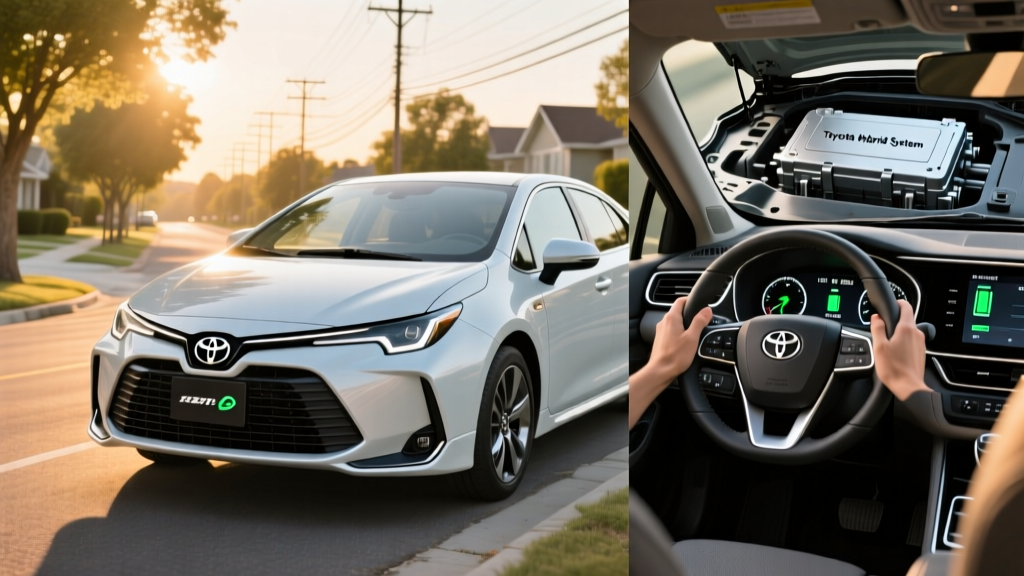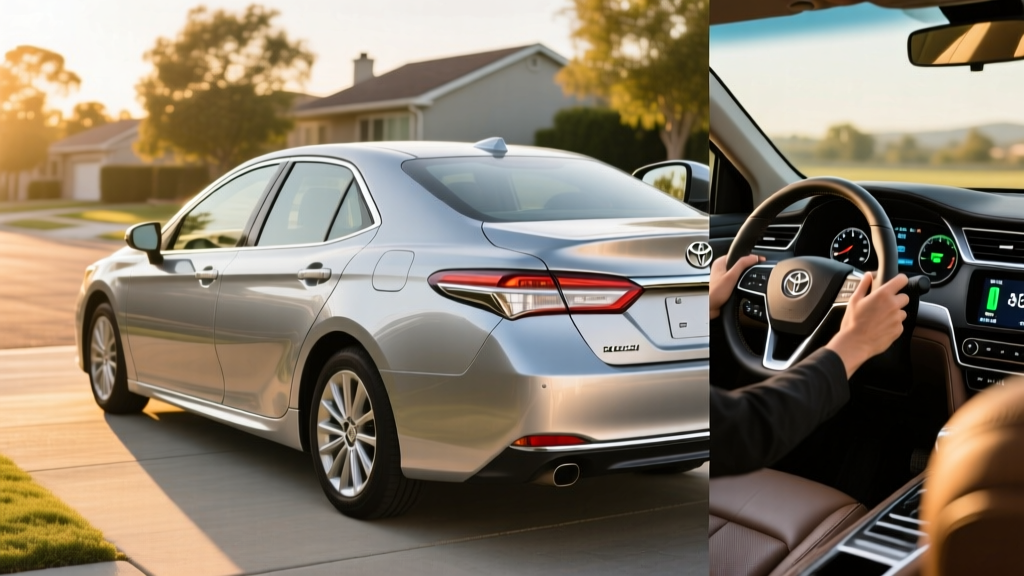
Hybrids dominate fuel-economy leaderboards, but the marketing rarely tells you what you give up. Whether you're eyeing a conventional hybrid (HEV) like the Toyota Camry Hybrid or a plug-in hybrid (PHEV) like the RAV4 Prime, the disadvantages of hybrid vehicles are real — they're just different from what most shoppers expect. This guide breaks down the mechanical, financial, and ownership trade-offs with exact numbers so you can decide whether a hybrid, PHEV, or full battery-electric vehicle (BEV) actually fits your driving life.
First, Let's Separate HEV from PHEV
Too many buyers lump all hybrids together. The disadvantages differ sharply depending on which type you're considering.
| Feature | Conventional Hybrid (HEV) | Plug-in Hybrid (PHEV) |
|---|---|---|
| Plug-in required? | No — self-charging via regen + engine | Yes — to unlock electric-only miles |
| Battery size | 0.6–1.6 kWh (small buffer) | 13–25 kWh usable |
| Electric-only range | ~1 mile at low speed | 25–45 miles EPA |
| Federal tax credit | Not eligible (§30D is BEV/PHEV only) | Up to $7,500 if sourcing/income/MSRP rules met |
| Added weight vs gas car | ~150–250 lbs | ~400–700 lbs |
| Typical price premium vs gas model | $1,200–$2,500 | $5,000–$9,000 |
If you never plan to plug in, a PHEV becomes an overweight HEV — you're hauling a big battery you don't use. That's the first real disadvantage to understand before signing anything.
The MPG Reality: EPA Stickers vs Real-World Driving
Hybrids are famous for high MPG, but the numbers behave differently than gas cars — and not always in the way brochures suggest.
| Model | Type | City | Highway | Combined |
|---|---|---|---|---|
| Toyota Camry Hybrid LE | HEV | 53 | 50 | 52 |
| Honda Accord Hybrid | HEV | 51 | 44 | 48 |
| Toyota RAV4 Hybrid | HEV | 41 | 38 | 40 |
| Toyota RAV4 Prime (PHEV) | PHEV | 40 (hybrid mode) | 36 | 38 / 94 MPGe elec |
| Jeep Wrangler 4xe | PHEV | 20 (hybrid mode) | 20 | 20 / 49 MPGe elec |
Where hybrids shine: city driving. Regenerative braking recaptures energy at every stoplight, and the engine shuts off frequently. Many HEV owners report exceeding EPA city MPG in stop-and-go traffic — sometimes by 3–5 MPG.
Where hybrids disappoint: sustained highway cruising. At 70–80 mph, the electric motor contributes little and the added weight of the hybrid system (battery, motor, power electronics) actually hurts efficiency versus a lighter gas-only car with a modern turbo. A 2026 Toyota RAV4 Hybrid rated at 38 MPG highway can dip to the low-to-mid 30s on a flat 75-mph interstate run with A/C on.
PHEV trap: Once the electric range is depleted, many PHEVs deliver only mediocre MPG because they're hauling 500+ lbs of dead battery. The Wrangler 4xe at 20 MPG combined in hybrid mode is the extreme example — heavier and thirstier than a mild-hybrid gas Wrangler.
Performance and Weight: What the Extra Mass Costs You
Every hybrid adds mass. HEVs add roughly 150–250 lbs; PHEVs add 400–700 lbs depending on battery size. That weight shows up in three places:
- Tire and brake wear: Heavier vehicles scrub tires faster. Budget for tire replacement 10–15% sooner than a gas equivalent, especially on PHEVs.
- Handling feel: Most hybrids tune suspension softly to mask the weight. Enthusiasts often find them less engaging than gas counterparts.
- Towing: Some hybrids actually have lower tow ratings than their gas siblings because the CVT/e-CVT transmission and thermal limits of the hybrid system cap capacity. Always check the door jamb sticker, not the brochure.
Powertrain output is usually fine or even strong — the electric motor fills in torque gaps the gas engine has. The 2026 RAV4 Prime, for example, produces 302 combined horsepower and hits 0-60 in 5.7 seconds. But that power comes with complexity and weight you'll feel in corners and on mountain grades.
Pricing, Tax Credits, and the Payback Math
Here's where the disadvantages of hybrid vehicles become most tangible: upfront cost and how long it takes to recoup.
HEV Payback
A Camry Hybrid LE starts around $29,995 in 2026 — roughly $1,500 more than the gas Camry LE. At 52 vs 32 combined MPG, driving 12,000 miles/year at $3.40/gallon:
- Gas Camry annual fuel cost: ~$1,275
- Hybrid Camry annual fuel cost: ~$785
- Annual savings: ~$490
- Payback on the $1,500 premium: ~3.1 years
That's reasonable. But HEVs get no federal tax credit — the §30D Clean Vehicle Credit applies only to BEVs and PHEVs that meet battery-sourcing, MSRP, and buyer-income caps per current IRS rules.
PHEV Payback
A RAV4 Prime XSE starts near $45,000 — roughly $8,500 more than a RAV4 Hybrid XSE. If you qualify for the full $7,500 §30D credit (income ≤ $150k single / $300k joint, MSRP ≤ $80k for SUVs, compliant battery sourcing), the effective premium drops to ~$1,000. Payback via fuel savings is then nearly immediate.
But here's the catch: the credit has tightened significantly since 2023 due to critical-mineral and battery-component sourcing rules. Many PHEVs that previously qualified no longer do. Always verify on fueleconomy.gov's tax credit lookup for the exact VIN/build you're considering — don't trust dealer verbal assurances.
If you don't qualify for the credit (income too high, or the specific build's battery doesn't meet sourcing rules), the PHEV premium often takes 6–10 years to recoup on fuel alone — longer than most people keep a car.
Battery Longevity, Warranty, and Replacement Cost
This is the #1 anxiety for hybrid shoppers, and it deserves exact numbers.
Hybrid Battery Warranty Baseline (2026)
- Federal mandate: 8 years / 100,000 miles (minimum for emissions-related hybrid components, including the traction battery)
- Toyota: 10 years / 150,000 miles on hybrid batteries for 2020+ models
- Honda: 8 years / 100,000 miles (10/150k in CARB states)
- Hyundai/Kia: 10 years / 100,000 miles (original owner); transfers vary by state
- Ford: 8 years / 100,000 miles on hybrid/PHEV batteries
Real-world degradation: HEV batteries are small and lightly cycled — they rarely see 100% or 0% state of charge. Most Toyota hybrids from 2010–2018 are still on their original batteries at 150k+ miles. Failure before 150,000 miles is uncommon.
Replacement cost if you're out of warranty:
- HEV (Camry, Accord, RAV4 Hybrid): $2,000–$4,000 for a new OEM pack; $1,200–$2,000 for a refurbished unit from specialists like Green Bean Battery
- PHEV (RAV4 Prime, Wrangler 4xe): $6,000–$12,000+ due to larger pack size
The honest disadvantage: PHEV battery replacement is a serious financial event if it happens post-warranty. HEV replacement is more manageable, and often avoidable within the vehicle's normal lifespan.
Charging Reality for PHEVs (And Why It Matters)
If you buy a PHEV and never plug it in, you've bought an expensive, heavy HEV. The disadvantages compound from there.
| Model | Battery (kWh usable) | EV Range (EPA) | Level 2 Charge Time | DC Fast Charge? |
|---|---|---|---|---|
| Toyota RAV4 Prime | 14.9 | 42 mi | ~2.5 hours @ 3.3 kW | No |
| Jeep Wrangler 4xe | 14.3 | 22 mi | ~2 hours @ 7.2 kW | No |
| Chrysler Pacifica Hybrid | 16.0 | 32 mi | ~2 hours @ 7.2 kW | No |
| BMW X5 xDrive50e | 25.7 | 38 mi | ~3.5 hours @ 7.4 kW | No (AC only) |
Key disadvantage: Virtually no PHEVs support DC fast charging. That means you're limited to Level 2 (240V) at home or at public AC stations. A full charge takes 2–4 hours. You cannot "top up" on a road trip the way a BEV can at a 150+ kW DC charger.
For daily commuting under 40 miles, this is fine — plug in at home overnight. But for apartment dwellers without dedicated parking, or road-trippers who want to use electricity beyond their driveway, the PHEV's electric range becomes a rounding error.
Maintenance Complexity: Two Powertrains, One Bill
A hybrid has everything a gas car has — engine, transmission, exhaust, cooling system, oil changes — plus an electric motor, inverter, high-voltage battery, and regen-braking controls. Two systems means two failure modes.
- Oil changes: Still required every 5,000–10,000 miles. The engine still runs frequently, especially in cold weather and on highways.
- Brake wear: Actually better than gas cars thanks to regen doing most of the deceleration. Pads often last 80,000+ miles.
- Coolant systems: Many hybrids have two separate cooling loops (engine + inverter/battery). More hoses, more pumps, more potential leak points.
- Inverter failures: Rare but expensive — $2,000–$5,000 out of warranty. Toyota's Gen 3 Prius inverter had a known issue; newer designs are more robust.
Overall, hybrids are not less reliable than gas cars — Toyota's hybrid powertrain is arguably the most proven drivetrain on the road. But when something does go wrong, the diagnosis and repair can be more specialized and costly than a standard gas-car fix.
Who Should Choose a Hybrid vs PHEV vs Full EV?
Choose a Conventional Hybrid (HEV) If:
- You drive mostly city/suburban miles with frequent stops
- You cannot install a home charger (apartment, street parking)
- You want maximum MPG with zero behavior change
- Your budget is tight and you can't wait on a PHEV tax credit
Choose a Plug-in Hybrid (PHEV) If:
- Your daily commute is under 40 miles round-trip AND you can charge at home
- You take regular road trips where charging infrastructure is sparse
- You qualify for the §30D credit on a specific VIN you've verified
- You want EV-like daily driving without range anxiety on long hauls
Choose a Full BEV If:
- You have home Level 2 charging access
- Your daily driving is under 250 miles (covers 95%+ of US drivers)
- You want to eliminate oil changes, exhaust repairs, and emissions tests entirely
- You plan to keep the vehicle 8+ years and want lowest total cost of ownership
Pros and Cons at a Glance
Hybrid Advantages
- Best-in-class city MPG (40–55 combined)
- No charging infrastructure needed (HEV)
- Proven long-term reliability (Toyota/Honda track record)
- No range anxiety — gas stations everywhere
- Lower fuel cost per mile than gas equivalent
Hybrid Disadvantages
- Highway MPG often worse than EPA suggests
- Upfront price premium with long payback (especially PHEV without credit)
- PHEV battery replacement cost: $6,000–$12,000+
- Two powertrains = more complexity long-term
- Heavier = more tire wear, softer handling
- No DC fast charging on PHEVs
- HEVs get zero federal tax credit
Frequently Asked Questions
How many MPG does a hybrid actually get in real driving?
City driving often meets or exceeds EPA — a Camry Hybrid rated 53 city routinely delivers 50–56 in real stop-and-go. Highway is where reality bites: expect 5–10% below the EPA highway number at sustained 70+ mph. Cold weather drops MPG another 5–10% due to the engine running more often for cabin heat.
How far can a PHEV go on electric only?
EPA ratings range from 22 miles (Wrangler 4xe) to 42 miles (RAV4 Prime) to 38 miles (BMW X5 xDrive50e). Real-world electric range drops to 70–80% of EPA in winter or at highway speeds. If your commute exceeds the electric range, the PHEV advantage shrinks fast.
Is a hybrid more reliable than a gas car?
Data from Consumer Reports and J.D. Power consistently ranks Toyota and Honda hybrids at or above their gas counterparts in long-term reliability. The e-CVT transmission is simpler than a conventional automatic. The risk item is the high-voltage battery — rare failures before warranty expiry, but expensive if out of pocket. IIHS crash ratings for hybrid variants generally match gas versions.
What does hybrid battery replacement cost?
HEV batteries: $2,000–$4,000 OEM new; $1,200–$2,000 refurbished. PHEV batteries: $6,000–$12,000+. Most HEV batteries last the life of the vehicle (150k–200k+ miles). PHEV batteries are more stressed due to deeper cycling and larger thermal swings.
Does a hybrid qualify for a tax credit?
Conventional HEVs: No federal credit. Some states offer small rebates ($250–$500) — check your state energy office. PHEVs: Eligible for up to $7,500 under §30D if the specific vehicle meets battery-sourcing requirements, MSRP caps ($80k SUVs/vans/trucks, $55k sedans), and buyer income limits ($150k single, $300k joint). Point-of-sale transfer is available at participating dealers. Verify eligibility per VIN at fueleconomy.gov before purchase.
Should I just get a full EV instead?
If you have home charging, drive under 250 miles daily, and want the lowest 5-year total cost of ownership, a BEV like the Tesla Model Y, Hyundai Ioniq 5, or Chevy Equinox EV will beat any hybrid on running costs — no oil, fewer moving parts, and up to $7,500 in federal credit. Hybrids remain the pragmatic choice for apartment dwellers, frequent long-distance drivers, and those in areas with sparse public charging.