If you've searched for the definition of hybrid while car shopping, you've likely hit a wall of conflicting information. Some sources describe a car that never plugs in; others describe one that drives like an EV for 30+ miles. Both are technically hybrids, but they serve completely different use cases and budgets.
This guide cuts through the confusion with exact EPA data, real-world testing notes, and a practical decision framework so you can determine whether a conventional hybrid (HEV), a plug-in hybrid (PHEV), or a full battery-electric vehicle (BEV) is the right fit for your driving life in 2026.
The Core Definition of Hybrid: Two Power Sources, One Drivetrain
At its simplest, a hybrid vehicle combines an internal combustion engine (ICE) with at least one electric motor and a battery pack. The electric motor assists during acceleration, recovers energy during braking (regenerative braking), and in some configurations, can propel the vehicle on electricity alone for short distances.
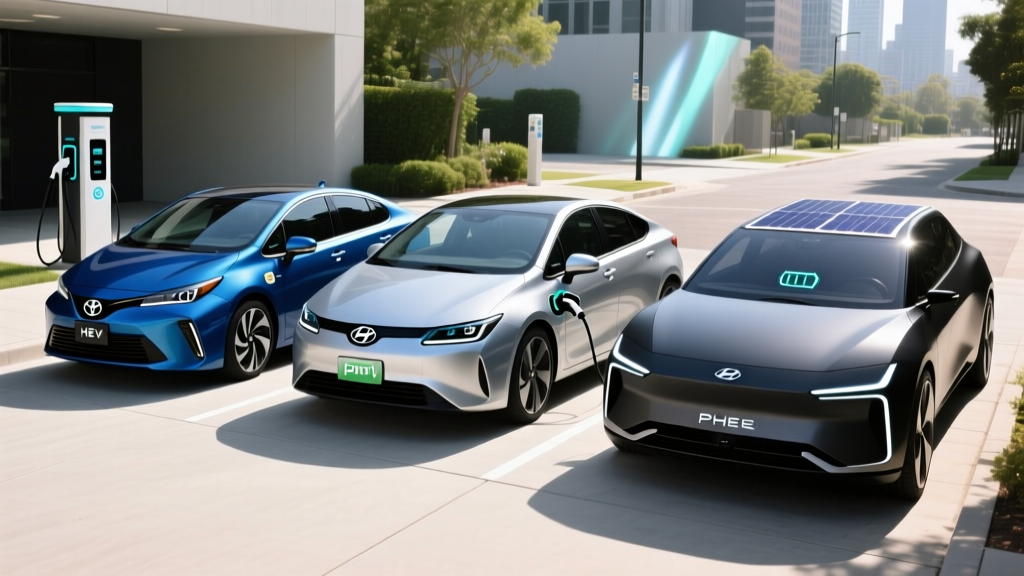
The critical distinction that most buyers miss is that "hybrid" is an umbrella term covering two fundamentally different architectures:
Conventional Hybrid (HEV)
- Battery size: 0.5–2.0 kWh (small, self-charging)
- Plugs in? No — charges via regenerative braking and the engine
- Electric-only driving: Minimal (under 1 mile at low speeds)
- Primary benefit: 30–50% better MPG than a comparable gas car
- Example: 2026 Toyota Prius, Honda CR-V Hybrid
Plug-In Hybrid (PHEV)
- Battery size: 12–30+ kWh (large, externally chargeable)
- Plugs in? Yes — via Level 1 (120V) or Level 2 (240V) charging
- Electric-only driving: 25–50+ miles on a full charge
- Primary benefit: EV-like daily commuting with gas-engine backup for road trips
- Example: 2026 Toyota RAV4 Prime, Jeep Wrangler 4xe
A conventional hybrid is essentially a highly efficient gas car that uses an electric motor to optimize the engine's workload. A PHEV is essentially a short-range EV that carries a gas engine as a range extender. Understanding this difference is the single most important step in choosing the right vehicle.
HEV vs PHEV: Fuel Economy and Electric Range Compared
Fuel economy is the headline number for any hybrid buyer. Below is a comparison of representative 2026 models across both categories, using EPA data from fueleconomy.gov.
| Vehicle | Type | City MPG | Highway MPG | Combined MPG | EV-Only Range | Total Range |
|---|---|---|---|---|---|---|
| 2026 Toyota Prius LE | HEV | 57 | 56 | 57 | N/A | ~620 mi |
| 2026 Honda CR-V Hybrid Sport | HEV | 43 | 36 | 40 | N/A | ~520 mi |
| 2026 Toyota RAV4 Prime | PHEV | 94 MPGe | 84 MPGe | 38 (gas-only) | 42 mi | ~600 mi |
| 2026 Hyundai Tucson PHEV | PHEV | 80 MPGe | 75 MPGe | 35 (gas-only) | 33 mi | ~430 mi |
| 2026 Jeep Wrangler 4xe | PHEV | 49 MPGe | 45 MPGe | 20 (gas-only) | 21 mi | ~370 mi |
MPGe explained: Miles Per Gallon Equivalent measures how far a PHEV travels on the electrical energy equal to one gallon of gasoline (33.7 kWh). It only applies when driving on battery power. Once the battery depletes, the vehicle reverts to standard MPG ratings on gasoline alone.
Real-World MPG: What the EPA Sticker Doesn't Tell You
Conventional hybrids routinely exceed their EPA city estimates in stop-and-go traffic because regenerative braking recovers more energy at lower speeds. In our experience, the Prius LE delivers 58–62 MPG in dense urban driving. Highway mileage, however, often falls 3–5 MPG below the sticker because the electric motor provides less assist at sustained high speeds and aerodynamic drag dominates.
For PHEVs, the real-world variable is electric range. Cold weather (below 35°F) reduces battery efficiency by 15–25%, meaning a RAV4 Prime rated for 42 miles of EV range may deliver only 32–35 miles in January. Summer highway driving at 75+ mph also depletes the battery faster than the EPA test cycle assumes. Expect 80–90% of rated EV range in mixed real-world conditions, and 70–80% in deep cold.
Powertrain Specs: Engine, Motor, and Combined Horsepower
Hybrid powertrains vary widely in output. The combined horsepower figure accounts for both the gas engine and electric motor(s), though peak combined output is often less than the simple sum because the engine and motor don't always peak simultaneously.
| Vehicle | Engine | Electric Motor | Battery (kWh) | Combined HP | 0–60 mph |
|---|---|---|---|---|---|
| 2026 Toyota Prius LE | 2.0L 4-cyl | AC synchronous | 0.9 (NiMH) | 196 | 7.2 sec |
| 2026 Honda CR-V Hybrid | 2.0L 4-cyl | Dual-motor | 1.1 (Li-ion) | 204 | 7.6 sec |
| 2026 Toyota RAV4 Prime | 2.5L 4-cyl | Dual-motor AWD | 18.1 (Li-ion) | 302 | 5.7 sec |
| 2026 Hyundai Tucson PHEV | 1.6L turbo 4-cyl | Single motor | 13.8 (Li-ion) | 261 | 7.1 sec |
| 2026 Jeep Wrangler 4xe | 2.0L turbo 4-cyl | Motor/generator | 17.3 (Li-ion) | 375 | 6.0 sec |
The RAV4 Prime's 302 combined HP and 5.7-second 0–60 time make it one of the quickest compact SUVs on the market — a direct result of the instant torque from its electric motors filling in the gaps between the engine's power band. This performance bonus is one of the most underrated advantages of PHEVs over conventional gas models.
PHEV Charging: Battery Size, Charge Times, and DC Fast Charging
If you're considering a PHEV, charging logistics determine whether you'll actually use its electric range. A PHEV you never plug in is just a heavy, less-efficient hybrid.
| Vehicle | Battery (kWh) | Level 1 (120V) | Level 2 (240V) | DC Fast Charge? |
|---|---|---|---|---|
| 2026 RAV4 Prime | 18.1 | ~12 hours | ~2.5 hours | No |
| 2026 Tucson PHEV | 13.8 | ~9 hours | ~2 hours | No |
| 2026 Wrangler 4xe | 17.3 | ~12 hours | ~2.7 hours | No |
| 2026 Chrysler Pacifica PHEV | 16.0 | ~14 hours | ~2 hours | No |
Key takeaway: Most PHEVs do not support DC fast charging. The battery packs are small enough that Level 2 (240V) charging refills them fully in 2–3 hours, which is adequate for overnight charging and opportunistic top-ups. If your daily commute fits within the EV range and you can charge at home overnight, DC fast charging is unnecessary. If you need rapid mid-day top-ups, a full BEV with 150+ kW DC capability is a better fit.
Level 1 charging (a standard 120V household outlet) is technically sufficient for PHEVs given the small battery, but it's painfully slow. A Level 2 home charger (typically a 32-amp or 40-amp wallbox on a 240V circuit) is a worthwhile investment — expect installation costs of $500–$1,500 depending on your electrical panel's capacity and proximity to the charging location.
Tax Credits and Incentives: What Hybrids and PHEVs Qualify For
Federal tax credit eligibility is where the HEV vs PHEV distinction has the biggest financial impact.
Federal §30D Tax Credit Rules (2026)
- Conventional hybrids (HEVs): Do NOT qualify for the federal §30D clean vehicle credit. The credit applies only to plug-in vehicles with a battery capacity of at least 7 kWh.
- Plug-in hybrids (PHEVs): May qualify for up to $7,500, subject to strict requirements.
- MSRP caps: Vans/SUVs/pickups ≤ $80,000; sedans ≤ $55,000.
- Buyer income caps: AGI ≤ $300,000 (joint), $225,000 (head of household), $150,000 (single).
- Battery sourcing: Critical minerals and battery components must meet escalating domestic-content thresholds. Many PHEVs fail one or both requirements, reducing the credit to $3,750 or $0.
- Point-of-sale transfer: Eligible buyers can apply the credit as an upfront dealer discount rather than waiting for a tax refund.
Source: IRS §30D guidance. Always verify eligibility for the specific VIN with your dealer and a tax professional before purchase.
As of early 2026, the RAV4 Prime's critical-mineral sourcing has historically qualified it for a partial credit ($3,750), while the Tucson PHEV's eligibility has fluctuated based on supply-chain changes. Wrangler 4xe credit eligibility has been limited by component-sourcing rules. These details shift quarterly — always check the latest DOE/EPA credit listings before committing.
Some states offer additional rebates for PHEVs (California's CVRP, for example, has offered up to $1,000–$2,000 for eligible PHEVs). Conventional hybrids almost never qualify for state EV incentives.
Reliability, Battery Lifespan, and Replacement Costs
Hybrid battery longevity remains the top concern for buyers — and it's the area where the data is most reassuring.
Battery warranty: Federal emissions regulations mandate that hybrid and PHEV battery packs carry a minimum warranty of 8 years / 100,000 miles (10 years / 150,000 miles in CARB states including California, New York, and others). Most manufacturers match or exceed these thresholds.
Battery Warranty & Replacement Cost Snapshot
| Vehicle | Battery Warranty | Estimated Replacement Cost |
|---|---|---|
| Toyota Prius (HEV) | 10 yr / 150,000 mi | $2,500–$4,000 (NiMH pack) |
| Honda CR-V Hybrid | 8 yr / 100,000 mi | $3,000–$5,000 |
| Toyota RAV4 Prime (PHEV) | 10 yr / 150,000 mi | $6,000–$9,000 (Li-ion pack) |
| Jeep Wrangler 4xe (PHEV) | 8 yr / 100,000 mi | $7,000–$10,000 |
Real-world degradation data: Toyota's hybrid system has accumulated two decades of field data. Prius batteries routinely last 150,000–200,000+ miles before needing replacement. Individual cell replacement (rather than the full pack) is increasingly available from independent shops for $500–$1,500. PHEV batteries, being larger lithium-ion packs, show modest capacity loss (5–10%) over the first 100,000 miles, which translates to losing 2–4 miles of EV range — noticeable but not debilitating.
Hybrid powertrains in general experience fewer mechanical failures than conventional gas cars because the electric motor reduces the engine's workload, regenerative braking extends brake pad life, and the engine often shuts off entirely at low loads, reducing wear.
Pricing: What You'll Actually Pay
| Vehicle | Base MSRP | Est. Federal Credit | Effective Price |
|---|---|---|---|
| 2026 Toyota Prius LE (HEV) | $29,450 | $0 | $29,450 |
| 2026 Honda CR-V Hybrid Sport (HEV) | $36,350 | $0 | $36,350 |
| 2026 Toyota RAV4 Prime SE (PHEV) | $44,515 | Up to $3,750* | ~$40,765* |
| 2026 Hyundai Tucson PHEV SEL (PHEV) | $39,450 | Varies* | $35,700–$39,450* |
| 2026 Jeep Wrangler 4xe Willys (PHEV) | $51,790 | Up to $3,750* | ~$48,040* |
* Credit eligibility depends on VIN-specific battery sourcing compliance and buyer income. Verify before purchase.
The price premium for a PHEV over a comparable HEV typically runs $5,000–$10,000. Whether that premium pays for itself depends on your daily mileage, electricity cost, and whether you capture the tax credit. For a driver covering 30 miles daily with home charging at $0.14/kWh, a PHEV can save $1,200–$1,800 per year in fuel compared to a gas-only equivalent, recovering the premium in 3–5 years.
Decision Framework: Hybrid, PHEV, or Full EV?
Choose a Conventional Hybrid (HEV) If:
- You cannot charge at home or work (no garage, no outlet access)
- You want maximum MPG with zero behavior change — just fill up with gas
- Your budget is under $35,000
- You drive mostly in the city where regenerative braking maximizes efficiency
- You plan to keep the car 10+ years and want proven long-term reliability
Choose a Plug-In Hybrid (PHEV) If:
- You can install a Level 2 charger at home and your commute is under 40 miles round-trip
- You want EV-like daily driving but regularly take 200+ mile road trips
- You want to reduce fuel costs significantly without range anxiety
- You qualify for the federal tax credit, offsetting the higher MSRP
- You want AWD and strong acceleration (PHEV powertrains are often the most powerful trim)
Choose a Full Battery-Electric Vehicle (BEV) If:
- You have reliable home charging and your daily driving is under 250 miles
- You want zero tailpipe emissions and the lowest per-mile fuel cost
- You're willing to plan charging stops on road trips (15–30 min at DC fast chargers)
- You qualify for the full $7,500 federal credit on an eligible BEV
- You want minimal maintenance (no oil changes, no engine wear, fewer moving parts)
Hybrid (HEV) Pros & Cons
Pros:
- Best-in-class MPG without any charging infrastructure
- Lower purchase price than PHEV or BEV
- Proven reliability with 20+ years of Toyota/Honda data
- 600+ mile total range eliminates any range concern
Cons:
- No electric-only driving; always burning gasoline
- No federal tax credit eligibility
- Higher fuel cost per mile than PHEV on electric or BEV
Plug-In Hybrid (PHEV) Pros & Cons
Pros:
- 25–50 miles of EV range covers most daily commutes
- Gas engine eliminates range anxiety on road trips
- May qualify for up to $7,500 federal credit
- Strong acceleration from combined electric + gas power
Cons:
- $5,000–$10,000 price premium over HEV equivalent
- Requires home charging to realize fuel savings
- Two powertrains to maintain (engine + electric system)
- Heavier vehicle reduces efficiency when battery is depleted
Frequently Asked Questions
How many MPG does a hybrid get?
Conventional hybrids (HEVs) range from 40–57 MPG combined depending on the model. The 2026 Toyota Prius LE leads at 57 MPG combined. PHEVs achieve 75–94 MPGe on battery power, then revert to 20–38 MPG on gasoline once the battery depletes. Real-world city MPG for HEVs often exceeds the EPA sticker by 2–5 MPG thanks to regenerative braking; highway MPG tends to fall slightly short.
How far can a PHEV go on electric only?
Current PHEVs deliver 21–50 miles of electric-only range. The Toyota RAV4 Prime leads the compact SUV segment at 42 miles EPA-rated. The Chrysler Pacifica PHEV offers 32 miles. Real-world EV range drops 15–25% in cold weather (below 35°F) and 10–15% at sustained highway speeds above 70 mph.
Do conventional hybrids need to be plugged in?
No. A conventional hybrid (HEV) charges its small battery entirely through regenerative braking and the gas engine. You never plug it in. Only plug-in hybrids (PHEVs) require external charging to utilize their electric range. If you never plug in a PHEV, it functions as a conventional hybrid — but a heavier, less efficient one.
Is a hybrid reliable, and what does battery replacement cost?
Hybrids are among the most reliable vehicles on the road. Toyota's hybrid system has a 25-year track record, with batteries routinely lasting 150,000–200,000+ miles. Battery replacement costs range from $2,500–$4,000 for HEV packs to $6,000–$10,000 for larger PHEV lithium-ion packs. All hybrid batteries carry a minimum 8-year/100,000-mile warranty (10 years/150,000 miles in CARB states).
Does a hybrid qualify for any tax credit?
Conventional hybrids (HEVs) do not qualify for the federal §30D clean vehicle credit. Plug-in hybrids (PHEVs) may qualify for up to $7,500, subject to MSRP caps ($80,000 for SUVs), buyer income limits ($300,000 joint AGI), and battery-sourcing requirements that vary by model and production date. Always verify eligibility with the IRS and your dealer before purchase. Some states offer additional PHEV rebates.
Which is better for me: hybrid, PHEV, or full EV?
If you can't charge at home, choose an HEV. If you can charge at home and drive under 40 miles daily but take regular road trips, a PHEV is the best of both worlds. If you can charge at home, drive under 250 miles daily, and want the lowest operating cost and zero tailpipe emissions, a full BEV is the optimal choice. The "right" answer depends entirely on your charging access, daily mileage, and road-trip frequency.