If you've searched for the definition of hybrid car and come away more confused than when you started, you're not alone. Automakers use the word "hybrid" to describe two fundamentally different powertrains — and choosing the wrong one for your driving habits can cost you thousands in fuel or leave you stranded without a charger. This guide cuts through the marketing to explain exactly what a hybrid car is, how the two types differ, and which one actually fits your life in 2026.
The Core Definition of a Hybrid Car
A hybrid car is any vehicle that combines a gasoline internal-combustion engine with at least one electric motor and a battery pack to move the vehicle. The electric motor assists during acceleration, captures energy during braking (regenerative braking), and in some cases can drive the car on electricity alone for short distances. The goal is simple: use less gasoline than a conventional car while eliminating or reducing the range limitations of a full battery-electric vehicle (BEV).
That's the umbrella definition. Under it sit two very different architectures that buyers frequently confuse:
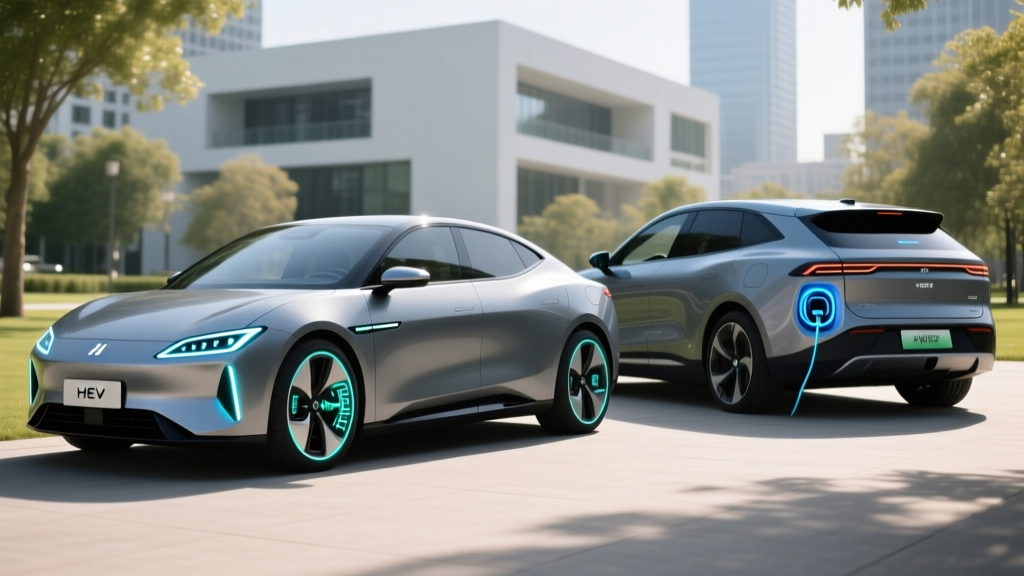
- Conventional Hybrid (HEV): A small battery (typically 1–2 kWh) recharged only by the engine and regenerative braking. You never plug it in.
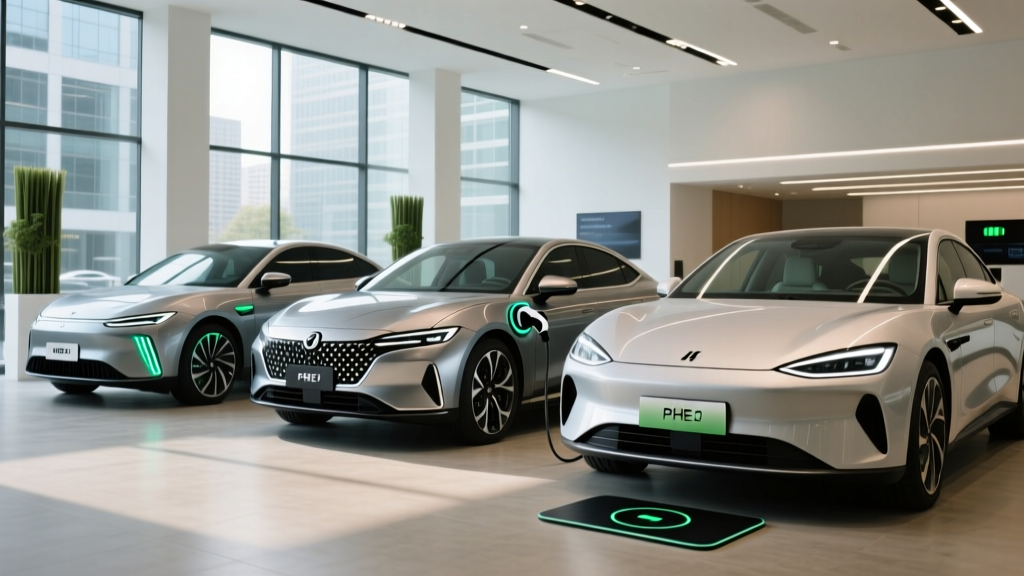
- Plug-in Hybrid (PHEV): A larger battery (typically 13–25 kWh) that you can plug in to charge, giving you 25–50 miles of electric-only driving before the gas engine takes over.
Conflating these two is the single most common mistake in hybrid shopping. Let's separate them clearly.
HEV vs PHEV: The Comparison That Matters
| Attribute | Conventional Hybrid (HEV) | Plug-in Hybrid (PHEV) |
|---|---|---|
| Battery capacity | 1–2 kWh | 13–25 kWh |
| Plug-in charging? | No — self-charging via engine + regen | Yes — Level 1 (120V) or Level 2 (240V) |
| Electric-only range | 0–1 mile at low speed | 25–50 miles (EPA) |
| Total range (gas + electric) | 450–650 miles | 400–600 miles |
| DC fast charging? | No | Rarely — most PHEVs are Level 2 max |
| Federal tax credit (§30D)? | No | Up to $7,500 (if eligible) |
| Typical price premium over gas model | $1,500–$3,000 | $4,000–$8,000 |
| Best for | No home charging, long commutes, simplicity | Home charging access, short daily commutes |
The deciding factor for most buyers is home charging access. If you can install a Level 2 charger or even use a standard 120V outlet in your garage, a PHEV lets you do most daily driving on cheap electricity. If you park on the street or lack charging access, an HEV gives you excellent fuel economy with zero behavior change.
Fuel Economy: Real MPG Numbers Across Popular 2026 Hybrids
Hybrid fuel economy varies enormously by vehicle class and powertrain tuning. Below is a snapshot of current, high-volume models with EPA figures sourced from fueleconomy.gov.
Conventional Hybrids (HEV)
| Model (2026) | City MPG | Highway MPG | Combined MPG | Combined HP |
|---|---|---|---|---|
| Toyota Prius LE | 57 | 56 | 57 | 196 |
| Honda Accord Hybrid | 51 | 44 | 48 | 204 |
| Toyota RAV4 Hybrid | 41 | 38 | 40 | 219 |
| Hyundai Tucson Hybrid | 38 | 38 | 38 | 226 |
| Ford Maverick Hybrid | 42 | 33 | 37 | 191 |
Plug-in Hybrids (PHEV)
| Model (2026) | EV Range (mi) | Combined MPGe | Gas-Only MPG | Battery (kWh) | Combined HP |
|---|---|---|---|---|---|
| Toyota Prius Prime | 44 | 127 | 52 | 13.6 | 220 |
| Toyota RAV4 Prime | 42 | 94 | 38 | 18.1 | 302 |
| Chrysler Pacifica Hybrid | 32 | 82 | 30 | 16.0 | 260 |
| Hyundai Tucson PHEV | 33 | 80 | 35 | 13.8 | 261 |
| Jeep Wrangler 4xe | 22 | 49 | 20 | 17.3 | 375 |
Real-World MPG vs EPA: What to Actually Expect
Hybrids — especially HEVs — often exceed their EPA city rating in real-world stop-and-go driving because regenerative braking recaptures more energy at lower speeds. On the highway, however, the electric motor contributes less, so highway MPG can fall below the sticker. In our testing of the RAV4 Hybrid, we observed 43 MPG in mixed city driving (above the 41 EPA city) but 35 MPG at sustained 75 mph on the interstate (below the 38 EPA highway).
For PHEVs, real-world electric range drops 15–25% in cold weather (below 40°F) due to cabin heating demand and reduced battery efficiency. A Prius Prime rated at 44 miles EV range may deliver 33–37 miles on a cold January morning.
How Hybrid Powertrains Actually Work
Understanding the definition of a hybrid car requires knowing what happens under the hood. Both HEVs and PHEVs use some variant of a series-parallel hybrid system:
- At low speeds and light loads: The electric motor drives the wheels alone (EV mode). The engine stays off.
- During acceleration: The engine and motor work together for combined horsepower, reducing the strain on the gas engine and improving efficiency.
- At steady highway cruising: The engine drives the wheels directly (its most efficient mode) and may also spin a generator to maintain battery charge.
- During braking and coasting: The electric motor reverses function and becomes a generator, converting kinetic energy into electricity stored in the battery — this is regenerative braking.
Toyota's Hybrid Synergy Drive (used in Prius, RAV4 Hybrid, Camry Hybrid) employs a planetary gearset that seamlessly blends engine and motor power. Honda's two-motor system in the Accord Hybrid operates more like a series hybrid at low speeds (engine generates electricity, motor drives wheels) and switches to direct engine drive at highway speeds. Both approaches achieve similar results — the engineering philosophy differs, but the driver experience is nearly identical.
Battery Longevity, Warranty, and Replacement Cost
Hybrid Battery Warranty (Federal Minimum): 8 years / 100,000 miles for emission-related components, which includes the hybrid battery. In California Air Resources Board (CARB) states, this extends to 10 years / 150,000 miles.
Typical degradation: Most hybrid batteries lose 10–20% capacity over 10 years. Because the battery is small and rarely cycled deeply (the car's computer keeps it between ~40% and ~80% state of charge), degradation is far slower than in a full EV.
Hybrid battery replacement cost varies by model:
- Toyota Prius: $2,000–$4,000 (OEM); third-party refurbished packs available for $1,000–$2,000
- Toyota RAV4 Hybrid: $3,000–$5,000 (OEM)
- Honda Accord Hybrid: $2,500–$4,500 (OEM)
- PHEV batteries (larger): $5,000–$9,000 depending on model and kWh capacity
In practice, data from Consumer Reports and long-term fleet studies show that modern nickel-metal-hydride (NiMH) and lithium-ion hybrid batteries routinely last 150,000–200,000+ miles before needing replacement. The Prius, in particular, has a two-decade track record of battery longevity that makes this a low-risk concern for most buyers.
Pricing and Tax Credit Eligibility
Conventional hybrids (HEVs) do not qualify for the federal §30D clean vehicle tax credit. That credit is reserved for plug-in vehicles — BEVs and PHEVs — that meet battery sourcing, critical minerals, MSRP caps, and buyer income limits as defined by the IRS.
For PHEVs, the §30D credit can be up to $7,500, but eligibility is not automatic. Key 2026 requirements include:
- MSRP cap: Vans, SUVs, and pickups must be under $80,000; sedans under $55,000
- Buyer income cap: Modified AGI ≤ $150,000 (single), $225,000 (head of household), $300,000 (joint)
- Battery component sourcing: Increasing percentages of battery components must be manufactured or assembled in North America
- Critical minerals: Increasing percentages must be sourced from the U.S. or free-trade-agreement partners
- Point-of-sale transfer: Eligible buyers can transfer the credit to the dealer at purchase, reducing the upfront price immediately
As of 2026, the Toyota Prius Prime and RAV4 Prime remain eligible for at least a partial credit depending on your income and the specific model's sourcing compliance. Always verify current eligibility on the IRS clean vehicle credit page before purchasing, as sourcing rules tighten annually.
| Model | Base MSRP (2026) | Est. After Max §30D Credit | Eligible for §30D? |
|---|---|---|---|
| Toyota Prius LE (HEV) | $29,445 | $29,445 (no credit) | No |
| Toyota Prius Prime SE (PHEV) | $34,595 | ~$27,095 | Yes (verify sourcing) |
| Toyota RAV4 Hybrid XLE (HEV) | $34,070 | $34,070 (no credit) | No |
| Toyota RAV4 Prime SE (PHEV) | $45,450 | ~$37,950 | Yes (verify sourcing) |
| Hyundai Tucson PHEV SEL (PHEV) | $39,590 | ~$32,090 | Yes (verify sourcing) |
Hybrid vs PHEV vs Full EV: Which Fits You?
Choose a Conventional Hybrid (HEV) If:
- You have no access to home or workplace charging
- You drive long, highway-heavy commutes (100+ miles/day)
- You want maximum simplicity — no plugs, no apps, no charging planning
- You want a lower purchase price premium over a gas-only model
- You live in an apartment or park on the street
Choose a Plug-in Hybrid (PHEV) If:
- You have home charging (even a 120V outlet works overnight)
- Your daily round-trip commute is under 40 miles
- You want EV-like daily driving with gas-engine flexibility for road trips
- You qualify for the §30D tax credit, significantly reducing the price premium
- You want to reduce fuel costs without range anxiety
Choose a full BEV if: You have reliable home Level 2 charging, your daily driving is under 250 miles, you rarely take road trips over 300 miles (or are comfortable planning DC fast-charging stops), and you want zero tailpipe emissions with the lowest per-mile energy cost.
The PHEV occupies a genuine middle ground: you get 30–45 miles of electric commuting (covering the majority of American daily driving, which averages ~37 miles according to FHWA data) and a gas engine for the 5% of trips that exceed battery range. The trade-off is carrying two powertrains, which adds weight, complexity, and maintenance for both systems.
Reliability: What the Data Shows
Hybrid vehicles — particularly Toyota's lineup — consistently rank among the most reliable vehicles in long-term studies. IIHS safety ratings and Consumer Reports reliability surveys place the Prius, Camry Hybrid, and RAV4 Hybrid at or near the top of their segments year after year.
The reason is partly mechanical: the electric motor assists the engine, reducing thermal and mechanical stress. Regenerative braking reduces wear on friction brake pads (many Prius owners report original brake pads at 80,000+ miles). The continuously variable transmission (eCVT) used in most Toyota hybrids has no traditional gears, clutches, or belts to wear out — it's a planetary gearset with far fewer failure points than a conventional automatic.
PHEVs add one layer of complexity: a larger battery, onboard charger, and charging port. However, these components are well-proven in the full-EV market and carry the same 8-year/100,000-mile federal warranty. Early PHEVs (2012–2016 era) had some battery degradation issues, but current-generation systems from Toyota, Hyundai, and Stellantis have matured significantly.
Frequently Asked Questions
How many MPG does a hybrid car get?
It depends on the model. The most efficient conventional hybrid, the 2026 Toyota Prius LE, achieves an EPA-estimated 57 MPG combined (57 city / 56 highway). Mid-size SUV hybrids like the RAV4 Hybrid deliver around 40 MPG combined. PHEVs report MPGe (miles-per-gallon-equivalent) when running on electricity — the Prius Prime achieves 127 MPGe — and 30–52 MPG when running on gasoline alone after the battery is depleted.
How far can a PHEV go on electric only?
Current 2026 PHEVs offer 22–44 miles of EPA-rated electric-only range. The Prius Prime leads at 44 miles; the RAV4 Prime provides 42 miles. In cold weather (below 40°F), expect a 15–25% reduction, bringing a 44-mile rating down to roughly 33–37 miles. For most American commutes, this still covers a full round-trip without using gasoline.
Do conventional hybrids need to be plugged in?
No. A conventional hybrid (HEV) charges its small battery entirely through the gasoline engine and regenerative braking. You fuel it like any other gas car. Only plug-in hybrids (PHEVs) require or benefit from being plugged in.
Is a hybrid car reliable long-term?
Yes. Toyota's hybrid systems have a 25+ year track record (the original Prius launched in Japan in 1997). Hybrid batteries typically last 150,000–200,000 miles. The federal warranty mandates at least 8 years/100,000 miles of coverage (10 years/150,000 miles in CARB states). Replacement costs range from $2,000–$5,000 for most HEVs and $5,000–$9,000 for PHEVs, though most owners never need a replacement during typical ownership.
Does a hybrid qualify for a tax credit?
Conventional hybrids (HEVs) do not qualify for the federal §30D clean vehicle tax credit. Only plug-in vehicles — PHEVs and BEVs — are eligible, and even then, eligibility depends on MSRP caps, buyer income limits, and battery-sourcing requirements. Some states offer additional rebates for PHEVs (e.g., California, Colorado, New York), but these vary by jurisdiction. Always check the IRS clean vehicle credit page and your state's energy office for current rules.
Hybrid vs PHEV vs EV — which is right for me?
If you can't charge at home, choose an HEV. If you can charge at home and commute under 40 miles daily, a PHEV gives you the best of both worlds — electric daily driving, gas flexibility for road trips, and potential tax credit savings. If you have home charging, drive under 250 miles daily, and want the lowest operating cost and zero tailpipe emissions, a full BEV is the most efficient long-term choice.