What Exactly Is a Hybrid Car?
If you've tried to define a hybrid car, you've probably noticed the term gets applied to vehicles that behave very differently from one another. At its core, a hybrid car pairs a gasoline engine with at least one electric motor and a battery pack. The motor assists the engine during acceleration, captures energy during braking (regenerative braking), and in some configurations can drive the wheels independently for short distances. The result is measurably better fuel economy than a comparable gas-only vehicle, with no behavioral change required from the driver.
But that broad definition masks a critical split in the market: conventional hybrids (HEVs) and plug-in hybrids (PHEVs). Understanding the difference is the single most important step before you buy, because it determines whether you'll ever plug in, how far you can drive on electricity alone, and whether you qualify for federal tax incentives.
HEV vs PHEV: The Fundamental Divide
| Attribute | Conventional Hybrid (HEV) | Plug-in Hybrid (PHEV) |
|---|---|---|
| Plugs in to charge? | No — charges via engine & regen | Yes — Level 1/Level 2 AC charging |
| Battery size (typical) | 0.6 – 1.6 kWh | 11 – 25 kWh usable |
| Electric-only driving | Very short, low-speed only (~1 mi) | 20 – 50 miles at highway speeds |
| Gas engine | Primary power source, motor assists | Backup once battery depletes; also assists |
| Federal tax credit (§30D) | Not eligible | Up to $7,500 (subject to rules) |
| Example (2026) | Toyota Prius LE (57 MPG combined) | Toyota RAV4 Prime (42 mi electric, 94 MPGe) |
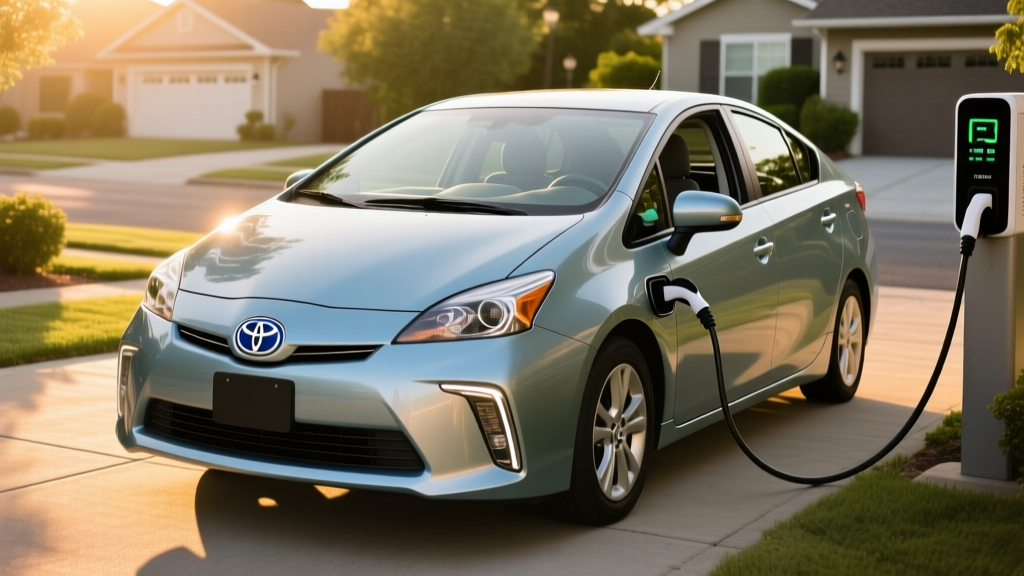
The conventional hybrid is a self-charging system. You never plug it in. The battery recharges through regenerative braking and the engine itself. A PHEV, by contrast, has a substantially larger battery that you charge from a wall outlet or charging station, giving you a meaningful electric-only range before the gas engine kicks in.
How Many MPG Does a Hybrid Get?
Hybrid fuel economy varies widely by vehicle class, but the gains over non-hybrid counterparts are consistent and measurable. Here are EPA figures for several popular 2026 models, sourced from fueleconomy.gov:
| Vehicle | Type | City MPG | Highway MPG | Combined MPG |
|---|---|---|---|---|
| Toyota Prius LE | HEV | 57 | 56 | 57 |
| Honda Accord Hybrid | HEV | 51 | 44 | 48 |
| Hyundai Tucson Hybrid | HEV | 38 | 38 | 38 |
| Toyota RAV4 Prime | PHEV | 94 MPGe (electric+gas) | 38 MPG (gas only) | |
| Chrysler Pacifica Hybrid | PHEV | 82 MPGe (electric+gas) | 30 MPG (gas only) | |
Real-World MPG: Why Hybrids Often Beat the EPA Sticker in Town
Hybrids have an unusual real-world characteristic: they frequently exceed their EPA city rating in stop-and-go traffic. That's because urban driving maximizes regenerative braking, which recaptures kinetic energy that a gas car wastes as brake heat. On a 12-mile city loop with frequent stops, a Prius LE can return 60+ MPG in warm weather. Highway driving is the opposite story — at sustained 75 MPH, aerodynamic drag dominates and the electric motor contributes less, so expect 2–4 MPG below the EPA highway figure. In cold weather (below 35°F), plan for a 5–10% reduction as the engine runs more often for cabin heat and the battery's charge/discharge efficiency drops.
PHEVs Explained: Electric-Only Range and Total Range
For plug-in hybrids, the electric-only range is the number that matters most for daily commuting. This is the distance you can travel on battery power alone before the gas engine starts. Here's how leading 2026 PHEVs stack up:
| Vehicle | Battery (kWh usable) | EV Range (miles) | Total Range (mi) | Charging (Level 2, 0–100%) | DC Fast Charge? |
|---|---|---|---|---|---|
| Toyota RAV4 Prime | 14.9 kWh | 42 | ~600 | ~2.5 hours (6.6 kW) | No |
| Jeep Wrangler 4xe | 15.3 kWh | 21 | ~370 | ~2.0 hours (7.2 kW) | No |
| Chrysler Pacifica Hybrid | 16.0 kWh | 32 | ~460 | ~2.0 hours (7.2 kW) | No |
| Toyota Prius Prime | 13.6 kWh | 44 | ~510 | ~4.0 hours (3.5 kW) | No |
A critical detail most buyers miss: nearly all PHEVs lack DC fast charging. You charge them on Level 1 (120V household outlet, roughly 8–12 hours) or Level 2 (240V, 2–4 hours). This is intentional — the battery is small enough that overnight Level 2 charging fully replenishes it, and adding DC fast-charge hardware would increase cost and weight for marginal benefit. If you need road-trip-speed charging, a full BEV with 150+ kW DC capability is a better fit.
PHEV Powertrain Snapshot: Toyota RAV4 Prime
Combined output: 302 horsepower (2.5L 4-cylinder + front and rear electric motors)
0–60 mph: 5.7 seconds
Drivetrain: Electronic AWD (rear motor engages automatically)
EV-mode top speed: 84 mph
The RAV4 Prime demonstrates the PHEV advantage: electric-motor torque fills in the low-end gap that makes small gas engines feel sluggish, producing acceleration that belies its efficiency numbers.
Hybrid Battery Longevity: Warranty, Degradation, and Replacement Cost
Battery reliability is the most common concern for first-time hybrid buyers, and it's where two decades of real-world data work in your favor. Toyota alone has sold over 25 million hybrids globally since 1997, and large-scale fleet data shows hybrid battery packs commonly last 150,000–200,000+ miles before significant degradation.
Federal Warranty Mandate and Manufacturer Coverage
Under U.S. federal emissions regulations, hybrid battery packs must carry a minimum warranty of 8 years/100,000 miles (extended to 10 years/150,000 miles in California Air Resources Board states and those adopting CARB standards). Most manufacturers meet or exceed this baseline:
- Toyota: 10 years/150,000 miles (all states, from 2020 model year forward)
- Hyundai/Kia: 10 years/100,000 miles
- Honda: 8 years/100,000 miles (10/150k in CARB states)
- Ford: 8 years/100,000 miles
What Does Replacement Actually Cost?
If your hybrid battery fails outside warranty, replacement costs depend heavily on the vehicle and whether you choose new, refurbished, or individual cell repair:
- New OEM battery (dealer): $2,000 – $6,000 depending on model. A Prius pack runs roughly $2,500–$3,500 installed; a RAV4 Prime pack is closer to $5,000–$6,000.
- Refurbished/remanufactured pack: $1,000 – $2,500 from specialists like Green Bean Battery or Exclusive Hybrid.
- Individual module replacement: Some shops replace only the degraded cells within the pack for $500–$1,200 — viable for NiMH packs in older HEVs.
For context, the average hybrid owner will never face this cost within a typical 10-year ownership period. The batteries in conventional HEVs are small (under 2 kWh) and operate within a conservative state-of-charge window (roughly 40–80%), which dramatically reduces degradation compared to a full EV battery that cycles from 10–90%.
Pricing, Tax Credits, and the Hybrid Value Equation
Hybrid pricing in 2026 reflects their position as a bridge technology — generally $1,000–$4,000 more than a gas equivalent, but less than a full BEV.
| Vehicle | Base MSRP | Hybrid Premium vs Gas | Federal Tax Credit |
|---|---|---|---|
| Toyota Prius LE (HEV) | $29,445 | N/A (hybrid-only model) | None |
| Honda Accord Hybrid | $34,990 | ~$1,700 | None |
| Toyota RAV4 Prime (PHEV) | $44,565 | ~$8,500 vs RAV4 gas | Up to $7,500* |
| Toyota Prius Prime (PHEV) | $34,070 | ~$4,600 vs Prius HEV | Up to $7,500* |
*Federal §30D tax credit eligibility for PHEVs is subject to multiple requirements that change frequently. Current rules include:
- MSRP cap: Vans/SUVs/pickups must be under $80,000; sedans under $55,000
- Buyer income cap: AGI must not exceed $150,000 (single), $225,000 (head of household), or $300,000 (joint)
- Battery sourcing: Critical minerals and battery components must meet phased-in domestic/FHA-partner sourcing percentages that tighten annually
- Point-of-sale transfer: Eligible buyers can transfer the credit to the dealer at purchase, reducing the sale price directly
Always verify current eligibility on IRS.gov before purchasing, as battery sourcing requirements have disqualified several previously eligible models. Conventional hybrids (HEVs) do not qualify for the §30D credit under any circumstance.
Hybrid vs PHEV vs EV: Which One Fits Your Life?
The right choice depends on three variables: your daily commute distance, your access to charging, and your willingness to adapt driving habits.
Choose a Conventional Hybrid (HEV) If:
- You drive 20–60 miles/day with frequent stops (city, suburban errands)
- You have no access to home or workplace charging
- You want maximum MPG with zero behavior change
- Your budget is $25,000–$40,000
- You want the lowest-maintenance electrified option
Choose a Plug-in Hybrid (PHEV) If:
- Your daily commute is under 30–40 miles round-trip
- You can charge at home (even a standard 120V outlet works overnight)
- You take road trips where EV charging infrastructure is sparse
- You want electric daily driving with gas-powered flexibility
- You qualify for the federal PHEV tax credit
Choose a Full EV (BEV) If:
- Your daily driving is under 250 miles and you can charge at home with Level 2
- You want zero tailpipe emissions and the lowest per-mile fuel cost
- You're willing to plan longer road trips around DC fast charging
- You want minimal maintenance (no oil changes, fewer moving parts)
- Your budget accommodates $35,000–$60,000+ and you qualify for the full $7,500 credit
The hybrid's strongest argument in 2026 remains its flexibility. An HEV delivers 40–57 MPG in any condition, any weather, with no infrastructure dependency. A PHEV gives you 20–44 miles of electric commuting that covers most Americans' daily driving (the U.S. average is ~37 miles/day, per FHWA data), while the gas engine eliminates range anxiety on longer trips. For buyers who aren't ready to commit to a full EV — whether due to apartment living, unreliable public charging in their area, or frequent travel to charging-desert regions — hybrids remain the most pragmatic path to lower fuel costs.
Real Ownership Considerations Most Guides Skip
Three practical details that affect daily life with a hybrid:
Cargo and packaging: Hybrid battery packs are typically mounted under the rear seat or in the trunk floor. In most modern designs (Prius, RAV4, Accord Hybrid), this has minimal impact on cargo space. But in some PHEVs, the larger battery can reduce cargo volume by 2–5 cubic feet or eliminate a spare tire. Always check cargo specs with seats up and down.
Insurance costs: Hybrids typically carry insurance premiums 5–10% higher than gas equivalents due to higher repair costs for the powertrain and battery. PHEVs sit between HEVs and full EVs. Get quotes before buying — the fuel savings should outweigh the premium increase, but it narrows the gap.
Resale value: Toyota and Honda hybrids have historically held resale value exceptionally well, often depreciating less than gas counterparts due to strong used-market demand. PHEVs are more variable — models with short electric range or discontinued trims can depreciate faster as battery technology improves.
Frequently Asked Questions
Do I need to plug in a hybrid car?
No — not if it's a conventional hybrid (HEV). HEVs like the Toyota Prius or Honda Accord Hybrid charge their own batteries through regenerative braking and the gas engine. You fuel them like any other car. Only plug-in hybrids (PHEVs) benefit from being plugged in, and even they can operate purely on gasoline if you never charge them (though you'd miss the efficiency benefit).
How long does a hybrid battery last before needing replacement?
Real-world data from millions of Toyota, Honda, and Hyundai hybrids shows battery packs commonly lasting 150,000–200,000+ miles. Federal law mandates an 8-year/100,000-mile warranty minimum (10 years/150,000 miles in CARB states). Most hybrid owners will never replace the battery during their ownership period.
Is a PHEV worth it if I can't charge at home?
Generally, no. Without regular charging, a PHEV operates as a heavier, more expensive conventional hybrid once the battery depletes. You'll still get decent MPG (the RAV4 Prime returns 38 MPG combined on gas alone), but you're paying a premium for electric range you never use. An HEV is the better choice for no-plug lifestyles.
Can a hybrid car drive on electric power only?
A PHEV can drive 20–50 miles on electricity alone at full highway speeds. A conventional HEV can only creep short distances (typically under 1 mile) at low speeds in EV mode — it's designed for assist, not independent electric driving.
Are hybrids more expensive to maintain than gas cars?
No. Hybrids actually tend to cost less in brake maintenance (regenerative braking reduces pad wear significantly) and have no additional scheduled maintenance beyond a standard gas car. The electric motor has no wearable components. The only potential long-term cost is battery replacement after warranty expiration, but this is statistically uncommon within 15 years.
Do hybrids qualify for any tax incentives in 2026?
Conventional hybrids (HEVs) do not qualify for the federal §30D clean vehicle credit. Plug-in hybrids (PHEVs) may qualify for up to $7,500, subject to MSRP caps, buyer income limits, and battery sourcing requirements that change annually. Some states offer additional rebates for PHEVs — check your state energy office or AFDC.energy.gov for local incentives.