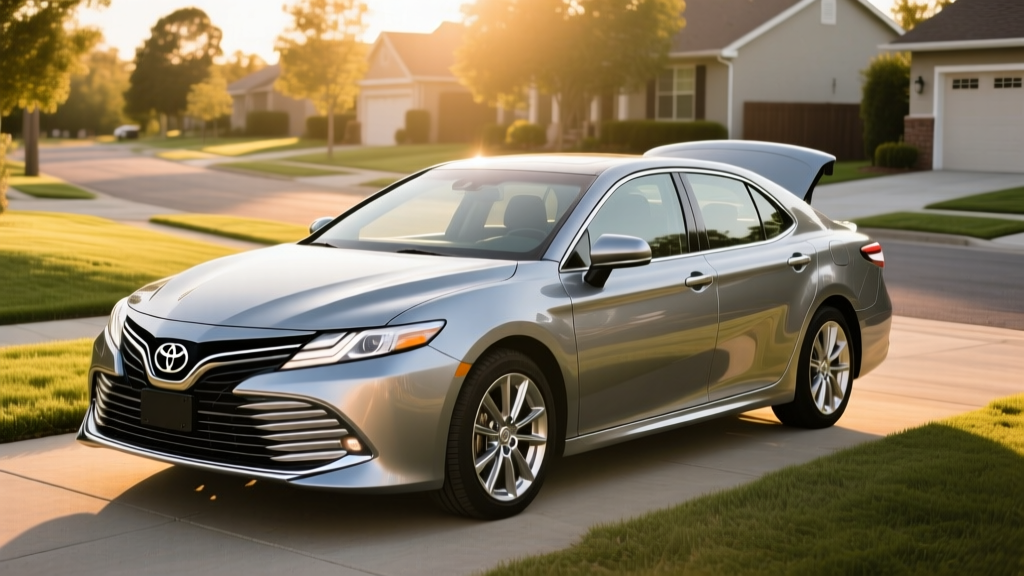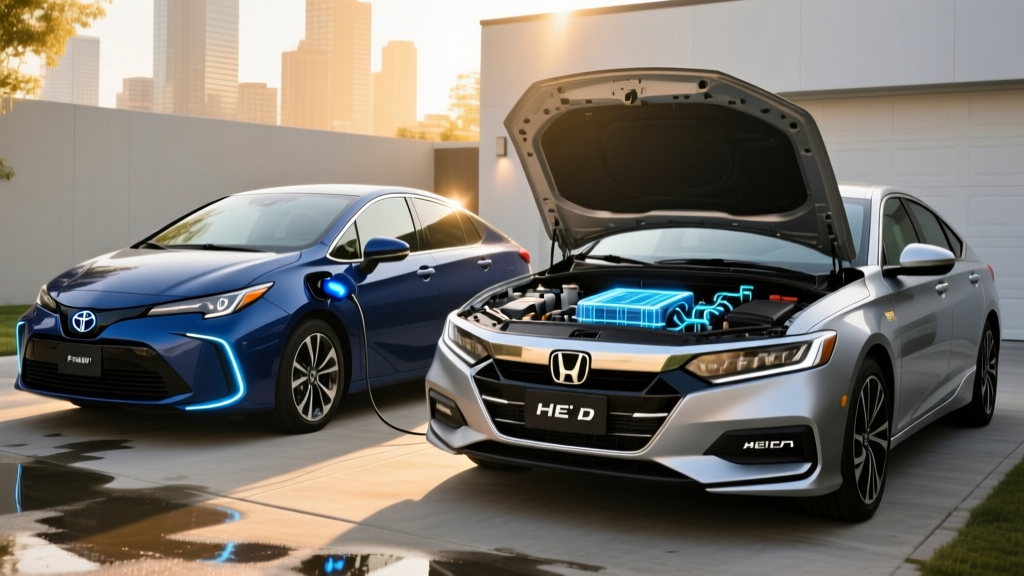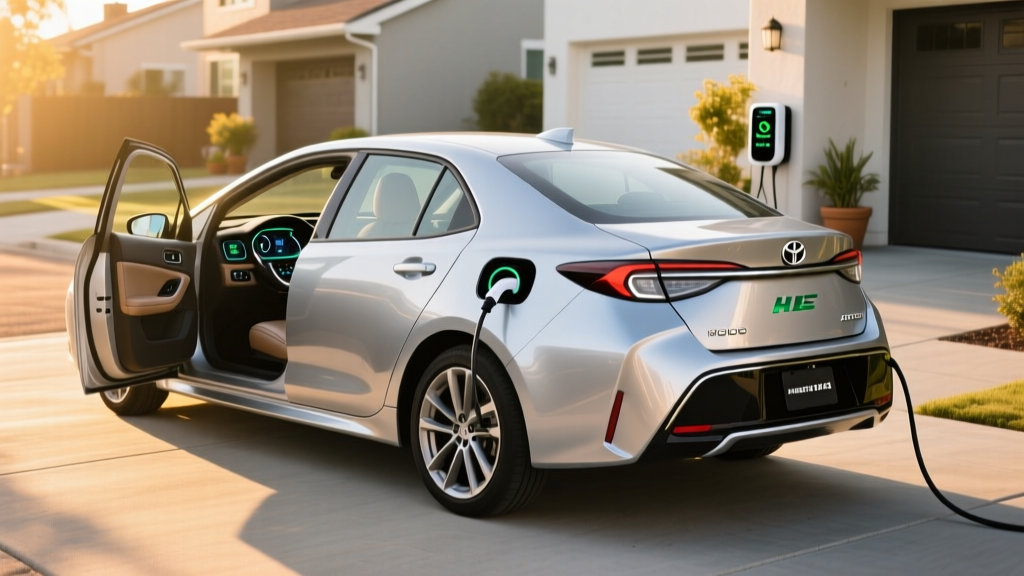
If you want maximum fuel efficiency without ever plugging in, the Toyota Corolla Hybrid LE remains one of the most practical choices on the market. It's a conventional hybrid (HEV), not a plug-in, which means it charges its own battery through regenerative braking and the gasoline engine — no outlet needed. For 2026, the Corolla Hybrid LE continues as the value-oriented entry point into Toyota's hybrid lineup, offering EPA-estimated fuel economy that rivals much smaller cars while providing the practicality of a compact sedan.
This guide covers the exact numbers buyers need: EPA MPG breakdowns, real-world fuel economy observations, powertrain specs, battery warranty details, and how the Corolla Hybrid LE stacks up against plug-in hybrids and full battery-electric vehicles. If you're cross-shopping electrified options, this is your data-driven starting point.
2026 Corolla Hybrid LE Fuel Economy: EPA Numbers and Real-World MPG
The headline number for the Corolla Hybrid LE is its EPA-estimated combined fuel economy. Here is the official breakdown for the 2026 model year:
| Driving Condition | EPA-Estimated MPG |
|---|---|
| City | 53 MPG |
| Highway | 46 MPG |
| Combined | 50 MPG |
Source: fueleconomy.gov
A few things to note about these figures. The Corolla Hybrid LE achieves higher MPG in city driving than on the highway — this is a hallmark of conventional hybrids. In stop-and-go traffic, the electric motor handles low-speed propulsion and regenerative braking recaptures energy that would otherwise be wasted. On sustained highway cruising, the gasoline engine carries most of the load.
Real-World MPG: What Owners Actually See
In real-world driving, many Corolla Hybrid owners report exceeding the EPA city estimate in warm-weather urban conditions, with some seeing 55–58 MPG on routes with frequent stops. However, cold weather (below 40°F) reduces fuel economy by roughly 5–10% as the engine runs more frequently to maintain cabin heat and battery temperature. Highway fuel economy at sustained 75+ mph speeds tends to drop to 42–44 MPG due to aerodynamic drag. For mixed suburban and city driving in moderate temperatures, expect 48–52 MPG — closely matching the EPA combined figure.
With the 2026 Corolla Hybrid LE's 11.3-gallon fuel tank, real-world range typically falls between 520 and 600 miles per tank, depending on driving conditions.
HEV vs. PHEV vs. EV: Where Does the Corolla Hybrid LE Fit?
The Corolla Hybrid LE is a conventional hybrid (HEV), which is fundamentally different from a plug-in hybrid (PHEV) or a battery-electric vehicle (BEV). Understanding these distinctions prevents costly mismatches at purchase time.
| Feature | HEV (Corolla Hybrid LE) | PHEV (e.g., Prius Prime) | BEV (e.g., Tesla Model 3) |
|---|---|---|---|
| Plug-in Required? | No | Yes (Level 1/2) | Yes (Level 2/DCFC) |
| Electric-Only Range | None (EV assist only) | ~40–44 miles | 250–360+ miles |
| Battery Size | ~0.9 kWh (small buffer) | ~13.6 kWh usable | 50–82 kWh |
| Fuel/Charging | Gasoline only | Gasoline + electricity | Electricity only |
| Home Charging Install | Not needed | Recommended (Level 2) | Essential (Level 2) |
| Federal Tax Credit (§30D) | Not eligible | Up to $7,500* | Up to $7,500* |
*§30D credit eligibility depends on MSRP caps, buyer income limits, battery sourcing requirements, and manufacturer volume. Consult IRS.gov and a tax professional for your situation.
The Corolla Hybrid LE is best understood as a gasoline car that happens to be extremely efficient. It has a small battery pack that assists the engine during acceleration and captures energy during braking, but it cannot drive on electricity alone for meaningful distances. If you want electric-only commuting capability, you need a PHEV or BEV.
Powertrain Specs: Engine, Motor, and Combined Output
| Specification | 2026 Corolla Hybrid LE |
|---|---|
| Engine | 1.8L 4-cylinder Atkinson-cycle |
| Electric Motor | Permanent-magnet synchronous (front axle) |
| Combined Net Horsepower | 138 hp |
| Transmission | Continuously Variable (eCVT) |
| Drivetrain | Front-Wheel Drive (AWD-e available on SE/XLE) |
| 0–60 mph (est.) | ~9.2 seconds |
| Fuel Tank Capacity | 11.3 gallons |
| Battery Type | Lithium-ion (traction battery) |
| Battery Capacity | ~0.9 kWh (not plug-in usable) |
The 1.8L Atkinson-cycle engine is tuned for efficiency rather than peak power, and Toyota's hybrid synergy drive system seamlessly blends engine and electric motor output through the eCVT. The result is smooth, linear acceleration that feels adequate for commuting and merging, though the 138 hp combined output means passing at highway speeds requires planning. The LE trim comes exclusively in front-wheel drive; all-wheel drive (AWD-e, which adds a rear-axle electric motor) is reserved for the SE and XLE trims.
Pricing, Trims, and Tax Credit Eligibility
The 2026 Toyota Corolla Hybrid LE starts at an MSRP of approximately $24,425 (including destination charge). This positions it as one of the most affordable hybrid vehicles in the US market. Higher trims — the SE and XLE — add features like AWD-e, upgraded infotainment, and premium interior materials, with MSRPs ranging from roughly $26,500 to $29,000.
Federal Tax Credit: Does the Corolla Hybrid LE Qualify?
No. The Corolla Hybrid LE is a conventional hybrid (HEV), and under current IRS §30D rules, only plug-in electric vehicles (PHEVs and BEVs) with a minimum battery capacity of 7 kWh qualify for the federal clean vehicle credit. The Corolla Hybrid's sub-1 kWh battery does not meet this threshold.
If the federal tax credit is a priority in your purchase decision, you would need to look at a PHEV like the Toyota Prius Prime (starting ~$33,445, eligible for up to $3,750–$7,500 depending on sourcing compliance) or a BEV. However, the Corolla Hybrid LE's significantly lower purchase price means its total cost of ownership can still compete favorably — especially for buyers who lack home charging access.
Hybrid Battery Warranty and Replacement Cost
Warranty: Toyota covers the Corolla Hybrid's traction battery for 10 years or 150,000 miles (whichever comes first) in all 50 states. This is the standard Toyota hybrid battery warranty and applies to all hybrid components including the inverter and hybrid control module.
Replacement Cost: If the hybrid battery fails outside of warranty, a new OEM replacement typically costs between $2,000 and $3,500 installed at a dealership. Refurbished or aftermarket units can reduce this to $1,000–$2,000. In practice, Toyota's hybrid batteries have demonstrated exceptional longevity — many first-generation Prius batteries lasted well beyond 200,000 miles with minimal degradation.
Degradation Reality: Because the Corolla Hybrid uses a small battery with a conservative state-of-charge buffer (never fully charging or fully depleting), degradation is minimal. Owners typically see no noticeable fuel economy decline over 100,000+ miles.
Reliability and Long-Term Ownership Costs
Toyota's hybrid powertrain is one of the most proven electrified systems in automotive history, with over 25 years of continuous refinement since the original Prius. The Corolla Hybrid LE carries forward this track record. The eCVT transmission has no traditional gears, belts, or clutch packs — it's a planetary gearset that is mechanically simple and extremely durable. There is no starter motor or alternator to replace (the hybrid motor/generator handles both functions).
According to data from IIHS and long-term owner surveys, the primary maintenance items remain standard: oil changes (the gasoline engine still requires them), tire rotations, brake pad replacement (though regenerative braking extends pad life significantly — many hybrid owners report 80,000+ miles on original brake pads), and cabin air filter changes.
5-Year Cost of Ownership Estimate
For a driver covering 15,000 miles per year at a national average gas price of $3.25/gallon:
| Cost Category | Corolla Hybrid LE (50 MPG) | Corolla Gas LE (33 MPG) |
|---|---|---|
| Annual Fuel Cost | ~$975 | ~$1,477 |
| 5-Year Fuel Cost | ~$4,875 | ~$7,386 |
| 5-Year Fuel Savings (Hybrid) | ~$2,511 | |
The hybrid premium over the gas-only Corolla LE is roughly $2,000–$2,500 at MSRP. At current fuel prices, most drivers will recoup that premium within 4–5 years through fuel savings alone, with the hybrid continuing to save money for the remainder of ownership.
Who Should Buy the Corolla Hybrid LE — and Who Shouldn't
Pros
- 50 MPG combined EPA — exceptional efficiency without behavioral changes
- No plug-in charging required — works for apartment dwellers and street parkers
- Low ~$24,425 MSRP entry point for hybrid ownership
- 10-year/150,000-mile hybrid battery warranty
- Proven Toyota hybrid reliability with 25+ year track record
- 520–600 mile real-world range per tank
Cons
- Not eligible for federal §30D tax credit (HEV, not PHEV/BEV)
- Modest 138 hp — adequate but not quick (0–60 in ~9.2 sec)
- No electric-only driving mode for zero-emission zones
- FWD only on LE trim (AWD-e requires SE/XLE upgrade)
- Higher highway noise compared to EVs at cruising speed
- Infotainment and interior materials reflect budget positioning
Choose the Corolla Hybrid LE If:
- You want maximum MPG without changing your fueling habits
- You live in an apartment or lack access to home/workplace charging
- Your budget is under $27,000 and you want a proven, reliable sedan
- You drive primarily in city and suburban conditions where hybrid efficiency peaks
- You plan to own the car 8+ years and value long-term cost predictability
Consider a PHEV or BEV Instead If:
- You have home charging access and want to reduce or eliminate gasoline use
- You want to claim the federal §30D tax credit (up to $7,500 for qualifying PHEVs/BEVs)
- Your commute is under 40 miles round-trip and you want electric-only daily driving (look at Prius Prime)
- You want stronger acceleration and a quieter driving experience (look at a BEV like the Hyundai Ioniq 6 or Tesla Model 3)
Corolla Hybrid LE vs. Competing Hybrids
The Corolla Hybrid LE's closest competitors include the Hyundai Elantra Hybrid Blue (EPA 54 MPG combined, ~$26,250 MSRP) and the Honda Civic Hybrid (EPA 49 MPG combined, ~$28,950 MSRP). The Elantra Hybrid edges out the Corolla on EPA numbers by 4 MPG combined but carries a slightly higher price. The Civic Hybrid offers more power (200 hp combined) and a more refined interior but sacrifices a few MPG and costs roughly $4,500 more.
The Corolla Hybrid LE's advantage remains its combination of the lowest entry price, Toyota's hybrid reliability reputation, and strong city MPG. For buyers who prioritize proven longevity and cost-per-mile above all else, it remains the benchmark.
Frequently Asked Questions
How many MPG does the 2026 Corolla Hybrid LE get?
The EPA estimates 53 MPG city, 46 MPG highway, and 50 MPG combined. Real-world city driving in warm weather often exceeds 53 MPG, while sustained highway driving at 75+ mph may drop to 42–44 MPG. Cold weather reduces fuel economy by 5–10%.
Does the Corolla Hybrid LE need to be plugged in?
No. The Corolla Hybrid LE is a conventional hybrid (HEV). Its small battery charges through regenerative braking and the gasoline engine. You simply fill it with gasoline like any other car.
Does the Corolla Hybrid LE qualify for any federal tax credit?
No. Under current IRS §30D rules, only plug-in vehicles (PHEVs and BEVs) with batteries of 7 kWh or larger qualify. The Corolla Hybrid's sub-1 kWh battery does not meet this threshold. Some states or local utilities may offer separate incentives for high-efficiency vehicles — check your state's energy office for details.
How long will the Corolla Hybrid battery last, and what does replacement cost?
Toyota warranties the hybrid battery for 10 years or 150,000 miles. In practice, Toyota hybrid batteries frequently last 200,000+ miles with minimal degradation due to conservative charge management. Out-of-warranty replacement costs $2,000–$3,500 for a new OEM unit or $1,000–$2,000 for a refurbished battery.
Is the Corolla Hybrid LE reliable compared to gas-only cars?
Toyota's hybrid system has fewer wear items than a conventional powertrain — no starter, no alternator, no traditional transmission clutches, and regenerative braking extends brake pad life significantly. Long-term reliability data across millions of Toyota hybrids shows equal or better durability compared to gas-only equivalents.
How does the Corolla Hybrid LE compare to a full EV for daily commuting?
If you have reliable home charging and a commute under 250 miles round-trip, a BEV will offer lower per-mile energy costs (electricity at $0.13/kWh vs. gasoline at $3.25/gallon) and zero tailpipe emissions. However, a BEV requires a Level 2 home charger installation ($500–$2,000+), has a higher purchase price, and may carry higher insurance premiums. The Corolla Hybrid LE is the pragmatic choice if charging access is uncertain or if you regularly take long road trips where charging infrastructure is sparse.
Is AWD available on the Corolla Hybrid LE?
No. The LE trim is front-wheel drive only. Toyota's AWD-e system (which adds a rear-axle electric motor for traction in slippery conditions) is available on the Hybrid SE and XLE trims at a higher MSRP.
For the most current EPA fuel economy data, visit fueleconomy.gov. For federal tax credit rules, consult the IRS clean vehicle credit page. Toyota specifications sourced from Toyota's official Corolla Hybrid page. Always verify specs, pricing, and credit eligibility with your dealer and tax professional before purchasing.