Quick Verdict: Two Hybrid Titans, Different Philosophies
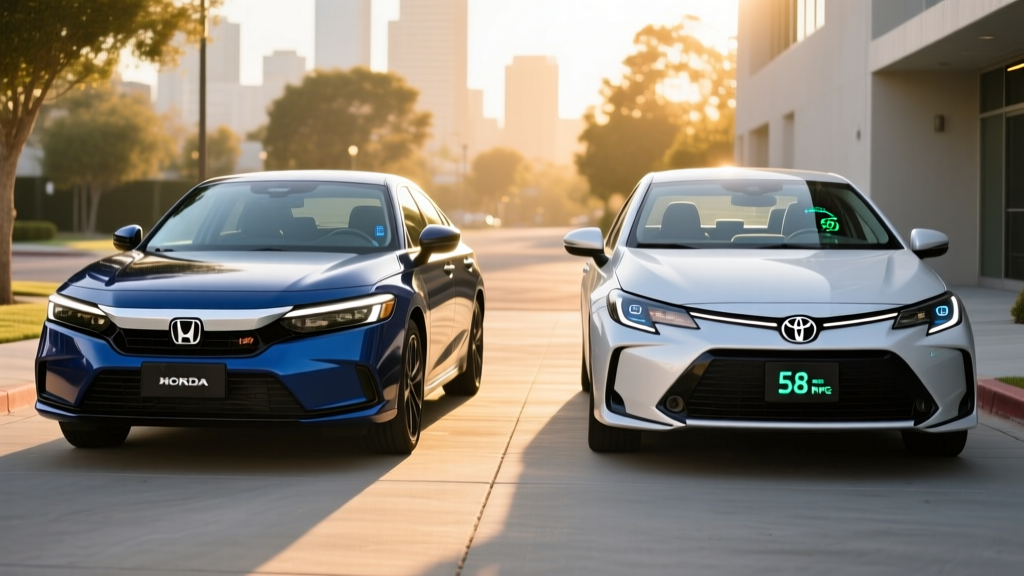
The compact hybrid sedan segment comes down to two nameplates that have defined reliability and efficiency for decades. The 2026 Honda Civic Hybrid and 2026 Toyota Corolla Hybrid are both conventional hybrids (HEVs) — meaning they recharge their small batteries through regenerative braking and the gasoline engine, never requiring a plug. But they take meaningfully different approaches to the hybrid formula.
The Corolla Hybrid prioritizes maximum fuel economy with a comfort-oriented tune, achieving an EPA-estimated 53 MPG combined in its LE FWD trim. The Civic Hybrid leans into driving engagement and a more premium interior feel while still delivering an impressive 49 MPG combined. Neither is a plug-in hybrid (PHEV), and neither qualifies for the federal §30D EV tax credit — but both offer exceptional total cost of ownership that undercuts most gas-only competitors over a five-year span.
Here's the full data-driven breakdown to help you choose.
Civic Hybrid vs Corolla Hybrid: Side-by-Side Specs
| Specification | 2026 Honda Civic Hybrid (Sport Touring) | 2026 Toyota Corolla Hybrid (LE AWD) |
|---|---|---|
| Powertrain | 2.0L 4-cyl + 2 electric motors (e:HEV) | 1.8L 4-cyl + electric motor (Toyota Hybrid System) |
| Combined Horsepower | 200 hp | 138 hp |
| Combined Torque | 232 lb-ft | ~155 lb-ft (engine) + motor torque |
| EPA City MPG | 50 | 51 (FWD) / 47 (AWD) |
| EPA Highway MPG | 47 | 44 (FWD) / 41 (AWD) |
| EPA Combined MPG | 49 | 53 (FWD) / 44 (AWD) |
| Fuel Tank Capacity | 12.4 gal | 11.4 gal |
| Estimated Total Range | ~607 mi | ~604 mi (FWD) |
| 0–60 mph (est.) | ~6.8 sec | ~9.0 sec |
| Drivetrain | FWD (standard) | FWD or AWD (electronic) |
| Cargo Volume | 14.8 cu ft | 13.1 cu ft |
| Base MSRP | ~$30,850 (Sport Hybrid) | ~$24,500 (LE Hybrid FWD) |
| Hybrid Battery Warranty | 8 yr / 100,000 mi | 10 yr / 150,000 mi |
Sources: fueleconomy.gov, Honda and Toyota official specifications. Trims and pricing vary by model year; verify with your dealer.
Fuel Economy: EPA Numbers and Real-World MPG
Both hybrids shine in city driving, where electric-motor assist and regenerative braking deliver their biggest advantage over conventional gas engines. Here's the EPA breakdown:
| Model / Trim | City MPG | Highway MPG | Combined MPG |
|---|---|---|---|
| Civic Hybrid Sport Touring | 50 | 47 | 49 |
| Corolla Hybrid LE (FWD) | 53 | 46 | 50 |
| Corolla Hybrid LE (AWD) | 47 | 41 | 44 |
| Corolla Hybrid SE (FWD) | 50 | 43 | 47 |
EPA estimates via fueleconomy.gov. Your actual mileage will vary.
Powertrain Deep Dive: How Each Hybrid System Works
Understanding the engineering under the hood explains why these cars feel so different despite similar fuel-economy stickers.
Honda's Two-Motor e:HEV System
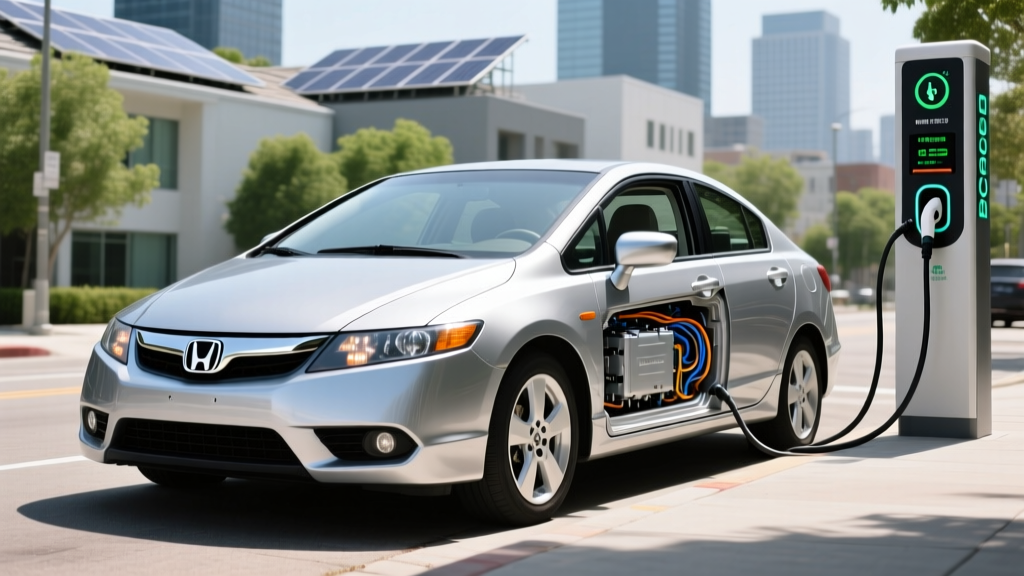
Honda's hybrid powertrain pairs a 2.0-liter Atkinson-cycle four-cylinder engine with two electric motors — one functioning primarily as a generator and the other as the drive motor. In most city and suburban driving, the electric drive motor propels the wheels while the engine acts as a generator to feed electricity. At higher highway speeds, a lock-up clutch connects the engine directly to the wheels for efficiency. The result: 200 combined horsepower and an EV-like smoothness in daily driving that makes the Civic Hybrid feel significantly quicker than its EPA numbers suggest.
Toyota's Series-Parallel Hybrid System (THS)
Toyota uses a 1.8-liter four-cylinder paired with a single electric drive motor through a planetary gearset that seamlessly blends power sources. This is the fifth generation of Toyota's Hybrid System, refined over 25+ years. It's less powerful at 138 combined horsepower, but its simplicity and Toyota's mastery of the control software deliver class-leading efficiency. The available electronic AWD adds a small rear-mounted electric motor that engages the rear wheels only when traction is needed — it doesn't meaningfully hurt fuel economy but does drop the combined EPA number to 44 MPG.
HEV vs PHEV vs EV: Which Powertrain Fits You?
| Factor | Conventional Hybrid (HEV) | Plug-In Hybrid (PHEV) | Battery Electric (BEV) |
|---|---|---|---|
| Plug-in required? | No | Yes (for EV range) | Yes |
| Electric-only range | ~1 mi (low-speed creep) | 25–45 mi typical | 200–400 mi |
| Battery size | 1–2 kWh | 10–20 kWh | 50–100+ kWh |
| Home charging needed? | No | Recommended (Level 2) | Essential |
| Federal tax credit (§30D) | Not eligible | Eligible (if requirements met) | Eligible (if requirements met) |
| Best for | No home charging, simplicity, low cost | Short commute + road trips | Home charging access, max savings |
If you have reliable access to home Level 2 charging and most daily trips are under 40 miles, a PHEV like the Prius Prime or a full BEV might save more on fuel. But if you park on the street, live in an apartment without charging, or simply want maximum simplicity with no behavioral change, the Civic or Corolla Hybrid is the pragmatic choice.
Pricing, Trims, and Tax Credit Eligibility
Here's where the Corolla Hybrid pulls ahead on pure value:
| Model / Trim | Approx. MSRP (2026) | Federal §30D Credit | Effective Price |
|---|---|---|---|
| Corolla Hybrid LE (FWD) | $24,500 | $0 (not eligible) | $24,500 |
| Corolla Hybrid SE (FWD) | $27,000 | $0 | $27,000 |
| Corolla Hybrid XLE (AWD) | $29,500 | $0 | $29,500 |
| Civic Sport Hybrid | $30,850 | $0 (not eligible) | $30,850 |
| Civic Sport Touring Hybrid | $33,350 | $0 | $33,350 |
Reliability, Battery Lifespan, and Replacement Cost
Toyota: 10 years / 150,000 miles (hybrid battery)
Honda: 8 years / 100,000 miles (hybrid battery)
Both warranties guarantee the battery will retain sufficient capacity; if it falls below the manufacturer's threshold, replacement is covered.
Hybrid battery longevity is one of the most common buyer concerns — and one of the most overblown. Toyota's hybrid system has been in mass production since the 1997 Prius. Real-world data from fleets and high-mileage owners consistently shows Toyota hybrid batteries lasting 150,000–200,000+ miles with minimal degradation, largely because the system never deeply cycles the small battery (it operates in a narrow state-of-charge window between roughly 40% and 80%).
Honda's newer two-motor system has less long-term track record but has proven robust in the Accord Hybrid and CR-V Hybrid since 2020. Both manufacturers use proven nickel-metal hydride (NiMH) or lithium-ion chemistry in small packs that experience far less stress than a full EV battery.
If replacement is ever needed: A Toyota hybrid battery replacement runs approximately $2,000–$4,000 at a dealer, with refurbished options available for $1,000–$2,000. Honda hybrid battery replacement is in a similar range. Given that most hybrid batteries outlast the vehicle's economic life, this is a low-probability expense for most buyers.
Both vehicles carry strong reliability reputations. Toyota consistently tops IIHS and J.D. Power dependability studies, while Honda's Civic platform has proven durable over generations. Neither hybrid system introduces a significant reliability risk compared to their gas-only counterparts — in fact, the regenerative braking system reduces wear on brake pads, often extending brake service intervals.
Driving Experience, Interior, and Daily Practicality
The spec sheet tells only part of the story. On the road, these two hybrids diverge in character.
✓ Civic Hybrid Pros
- 200 hp — genuinely quick for a hybrid
- Refined, near-premium interior quality
- 14.8 cu ft trunk (larger than Corolla)
- Smooth EV-like low-speed driving feel
- Strong resale value
✗ Civic Hybrid Cons
- ~$6,000 more expensive at base
- 4 MPG less combined than Corolla FWD
- No AWD option
- Shorter hybrid battery warranty (8 vs 10 yr)
✓ Corolla Hybrid Pros
- Best-in-class 53 MPG combined (FWD)
- Lowest entry price in the segment
- Available electronic AWD
- 10 yr / 150,000 mi battery warranty
- Proven 25-year hybrid track record
✗ Corolla Hybrid Cons
- 138 hp — noticeably slower acceleration
- Smaller trunk (13.1 cu ft)
- More basic interior materials
- Ride quality can feel firm over rough pavement
- Infotainment interface lags Honda's
Who Should Buy Which — Decision Framework
Choose the Toyota Corolla Hybrid if:
- Maximum MPG and lowest cost of ownership are your top priorities
- You want AWD for snow-belt winters (the only AWD option here)
- You plan to keep the car 10+ years and value the longer battery warranty
- Your budget is under $28,000
Choose the Honda Civic Hybrid if:
- You want a hybrid that doesn't feel like a compromise on performance
- Interior quality, tech, and trunk space matter to you
- You do a lot of highway merging and passing where 200 hp makes a real difference
- You're willing to pay ~$6,000 more for a more refined driving experience
Look at a PHEV or full EV instead if:
- You have home Level 2 charging and want to eliminate most gasoline use
- Your daily commute is under 40 miles (a PHEV covers it on electricity alone)
- You want to access the federal §30D tax credit (up to $7,500 for qualifying PHEVs/BEVs)
Frequently Asked Questions
How many MPG does the Civic Hybrid get?
The 2026 Honda Civic Hybrid achieves an EPA-estimated 50 city / 47 highway / 49 combined MPG. In real-world city driving with warm weather, owners report 52–55 MPG. Highway cruising at 75+ mph typically yields 42–45 MPG. Cold weather reduces these figures by roughly 5–10%.
How many MPG does the Corolla Hybrid get?
The 2026 Corolla Hybrid LE (FWD) achieves an EPA-estimated 53 city / 46 highway / 50 combined MPG. The AWD version drops to 47 city / 41 highway / 44 combined. Real-world city MPG often exceeds the EPA number; highway and cold-weather driving will fall below it.
Do either of these hybrids need to be plugged in?
No. Both the Civic Hybrid and Corolla Hybrid are conventional hybrids (HEVs). Their small batteries recharge entirely through regenerative braking and the gasoline engine. You fuel them like any other car — just with fewer fill-ups thanks to 50+ MPG efficiency.
Do the Civic or Corolla Hybrid qualify for any federal tax credit?
No. The federal §30D Clean Vehicle Credit applies only to plug-in electric vehicles (PHEVs and BEVs) that meet battery sourcing, MSRP, and buyer income requirements. Conventional hybrids are not eligible. Some states may offer separate hybrid incentives — check the AFDC state laws database for current programs.
How long will the hybrid battery last, and what does replacement cost?
Toyota warranties its hybrid battery for 10 years / 150,000 miles; Honda covers 8 years / 100,000 miles. In practice, Toyota hybrid batteries routinely last 150,000–200,000+ miles. If replacement is needed, expect $2,000–$4,000 at a dealer, with refurbished options for $1,000–$2,000. Given the narrow state-of-charge operating window, deep-cycle degradation is minimal.
Which is more reliable — Civic Hybrid or Corolla Hybrid?
Both have strong reliability records. Toyota's hybrid system has 25+ years of proven durability and consistently ranks at the top of dependability studies. Honda's two-motor system is newer but has performed well since its 2020 introduction in the Accord Hybrid. Neither hybrid system adds significant reliability risk versus a gas-only model.
Is the Corolla Hybrid AWD system worth it?
If you regularly drive in snow or rain, the electronic AWD system is a worthwhile addition. It uses a small independent rear motor that engages only when slip is detected, adding minimal weight and only a small MPG penalty (44 combined vs 50 FWD). It's not a performance AWD system — it's a traction aid — but it fills a gap the Civic Hybrid (FWD only) cannot.