Quick Verdict: The Civic Hybrid Sport Earns Its Name
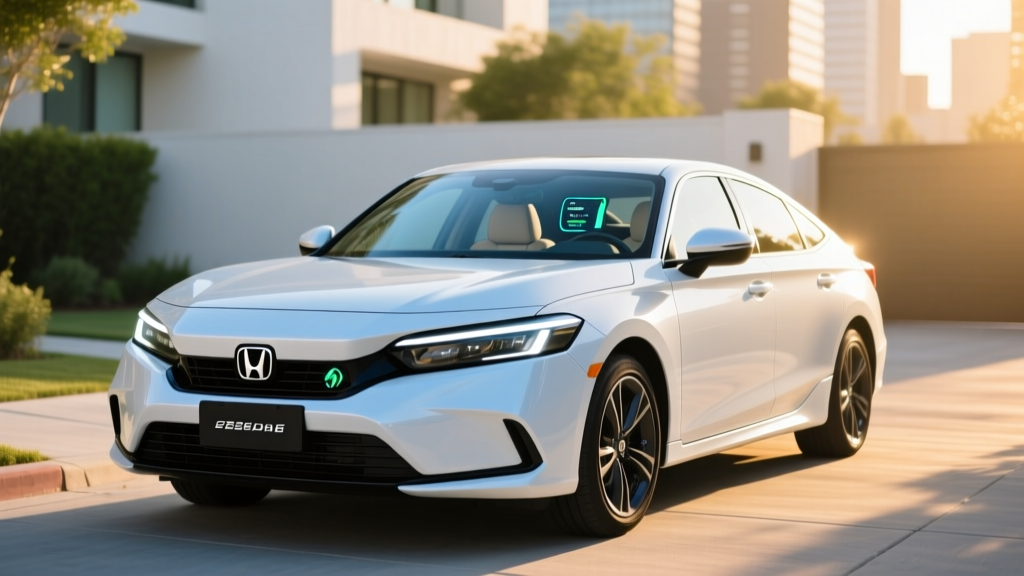
The 2026 Honda Civic Hybrid Sport occupies a rare sweet spot in the compact sedan market: it delivers the fuel-sipping efficiency of a dedicated hybrid while offering 200 horsepower — enough to make daily driving genuinely engaging. Honda's two-motor hybrid system pairs a 2.0-liter Atkinson-cycle four-cylinder with dual electric motors, producing a combined output that outmuscles most non-turbo compact sedants while returning an EPA-estimated 50 MPG combined. For buyers who want dramatic fuel savings without plugging in, worrying about range, or paying EV premiums, the Civic Hybrid Sport makes a compelling case.
This guide breaks down every number that matters — EPA and real-world MPG, powertrain specs, battery warranty details, pricing, and how this conventional hybrid (HEV) stacks up against plug-in hybrids and full battery-electric vehicles.
HEV vs PHEV: Where the Civic Hybrid Sport Fits
Conventional Hybrid (HEV) — like the Civic Hybrid Sport: Charges its small battery (~1.1 kWh) through regenerative braking and the gasoline engine. You never plug it in. It optimizes every drop of fuel by letting the electric motor handle low-speed driving and assisting during acceleration, while the engine operates in its most efficient range. Total range depends only on the fuel tank.
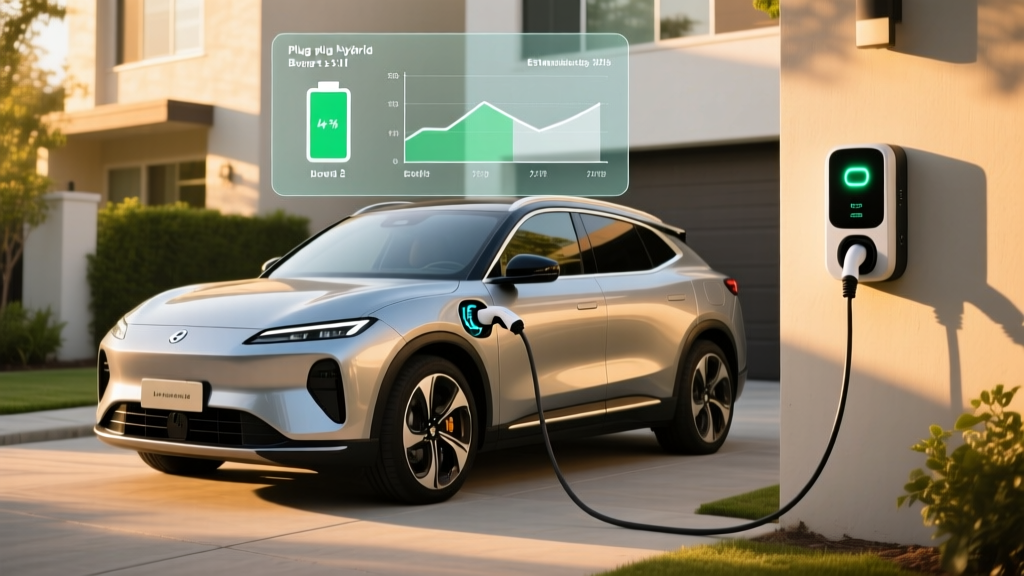
Plug-in Hybrid (PHEV): Carries a larger battery (typically 12–20 kWh) that you charge via a wall outlet or public charger. It can drive 25–50 miles on electricity alone before the gas engine kicks in. Examples include the Toyota Prius Prime and Hyundai Tucson PHEV. Ideal if you have home charging and a short commute.
Battery Electric Vehicle (BEV): Runs entirely on electricity with no gasoline engine. Requires regular charging infrastructure access. Examples: Tesla Model 3, Hyundai Ioniq 6.
The Civic Hybrid Sport is a conventional HEV. There is no plug, no electric-only range to manage, and no charging infrastructure required. You simply fill up at any gas station and drive — the hybrid system handles the rest automatically.
Fuel Economy: EPA Ratings and Real-World MPG
| Driving Condition | EPA Estimate | Real-World Expectation |
|---|---|---|
| City | 50 MPG | 52–56 MPG (hybrids excel in stop-and-go) |
| Highway | 47 MPG | 42–46 MPG (sustained high speeds reduce regen benefit) |
| Combined | 50 MPG | 47–52 MPG (varies with driving mix) |
Source: EPA Fuel Economy Guide
Honda's two-motor hybrid system is particularly effective in city driving, where the electric motor handles propulsion at low speeds and during initial acceleration while the engine acts primarily as a generator. This is why real-world city MPG often exceeds the EPA estimate — regenerative braking recaptures energy at every stoplight, and the engine rarely runs at idle.
On the highway, the engine can mechanically couple to the wheels via a lockup clutch at steady cruising speeds (roughly 45–80 mph), operating at peak thermal efficiency. However, sustained 75+ mph speeds, aggressive driving, or heavy cargo loads will push real-world highway figures toward the low-to-mid 40s. In cold weather (below 35°F), expect a 5–10% efficiency reduction as the engine runs more frequently to provide cabin heat and maintain battery temperature.
Total Range: With a 12.4-gallon fuel tank and 50 MPG combined, the Civic Hybrid Sport delivers approximately 620 miles per tank under EPA conditions. Real-world mixed driving typically yields 550–620 miles between fill-ups — enough for most drivers to visit the gas station once every two to three weeks.
Powertrain and Performance Specs
| Specification | 2026 Civic Hybrid Sport |
|---|---|
| Engine | 2.0L DOHC Atkinson-cycle 4-cylinder |
| Engine Output | 146 hp / 134 lb-ft torque |
| Electric Motors | Dual-motor hybrid system |
| Combined System Output | 200 hp / 232 lb-ft torque |
| Transmission | e-CVT (no traditional gears) |
| 0–60 mph | ~7.2 seconds (est.) |
| Drivetrain | Front-wheel drive |
| Battery Type | Lithium-ion (~1.1 kWh, HEV) |
| Fuel Tank | 12.4 gallons |
| Curb Weight | ~3,100 lbs |
The 200-horsepower combined output puts the Civic Hybrid Sport ahead of the Toyota Corolla Hybrid (138 hp) and competitive with the Hyundai Elantra Hybrid (139 hp). The 232 lb-ft of torque — available almost instantly from the electric motors — gives the car a responsive, punchy feel off the line that belies its efficiency focus. The e-CVT operates without the rubber-band sensation of older CVTs; under hard acceleration, the system simulates stepped gear shifts for a more natural driving experience.
Pricing, Trims, and Tax Credit Eligibility
The 2026 Honda Civic Hybrid is available in Sport and Sport Touring trims:
- Civic Hybrid Sport: Starting MSRP ~$29,845 (including destination)
- Civic Hybrid Sport Touring: Starting MSRP ~$32,845 (adds leather, Bose audio, wireless CarPlay/Android Auto, Honda Sensing suite enhancements)
Does the Civic Hybrid Sport Qualify for a Federal Tax Credit?
No. The Civic Hybrid Sport is a conventional hybrid (HEV), not a plug-in vehicle. The federal §30D Clean Vehicle Credit — which offers up to $7,500 — applies exclusively to new battery electric vehicles (BEVs) and plug-in hybrids (PHEVs) that meet battery sourcing, critical mineral, MSRP cap, and buyer income requirements. Conventional hybrids like the Civic Hybrid Sport do not qualify for this credit.
Some states and local utilities offer modest rebates or incentives for hybrid purchases, but these vary widely by jurisdiction. Check your state energy office or utility provider for current programs. The Civic Hybrid's fuel savings are its primary financial benefit: at $3.50/gallon and 15,000 miles/year, a 50 MPG Civic Hybrid saves roughly $1,050 annually compared to a 30 MPG conventional compact sedan.
Battery Warranty, Reliability, and Replacement Cost
Hybrid Battery Warranty: Honda covers the Civic Hybrid's lithium-ion battery pack for 8 years / 100,000 miles (10 years / 150,000 miles in CARB states including California, New York, Massachusetts, and others that follow California emissions standards).
Powertrain Warranty: 5 years / 60,000 miles (engine, transmission, hybrid system components).
Hybrid System Warranty: 8 years / 100,000 miles, covering the inverter, electric motors, and related control modules.
How Long Will the Hybrid Battery Last?
Honda's two-motor hybrid system uses a relatively small lithium-ion battery (~1.1 kWh) that operates within a narrow state-of-charge window — typically between 40% and 60%. This shallow cycling dramatically reduces degradation compared to a full EV battery that cycles from 10% to 90%. Based on historical data from Honda's hybrid lineup (Insight, Accord Hybrid, CR-V Hybrid), owners can expect the battery to last well beyond the warranty period, often reaching 150,000–200,000+ miles with minimal capacity loss.
What Does a Hybrid Battery Replacement Cost?
If the battery does fail outside warranty, replacement costs for Honda's compact hybrid battery packs typically range from $2,000 to $4,000 (parts and labor) at a dealership. Independent hybrid specialists may offer refurbished packs for $1,500–$2,500. This is significantly less than a full EV battery replacement ($5,000–$20,000+), reflecting the Civic Hybrid's much smaller battery capacity.
Honda's hybrid system has earned a strong reliability reputation. The NHTSA and Consumer Reports data on previous-generation Honda hybrids show few systemic battery or powertrain issues. The e-CVT design eliminates traditional transmission wear components (clutch packs, torque converters, gear sets), contributing to long-term durability.
Who Should Buy the Civic Hybrid Sport?
Pros
- 50 MPG combined — among the most efficient non-plug-in sedans available
- 200 hp provides genuinely quick acceleration for the class
- No plug-in charging required — works with existing gas infrastructure
- 620-mile total range eliminates range anxiety entirely
- Sport-tuned suspension and styling differentiate from eco-focused competitors
- Strong resale value and Honda reliability track record
- Comprehensive Honda Sensing ADAS suite standard
Cons
- No federal tax credit eligibility (HEV, not PHEV/BEV)
- FWD only — no AWD option (the CR-V Hybrid offers AWD)
- Highway MPG drops with aggressive driving or sustained 75+ mph speeds
- Rear seat and trunk slightly compromised vs. non-hybrid Civic (battery packaging)
- No electric-only driving mode for zero-emission short trips
Decision Framework: Civic Hybrid Sport vs. Alternatives
Choose the Civic Hybrid Sport if:
- You want maximum fuel savings without changing your fueling habits
- You lack access to home or workplace charging (apartment, street parking)
- You take frequent long road trips where EV charging infrastructure is sparse
- You want a sporty-driving compact sedan that also sips fuel
- Your budget is $28,000–$34,000 and you want proven reliability
Consider a PHEV instead (e.g., Toyota Prius Prime) if:
- You have reliable home Level 2 charging and a commute under 40 miles
- You want to drive on electricity most days and use gas only for long trips
- You want to qualify for the federal §30D tax credit (up to $7,500, subject to eligibility)
Consider a full EV (e.g., Hyundai Ioniq 6, Tesla Model 3) if:
- You have home charging and want zero tailpipe emissions
- Your daily driving is under 250 miles and you're comfortable with road-trip charging
- You want the lowest per-mile energy cost (~$0.04/mile on home electricity vs. ~$0.07/mile at 50 MPG)
- You want to qualify for the full $7,500 federal tax credit
Honda Sensing and Safety Technology
Every 2026 Civic Hybrid Sport comes standard with the Honda Sensing suite of driver-assistance features:
- Adaptive Cruise Control (ACC) with low-speed follow
- Lane Keeping Assist System (LKAS) with road departure mitigation
- Collision Mitigation Braking System (CMBS) with pedestrian detection
- Traffic Sign Recognition
- Blind Spot Information with cross-traffic monitor (Sport Touring)
These are SAE Level 1–2 driver-assistance features — the driver must remain fully engaged, hands on the wheel, and eyes on the road at all times. This is not autonomous or self-driving capability. Honda's system is competitive with Toyota Safety Sense and Subaru EyeSight, offering smooth, predictable interventions without the over-aggressive braking some competitors exhibit.
For crash-test ratings, refer to IIHS and NHTSA results as they become available for the 2026 model year. The previous-generation Civic earned IIHS Top Safety Pick+ honors, and Honda has maintained strong structural safety performance across the lineup.
Ownership Costs: 5-Year Outlook
| Cost Category | Civic Hybrid Sport (50 MPG) | Civic Gas 2.0L (33 MPG) | 5-Year Savings |
|---|---|---|---|
| Fuel (15K mi/yr × 5 yrs, $3.50/gal) | $5,250 | $7,955 | $2,705 |
| Estimated Maintenance | $2,200 | $2,400 | $200 |
| Insurance (avg.) | $7,500 | $7,200 | -$300 |
| Purchase Price (base MSRP) | $29,845 | $24,645 | -$5,200 |
| 5-Year Total (fuel + maint. + insur.) | $14,950 | $17,555 | $2,605 |
The Civic Hybrid Sport commands a ~$5,200 premium over the gas-only Civic at purchase, but recovers roughly $2,600 in operating savings over five years. The break-even point on fuel savings alone arrives around year 8–9 for average drivers, though higher-mileage drivers (20,000+ miles/year) and those in high-gas-price states (California, Washington, New York) will break even significantly sooner — potentially within 3–4 years.
The hybrid's regenerative braking system also reduces brake pad wear, often extending pad life to 80,000–100,000+ miles — a maintenance saving that doesn't appear in standard cost calculators but matters over long ownership.
Frequently Asked Questions
How many MPG does the Civic Hybrid Sport get?
The EPA rates the 2026 Civic Hybrid Sport at 50 MPG city, 47 MPG highway, and 50 MPG combined. In real-world city driving, many owners report 52–56 MPG thanks to regenerative braking. Highway driving at sustained 75+ mph typically yields 42–46 MPG.
Does the Civic Hybrid Sport need to be plugged in?
No. The Civic Hybrid Sport is a conventional hybrid (HEV). Its small lithium-ion battery recharges automatically through regenerative braking and the gasoline engine. You never plug it in — just fill up at any gas station.
How far can the Civic Hybrid Sport drive on electric only?
As a conventional hybrid, the Civic Hybrid Sport can travel very short distances (roughly 1–2 miles) at low speeds on electric power alone, but it is not designed for meaningful electric-only driving. The electric motor primarily assists the gas engine and handles low-speed propulsion to optimize efficiency. If electric-only range is a priority, consider a PHEV like the Toyota Prius Prime (44 miles EV range).
Is the Civic Hybrid reliable, and what is the battery replacement cost?
Honda's hybrid powertrain has a strong reliability record across the Accord Hybrid, CR-V Hybrid, and previous Insight models. The hybrid battery is warrantied for 8 years/100,000 miles (10 years/150,000 in CARB states). Out-of-warranty replacement typically costs $2,000–$4,000. Most Honda hybrid batteries last 150,000–200,000+ miles based on historical data.
Does the Civic Hybrid Sport qualify for a federal tax credit?
No. The federal §30D Clean Vehicle Credit applies only to plug-in electric vehicles (BEVs and PHEVs) that meet battery sourcing, MSRP, and buyer income requirements. The Civic Hybrid Sport is a conventional hybrid and does not qualify. Check your state and local utility for any hybrid-specific rebates, which vary by jurisdiction.
How does the Civic Hybrid Sport compare to the Toyota Corolla Hybrid?
The Corolla Hybrid returns a slightly higher EPA combined rating (52 MPG vs. 50 MPG) and offers available AWD, but produces only 138 hp compared to the Civic Hybrid Sport's 200 hp. The Civic offers more cargo space, a more refined interior, and a sportier driving experience. The Corolla Hybrid starts at a lower MSRP (~$24,000), making it the budget pick, while the Civic Hybrid Sport targets buyers who want both efficiency and performance.
Is the Civic Hybrid Sport good for road trips?
Excellent. With approximately 620 miles of total range and no dependence on charging infrastructure, the Civic Hybrid Sport is one of the most road-trip-friendly vehicles in its class. You'll stop for fuel roughly once every 8–10 hours of driving. The Sport Touring trim adds adaptive cruise control and a comfortable highway ride, though wind and road noise are present at 75+ mph speeds.