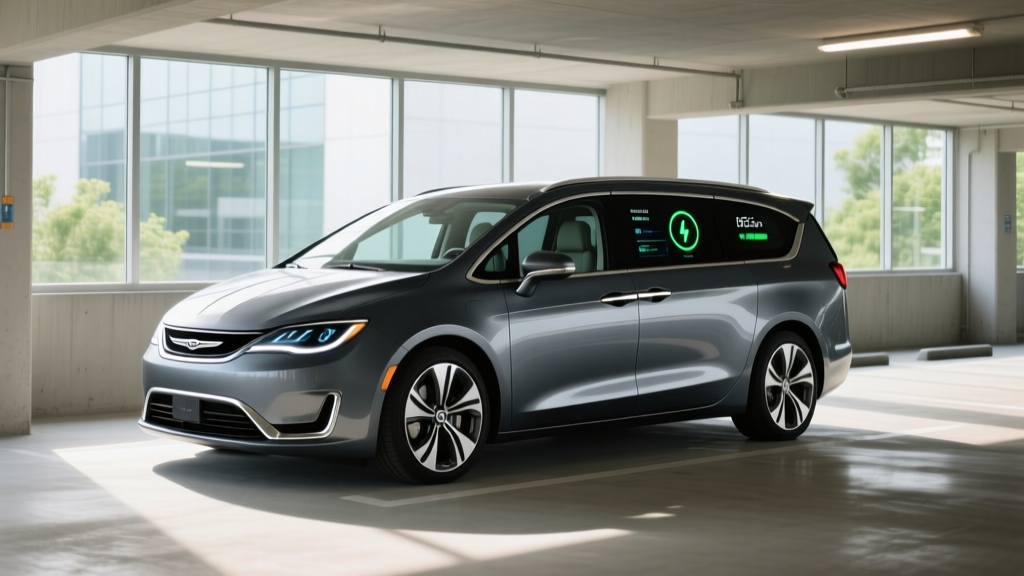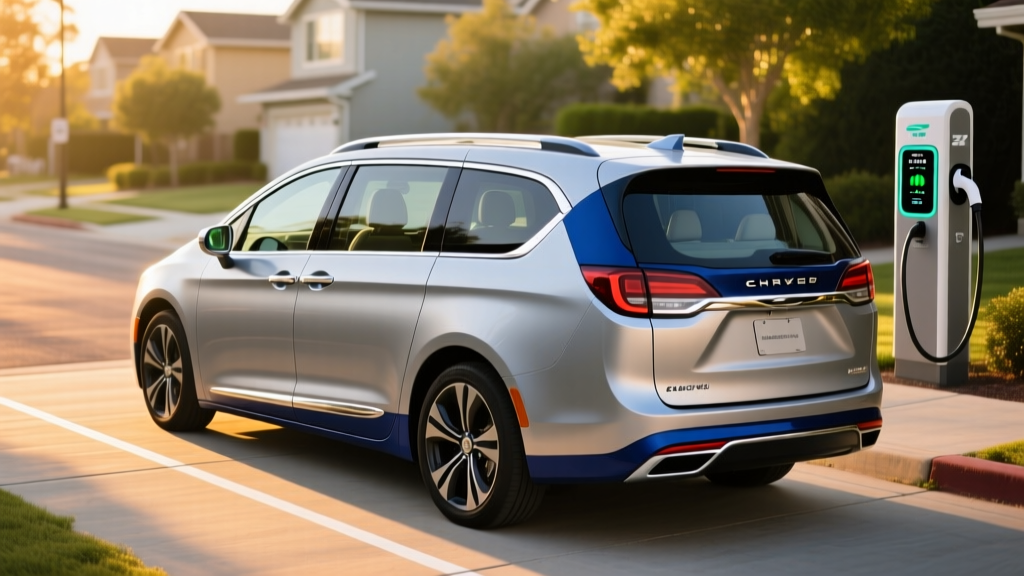
The Chrysler Pacifica Plug-In Hybrid occupies a unique position in the electrified vehicle market: it is the only plug-in hybrid minivan available in the United States. For families who need three rows of seating, want meaningful electric-only commuting range, and aren't ready to commit to a full battery-electric vehicle, the Pacifica PHEV has been the default choice for years. But in 2026, with the EV landscape shifting rapidly and competitors eyeing the segment, how does this minivan actually stack up for daily ownership?
This guide covers the 2026 Chrysler Pacifica PHEV's real-world range, fuel economy, charging logistics, powertrain specs, pricing, federal tax credit eligibility, and long-term reliability — the exact data points you need before signing a purchase agreement.
Quick Verdict: Who the Pacifica PHEV Is For
The Pacifica PHEV makes the most sense for families with predictable daily routines — school runs, commuting, errands — that total under 30 miles, combined with access to Level 2 home charging. In that scenario, you'll burn almost no gasoline during the week while retaining unlimited range for road trips via the gas engine. If your daily driving regularly exceeds 35 miles, or you can't charge at home, the PHEV premium over the gas-only Pacifica becomes harder to justify economically.
HEV vs PHEV: Understanding the Pacifica Lineup
Chrysler sells the Pacifica in two electrified-adjacent forms, and confusing them is a common buyer mistake:
| Feature | Pacifica Hybrid (PHEV) | Pacifica Gas (ICE) |
|---|---|---|
| Powertrain | 3.6L V6 + 2 electric motors + 16 kWh battery | 3.6L V6 only |
| Plug-in charging | Yes — Level 1 and Level 2 | No — refuels with gas only |
| Electric-only range | 32 miles (EPA) | None |
| Combined MPG (hybrid mode) | 30 MPG combined | 22 MPG combined |
| MPGe (electric + gas) | 82 MPGe | N/A |
| Total range | ~520 miles | ~450 miles |
| AWD availability | No (FWD only) | Yes (AWD available) |
| Stow 'n Go 2nd row | No (battery occupies under-floor space) | Yes |
The critical trade-off: the PHEV's 16 kWh battery pack lives under the second-row floor, which eliminates the Stow 'n Go folding feature for those seats. Second-row seats in the PHEV can be removed entirely, but they don't fold into the floor. If maximum cargo flexibility is non-negotiable, the gas Pacifica retains an advantage.
Fuel Economy: EPA Numbers vs Real-World MPG
| Mode | City | Highway | Combined |
|---|---|---|---|
| Hybrid (charge-sustaining) | 29 MPG | 30 MPG | 30 MPG |
| Electric-only | 82 MPGe (2.4 kWh/mile) | ||
Source: EPA Fuel Economy Guide.
Real-world expectation: Hybrid-mode fuel economy in the Pacifica PHEV tends to track closely with the EPA combined figure during mixed suburban driving. On long highway trips at 75+ mph with the battery depleted, expect 26-28 MPG — the minivan's aerodynamic profile and 5,000+ lb curb weight work against it at sustained speed. In city driving with frequent regenerative braking opportunities, some owners report 31-33 MPG in hybrid mode, slightly exceeding the EPA city estimate.
The 82 MPGe rating applies only when you're driving on stored battery energy. Once the battery is depleted and the gas engine takes over, you're operating at 30 MPG — still excellent for a three-row minivan, but not magical.
Electric-Only Range and Total Driving Range
The Pacifica PHEV's 32-mile EPA electric range covers the majority of American daily driving needs. According to FHWA data, the average American drives roughly 37 miles per day — meaning many families could complete most weekday driving on electricity alone, reserving the gas engine for weekends and road trips.
When the battery depletes, the 3.6L V6 engine seamlessly takes over, and the vehicle operates as a conventional hybrid. The 14.5-gallon fuel tank combined with 30 MPG hybrid-mode efficiency yields approximately 435 miles of gas-only range. Combined with the full battery, total range reaches roughly 520 miles — eliminating any range anxiety for cross-country trips.
Charging: Battery Size, Speeds, and Home Setup
| Charging Level | Power | Time (0-100%) | Connector |
|---|---|---|---|
| Level 1 (120V household) | ~1.4 kW | ~14 hours | Standard J1772 |
| Level 2 (240V home/public) | ~6.6 kW | ~2 hours | J1772 |
| DC Fast Charging | Not supported | ||
The Pacifica PHEV uses a 16 kWh lithium-ion battery pack (approximately 13 kWh usable, with a buffer to protect longevity). The onboard charger maxes out at 6.6 kW on Level 2, which is adequate for overnight replenishment but means you won't find meaningful top-ups at public DC fast chargers — the Pacifica PHEV does not support DC fast charging.
Home charging practicality: A Level 2 home charger (240V, 32A circuit) will fully recharge the Pacifica PHEV in about two hours. Many PHEV owners find that plugging in overnight on a standard 120V outlet provides enough charge for the next day's electric-only driving, though it takes significantly longer. For dedicated Level 2 installation, budget $500-$1,500 for the charger and electrical work, depending on your panel capacity and run distance.
Powertrain: Horsepower, Performance, and Drivetrain
The Pacifica PHEV pairs Chrysler's 3.6L Pentastar V6 engine with two electric motors integrated into the transmission, producing a combined system output of 260 horsepower. Power is sent to the front wheels only — all-wheel drive is not available on the PHEV variant (AWD is exclusive to the gas-only Pacifica).
| Specification | Value |
|---|---|
| Combined system output | 260 HP |
| Engine | 3.6L V6 (Atkinson cycle) |
| Electric motors | 2 motors integrated in eFlite transmission |
| Drivetrain | Front-wheel drive (FWD) |
| 0-60 mph | ~7.5 seconds (estimated) |
| Battery capacity | 16 kWh total (~13 kWh usable) |
| Towing capacity | Not rated for towing (PHEV only) |
| Curb weight | ~5,050 lbs |
Acceleration is adequate for a family minivan — the electric motors provide immediate low-end torque that makes the Pacifica PHEV feel responsive around town. Highway merging and passing are confident but not quick. The notable limitation: the PHEV variant is not rated for towing, while the gas Pacifica can tow up to 3,600 lbs. If you need to pull a small trailer, the PHEV is not the right choice.
Pricing, Trims, and Tax Credit Eligibility
The 2026 Chrysler Pacifica PHEV is offered across several trim levels. Pricing starts around $49,995 for the base PHEV trim and climbs to approximately $58,000+ for the Pinnacle PHEV with premium packages. These figures include destination charges but before any incentives.
Federal §30D Tax Credit Eligibility
Current §30D requirements (verify with IRS.gov before purchase):
- MSRP cap: Vans, SUVs, and pickups must be under $80,000 — the Pacifica PHEV qualifies on price.
- Buyer income cap: Modified AGI must not exceed $150,000 (single), $225,000 (head of household), or $300,000 (joint).
- Battery sourcing: Critical minerals and battery components must meet phased-in percentage thresholds from US or FTA-partner countries. These requirements tighten annually — verify current-year Pacifica compliance with your dealer.
- Point-of-sale transfer: Eligible buyers can transfer the credit to the dealer at purchase, reducing the purchase price directly rather than waiting for a tax return.
- Final assembly: Vehicle must undergo final assembly in North America. The Pacifica is assembled in Windsor, Ontario, Canada — which qualifies.
Note: Tax credit eligibility depends on battery sourcing compliance that changes yearly. A qualified tax professional should confirm your personal eligibility before purchase.
Battery Longevity, Warranty, and Reliability
Hybrid and PHEV battery packs have proven remarkably durable across the industry. The Pacifica PHEV uses an NMC (nickel-manganese-cobalt) lithium-ion chemistry with active thermal management — a liquid cooling system that keeps the battery within optimal temperature ranges, reducing degradation. Real-world data from Pacifica PHEV owners suggests minimal capacity loss in the first 5-7 years of ownership, typically under 10%.
Battery replacement cost: If the battery does eventually need replacement outside of warranty, expect a cost between $6,000 and $9,000 for the pack plus labor. However, this is a last-resort scenario — most PHEV batteries outlast the vehicle's useful economic life. Individual cell modules can sometimes be replaced rather than the entire pack, reducing cost.
General reliability: The Pacifica PHEV's powertrain has been in production since the 2017 model year, giving Chrysler a long track record to work from. Early model years (2017-2019) had some reported issues with the power inverter and charging system. The 2021 refresh addressed many of these concerns. For the most current reliability data, consult NHTSA.gov for recall information and owner complaints specific to your target model year.
Pacifica PHEV vs Full EV vs Gas Minivan: Which Fits Your Family?
Choose the Pacifica PHEV if:
- Your daily driving is under 30 miles and you have home Level 2 charging
- You need three rows for family duty but want to minimize fuel costs
- You take regular road trips where EV charging infrastructure remains inconsistent
- You want EV-like commuting without range anxiety on longer drives
Choose a full EV (e.g., Kia EV9, Tesla Model X) if:
- You have reliable home charging and your daily driving is under 250 miles
- You want zero tailpipe emissions and minimal maintenance (no oil changes, fewer moving parts)
- You're willing to plan around charging stops on road trips
Choose the gas Pacifica if:
- You need AWD for snow/ice belt driving
- You need Stow 'n Go second-row seating for maximum cargo flexibility
- You can't install a home charger
- You need towing capability (up to 3,600 lbs)
- The $10,000+ PHEV price premium doesn't pencil out for your mileage
Pros and Cons
- Only PHEV minivan on the market — no direct competitor
- 32-mile electric range covers most daily family driving
- 520+ mile total range eliminates road-trip range anxiety
- 30 MPG hybrid mode is excellent for a 5,000-lb minivan
- Comfortable, well-equipped interior with premium trims available
- Federal tax credit may offset the PHEV price premium
- Strong 8-10 year battery warranty
- No DC fast charging capability
- No AWD availability (FWD only)
- Stow 'n Go second-row eliminated by battery placement
- Not rated for towing
- ~$10,000+ premium over gas Pacifica base models
- 6.6 kW onboard charger is modest by 2026 standards
- Heavy curb weight impacts highway fuel economy
Frequently Asked Questions
How many MPG does the Chrysler Pacifica PHEV get?
The Pacifica PHEV achieves 30 MPG combined (29 city / 30 highway) in hybrid mode once the battery is depleted. When operating on battery power alone, it achieves 82 MPGe. Real-world highway driving at 75+ mph typically yields 26-28 MPG, while city driving with regenerative braking can slightly exceed the EPA estimate.
How far can the Pacifica PHEV go on electric only?
The EPA rates the Pacifica PHEV at 32 miles of electric-only range. In warm-weather suburban driving, expect 26-30 real-world miles. In cold weather (below 35°F) with cabin heating, range can drop to 20-24 miles. Highway-speed electric driving also reduces range below the EPA estimate.
Does the Pacifica PHEV qualify for a federal tax credit?
The Pacifica PHEV may qualify for up to $7,500 under the §30D federal clean vehicle credit, subject to battery sourcing requirements that tighten annually. The vehicle meets the $80,000 MSRP cap and North American final assembly requirement. Buyer income caps apply ($150K single / $300K joint). Verify current-year battery component compliance with your dealer and consult a tax professional. Source: IRS Clean Vehicle Credits.
Is the Pacifica PHEV reliable, and what does battery replacement cost?
The Pacifica PHEV's powertrain has been in production since 2017, and the hybrid battery is covered for 8-10 years / 100,000 miles depending on your state. Real-world degradation data suggests minimal capacity loss in the first 5-7 years. Out-of-warranty battery replacement costs approximately $6,000-$9,000, though full pack replacement is rare — individual modules can sometimes be serviced.
Can I charge the Pacifica PHEV at a DC fast charger?
No. The Pacifica PHEV does not support DC fast charging. It charges via Level 1 (120V, ~14 hours for a full charge) or Level 2 (240V at 6.6 kW, ~2 hours). For a PHEV with a 16 kWh battery, this is generally sufficient — you charge at home overnight and don't need public fast charging for daily use.
Hybrid vs PHEV vs EV — which powertrain fits my family?
If you drive under 30 miles daily and can charge at home, the PHEV gives you electric commuting with gas-engine road trip flexibility — ideal for one-car families who do it all. A conventional HEV (no plug) works if you can't charge at home but want better MPG. A full BEV makes sense if you have home charging, a predictable commute, and willingness to plan charging stops on trips. The Pacifica PHEV uniquely serves families who need minivan space but want partial electrification without commitment.
Why doesn't the Pacifica PHEV have Stow 'n Go or AWD?
The 16 kWh battery pack is mounted under the second-row floor, occupying the space that Stow 'n Go seats fold into. Second-row seats can be removed but not stowed. AWD requires a rear drive unit and driveshaft routing that conflicts with the battery and hybrid powertrain packaging. Chrysler offers both features on the gas-only Pacifica.
Final Assessment
The 2026 Chrysler Pacifica PHEV remains a vehicle without a direct rival. For families who need minivan practicality and want meaningful daily electric driving without sacrificing road-trip range, it delivers exactly what it promises. The 32-mile electric range, 30 MPG hybrid efficiency, and 520-mile total range form a compelling package — provided you understand the trade-offs: no AWD, no towing, no Stow 'n Go, and no DC fast charging.
The math works best when your daily mileage falls within the electric envelope and you can charge at home. Run your actual commute distance, factor in the federal tax credit if you qualify, and compare the PHEV premium against five years of fuel savings. For many families, the Pacifica PHEV is the most pragmatic bridge between gasoline convenience and electric efficiency available today.