The Only Plug-In Hybrid Minivan: Does the Tax Credit Apply?
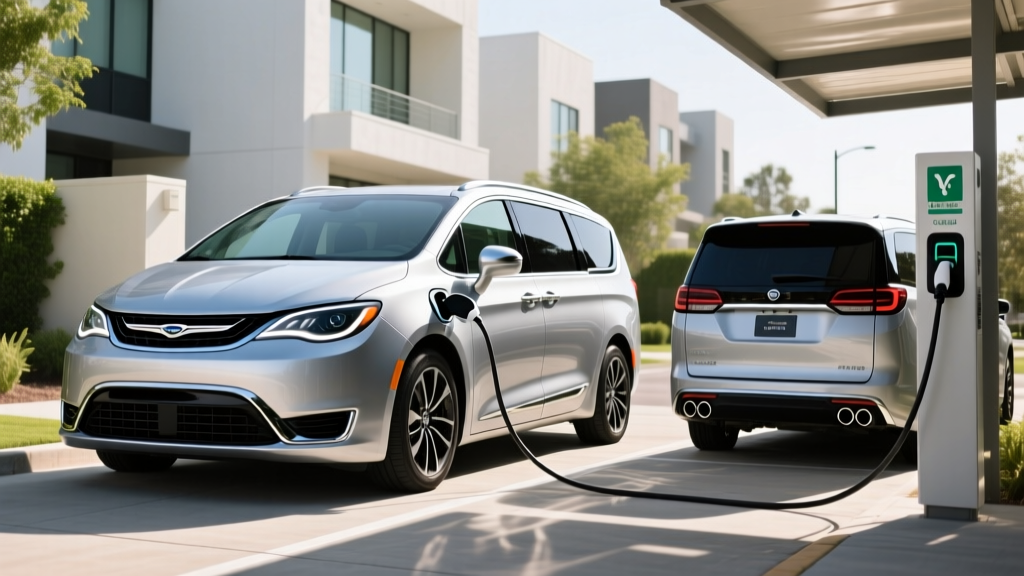
The Chrysler Pacifica Hybrid occupies a rare niche. As of the 2026 model year, it remains the only plug-in hybrid electric vehicle (PHEV) minivan sold in the United States. For families who need three rows, sliding doors, and the option to drive on electricity alone for the daily school run, it has no direct rival. But one question dominates buyer searches: does the Chrysler Pacifica Hybrid qualify for a federal tax credit, and if so, how much can you actually claim?
The short answer is nuanced. The Pacifica PHEV has historically been eligible for the full $7,500 federal tax credit under Internal Revenue Code §30D. However, current-year eligibility depends on battery-component sourcing, critical-mineral requirements, MSRP caps, and buyer income limits that have tightened significantly since the Inflation Reduction Act reshaped the rules. Below, we map out exactly where the 2026 Pacifica Hybrid stands, what it delivers in efficiency and electric range, and whether a PHEV minivan is the right bridge for your household.
HEV vs PHEV: What the Pacifica Hybrid Actually Is
Chrysler sells two distinct Pacifica powertrains, and confusing them is the most common buyer mistake:
Pacifica Hybrid (PHEV)
- 16.0 kWh lithium-ion battery pack (usable capacity ~13.5 kWh)
- Plug-in capable: Level 2 charging via J1772 connector
- 32 miles EPA electric-only range
- 82 MPGe combined when operating in electric mode
- 30 MPG combined once the battery is depleted (gas-only operation)
- Eligible for potential federal §30D tax credit (rules-dependent)
Pacifica Gas (HEV / Conventional)
- 3.6L Pentastar V6, no electric motor, no plug
- 22 MPG combined EPA (19 city / 28 highway)
- No electric-only driving capability
- No federal tax credit eligibility
- Lower starting MSRP
This guide focuses entirely on the Pacifica Hybrid PHEV. If you see a Pacifica listed without the "Hybrid" badge and without a charging port on the driver-side front fender, it is the conventional gas model. The two share a body shell but little else under the skin.
Range, MPGe, and Fuel Economy: The Real Numbers
The EPA rates the 2026 Chrysler Pacifica Hybrid at 32 miles of electric-only range and 82 MPGe combined when the battery is charged. Once the battery depletes, the 3.6L V6 engine takes over, and the vehicle operates as a conventional hybrid, returning an EPA-estimated 30 MPG combined (29 city / 31 highway).
| Metric | EPA Rating | Real-World Expectation |
|---|---|---|
| Electric-only range | 32 miles | 26–30 mi (highway/cold); 30–34 mi (city/moderate temps) |
| MPGe (charge-sustaining + EV) | 82 MPGe | Depends on charging frequency — higher with daily plug-in |
| Gas-only MPG (battery depleted) | 30 combined (29 city / 31 hwy) | 28–31 combined; hybrids often beat EPA city estimates |
| Total combined range | 520 miles | ~480–510 mi with mixed driving |
The Pacifica PHEV's 14.0-gallon fuel tank (smaller than the gas model's 19.0-gallon tank to accommodate the battery) yields a total combined range of approximately 520 miles. For a minivan, 30 MPG gas-only is competitive with the Toyota Sienna hybrid (36 MPG combined, but the Sienna is a conventional HEV — no plug, no electric-only mode).
Powertrain, Battery, and Charging Specs
| Specification | 2026 Chrysler Pacifica Hybrid |
|---|---|
| Powertrain | 3.6L Atkinson-cycle V6 + 2 electric motors (SI-EVT) |
| Combined system horsepower | 260 hp |
| Battery capacity (gross / usable) | 16.0 kWh / ~13.5 kWh |
| Battery chemistry | NMC (Nickel Manganese Cobalt) |
| Electric-only range (EPA) | 32 miles |
| Level 1 charging (120V, 12A) | ~14 hours (0–100%) |
| Level 2 charging (240V, 32A) | ~2 hours (0–100%) |
| DC fast charging | Not supported |
| Charge connector | J1772 (Level 1 and Level 2) |
| 0–60 mph | ~7.1 seconds |
| Drivetrain | Front-wheel drive (AWD not available on PHEV) |
| Towing capacity | Not rated for towing (PHEV only; gas model tows 3,600 lb) |
Charging reality check: The Pacifica Hybrid's onboard charger maxes out at approximately 7.2 kW on Level 2. This means a full 0–100% charge takes about two hours on a 240V home outlet or dedicated Level 2 station. There is no DC fast-charging capability — this is typical for PHEVs, whose smaller batteries do not justify the cost and weight of DCFC hardware. For most owners, plugging in overnight at home on Level 2 (or even Level 1, if daily driving stays under 30 miles) is entirely sufficient to wake up with a full battery every morning.
kW vs kWh reminder: The battery stores 16.0 kWh of energy (kilowatt-hours — think of it as the "tank size"). The onboard charger accepts up to 7.2 kW of power (kilowatts — the "flow rate" from your wall). These are not interchangeable. A higher kW charge rate fills the kWh battery faster.
Chrysler Pacifica Hybrid Tax Credit: §30D Eligibility Breakdown
The federal clean vehicle credit under IRS §30D is the primary incentive buyers research, and the Pacifica PHEV's eligibility has been a moving target since the Inflation Reduction Act (IRA) introduced stringent new requirements in 2023. Here is the current framework as of the 2026 tax year:
- Vehicle MSRP cap: Vans and SUVs must have an MSRP at or below $80,000. The Pacifica Hybrid's trims range from ~$51,000 to ~$62,000, so it clears this threshold on all trims.
- Buyer income cap: Adjusted gross income must not exceed $150,000 (single), $225,000 (head of household), or $300,000 (married filing jointly).
- Battery component sourcing: A percentage of battery components must be manufactured or assembled in North America. This threshold increases annually.
- Critical minerals requirement: A percentage of critical minerals in the battery must be sourced from the U.S. or a free-trade-agreement partner. This threshold also increases annually.
- Final assembly: Vehicle must undergo final assembly in North America. The Pacifica is built in Windsor, Ontario, Canada, which qualifies under USMCA.
- Point-of-sale transfer: As of 2024, buyers can transfer the credit to the dealer at purchase, reducing the out-of-pocket price immediately — provided all eligibility criteria are met and the dealer is registered with the IRS Energy Credits Online system.
- FEOC exclusion: Vehicles with battery components or critical minerals from a "foreign entity of concern" (primarily China, Russia, North Korea, Iran) are disqualified. This is the most volatile rule and the one most likely to affect PHEV eligibility year to year.
The critical question: Whether the 2026 Pacifica Hybrid qualifies for the full $7,500, a partial $3,750 (meeting only one of the two sourcing requirements), or $0 depends on Chrysler's current battery supply chain compliance. The IRS maintains a list of eligible vehicles that updates periodically. Before purchasing, verify the Pacifica Hybrid's current status on the IRS Clean Vehicle Provisions page or through the DOE's fueleconomy.gov tax credit lookup.
Pricing, Trims, and Total Cost of Ownership
The 2026 Chrysler Pacifica Hybrid is offered in three primary trims. Pricing below reflects base MSRP before any destination charges, dealer adjustments, or incentives:
| Trim | MSRP (approx.) | Key Features |
|---|---|---|
| Hybrid Select | $51,120 | Leatherette seats, 10.1" Uconnect 5, power sliding doors, 32-mi EV range |
| Hybrid Limited | $55,695 | Nappa leather, hands-free sliding doors/liftgate, heated steering wheel, navigation |
| Hybrid Pinnacle | $61,095 | Quilted Nappa leather, ventilated front seats, premium audio, rear-seat entertainment |
If the full $7,500 federal credit applies and your income qualifies, the effective price of the base Hybrid Select drops to approximately $43,620 — placing it within range of well-equipped gas minivans and making the PHEV premium much easier to justify. Many states also offer additional rebates or HOV lane access for PHEVs; check your state's energy office or the AFDC state incentive database for local programs.
Five-year cost comparison: A Pacifica Hybrid owner who charges nightly and drives 30 miles or fewer on weekdays may use almost zero gasoline for daily commuting. At $3.50/gallon and 12,000 miles/year, a gas-only minivan averaging 22 MPG costs roughly $1,909/year in fuel. The Pacifica PHEV, driven primarily on electricity (at $0.14/kWh national average), might spend $550–$800/year on electricity plus occasional gasoline for longer trips — a potential annual savings of $800–$1,200 depending on driving patterns and electricity rates.
Reliability, Battery Warranty, and Replacement Cost
Hybrid battery longevity is the top concern for PHEV buyers, and Chrysler addresses this with a robust warranty:
Real-world reliability: The Pacifica Hybrid's powertrain has been in production since the 2017 model year, giving it one of the longest track records of any PHEV on the market. Early models (2017–2019) experienced some battery recall campaigns related to fire risk under certain fault conditions — Chrysler addressed these through software updates and, in some cases, battery replacements. The 2021+ models have shown improved reliability. However, the Pacifica Hybrid does not match the Toyota Sienna's reputation for bulletproof hybrid durability; the Sienna's simpler HEV system has fewer failure modes.
Battery replacement cost: Out of warranty, a Pacifica Hybrid high-voltage battery replacement runs approximately $8,000–$12,000 including parts and labor at a dealership. Independent hybrid specialists may offer refurbished packs for $5,000–$7,000. Given the 10-year/100,000-mile warranty, most original owners will never face this expense — but second- or third-owners should verify remaining warranty coverage before purchasing used.
General maintenance: The Pacifica Hybrid requires less routine maintenance than a gas minivan. The engine runs less frequently (reducing oil change intervals in practice, though Chrysler still recommends following the onboard oil-life monitor), and regenerative braking extends brake pad life significantly. Expect standard maintenance items: cabin air filter, brake fluid checks, tire rotations, and coolant service per the maintenance schedule.
Pacifica Hybrid vs. Full EV vs. Gas Minivan: Which Fits You?
Choose the Pacifica Hybrid PHEV if:
- You need a minivan (three rows, sliding doors, family hauling) and want some electric driving
- You can charge at home (Level 1 or Level 2) and your daily driving is mostly under 30 miles
- You take road trips where EV charging infrastructure is still unreliable
- You want to reduce fuel costs without committing to full EV range planning
Choose a full EV (e.g., Kia EV9, Tesla Model X) if:
- You have reliable home charging and your daily driving is under 250 miles
- You want zero tailpipe emissions and the lowest per-mile operating cost
- You don't need minivan-specific features (the EV9 offers three rows but conventional doors)
- You're comfortable with public DC fast charging on road trips
Choose a conventional gas or HEV minivan (Toyota Sienna, Honda Odyssey) if:
- You cannot charge at home (apartment, street parking, no garage outlet access)
- You want the lowest purchase price and simplest ownership experience
- You need AWD (available on Sienna Hybrid and gas Pacifica, but not Pacifica PHEV)
- You tow regularly (the Pacifica PHEV is not rated for towing)
Pros and Cons at a Glance
Pros
- Only PHEV minivan on the market — no direct competitor
- 32 miles EV range covers most school-run and errand loops
- 30 MPG gas-only is respectable for a 4,800-lb minivan
- Stow 'n Go second-row seats (unique to Pacifica Hybrid — folds flat into the floor)
- Strong Uconnect 5 infotainment with wireless CarPlay/Android Auto
- Potential $7,500 federal tax credit (verify current eligibility)
- 10-year/100,000-mile battery warranty
Cons
- No AWD option (PHEV only; FWD only)
- Not rated for towing
- No DC fast charging — Level 2 only
- Higher MSRP than gas Pacifica or Sienna Hybrid
- Electric range drops noticeably in cold weather (24–28 mi in winter)
- Fold-flat second-row seats are thinner/less padded than captain's chairs in competitors
- Reliability record not as strong as Toyota's hybrid systems
Frequently Asked Questions
How many MPG does the Chrysler Pacifica Hybrid get?
The EPA rates it at 82 MPGe combined when operating with a charged battery (blending electric and gas). Once the battery is depleted and it runs as a conventional hybrid, it delivers 30 MPG combined (29 city / 31 highway). In real-world city driving, owners often see 31–33 MPG on gas alone, as hybrids tend to outperform EPA city estimates in stop-and-go traffic where regenerative braking recaptures energy.
How far can the Pacifica Hybrid go on electric only?
The EPA rates it at 32 miles electric-only. Real-world results range from about 26 miles in cold highway driving to 34 miles in moderate-temperature city driving. For most families, this covers the daily school drop-off, grocery run, and commute without the engine starting.
Does the Chrysler Pacifica Hybrid qualify for a tax credit in 2026?
It may qualify for up to $7,500 under IRS §30D, but eligibility depends on current battery-sourcing compliance, buyer income limits ($150K single / $300K joint), and the $80,000 MSRP cap for vans. The Pacifica Hybrid clears the MSRP cap on all trims. However, the battery-component and critical-mineral sourcing rules tighten annually, and eligibility can change. Always verify on the IRS Clean Vehicle page at the time of purchase.
Can I charge the Pacifica Hybrid at home on a regular outlet?
Yes. Level 1 charging on a standard 120V household outlet takes about 14 hours for a full charge. If you drive 30 miles or fewer per day and plug in overnight, Level 1 may be sufficient. A Level 2 (240V) home charger reduces that to about 2 hours and is recommended if you want flexibility for mid-day top-ups or higher daily mileage.
Is the Pacifica Hybrid reliable, and what does a battery replacement cost?
The Pacifica PHEV has been in production since 2017 with a generally acceptable but not class-leading reliability record. Early models had battery recall campaigns; 2021+ models have been more stable. The high-voltage battery is warrantied for 10 years/100,000 miles (150,000 in CARB states). Out-of-warranty replacement costs $8,000–$12,000 at a dealer, or $5,000–$7,000 through independent hybrid shops with refurbished packs.
Does the Pacifica Hybrid have AWD?
No. The PHEV model is front-wheel drive only. If AWD is a must-have (snow-belt climates, mountain driving), you would need to look at the gas-only Pacifica (AWD available) or the Toyota Sienna Hybrid (AWD available, but no plug-in option).
Hybrid vs PHEV vs EV — which minivan should I buy?
If you can charge at home and your daily driving stays under 30 miles, the Pacifica PHEV gives you EV-like daily commuting with gas-engine backup for road trips — the best of both worlds for a one-vehicle family. If you can't charge at home, a conventional hybrid like the Toyota Sienna (36 MPG, no plug) makes more sense. If you have home charging, rarely drive over 250 miles in a day, and don't need minivan-specific features, a three-row EV like the Kia EV9 eliminates gasoline entirely.