Why Chinese Hybrid Cars Are Dominating Global Headlines
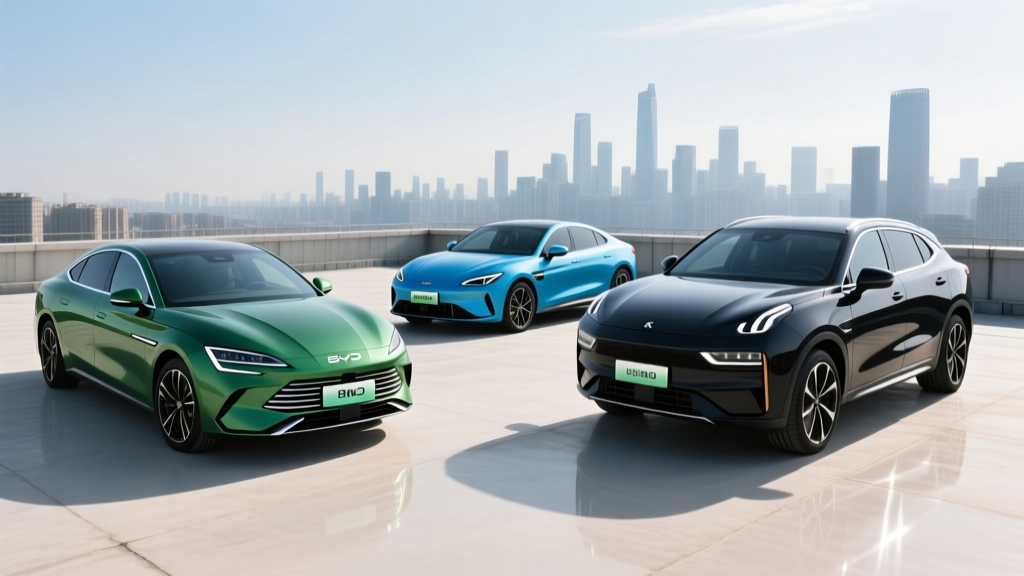
Chinese automakers now produce more plug-in hybrid and conventional hybrid vehicles than any other nation. BYD alone sold over 1.7 million new-energy vehicles (a category that includes BEVs and PHEVs) in 2024, surpassing Tesla in total electrified output. Brands like Geely, Chery, Great Wall Motor, and Changan have followed with sophisticated hybrid powertrains that rival — and sometimes exceed — Japanese and Korean competitors on paper.
For US-based buyers researching Chinese hybrid cars, the central question isn't whether these vehicles are technically capable. It's whether you can actually buy one, service one, and benefit from US tax incentives. This guide breaks down the major Chinese hybrid platforms, their real-world specs, and what their arrival (or absence) in the American market means for your next purchase.
HEV vs PHEV: How Chinese Hybrids Differ
Before comparing models, it's essential to separate the two hybrid architectures Chinese automakers deploy:
Conventional Hybrid (HEV)
- No plug — the battery recharges via regenerative braking and the gasoline engine
- Small battery (typically 1.0–2.0 kWh)
- Cannot drive on electric power alone for meaningful distances
- Fuel economy advantage is greatest in stop-and-go city driving
- No federal tax credit eligibility under IRS §30D
Plug-In Hybrid (PHEV)
- Plugs into a Level 1 (120V) or Level 2 (240V) charger
- Larger battery (typically 18–40 kWh)
- Can drive 30–75+ miles on electricity alone before the gas engine engages
- May qualify for the federal §30D tax credit (up to $7,500) if assembled in North America and meeting battery-sourcing requirements — a critical caveat for Chinese-brand PHEVs
Most Chinese hybrid cars exported globally are PHEVs, since they offer the headline-grabbing electric-only range that appeals to buyers transitioning from gasoline. Chinese HEVs exist but are less common in export markets.
BYD DM-i and DM-p: The Powertrain Behind the Headlines
BYD's dual-mode hybrid system is the most widely deployed Chinese hybrid architecture in the world. It comes in two variants:
DM-i (Dual Mode – intelligent)
Designed for efficiency. The gasoline engine primarily acts as a generator, while an electric motor drives the wheels. The engine only directly drives the wheels at highway cruising speeds where it's most efficient. This series-parallel architecture delivers exceptional city fuel economy.
DM-p (Dual Mode – performance)
Adds a rear electric motor for all-wheel drive and significantly more combined horsepower. Trade-offs include slightly lower electric-only range and reduced fuel economy compared to DM-i variants.
| Spec | BYD Seal U DM-i (2025 EU) | BYD Tang DM-p (2025 EU) |
|---|---|---|
| Powertrain | 1.5L 4-cyl + front motor | 1.5T 4-cyl + dual motors (AWD) |
| Combined HP | 218 hp | 530 hp |
| Battery (kWh) | 18.3 kWh (LFP Blade) | 21.5 kWh (LFP Blade) |
| EV-Only Range (WLTP) | ~70 km (~44 mi) | ~100 km (~62 mi) |
| 0–100 km/h (0–62 mph) | 8.3 sec | 4.3 sec |
| DC Fast Charge | Yes, up to 18 kW | Yes, up to 40 kW |
| AC Charge (Level 2) | ~3 hours (0–100%) | ~2.5 hours (0–100%) |
Important note on range figures: BYD and most Chinese automakers publish WLTP (Worldwide Harmonised Light Vehicles Test Procedure) range, which tends to be 10–20% more optimistic than the US EPA cycle. A BYD Seal U DM-i rated at 44 miles WLTP would likely earn an EPA estimate of roughly 35–38 miles if sold in the US. Always adjust expectations downward when converting WLTP to EPA.
Geely, Chery, and Great Wall: Other Chinese Hybrid Platforms
Geely (including Volvo and Polestar)
Geely owns Volvo, and Volvo's T8 Recharge PHEV powertrain (used in the XC60, XC90, and S60 Recharge) is effectively a Geely-developed system. The 2026 Volvo XC60 T8 Recharge delivers:
- 18.8 kWh battery (NMC chemistry)
- EPA-estimated 35 miles electric-only range
- 455 combined horsepower
- EPA-estimated 63 MPGe combined
- MSRP from ~$58,395 (XC60 T8 Recharge Core)
This is the most accessible "Chinese hybrid" in the US market today — sold through Volvo's established US dealer network with full warranty and parts support. Because Volvo assembles some models outside North America, §30D federal tax credit eligibility varies by model and sourcing. Check the IRS qualified vehicles list at irs.gov before assuming eligibility.
Chery and Omoda
Chery's Kunpeng super-hybrid system pairs a 1.5T engine with a dedicated hybrid transmission (DHT). The Omoda 5 PHEV, sold in markets like Australia and Southeast Asia, offers:
- ~80 km (~50 mi) WLTP electric-only range
- 18.3 kWh LFP battery
- Combined output: ~320 hp
- Claimed combined fuel consumption: ~1.0 L/100 km (WLTP, charge-sustaining mode will be significantly higher)
Chery has announced intentions to enter the US market but has not confirmed a timeline or dealer network as of early 2026.
Great Wall Motor (GWM) – Haval and Tank
GWM's Hi4 hybrid system appears in the Haval H6 PHEV and Tank 500 Hi4-T. The Haval H6 PHEV offers roughly 50 miles WLTP electric range from a 19.9 kWh battery and combined output near 326 hp. GWM has no announced US market entry.
Fuel Economy: What the Numbers Actually Mean
Chinese automakers frequently advertise combined fuel consumption figures below 2.0 L/100 km (over 117 MPGe). These numbers are measured under WLTP or China's CLTC cycle with a fully charged battery and represent blended driving that includes substantial electric-only miles. They are not comparable to EPA fuel-economy estimates for a charge-sustaining hybrid.
| Vehicle (for reference) | EPA City MPG | EPA Hwy MPG | EPA Combined |
|---|---|---|---|
| Toyota RAV4 Prime (PHEV, US benchmark) | 94 MPGe | 84 MPGe | 94 MPGe |
| Toyota RAV4 Hybrid (HEV) | 41 | 38 | 40 |
| Volvo XC60 T8 Recharge (Geely PHEV) | — | — | 63 MPGe |
| Honda CR-V Hybrid (HEV) | 43 | 36 | 40 |
Sources: fueleconomy.gov. MPGe figures apply only when factoring in electric-only driving with a charged battery. Charge-sustaining MPG (battery depleted) is typically 25–32 MPG for midsize PHEV SUVs.
Real-world expectation: PHEVs deliver their best fuel economy when you charge daily and drive within the electric-only range. If you never plug in a PHEV, you're carrying dead battery weight and will see MPG figures worse than a comparable conventional hybrid. A Chinese PHEV with a 40-mile EPA electric range driven on a 20-mile daily commute (charged nightly) could effectively use zero gasoline for weeks. The same vehicle on a 200-mile road trip with no charging will return roughly 28–33 MPG in charge-sustaining mode — comparable to, but not better than, a Toyota or Honda HEV.
Battery Warranty, Reliability, and Replacement Costs
Chinese Hybrid Battery Warranty Standards
BYD provides an 8-year/150,000 km (93,000 mi) warranty on the Blade Battery in most export markets, with some regions offering lifetime coverage for the first owner. Geely/Volvo covers PHEV batteries for 8 years/100,000 miles in the US market. These terms are broadly competitive with Japanese and Korean automakers.
BYD's LFP (lithium iron phosphate) Blade Battery has demonstrated strong longevity in Chinese fleet data, with studies showing less than 10% capacity degradation after 3,000 charge cycles — equivalent to roughly 300,000+ miles of electric driving in a PHEV with a 40-mile electric range. LFP chemistry sacrifices some energy density compared to NMC but offers superior thermal stability and cycle life.
Battery Replacement Cost
Out-of-warranty PHEV battery replacement remains a legitimate concern. Based on current global pricing:
- BYD PHEV battery (18–22 kWh LFP): Estimated $4,000–$7,000 USD (based on Chinese domestic replacement pricing; US costs would likely be higher due to labor and import logistics)
- Volvo T8 Recharge battery (18.8 kWh NMC): Estimated $8,000–$12,000 at US dealerships
- Toyota RAV4 Prime battery (18.1 kWh NMC): Estimated $7,000–$10,000
For comparison, a conventional hybrid (HEV) battery is smaller (1–2 kWh) and costs $2,000–$4,000 to replace. Hybrid battery failure before 150,000 miles is statistically uncommon across all major manufacturers.
Pricing and US Tax Credit Eligibility
Here's the critical reality for US buyers: no Chinese-brand vehicle is currently sold in the United States, aside from Volvo (Geely-owned) and select Polestar models. BYD, Chery, GWM, and Changan have no US dealer networks.
Federal §30D Tax Credit Rules (2026)
Even if a Chinese-brand PHEV were sold in the US, qualifying for the up-to-$7,500 federal tax credit under IRS §30D would require:
- Final assembly in North America — currently disqualifies all vehicles manufactured in China
- MSRP cap: Vans/SUVs/pickups ≤ $80,000; sedans ≤ $55,000
- Buyer income cap: AGI ≤ $150,000 (single) / $300,000 (joint)
- Battery sourcing: Increasing percentages of critical minerals and battery components must be sourced from the US or free-trade-agreement countries — Chinese-mined and processed minerals face phase-out restrictions
- Foreign Entity of Concern (FEOC): Vehicles with battery components from a FEOC (which includes many Chinese battery manufacturers) are disqualified from the credit beginning in 2024–2025
Translation: The FEOC restriction and North American assembly requirement effectively block Chinese-brand PHEVs from the federal tax credit even if those brands entered the US market, unless they established North American manufacturing and non-Chinese battery supply chains. This is a substantial barrier.
Volvo exception: Some Volvo Recharge PHEVs have qualified for partial or full credits depending on model year and sourcing. Always verify current eligibility on the IRS qualified vehicles list before purchasing.
Who Should Consider a Chinese Hybrid — and Who Shouldn't
Choose a Chinese-brand PHEV (if available in your market) if:
- You live outside the US (Australia, Southeast Asia, Europe, Middle East, South America) where these brands have dealer networks
- You want a large battery PHEV with 40–60+ miles of electric range at a lower price point than European alternatives
- You value LFP battery chemistry for its longevity and thermal safety
- You charge at home nightly and your daily commute fits within the electric-only range
Choose a Volvo Recharge (Geely) PHEV in the US if:
- You want Chinese-developed hybrid technology with US dealer support, warranty service, and parts availability
- You're shopping in the luxury SUV segment (XC60, XC90)
- You've verified §30D eligibility for the specific model year and trim
Choose a Toyota, Honda, or Hyundai/Kia hybrid if:
- You're a US buyer who needs established dealer service, proven long-term reliability data, and strong resale value
- You want the best chance of qualifying for the §30D tax credit (Kia/Hyundai PHEVs assembled in Georgia, for example)
- You prefer a conventional HEV with no plug-in requirement and simpler ownership
Chinese PHEV Advantages
- Large LFP batteries with strong cycle life
- Competitive electric-only range (40–60+ mi)
- Aggressive pricing in export markets (20–40% below European equivalents)
- DC fast-charging capability on many models (unusual for PHEVs)
- Rapid powertrain iteration — new models every 12–18 months
Chinese PHEV Limitations
- No US availability (except Volvo/Polestar)
- FEOC rules block §30D tax credit eligibility
- Long-term reliability data (10+ years) still limited outside China
- WLTP/CLTC range figures overstate real-world EPA expectations
- Resale value unproven in Western markets
- Parts and service infrastructure absent in North America
Frequently Asked Questions
How many MPG do Chinese hybrid cars get?
It depends on the powertrain and how you use it. A BYD DM-i PHEV driven within its electric-only range (charged daily) can use minimal gasoline — effectively 100+ MPGe for short commutes. In charge-sustaining mode (battery depleted, engine running), expect roughly 30–38 MPG combined for a midsize SUV — competitive with but not dramatically better than a Toyota RAV4 Hybrid's 40 MPG combined. Chinese HEVs (non-plug-in) return approximately 35–45 MPG combined depending on vehicle size, comparable to Japanese equivalents.
How far can Chinese PHEVs go on electric only?
Most current Chinese PHEVs offer 40–75 miles of WLTP-rated electric range, which translates to roughly 35–60 miles EPA-equivalent. The BYD Seal U DM-i achieves approximately 44 miles WLTP (~37 miles EPA-estimated). The BYD Han DM-i sedan reaches up to 75 miles WLTP (~62 miles EPA-estimated). These figures are competitive with the Toyota RAV4 Prime's 42 miles EPA and exceed most European PHEVs (typically 20–35 miles EPA).
Are Chinese hybrid cars reliable?
BYD's LFP Blade Battery has demonstrated strong durability in Chinese taxi and ride-hailing fleets, with many vehicles exceeding 300,000 km (186,000 miles) with less than 10% battery degradation. However, long-term reliability data for Chinese hybrids in Western markets (different climate conditions, driving patterns, and service standards) remains limited. Volvo/Geely models sold in the US benefit from Volvo's established service network and have reliability records tracked by organizations like Consumer Reports and J.D. Power.
Does a Chinese hybrid qualify for any US tax credit?
Under current IRS §30D rules, no Chinese-manufactured hybrid or PHEV qualifies for the federal tax credit. The North American final assembly requirement and FEOC battery-sourcing restrictions effectively exclude all vehicles manufactured in China. Some Volvo Recharge PHEVs (Geely-owned, assembled in Europe or potentially North America) may qualify depending on model year and battery sourcing — verify on the IRS qualified vehicles list. State-level incentives vary by jurisdiction and may have different eligibility rules.
Hybrid vs PHEV vs EV — which is right for me?
Choose a conventional hybrid (HEV) if you cannot charge at home, drive long distances frequently, or want the simplest ownership experience with no plug-in routine. Choose a PHEV if you can charge at home (Level 2, ~$500–$1,500 installed), your daily driving is under 40 miles, and you want electric commuting with gasoline flexibility for road trips. Choose a full EV if you have reliable home charging, your daily driving fits within 200–300 miles, you want the lowest per-mile fuel cost ($0.03–$0.05/mi vs. $0.10–$0.15/mi for gas), and you're ready to plan around DC fast charging on road trips. Chinese PHEVs are particularly compelling for buyers in developing charging-infrastructure markets who want electric daily driving without range-anxiety risk.
What is the battery replacement cost for a Chinese PHEV?
Based on available data, a BYD PHEV battery (18–22 kWh LFP) costs approximately $4,000–$7,000 to replace in China. US replacement costs would likely be higher ($6,000–$10,000) due to import logistics, labor rates, and parts markup if these brands entered the market. A Volvo T8 Recharge battery runs $8,000–$12,000 at US dealers. All major manufacturers warranty PHEV batteries for at least 8 years/100,000 miles, and LFP chemistry in particular shows minimal degradation within that window.