Why China Hybrid Cars Are Dominating Global Headlines
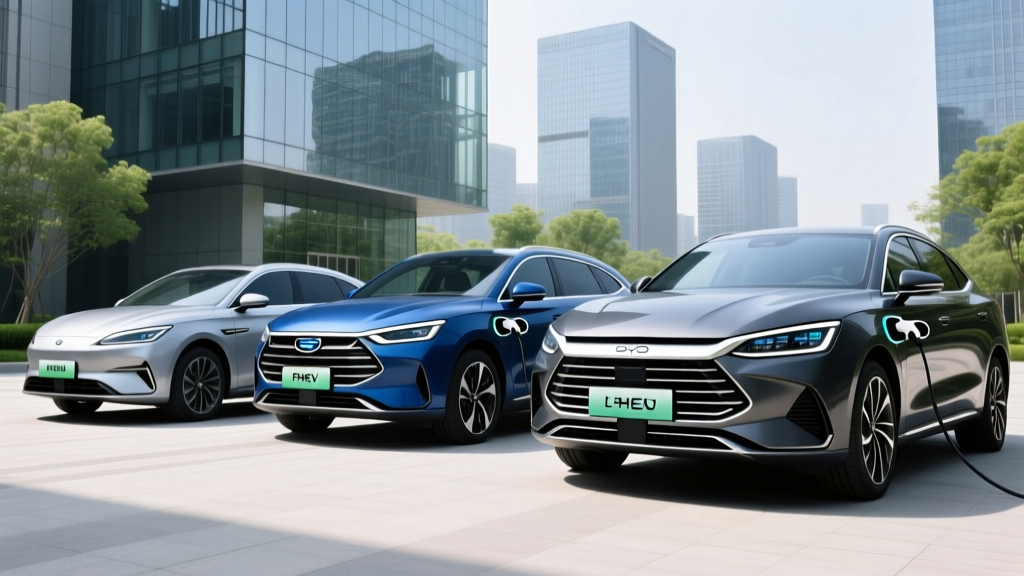
China hybrid cars have become the most talked-about segment in global automotive markets. Led by BYD, Chery, Geely, and Great Wall Motor, Chinese automakers are producing plug-in hybrids (PHEVs) and extended-range electric vehicles (EREVs) at price points and efficiency levels that legacy automakers struggle to match. In 2025 alone, BYD sold over 2.2 million plug-in electrified vehicles globally, with its DM-i (Dual Mode intelligent) hybrid system becoming a benchmark for efficiency and affordability.
For US-based shoppers researching these vehicles, the reality is more complicated: most China hybrid cars are not available for purchase in the United States due to tariffs (currently 100% on Chinese-made EVs and PHEVs as of 2025), lack of dealer networks, and NHTSA homologation requirements. But understanding what these vehicles offer — and which US-market alternatives come closest — is essential for making an informed electrified purchase.
This guide breaks down the leading China hybrid car platforms, their real-world specs, and what they mean for American buyers weighing hybrid, PHEV, and full EV options.
HEV vs PHEV vs EREV: How China's Hybrid Systems Differ
Chinese automakers deploy three distinct electrified powertrain architectures. Confusing them leads to bad purchase decisions, so let's clarify:
| Type | How It Works | Plug In? | Electric-Only Range |
|---|---|---|---|
| HEV (Hybrid) | Small battery recharged by engine + regen; motor assists at low speeds | No | 1-2 mi (low-speed only) |
| PHEV (Plug-in Hybrid) | Larger battery (15-40 kWh); drives on electricity until depleted, then engine takes over | Yes | 30-75 mi typical |
| EREV (Extended Range) | Wheels always driven by electric motor; gas engine acts solely as a generator | Yes | 90-170 mi typical |
BYD's DM-i system is a PHEV architecture that heavily favors electric drive. The 1.5L or 1.5T engine primarily acts as a generator (series-hybrid mode) at low and medium speeds, only clutching directly to the wheels at sustained highway cruising. This is why DM-i vehicles achieve exceptional city efficiency — the engine runs at its optimal RPM regardless of vehicle speed.
Chery's Kunpeng DHT and Geely's Thor (Hi·X) systems use dedicated hybrid transmissions (DHTs) with multiple gears to blend engine and motor power across a wider speed range, trading some city efficiency for stronger highway passing performance.
BYD DM-i Platform: The Benchmark China Hybrid System
BYD's DM-i (Dual Mode intelligent) is the most widely deployed PHEV platform in China hybrid cars. As of the 2026 model year, it underpins the Qin Plus DM-i, Song Plus DM-i, Seal U DM-i, and Han DM-i, among others.
BYD Seal U DM-i (2026) — Key Specifications
The BYD Blade battery uses lithium iron phosphate (LFP) chemistry — the same chemistry Tesla uses in standard-range Model 3 and Model Y vehicles. LFP offers superior thermal stability, longer cycle life (3,000+ full cycles before 80% capacity retention), and avoids cobalt/nickel supply-chain concerns. The trade-off is lower energy density, which is why PHEV batteries using LFP tend to be physically larger for a given kWh capacity.
Chery and Geely: China's Other Hybrid Contenders
Chery Kunpeng DHT (Tiggo 8 PHEV)
Chery's dedicated hybrid transmission pairs a 1.5T turbocharged engine with dual electric motors for a combined 326 hp in the Tiggo 8 PHEV. The 19.4 kWh NMC battery delivers approximately 47 mi (WLTP) of electric range — roughly 38-40 mi EPA-equivalent. Unlike BYD's series-dominant approach, Chery's DHT uses a 3-speed gearbox that allows the engine to drive the wheels directly across a broader speed range, improving highway efficiency at the cost of some city-driving smoothness.
Chery has signaled intentions to enter the US market by late 2026 or 2027, potentially through a manufacturing partnership, but no vehicles are currently available or homologated for US sale.
Geely Hi·X (Thor Hybrid)
Geely's Thor hybrid system, deployed in the Monjaro and Galaxy L7, uses a 3-speed DHT Pro transmission with a 1.5T engine producing a combined 390 hp. The 18.7 kWh battery yields about 40 mi EPA-equivalent electric range. Geely's parent company, Zhejiang Geely Holding Group, also owns Volvo and Polestar — and the Thor system's architecture shares DNA with Volvo's T8 Recharge PHEV powertrain found in the US-market XC60 and XC90 Recharge models.
US-Market Alternatives: What You Can Actually Buy
Since China hybrid cars are unavailable in the US, here are the closest domestic alternatives with comparable specs and pricing:
Data sourced from fueleconomy.gov (EPA). The Toyota RAV4 PHEV comes closest to matching BYD's DM-i formula: strong electric-only range, high combined MPGe, and a series-hybrid-dominant architecture. The Ford Escape PHEV leads the segment in charge-depleted MPG at 40 combined.
Fuel Economy Deep-Dive: Real-World MPG vs EPA Stickers
Hybrid and PHEV fuel economy is where EPA stickers and real-world results diverge most dramatically — and usually in the buyer's favor for city driving.
Why Hybrids Often Beat EPA City Estimates
Conventional hybrids and PHEVs in charge-depleted (hybrid) mode frequently exceed their EPA city ratings by 3-8 MPG in real-world driving. This happens because:
- Regenerative braking recaptures more energy in stop-and-go traffic than the EPA test cycle simulates
- Engine-off coasting at low speeds eliminates idling fuel consumption entirely
- Thermal efficiency of Atkinson-cycle engines (used in Toyota, Honda, and BYD hybrids) peaks at the low-load conditions common in city driving
However, highway MPG often falls 2-5 MPG below EPA estimates in PHEVs once the battery is depleted, because the added weight of the battery and motor (typically 200-400 lbs more than a gas equivalent) creates a penalty at sustained high speeds where regenerative braking contributes nothing.
Battery Longevity, Warranty, and Replacement Costs
Hybrid & PHEV Battery Warranty Standards
Federal law mandates that hybrid and PHEV batteries carry a minimum warranty of 8 years / 100,000 miles in all 50 states. In CARB states (California, New York, Massachusetts, and 14 others), that extends to 10 years / 150,000 miles for PZEV-certified vehicles.
Warranties cover capacity loss below a defined threshold — typically 60-70% of original capacity. If your PHEV's 40-mile electric range drops to 24 miles within the warranty period, the manufacturer must repair or replace the battery at no cost.
Replacement Cost Reality
Out-of-warranty hybrid battery replacement costs vary widely by model:
- Toyota RAV4 Hybrid/PHEV: $3,500-$5,000 (refurbished) / $6,000-$8,000 (new OEM)
- Honda CR-V Hybrid: $2,500-$4,000 (refurbished)
- Hyundai Tucson PHEV: $5,000-$7,500 (new OEM)
- BYD Blade (LFP, if available): LFP chemistry degrades more slowly — projected 15-20 year lifespan before reaching 80% capacity, making replacement unlikely within typical ownership periods
For context, the Consumer Reports reliability data shows that modern hybrid battery packs from Toyota and Honda have failure rates below 3% within the first 10 years. The fear of catastrophic battery replacement cost is largely a legacy concern from early-2000s NiMH packs.
Tax Credits and Incentives for PHEVs in 2026
The federal §30D Clean Vehicle Credit applies to qualifying PHEVs — not conventional HEVs. Key requirements for 2026:
- Battery capacity: Minimum 7 kWh (all current US-market PHEVs qualify)
- MSRP caps: $80,000 for SUVs/pickups/vans; $55,000 for sedans
- Buyer income limits: $150,000 single / $225,000 head of household / $300,000 joint (modified AGI)
- Critical minerals & battery component sourcing: Phased percentages must be met from US or FTA-partner countries — this eliminates most vehicles with Chinese-sourced battery components
- FEOC restriction: Vehicles with battery components from a Foreign Entity of Concern (including Chinese manufacturers) are ineligible
- Point-of-sale transfer: Eligible buyers can apply the credit as an immediate dealer discount rather than waiting for tax filing
As of 2026, the Toyota RAV4 PHEV qualifies for up to $3,750 (partial credit due to battery sourcing), while the Ford Escape PHEV may qualify for the full $7,500 depending on the buyer's income and the specific model year's sourcing compliance. Always verify current eligibility at fueleconomy.gov before purchasing, as sourcing rules change quarterly.
China hybrid cars like BYD's DM-i lineup would not qualify for US federal tax credits even if they were sold here, due to the FEOC battery-sourcing restrictions.
Who Should Choose a Hybrid, PHEV, or Full EV?
Choose a Hybrid (HEV) If:
- You lack access to home or workplace charging
- You want zero behavior change — just buy gas less often
- Your budget is under $38,000
- You drive mostly in stop-and-go city traffic (where hybrids shine)
- You plan to keep the vehicle 10+ years and want proven long-term reliability
Choose a PHEV If:
- You can charge at home (even a standard 120V outlet works for 30-40 mi range PHEVs overnight)
- Your daily commute is under 40 miles round-trip
- You take road trips where charging infrastructure is sparse
- You want EV-like daily driving without range anxiety
- You're in a cold climate where EV range loss is a concern (the engine provides cabin heat without draining the battery)
Choose a Full EV If:
- You have reliable home Level 2 charging
- Your daily driving is predictable and under 250 miles
- You want the lowest per-mile fuel cost ($0.04-$0.08/mi vs $0.10-$0.15/mi for PHEV)
- You want minimal maintenance (no oil changes, no engine)
- You qualify for the full $7,500 federal tax credit
The Bottom Line on China Hybrid Cars for US Buyers
China hybrid cars represent genuine engineering achievement. BYD's DM-i system delivers PHEV efficiency and electric range that matches or exceeds anything available in the US market — at prices 30-40% lower. The Seal U DM-i offering 50 mi of electric range and 53 MPG in hybrid mode for the equivalent of $41,500 is a compelling package.
But for American buyers, these vehicles remain aspirational rather than purchasable. The 100% tariff on Chinese-made vehicles, FEOC battery-sourcing restrictions, and absence of dealer/service networks mean the closest you can get to the DM-i experience is a Toyota RAV4 PHEV or Ford Escape PHEV — both of which are excellent vehicles in their own right.
If Chinese automakers eventually establish US manufacturing (as Hyundai, Toyota, and BMW did before them), expect the PHEV price-to-performance bar to shift dramatically. Until then, the US alternatives listed above offer strong efficiency, established dealer support, and available tax credits.
Frequently Asked Questions
How many MPG do China hybrid cars get?
BYD DM-i PHEVs achieve approximately 50-55 MPG combined in charge-depleted (hybrid) mode, based on WLTP testing. EPA-equivalent figures would be roughly 45-50 MPG combined. For comparison, the best US-market PHEV (Ford Escape PHEV) delivers 40 MPG combined once the battery is depleted, and the Toyota RAV4 Hybrid (non-plug-in) achieves 40 MPG combined.
How far can BYD PHEVs go on electric only?
Current BYD DM-i models range from 30 to 75 miles of WLTP-rated electric range depending on battery size and vehicle class. The Qin Plus DM-i with the 18.3 kWh Blade battery achieves approximately 75 mi WLTP (~60 mi EPA-equivalent). Real-world range with climate control and highway driving drops to approximately 50-55 mi.
Are China hybrid cars reliable?
BYD's LFP Blade battery has demonstrated excellent longevity in Chinese fleet data, with less than 10% degradation over 200,000 km (124,000 mi) in taxi and ride-hailing applications. However, long-term reliability data for Chinese PHEV powertrains in Western markets is limited, as most have been on sale in Europe for fewer than three years. Toyota and Honda hybrids have 20+ year reliability track records in the US.
Does a PHEV qualify for a tax credit?
Yes — qualifying PHEVs with at least 7 kWh of battery capacity are eligible for the federal §30D Clean Vehicle Credit (up to $7,500), subject to MSRP caps, buyer income limits, and battery-sourcing requirements. Conventional hybrids (HEVs) do not qualify for the federal credit. Check current eligibility at fueleconomy.gov.
What is the battery replacement cost for a PHEV?
US-market PHEV battery replacement ranges from $2,500 (refurbished Honda) to $8,000 (new OEM Toyota). All PHEV batteries carry a federally mandated 8-year/100,000-mile warranty minimum. BYD's LFP chemistry is projected to last 15-20 years before reaching 80% capacity, potentially eliminating replacement concerns for most owners.