Quick Answer: Yes, the Chevrolet Volt is a plug-in hybrid electric vehicle (PHEV), not a conventional hybrid. It can drive on electric power alone for a meaningful distance before its gasoline engine engages as a generator. However, Chevrolet discontinued the Volt after the 2019 model year, so in 2026 you'll find it exclusively on the used market. It remains one of the most practical PHEVs ever built, especially for buyers who want electric commuting with gas-engine backup.
Understanding the Chevy Volt's PHEV Powertrain
The Chevrolet Volt uses what General Motors called an Extended-Range Electric Vehicle (EREV) architecture — a specific subtype of plug-in hybrid. Unlike a conventional hybrid (HEV) such as the Toyota Prius, which blends a small battery with a gas engine and never plugs in, the Volt prioritizes electric driving. Its gasoline engine does not drive the wheels directly under normal conditions; instead, it acts as a series generator, producing electricity to extend range once the battery is depleted.
This distinction matters for how the car drives and how you use it. Plug in overnight, and the Volt operates as a pure electric car for your daily commute. Take a road trip, and the onboard 1.5-liter four-cylinder engine fires up seamlessly to keep you moving — no range anxiety, no charging-station dependency.
HEV vs. PHEV: Where the Volt Fits
| Feature | Conventional Hybrid (HEV) | Plug-In Hybrid (PHEV) — Chevy Volt | Battery Electric (BEV) |
|---|---|---|---|
| Plugs in to charge? | No | Yes | Yes |
| Electric-only range | 0–2 miles (low speed) | 38–53 miles (depending on generation) | 200–400+ miles |
| Gas engine role | Drives wheels + charges battery | Generator only (Volt EREV) | None |
| Battery size | 1–2 kWh | 18.4 kWh (Gen 2 Volt) | 60–100+ kWh |
| Tailpipe emissions (EV mode) | N/A (always uses gas) | Zero in EV mode | Zero |
Chevy Volt Generations: Gen 1 vs. Gen 2 Specs
The Volt spans two distinct generations, and the differences in range, efficiency, and powertrain are significant. If you're shopping used in 2026, knowing which generation you're looking at is essential.
| Specification | Gen 1 Volt (2011–2015) | Gen 2 Volt (2016–2019) |
|---|---|---|
| Electric-only range (EPA) | 35 miles (2013–2015) | 53 miles (2017–2019) |
| Battery capacity (total / usable) | 16.5 kWh / ~10.3 kWh | 18.4 kWh / ~14.0 kWh |
| Battery chemistry | NMC (LG Chem) | NMC (LG Chem) |
| Gas engine | 1.4L 4-cyl (84 hp) | 1.5L 4-cyl (101 hp) |
| Electric motor output | 149 hp / 273 lb-ft | 149 hp / 294 lb-ft (twin-motor) |
| Combined system output | 149 hp | 149 hp |
| 0–60 mph | ~9.0 seconds | ~8.4 seconds |
| Charge time (Level 2, 240V) | ~4 hours (3.6 kW) | ~4.5 hours (3.6 kW) |
| DC fast charging | No | No |
| Total combined range (EPA) | ~380 miles | ~420 miles |
Fuel Economy: MPG and MPGe Breakdown
Because the Volt operates as an EV first and a hybrid second, it carries two efficiency ratings: MPGe (miles per gallon equivalent, measuring electric-mode efficiency) and MPG (once the engine is running as a generator).
| Metric | Gen 1 Volt (2013–2015) | Gen 2 Volt (2016–2019) |
|---|---|---|
| Combined MPGe (electric mode) | 98 MPGe | 106 MPGe |
| Combined MPG (gas mode) | 37 MPG | 42 MPG |
| City MPG (gas mode) | 35 MPG | 43 MPG |
| Highway MPG (gas mode) | 40 MPG | 42 MPG |
| Energy consumption (EV mode) | 36 kWh/100 mi | 31 kWh/100 mi |
Real-world MPG note: Owners who charge nightly and commute under 50 miles may go weeks without using a drop of gasoline. The gas engine may only run on longer trips or during extreme cold when the Volt uses it to heat the cabin and maintain battery temperature. According to fueleconomy.gov, the Gen 2 Volt's 42 MPG combined in charge-sustaining mode is competitive with dedicated hybrids like the Honda Accord Hybrid.
Charging the Volt: What You Need to Know
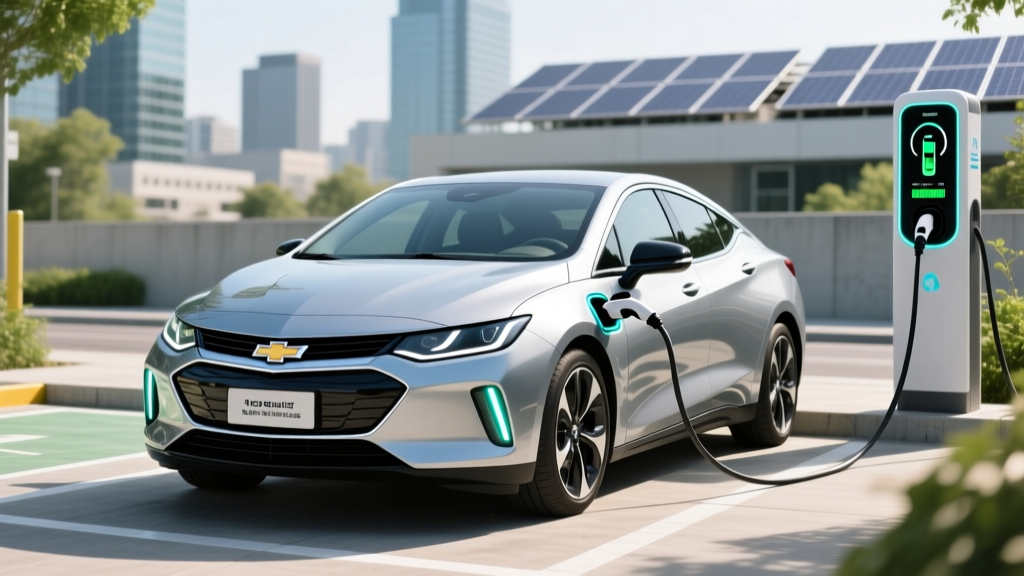
The Volt charges via a standard J1772 connector (the universal Level 1/Level 2 plug for non-Tesla EVs in North America). Here's the charging breakdown:
| Charging Level | Power (kW) | Time (Empty to Full) | Notes |
|---|---|---|---|
| Level 1 (120V household) | ~1.4 kW | ~12–13 hours (Gen 2) | Works for overnight top-ups |
| Level 2 (240V home/public) | 3.6 kW | ~4.5 hours (Gen 2) | Recommended for daily use |
| DC Fast Charge | Not supported | N/A | Volt has no DCFC capability |
A critical limitation: the Chevy Volt cannot DC fast charge. The onboard charger maxes out at 3.6 kW, meaning even at a public Level 2 station, a full charge takes about 4.5 hours. For PHEV owners who charge primarily at home overnight, this isn't a practical problem — you wake up to a full battery every morning. But it does mean the Volt won't benefit from a quick top-up on a road trip the way a full BEV would.
Home charging cost estimate: At the US average residential electricity rate of ~$0.16/kWh, fully charging the Gen 2 Volt's 18.4 kWh battery costs roughly $2.94, yielding 53 miles of electric range — about $0.055 per mile. Compare that to gasoline at $3.50/gallon and 42 MPG: roughly $0.083 per mile in gas mode.
Battery Warranty, Longevity, and Replacement Cost
Since the newest Volt is now a 2019 model, original battery warranties are expiring or have expired for most vehicles as of 2026–2027. This makes battery health a critical check when buying used.
Real-World Degradation Data
Owner-reported data from Volt forums and fleet studies suggest the Gen 2 Volt's LG Chem NMC battery retains approximately 80–88% of original capacity after 7–8 years and 80,000–100,000 miles of typical use. The Volt's relatively conservative battery buffer (GM reserves roughly 4.4 kWh of the 18.4 kWh pack as a buffer that owners can never access) helps protect long-term health by preventing deep discharge and overcharge cycles.
Battery Replacement Cost
As of 2026, a replacement Volt battery pack from a GM dealer typically runs $4,000–$8,000 depending on labor rates and whether the pack is new, remanufactured, or salvaged. Independent EV shops sometimes offer refurbished packs for $3,000–$5,000. While not cheap, this is lower than many full EV battery replacements thanks to the Volt's smaller 18.4 kWh pack.
Pro tip for used buyers: Before purchasing, use the Volt's built-in Energy Detail screen or an OBD2 reader with an app like MyGreenVolt to check the battery's current usable capacity. A healthy Gen 2 pack should show approximately 13–14 kWh usable. If it reads below 11 kWh, negotiate the price accordingly or walk away.
Used Volt Pricing in 2026 and Tax Credit Eligibility
The Chevrolet Volt is no longer in production, so all 2026 purchases are on the used market. Current pricing trends:
| Model Year / Generation | Typical Used Price Range (2026) | Mileage Range |
|---|---|---|
| 2011–2015 (Gen 1) | $7,000 – $12,000 | 80,000 – 150,000 mi |
| 2016–2017 (Early Gen 2) | $12,000 – $17,000 | 60,000 – 110,000 mi |
| 2018–2019 (Late Gen 2) | $16,000 – $22,000 | 30,000 – 80,000 mi |
Does the Used Chevy Volt Qualify for a Tax Credit?
Under the IRS §25E Used Clean Vehicle Credit (sometimes called the "used EV credit"), qualifying buyers can receive up to $4,000 or 30% of the sale price (whichever is less) when purchasing a used PHEV like the Volt from a licensed dealer. Key requirements as of 2026:
- Sale price cap: Vehicle must sell for $25,000 or less — this includes most used Volts
- Buyer income limits: Adjusted gross income must not exceed $75,000 (single) / $150,000 (married filing jointly) / $112,500 (head of household)
- Vehicle age: Must be at least 2 model years old (all Volts qualify)
- Dealer sale required: Private-party sales do not qualify
- Battery capacity: Must have at least 7 kWh of battery capacity (Volt's 18.4 kWh qualifies)
- First transfer since Aug 16, 2022: The credit applies only to the first qualified resale after that date — verify with the dealer that the vehicle hasn't already been claimed under §25E
Always verify current-year eligibility with your tax professional or directly at IRS.gov, as rules can shift annually.
Reliability: What Owners and Data Show
The Volt earns solid reliability marks, particularly for the Gen 2 (2016–2019). Key data points:
- J.D. Power: The 2017–2019 Volt consistently scored above average in powertrain reliability, benefiting from the EREV architecture's simpler mechanical layout — the gas engine runs at steady RPM as a generator, avoiding the stress of direct-drive duty cycles
- NHTSA: The Gen 2 Volt earned a 5-star overall safety rating from NHTSA, with strong frontal and side crash scores
- Common issues to watch: Gen 1 Volts (2011–2015) had some reports of battery cell imbalance and coolant system leaks. Gen 2 models addressed most of these. All years: check for the BECM (Battery Energy Control Module) recall and ensure software updates are current
- Powertrain simplicity advantage: The Volt has no traditional multi-speed transmission — it uses a planetary gearset (Voltec drive unit) with far fewer moving parts than a conventional automatic, reducing long-term mechanical failure risk
Who Should Buy the Chevy Volt in 2026?
Decision Framework: Is the Volt Right for You?
Choose the Chevy Volt if:
- Your daily commute is under 50 miles round-trip (Gen 2) and you can charge at home
- You want electric commuting but need gas flexibility for road trips or rural driving
- You're on a budget — used Volts are among the most affordable PHEVs available
- You live in a cold climate where pure EVs lose significant range in winter
- You want to reduce gas consumption without committing to full EV infrastructure
Choose a full BEV instead if:
- You have reliable home charging and mostly drive under 250 miles/day
- You want near-zero maintenance (no oil changes, no engine coolant, no spark plugs)
- You want DC fast charging for road trips (Volt lacks this)
- You want the latest ADAS tech and infotainment — the Volt's 2019-era tech is dated
Choose a conventional HEV (like a Prius) instead if:
- You cannot charge at home or at work — a PHEV unplugged is just a heavy hybrid
- You want a newer vehicle with current warranty coverage at a similar price point
- You prioritize cargo space — the Volt's T-shaped battery eats into rear-seat and trunk room
✅ Pros
- 53 miles EV range covers most commutes gas-free
- 420+ miles total range eliminates range anxiety
- Low used pricing; eligible for up to $4,000 used-EV credit
- Smooth, quiet electric driving experience
- Proven, reliable Gen 2 powertrain
- Regen braking enables one-pedal-style driving
❌ Cons
- No DC fast charging — road-trip top-ups are slow
- Discontinued after 2019 — no new models available
- Rear seat is tight; cargo space compromised by battery
- Original battery warranties expiring/expired
- Infotainment and ADAS tech is a generation behind
- Only seats 4 (Gen 1) or 5 tight (Gen 2)
Frequently Asked Questions
Is the Chevy Volt a plug-in hybrid or a regular hybrid?
The Chevy Volt is a plug-in hybrid — specifically an Extended-Range Electric Vehicle (EREV). It has a charge port, a substantial 18.4 kWh battery (Gen 2), and can drive 53 miles on electricity alone before the gas engine activates as a generator. A conventional hybrid like the Toyota Prius cannot plug in and has only a tiny 1–2 kWh battery.
How many MPG does the Chevy Volt get?
In electric mode, the Gen 2 Volt achieves 106 MPGe combined. Once the battery depletes and the gas engine engages, it delivers 42 MPG combined (43 city / 42 highway). Real-world results vary: owners who charge nightly often report using very little gasoline, while those who drive long distances without charging see consistent low-40s MPG.
How far can the Chevy Volt go on electric only?
The Gen 2 Volt (2016–2019) is EPA-rated at 53 miles of electric-only range. The Gen 1 (2013–2015) is rated at 35 miles. In real-world driving, expect 40–48 miles from a Gen 2 in mild weather, dropping to 30–35 miles in cold winter conditions or at sustained highway speeds above 70 mph.
Can the Chevy Volt use DC fast charging?
No. The Volt does not support DC fast charging (CHAdeMO, CCS, or NACS). It charges exclusively via Level 1 (120V) or Level 2 (240V) using a J1772 connector, with a maximum onboard charge rate of 3.6 kW. A full Level 2 charge takes approximately 4.5 hours for the Gen 2.
Is the Chevy Volt reliable, and what does battery replacement cost?
The Gen 2 Volt has a strong reliability record. Its EREV powertrain is mechanically simpler than a conventional transmission, and the battery's conservative buffer strategy promotes longevity. Replacement battery packs cost $4,000–$8,000 from a dealer or $3,000–$5,000 from independent shops. Most Gen 2 packs retain 80–88% capacity after 8 years.
Does the Chevy Volt qualify for any tax credit in 2026?
Since the Volt is only available used, it may qualify for the IRS §25E Used Clean Vehicle Credit — up to $4,000 or 30% of the sale price (whichever is less). Requirements include a sale price of $25,000 or less, buyer income under $75,000 (single) or $150,000 (joint), purchase from a licensed dealer, and the vehicle must not have been previously claimed under §25E after August 16, 2022. Verify current rules at IRS.gov.
Should I buy a Volt or a full electric vehicle?
If you can charge at home, drive under 250 miles daily, and want minimal maintenance, a full EV like a used Tesla Model 3 or Chevrolet Bolt EV may serve you better with modern tech and DC fast charging. But if you regularly take longer trips, live in a charging-desert area, or want to stay under $20,000 with zero range anxiety, the Volt is an outstanding budget PHEV.