Short Answer: The Chevy Volt Is a Plug-In Hybrid, Not a Conventional Hybrid
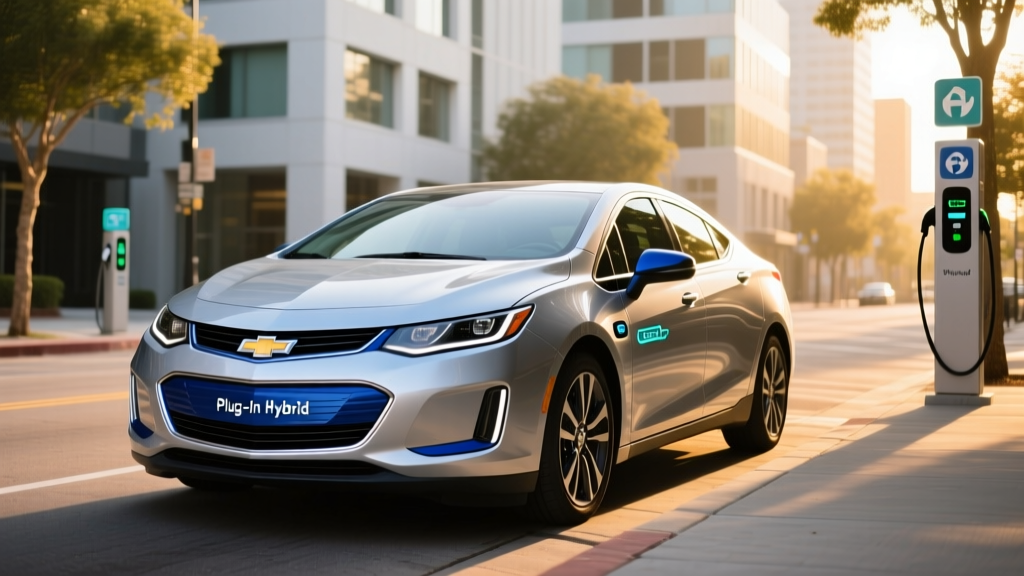
If you've been searching "is the Chevy Volt a hybrid vehicle," the precise answer is that it's a plug-in hybrid electric vehicle (PHEV) — a fundamentally different architecture from a conventional hybrid like the Toyota Prius. Chevrolet discontinued the Volt after the 2019 model year, so you'll only find it on the used market in 2026, but it remains one of the most capable and misunderstood electrified vehicles ever sold in the US.
The Volt can drive on pure electricity for up to 53 miles (second generation, 2016–2019) before its gasoline engine kicks in to extend range. A conventional hybrid, by contrast, can only travel 1–2 miles on electric power at low speeds and never plugs into a wall. Understanding this distinction is critical if you're evaluating a used Volt against other hybrids or full EVs today.
Conventional Hybrid (HEV): Small battery (1–2 kWh), charges only via regenerative braking and the engine. Never plugs in. Examples: Toyota Prius, Honda Accord Hybrid.
Plug-In Hybrid (PHEV): Larger battery (8–18+ kWh), charges from a wall outlet or charger, delivers 20–50+ miles of electric-only driving before the gas engine takes over. Examples: Chevy Volt, Toyota RAV4 Prime, Jeep Wrangler 4xe.
Chevy Volt Powertrain Specs: How the Voltec System Works
The second-generation Volt (2016–2019) uses GM's Voltec powertrain, which pairs a 1.5-liter four-cylinder gasoline engine with two electric motors and an 18.4 kWh lithium-ion battery pack (gross capacity; approximately 14.0 kWh usable to preserve battery longevity). This is not a simple parallel hybrid system — it operates primarily as a series hybrid in most driving conditions, meaning the electric motors drive the wheels while the gas engine acts as a generator to recharge the battery when needed.
| Specification | Value |
|---|---|
| Combined System Output | 149 hp / 294 lb-ft torque |
| Electric Motors | Two motor-generators (111 kW + 48 kW peak) |
| Gas Engine | 1.5L naturally aspirated I4, 101 hp |
| Battery Capacity (Gross / Usable) | 18.4 kWh / ~14.0 kWh |
| Battery Chemistry | LG Chem NMC lithium-ion |
| EPA Electric-Only Range | 53 miles |
| EPA Total Range (Electric + Gas) | 420 miles |
| 0–60 mph | ~7.5 seconds |
| DC Fast Charging | Not supported (Level 2 AC only) |
The first-generation Volt (2011–2015) had a smaller 16.5 kWh battery (10.3 kWh usable) with an EPA electric range of 35–38 miles and a 1.4L engine. If you're shopping used, the second-gen model is substantially better in range, efficiency, interior space, and driving dynamics.
Fuel Economy: EPA MPG and MPGe Breakdown
Because the Volt is a PHEV, it carries two efficiency ratings: an MPGe (miles-per-gallon-equivalent) figure that measures efficiency when running on electricity, and a standard MPG figure for when the gas engine is operating after the battery is depleted. Here are the official EPA numbers for the 2016–2019 second-generation Volt:
| Mode | City | Highway | Combined |
|---|---|---|---|
| Electric Mode (MPGe) | — | — | 106 MPGe |
| Gas-Only Mode (MPG) | 42 MPG | 42 MPG | 42 MPG |
Real-world MPG vs. EPA: In practice, the Volt's gas-mode fuel economy tends to align closely with the 42 MPG EPA figure in mixed driving. Some owners report 45–50 MPG in gentle city driving with warm weather, while sustained highway speeds above 75 mph can drop it to 36–38 MPG. Cold weather reduces both electric range (by roughly 20–30%) and gas-mode efficiency due to cabin heating demands and denser air.
If you charge daily and your commute is under 50 miles round-trip, you may go months between fill-ups. Many Volt owners report using less than 100 gallons of gas per year in this scenario.
Charging the Volt: Level 1 and Level 2 Only
The Chevy Volt does not support DC fast charging. This is a common point of confusion for shoppers new to PHEVs. The Volt charges exclusively via AC power through its J1772 connector:
| Charging Level | Power | 0–Full Time | Equipment |
|---|---|---|---|
| Level 1 (120V household) | 1.4 kW (12A) | ~13 hours | Included portable cord |
| Level 2 (240V) | 3.6 kW (standard) / 7.2 kW (optional upgrade on 2019 models) | ~4.5 hours (3.6 kW) / ~2.3 hours (7.2 kW) | Home wallbox or public Level 2 station |
For a PHEV with an 18.4 kWh battery, the lack of DC fast charging is not a serious limitation — the battery is small enough to refill overnight on Level 1, or in a few hours on Level 2. The 7.2 kW onboard charger option on 2019 models is a valuable find if you're shopping used, as it roughly halves Level 2 charge time.
kW vs kWh reminder: kW (kilowatts) measures the rate of power delivery — how fast energy flows into the battery. kWh (kilowatt-hours) measures total energy capacity — the size of the battery. The Volt's 3.6 kW Level 2 charge rate means it takes about 4.5 hours to fill its 18.4 kWh battery (minus the buffer).
Battery Longevity, Warranty, and Replacement Cost
GM covered the Volt's high-voltage battery for 8 years / 100,000 miles (10 years / 150,000 miles in CARB states like California, New York, and others). The warranty guaranteed the battery would retain at least 60% of its original capacity. For 2011–2018 models in 2026, most original factory warranties have expired or are expiring — factor this into your used purchase decision.
Real-world degradation data: The Volt's LG Chem NMC battery has proven remarkably durable. Owner surveys and data from sources like NHTSA and Volt owner forums indicate that most second-generation Volts retain 85–92% of original battery capacity after 100,000 miles. GM's aggressive battery buffer strategy (hiding ~4.4 kWh from the user at the top and bottom of the pack) is the primary reason for this longevity — the cells are never stressed to their true full or empty states.
Battery replacement cost (2026): If you do need a replacement high-voltage battery outside of warranty, expect to pay between $3,500 and $6,000 for a refurbished or new pack including labor at a Chevrolet dealer. Independent EV shops sometimes offer refurbished packs for $2,500–$4,000. Given that most Volt batteries are lasting well beyond 150,000 miles with acceptable degradation, this is a relatively low-probability expense — but one worth budgeting for on a used purchase.
Used Volt Pricing in 2026 and Tax Credit Eligibility
Since Chevrolet discontinued the Volt after 2019, you'll only find it on the used market. As of early 2026, typical pricing looks like this:
- 2016–2017 Volt (Gen 2): $10,000–$14,500 depending on mileage and condition
- 2018–2019 Volt (Gen 2): $13,500–$18,000 depending on mileage and condition
- 2011–2015 Volt (Gen 1): $5,500–$9,500 — lower electric range (35–38 mi), older interior
Federal tax credit for used PHEVs: Under the IRS §25E Used Clean Vehicle Credit, you may qualify for up to $4,000 or 30% of the sale price (whichever is lower) when buying a used Volt from a licensed dealer. Key eligibility requirements:
- Sale price must be $25,000 or less (most used Volts qualify)
- Buyer income caps: $75,000 single / $112,500 head of household / $150,000 joint (modified AGI)
- Vehicle must be at least 2 model years old (all Volts qualify)
- Must purchase from a licensed dealer — private-party sales do not qualify
- The credit can be transferred to the dealer at point of sale for an immediate price reduction
- You can only claim this credit once every 3 years
At a $14,000 used Volt purchase, the 30% calculation yields $4,200, but the credit is capped at $4,000 — effectively reducing your net cost to around $10,000 if you meet all income and eligibility requirements. This makes the used Volt one of the best value propositions in electrified transportation in 2026. Always confirm your personal eligibility with a tax professional before relying on the credit.
Who Should Buy a Used Chevy Volt — And Who Shouldn't
- Your daily round-trip commute is under 50 miles and you can charge at home
- You want electric daily driving but need gas flexibility for road trips
- You don't have reliable access to public DC fast chargers
- You want to minimize gasoline use without full EV range anxiety
- You're on a budget and want a used PHEV under $18K (before credits)
- You want a new vehicle with full warranty coverage
- You need more than 53 miles of electric range for your commute
- You need a crossover/SUV body style (Volt is a low sedan/hatchback)
- You need DC fast charging for frequent long road trips
- You want the latest infotainment and ADAS technology
Hybrid vs PHEV vs EV — which fits you?
- Conventional hybrid (HEV): Best for buyers who can't charge at home, want maximum simplicity, and prioritize low upfront cost. No plug, no behavior change. Example: Toyota Prius.
- Plug-in hybrid (PHEV): Best for buyers who can charge at home, have a sub-50-mile commute, but need occasional long-range capability without planning charging stops. Example: Chevy Volt, Toyota RAV4 Prime.
- Battery electric (BEV): Best for buyers with home charging who want zero gasoline expenses, minimal maintenance, and have a second car or don't mind planning DC fast-charge stops on road trips. Example: Tesla Model 3, Hyundai Ioniq 5.
Frequently Asked Questions
Is the Chevy Volt a hybrid or an electric car?
It's technically both — the Volt is a plug-in hybrid (PHEV) that drives as an electric car for its first 53 miles, then seamlessly switches to gas-engine operation for unlimited range. It is not a conventional hybrid like a Prius, and it is not a pure battery-electric vehicle like a Tesla Model 3.
How many MPG does the Chevy Volt get?
The 2016–2019 Volt achieves 42 MPG combined in gas-only mode (after the battery is depleted) and 106 MPGe in electric mode. Real-world gas mileage typically ranges from 36–50 MPG depending on driving style, temperature, and terrain.
How far can the Chevy Volt go on electric only?
The second-generation Volt (2016–2019) has an EPA-rated 53 miles of electric-only range. Real-world range is typically 40–55 miles depending on temperature, speed, and terrain. Expect roughly 35–42 miles in cold weather (below 32°F) due to cabin heating and reduced battery efficiency. The first-generation Volt (2011–2015) manages 35–38 miles EPA.
Can the Chevy Volt charge at Tesla Superchargers?
No. The Volt uses a J1772 connector for AC Level 2 charging and does not support DC fast charging of any kind, including CCS, CHAdeMO, or NACS (Tesla). You can use any J1772 public Level 2 station, which is the most common public connector in the US.
Is the Chevy Volt reliable?
The Volt has above-average reliability for a GM product of its era. The Voltec powertrain has proven durable, and the battery's large buffer has kept degradation low. Common issues include minor electrical gremlins, occasional coolant pump failures in the battery thermal management system, and infotainment screen delamination on early Gen 2 models. The IIHS gave the Gen 2 Volt a Top Safety Pick rating. Always get a pre-purchase inspection and check the battery's State of Health via the dash display before buying.
Does the Chevy Volt qualify for any tax credit in 2026?
The Volt no longer qualifies for the new-vehicle §30D credit (production ended in 2019). However, buying a used Volt from a licensed dealer may qualify you for the §25E Used Clean Vehicle Credit of up to $4,000, subject to buyer income limits and the $25,000 sale-price cap. Consult a tax professional to confirm eligibility.
What is the Chevy Volt's battery replacement cost?
As of 2026, a replacement high-voltage battery for the Volt costs approximately $3,500–$6,000 at a Chevrolet dealer, or $2,500–$4,000 from an independent EV specialist using a refurbished pack. Most Volt batteries are lasting 150,000+ miles with less than 15% degradation, making replacement a low-probability event.