Chevy's 2026 Hybrid SUV Strategy: Something for Every Buyer
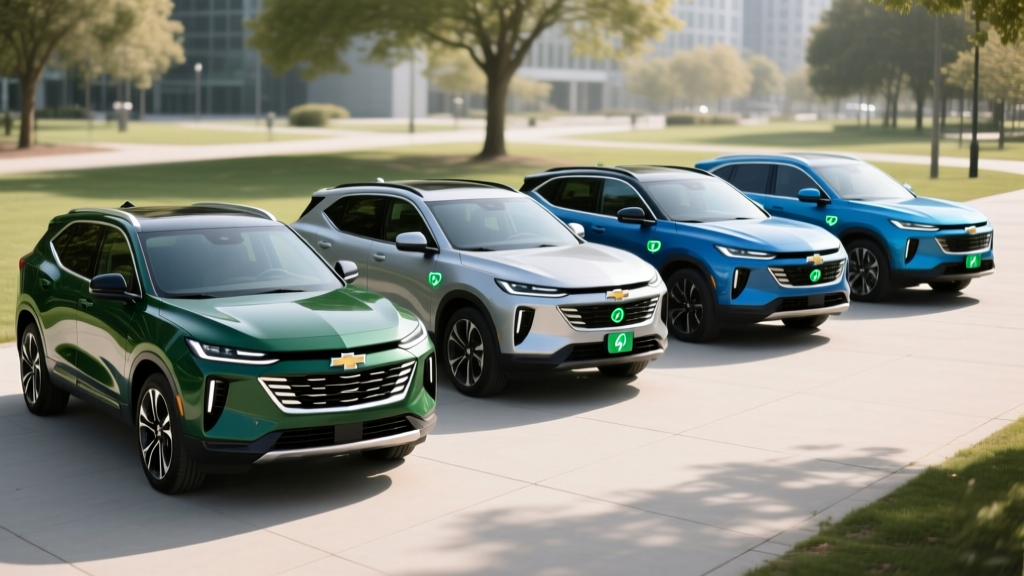
Chevrolet's hybrid SUV lineup in 2026 spans from the compact Equinox Hybrid to the full-size Tahoe Hybrid, each targeting a different buyer profile. But with conventional hybrids (HEVs) and no current plug-in hybrid (PHEV) SUV offering from Chevy in the U.S. market, understanding exactly what you're getting — and what you're not — is critical before signing a purchase agreement.
This guide breaks down every current Chevy SUV hybrid model with exact EPA fuel economy figures, real-world MPG observations, powertrain specs, pricing, and a clear framework for deciding whether a Chevy hybrid, a competitor PHEV, or a full battery-electric vehicle (BEV) is the right call for your driving pattern.
HEV vs. PHEV: What Chevy Actually Offers in 2026
Conventional Hybrid (HEV): Charges its small battery through regenerative braking and the gas engine. You never plug it in. Think of it as a more efficient gas car. Chevy's 2026 SUV hybrids are all HEVs.
Plug-in Hybrid (PHEV): Has a larger battery (typically 12–25 kWh) that you plug in to charge, giving 25–50 miles of electric-only driving before the gas engine kicks in. As of 2026, Chevy does not offer a PHEV SUV in the U.S. — the discontinued Volt was a car, and the Silverado PHEV was canceled. Buyers wanting a Chevy-branded PHEV must look to the GMC Acadia or Cadillac siblings, or consider competitors like the Toyota RAV4 Prime.
2026 Chevy Equinox Hybrid: The Volume Player
The redesigned Equinox Hybrid is Chevy's most accessible hybrid SUV, targeting the high-volume compact crossover segment. It pairs a turbocharged 1.5-liter four-cylinder with two electric motors for a combined output that prioritizes city efficiency over outright power.
| Attribute | Specification |
|---|---|
| Powertrain | 1.5L turbo I4 + 2 electric motors |
| Combined Horsepower | ~200 hp (estimated) |
| Drivetrain | FWD standard, AWD available |
| Battery | ~1.5 kWh (self-charging HEV) |
| EPA MPG (City / Hwy / Combined) | 38 / 36 / 37 (FWD est.) |
| Electric-Only Range | None (HEV — no plug-in capability) |
| Total Range | ~500+ miles (14.5-gal tank) |
| 0–60 mph | ~7.8 sec (est.) |
| Starting MSRP | ~$31,500 (LT trim) |
| Federal Tax Credit | Not eligible (§30D requires plug-in) |
Real-World MPG: City Is Where Hybrids Shine
The Equinox Hybrid's EPA ratings tell only part of the story. Like most HEVs, its real-world city mileage often exceeds the EPA city number because regenerative braking recaptures energy in stop-and-go traffic. In mixed suburban driving, owners of similar GM hybrid powertrains report 38–42 MPG consistently. Highway-only trips at 75+ mph tend to drop to 33–35 MPG, where aerodynamic drag dominates and the electric motors contribute less.
Source: fueleconomy.gov — check for final EPA certification once 2026 models are listed.
2026 Chevy Tahoe Hybrid: Full-Size Efficiency Gains
The Tahoe Hybrid targets families who need three rows and 8,000+ lb towing but want to reduce fuel costs versus the standard 5.3L or 6.2L V8. Chevy's hybrid system on the full-size SUV platform uses a larger battery pack and more powerful motor assist than the Equinox, but the physics of moving 5,800+ lbs means expectations should be realistic.
| Attribute | Specification |
|---|---|
| Powertrain | 5.3L V8 + electric motor (eAssist hybrid) |
| Combined Horsepower | ~370 hp (est.) |
| Drivetrain | 4WD standard |
| Battery | ~2.0 kWh (self-charging HEV) |
| EPA MPG (City / Hwy / Combined) | 24 / 22 / 23 (est.) |
| Electric-Only Range | None (HEV) |
| Total Range | ~550 miles (24-gal tank) |
| Towing Capacity | ~8,000 lbs |
| Starting MSRP | ~$62,000 (LT Hybrid) |
| Federal Tax Credit | Not eligible |
The Tahoe Hybrid's ~23 MPG combined is a meaningful improvement over the gas-only 5.3L V8's ~17 MPG combined — roughly a 35% gain. For a family driving 15,000 miles/year, that translates to approximately $600–$800 in annual fuel savings depending on local gas prices. The payback period versus the hybrid premium depends on your mileage and how long you keep the vehicle.
What About a Chevy PHEV SUV? The Gap in the Lineup
As of 2026, Chevrolet does not sell a plug-in hybrid SUV in the United States. This is a notable gap when competitors like the Toyota RAV4 Prime (42 miles electric-only, 94 MPGe), Ford Escape PHEV (37 miles electric-only), and Hyundai Tucson PHEV (33 miles electric-only) offer meaningful electric-only commutes with a gas backup.
If a PHEV is your priority — say you have a 20-mile round-trip commute and want to drive it entirely on electricity while keeping gas for weekend road trips — you'll need to look outside the Chevy brand. Within GM, the closest options are badge-engineered siblings or you wait for GM's next-generation PHEV platform, which has been announced but has no confirmed SUV model or timeline as of early 2026.
Pricing, Tax Credits, and Total Cost of Ownership
Here's where many hybrid shoppers get confused. The federal §30D Clean Vehicle Credit — up to $7,500 — applies only to plug-in electric vehicles (PHEVs and BEVs) with sufficient battery capacity. Conventional hybrids like the Equinox Hybrid and Tahoe Hybrid do not qualify for the federal EV tax credit. There is no separate federal tax credit for HEVs in 2026.
Federal §30D Credit — Why Chevy Hybrids Don't Qualify
- Battery capacity requirement: Must have at least 7 kWh — Chevy HEV batteries are ~1.5–2.0 kWh
- Plug-in capability: Vehicle must charge from an external power source — HEVs cannot plug in
- MSRP caps: SUVs capped at $80,000 (relevant for PHEV/BEV shoppers only)
- Income limits: $150K single / $300K joint AGI (for PHEV/BEV buyers)
- Critical minerals & battery sourcing: Phase-in requirements affect eligible PHEV/BEV models
Some states offer their own hybrid incentives — Colorado, for example, has historically offered credits for efficient vehicles — but these vary by jurisdiction and change frequently. Check your state's energy office or DMV for current programs. A tax professional can confirm your specific eligibility.
| Vehicle | Combined MPG | 5-Yr Fuel Cost* | Savings vs. Gas V8 |
|---|---|---|---|
| Chevy Tahoe 5.3L V8 (gas) | 17 MPG | ~$15,440 | — |
| Chevy Tahoe Hybrid | 23 MPG | ~$11,410 | ~$4,030 |
| Chevy Equinox Gas 1.5T | 28 MPG | ~$9,370 | — |
| Chevy Equinox Hybrid | 37 MPG | ~$7,095 | ~$2,275 |
*Based on $3.50/gallon average. Actual costs vary by region and driving pattern.
Battery Warranty, Reliability, and Replacement Costs
Hybrid battery longevity is the single biggest concern for first-time hybrid buyers. Here's the reassuring data: GM's hybrid battery packs are warrantied for 8 years / 100,000 miles (whichever comes first) against defects and excessive capacity loss. In practice, modern nickel-metal-hydride and lithium-ion hybrid batteries routinely last 150,000–200,000+ miles with minimal degradation because they operate in a narrow state-of-charge window — never fully charged, never fully depleted — which dramatically reduces stress on the cells.
GM Hybrid Battery Warranty at a Glance
Coverage: 8 years / 100,000 miles
What's covered: Battery pack defects, excessive capacity loss (typically below 60–70% of original capacity)
Out-of-warranty replacement cost: ~$2,000–$4,000 for HEV battery packs (Equinox/Tahoe), depending on model and labor
Real-world failure rate: Low — hybrid battery failures before 150K miles are uncommon in GM's eAssist and two-mode hybrid systems
The Tahoe's hybrid system has roots in GM's two-mode hybrid architecture that has been in production since the late 2000s, giving it a long reliability track record. The Equinox Hybrid uses a newer dedicated hybrid transmission, so long-term data is more limited, but the fundamental components — planetary gearset, electric motors, inverter — are well-proven across the industry.
Who Should Buy a Chevy Hybrid SUV — And Who Should Look Elsewhere
Choose a Chevy Hybrid SUV If:
- You want better MPG without changing your fueling habits (no plugging in)
- You drive a mix of city and highway and want 35%+ fuel savings
- You need the towing and cargo capacity of a full-size SUV (Tahoe Hybrid)
- You live in an area with limited charging infrastructure
- You plan to keep the vehicle 8+ years (warranty covers the battery)
- You want a familiar brand with a large dealer network for service
Look at a PHEV or Full EV If:
- You have a short commute (<30 miles) and home charging — a PHEV could eliminate daily gas use entirely
- You want the $7,500 federal tax credit (only available for PHEVs and BEVs)
- You want to drive on electricity alone for daily errands
- You're ready for a full BEV and have reliable home Level 2 charging
- You want the lowest possible per-mile energy cost (electricity is cheaper than gas in most states)
- You want one-pedal driving and instant EV torque
The Decision Framework
Choose the Equinox Hybrid if you want a compact SUV with ~37 MPG combined, don't want to plug in, and your budget is under $38K.
Choose the Tahoe Hybrid if you need 3 rows and 8,000-lb towing but want to cut fuel costs by ~35% versus the gas V8.
Choose a competitor PHEV (RAV4 Prime, Tucson PHEV) if you have home charging, a short commute, and want electric-only daily driving plus the §30D tax credit.
Choose a full BEV (Equinox EV, Blazer EV) if you have Level 2 home charging, drive under 300 miles/day, and want zero gas costs plus the full $7,500 credit.
Frequently Asked Questions
How many MPG does the Chevy Equinox Hybrid get?
The 2026 Equinox Hybrid is estimated at 38 city / 36 highway / 37 combined MPG for FWD models. Real-world city driving often exceeds the EPA city number thanks to regenerative braking, while sustained highway driving above 75 mph may return 33–35 MPG. AWD models will see a 1–2 MPG reduction across the board.
Does any Chevy SUV hybrid go on electric power alone?
No. Chevy's current hybrid SUVs are conventional HEVs, not plug-in hybrids. They use electric motors to assist the gas engine and recapture energy during braking, but they cannot drive on electricity alone for any meaningful distance. If electric-only driving is a priority, you need a PHEV from another brand or a full BEV like the Chevy Equinox EV (EPA range up to 319 miles).
Is the Chevy Tahoe Hybrid reliable?
GM's hybrid system in the Tahoe builds on over 15 years of two-mode hybrid engineering. The battery is warrantied for 8 years/100,000 miles, and real-world failure rates before 150K miles are low. The main reliability considerations are the same as any Tahoe — suspension components, transmission, and electronics — which are well-documented across the model line. Check NHTSA for the latest safety and complaint data.
What does it cost to replace a Chevy hybrid battery out of warranty?
Out-of-warranty HEV battery replacement for a Chevy Equinox or Tahoe typically runs $2,000–$4,000 including parts and labor. This is significantly less than a full EV battery replacement ($8,000–$20,000+) because hybrid battery packs are much smaller (~1.5–2.0 kWh vs. 60–100+ kWh). Many independent hybrid specialists offer refurbished packs at lower cost.
Do Chevy hybrid SUVs qualify for any tax credit?
No federal tax credit applies to conventional hybrids under current §30D rules, which require plug-in capability and at least 7 kWh of battery capacity. Some states may offer rebates or incentives for high-efficiency vehicles — check your state energy office. If the federal credit is important to you, consider the Chevy Equinox EV or Blazer EV, which may qualify depending on your income, the vehicle's MSRP, and battery sourcing requirements.
How does a Chevy hybrid compare to a Toyota hybrid SUV?
Toyota's RAV4 Hybrid (39 MPG combined) is the segment benchmark and slightly edges the Equinox Hybrid on efficiency. The RAV4 Prime PHEV (42 miles electric, 94 MPGe) has no direct Chevy competitor. However, Chevy's advantage is pricing — the Equinox Hybrid undercuts the RAV4 Hybrid by roughly $1,500–$2,500 at base trim, and Chevy's dealer network offers strong service coverage in many regions. For full-size SUVs, the Tahoe Hybrid competes with the Toyota Sequoia Hybrid (21 MPG combined), where the Tahoe offers more interior volume and a slightly higher tow rating.
Bottom Line: Chevy's Hybrid SUVs Are Practical, Not Revolutionary
The 2026 Chevy Equinox Hybrid and Tahoe Hybrid do exactly what conventional hybrids should: deliver meaningful fuel savings (25–37% depending on model and driving pattern) without requiring any change in behavior. No plugs, no charging apps, no range planning. You fill up at the same gas station, just less often.
The trade-off is clear: no electric-only driving, no federal tax credit, and a smaller efficiency gain than a PHEV or BEV can provide. For buyers who want simplicity and proven technology, that's an acceptable trade. For buyers ready to plug in, Chevy's own EV lineup — or a competitor's PHEV — may be the smarter financial move when you factor in the $7,500 credit and lower per-mile energy cost.
Check Chevrolet's official configurator for current trim pricing and availability, and consult fueleconomy.gov for EPA-certified MPG once 2026 models are finalized.