The Short Answer: No, the Chevy Spark Was Never a Hybrid
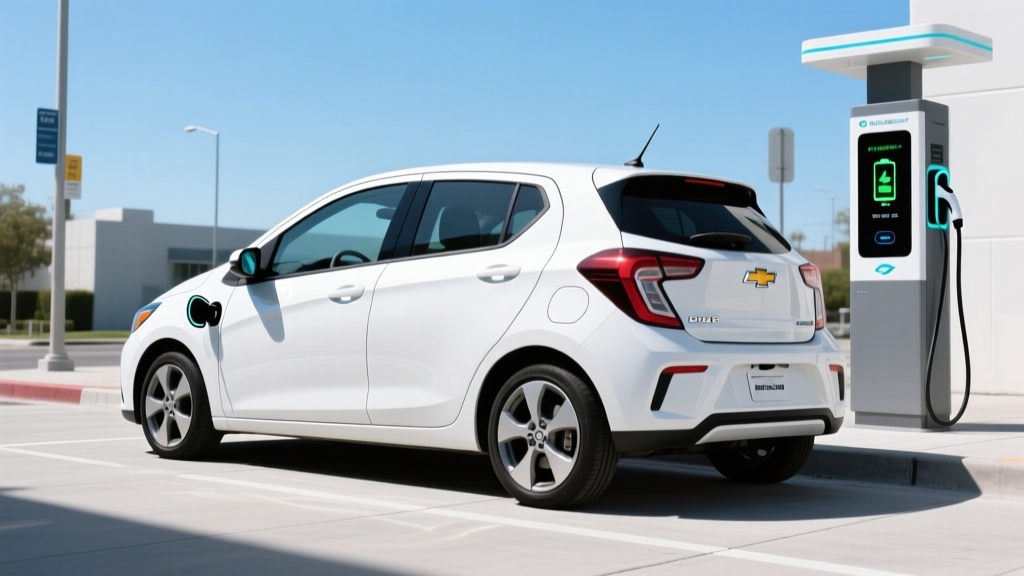
If you're searching for whether the Chevrolet Spark is a hybrid, the answer is straightforward: no version of the Chevy Spark was ever produced as a hybrid (HEV) or plug-in hybrid (PHEV). Every Spark sold in the United States from its 2013 launch through its discontinuation after the 2022 model year was powered exclusively by a conventional gasoline engine — a 1.4-liter inline-four producing 98 horsepower.
Chevrolet retired the Spark after 2022, making it one of the last affordable subcompact hatchbacks in the U.S. market. There is no 2026 Chevy Spark, no hybrid variant, and no announced successor carrying the Spark nameplate with an electrified powertrain.
That said, the Spark's low purchase price and city-friendly footprint made it popular with budget-conscious commuters — the exact demographic that often benefits most from hybrid or PHEV ownership. If you're considering a Spark on the used market or looking for a Chevy hybrid alternative, here's what you need to know about fuel economy, ownership costs, and which electrified Chevrolets actually exist in 2026.
Chevy Spark Fuel Economy: Gas-Only Numbers
The final-generation Chevy Spark (2016–2022) came with a 1.4L Ecotec four-cylinder engine and either a 5-speed manual or a continuously variable transmission (CVT). According to fueleconomy.gov, the EPA-rated fuel economy breaks down as follows:
| Metric | Value |
|---|---|
| City MPG | 29 |
| Highway MPG | 38 |
| Combined MPG | 33 |
| Annual Fuel Cost (est.) | ~$1,550 |
| Fuel Type | Regular gasoline (87 octane) |
Real-world note: The Spark's small engine and light curb weight (~2,300 lbs) mean city driving often yields closer to 30–32 MPG in practice, while steady-state highway cruising at 65 mph can push 39–41 MPG. However, aggressive acceleration or sustained 75+ mph highway speeds drop efficiency noticeably — this engine lacks the torque reserve of a hybrid system to mask inefficient driving habits.
HEV vs. PHEV: Understanding the Hybrid Landscape
Since the Spark doesn't offer either technology, it's worth clarifying what you'd get from a true hybrid or plug-in hybrid from Chevrolet's current lineup or competitors:
Conventional Hybrid (HEV)
- No plug required — the battery recharges via regenerative braking and the engine
- Battery typically 1–2 kWh
- Electric motor assists the gas engine; cannot drive on electric power alone for meaningful distances
- EPA MPG gains: 30–50% improvement over gas-only equivalents, especially in city driving
- Example: Toyota Corolla Hybrid (52 MPG combined)
Plug-In Hybrid (PHEV)
- Plugs in to charge — offers a dedicated electric-only driving range before the gas engine engages
- Battery typically 10–25 kWh
- 20–50 miles of electric-only range, then operates as a conventional hybrid
- Eligible for federal tax credits (up to $7,500 under IRS §30D, subject to sourcing and income requirements)
- Example: Chevrolet Equinox PHEV or Toyota RAV4 Prime (42 miles electric-only)
The Spark's 33 MPG combined sits well below what a modern HEV delivers. A Toyota Prius achieves 57 MPG combined — a 73% improvement — while costing only moderately more on the used market.
Chevrolet's Actual Hybrid and PHEV Options for 2026
If you want an electrified Chevrolet, here's what's available or announced for the 2026 model year:
| Model | Type | Combined MPG / MPGe | Electric-Only Range | Battery | Starting MSRP |
|---|---|---|---|---|---|
| Chevrolet Equinox EV | BEV | ~100 MPGe | 319 mi (EPA, FWD) | 85 kWh (NMC) | ~$33,400 |
| Chevrolet Blazer EV | BEV | ~89 MPGe | 279–324 mi (EPA) | 102 kWh (NMC) | ~$44,600 |
| Chevrolet Silverado EV | BEV | ~76 MPGe | ~380 mi (EPA, 4WT) | 200+ kWh (NMC) | ~$57,900 |
| Chevrolet Corvette E-Ray | Mild Hybrid (AWD) | ~19 combined MPG | N/A (performance hybrid) | 1.9 kWh | ~$106,595 |
Key takeaway: Chevrolet has pivoted heavily toward full battery-electric vehicles (BEVs) rather than conventional hybrids or PHEVs for the U.S. market. If you specifically want a Chevy hybrid (HEV) or plug-in hybrid, the current lineup offers limited options. The Corvette E-Ray uses a small electric motor on the front axle for all-wheel-drive performance, not fuel economy — it's not a fuel-saving hybrid in the Prius sense.
For buyers who want hybrid efficiency with a Chevy badge, your best bet on the used market is the Chevrolet Volt (2011–2019), a PHEV with approximately 53 miles of electric-only range (second generation, 2016–2019) and 42 MPG combined once the battery is depleted.
Hybrid Alternatives to the Chevy Spark
If you valued the Spark's small footprint, low cost, and city commuting role, these hybrids serve that same use case with dramatically better fuel economy:
| Vehicle | Type | EPA Combined MPG | Typical Used Price (2026) | City MPG |
|---|---|---|---|---|
| Toyota Prius (2016–2022) | HEV | 52–56 | $16,000–$24,000 | 54–58 |
| Hyundai Ioniq Hybrid (2017–2022) | HEV | 55–59 | $14,000–$22,000 | 54–58 |
| Honda Insight (2019–2022) | HEV | 52 | $17,000–$23,000 | 55 |
| Toyota Prius Prime (2017–2022) | PHEV | 54 combined + 25 mi electric | $18,000–$26,000 | 55 (hybrid mode) |
| Chevrolet Volt (2016–2019) | PHEV | 42 combined + 53 mi electric | $15,000–$22,000 | 43 (hybrid mode) |
For context, a commuter driving 15,000 miles per year would spend roughly $1,550 annually on gasoline in a Chevy Spark at $3.40/gallon. That same driver in a Toyota Prius (56 MPG combined) would spend approximately $910 annually — a savings of $640 per year, or $3,200 over five years. That alone can offset the higher purchase price of a used hybrid.
Reliability and Battery Warranty: What Hybrid Buyers Should Know
Hybrid Battery Longevity — The Data
Modern hybrid batteries (NiMH or lithium-ion) are engineered for long service life. Key benchmarks:
- Federal mandate: All hybrid and EV batteries must carry a warranty of at least 8 years / 100,000 miles (10 years / 150,000 miles in CARB states like California, New York, and others).
- Real-world lifespan: Toyota Prius hybrid batteries routinely last 150,000–200,000+ miles before significant degradation. Replacement costs range from $2,000–$4,000 for a new OEM battery, or $1,000–$2,000 for a refurbished unit.
- Chevrolet Volt (PHEV): GM's 18.4 kWh battery (2016–2019) carries the standard 8yr/100k-mile warranty. Real-world degradation has been modest — most owners report 90%+ capacity retention at 100,000 miles. Full replacement runs $3,500–$5,500.
- Failure rates: According to Consumer Reports and iSeeCars data, hybrid battery failure before 150,000 miles is uncommon — under 5% of vehicles require replacement within the warranty period.
The Spark, being gas-only, carries no hybrid battery warranty — but its conventional powertrain is simple and generally reliable. The 1.4L Ecotec engine has a timing chain (not a belt), reducing maintenance. However, owners should budget for standard wear items: transmission fluid changes, spark plugs, and the usual suspension components.
Tax Credits: Does the Spark or Any Hybrid Qualify?
Because the Chevy Spark is a conventional gasoline vehicle with no electrified powertrain, it does not qualify for any federal EV or PHEV tax credit.
For hybrid and PHEV buyers, here's the current landscape under IRS §30D rules:
- Conventional hybrids (HEVs): Not eligible for the federal clean vehicle credit. These vehicles do not plug in and do not meet the battery-capacity threshold.
- Plug-in hybrids (PHEVs): May qualify for up to $7,500, but eligibility depends on:
- MSRP caps: $55,000 for sedans/wagons, $80,000 for SUVs/trucks/vans
- Buyer income caps: $150,000 (single), $225,000 (head of household), $300,000 (joint)
- Battery component and critical mineral sourcing requirements (which tighten annually through 2032)
- The vehicle must undergo final assembly in North America
- Used PHEVs/EVs: The §25E credit offers up to $4,000 (30% of sale price) on qualifying used electrified vehicles priced under $25,000, subject to income caps ($75,000 single / $150,000 joint).
A used Chevrolet Volt (2016–2019) priced under $25,000 could potentially qualify for the used clean vehicle credit — making it one of the most affordable paths into PHEV ownership. Always verify eligibility with a tax professional and the IRS's official qualifying vehicle list before purchasing.
Who Should Choose a Gas Spark vs. a Hybrid or EV?
The Decision Framework
Buy a used Chevy Spark if:
- Your budget is strictly under $12,000 and you need the cheapest possible transportation
- You drive fewer than 8,000 miles per year (fuel savings from a hybrid won't offset the higher purchase price quickly)
- You lack access to home or workplace charging (relevant for PHEVs and BEVs)
- You want minimal complexity — no hybrid battery to worry about long-term
Choose a hybrid (HEV) instead if:
- You drive 12,000+ miles per year, especially in stop-and-go city traffic where hybrids shine
- You can stretch your budget to $15,000–$22,000 for a used Prius, Ioniq, or Insight
- You want lower fuel costs without changing your habits — no plugging in required
Choose a PHEV instead if:
- You have home charging (even a standard 120V outlet works overnight for most PHEVs)
- Your daily commute is under 40 miles — you could drive months without using gasoline
- You want to reduce emissions without range anxiety on longer road trips
- You qualify for the used-vehicle tax credit, bringing effective cost below a comparable HEV
Choose a full EV (BEV) instead if:
- You have reliable home Level 2 charging (240V)
- You want the lowest per-mile fuel cost and minimal maintenance (no oil changes, no engine)
- Your daily driving is predictable and within the vehicle's range
- You qualify for the full $7,500 federal credit on a new vehicle like the Equinox EV
Frequently Asked Questions
Did Chevrolet ever make a hybrid Spark?
No. Every Chevrolet Spark produced from 2013 through 2022 was a conventional gasoline vehicle with a 1.4L four-cylinder engine. Chevrolet never offered a hybrid, plug-in hybrid, or electric version of the Spark in any market. The Chevrolet Spark EV (2014–2016) was a fully electric version sold in limited markets, but it was a BEV — not a hybrid — and was discontinued before the final Spark generation.
How many MPG does the Chevy Spark get?
The EPA rates the 2022 Chevrolet Spark with CVT at 29 city / 38 highway / 33 combined MPG. In real-world driving, owners typically see 30–35 MPG combined depending on driving style, terrain, and climate. Highway-heavy commuters may see 38–41 MPG, while aggressive city driving can drop it to 26–28 MPG.
What is the best Chevy hybrid or PHEV to buy?
For new vehicles, Chevrolet's 2026 lineup focuses on full EVs (Equinox EV, Blazer EV, Silverado EV) rather than traditional hybrids. For PHEV buyers, the used Chevrolet Volt (2016–2019) remains one of the best values — offering 53 miles of electric range, 42 MPG in hybrid mode, and potential eligibility for the $4,000 used clean vehicle credit.
Is a hybrid battery expensive to replace?
Hybrid battery replacement typically costs $2,000–$4,000 for conventional hybrids (Toyota Prius, Hyundai Ioniq) and $3,500–$5,500 for PHEVs (Chevrolet Volt, Toyota Prius Prime). However, most hybrid batteries last 150,000–200,000+ miles, and all are covered by a minimum 8-year/100,000-mile federal warranty. Premature failure is statistically uncommon.
Does the Chevy Spark qualify for any tax credit?
No. The Chevy Spark is a conventional gasoline vehicle and does not qualify for the federal §30D clean vehicle credit, the §25E used vehicle credit, or any state-level EV/PHEV incentive. Only electrified vehicles (HEVs with specific advanced-technology qualifications, PHEVs, and BEVs) are eligible for these programs.
Is the Spark EV the same as a hybrid?
No. The Chevrolet Spark EV (sold 2014–2016 in California, Oregon, and Maryland) was a fully battery-electric vehicle with an EPA range of approximately 82 miles and a 19 kWh battery. It had no gasoline engine and required plug-in charging. It is not a hybrid. If you find a used Spark EV, it qualifies as a BEV — but its limited range and age make it suitable only for short urban commutes.
Sources: fueleconomy.gov (EPA ratings), irs.gov (§30D and §25E credit rules), Chevrolet product archives.