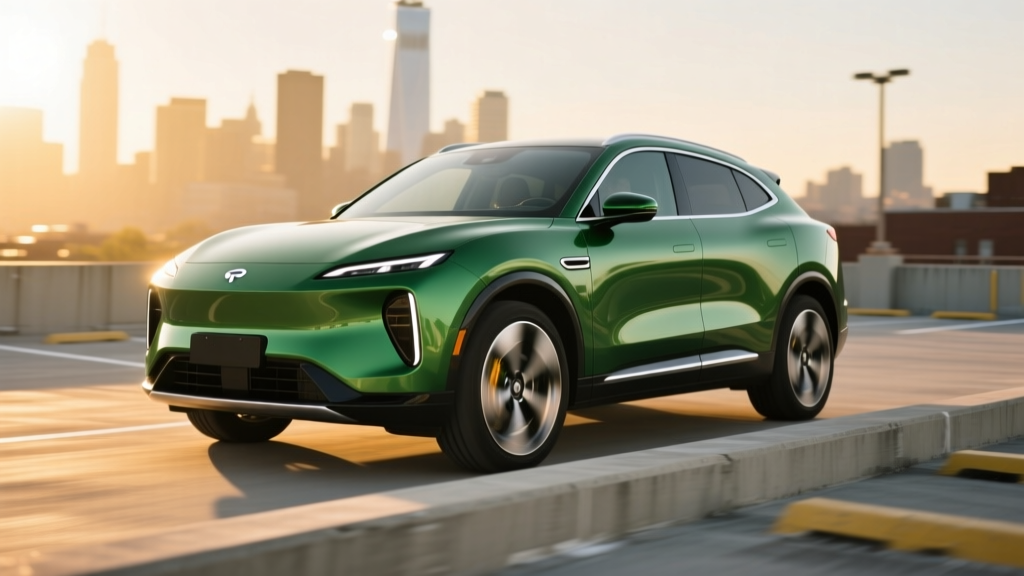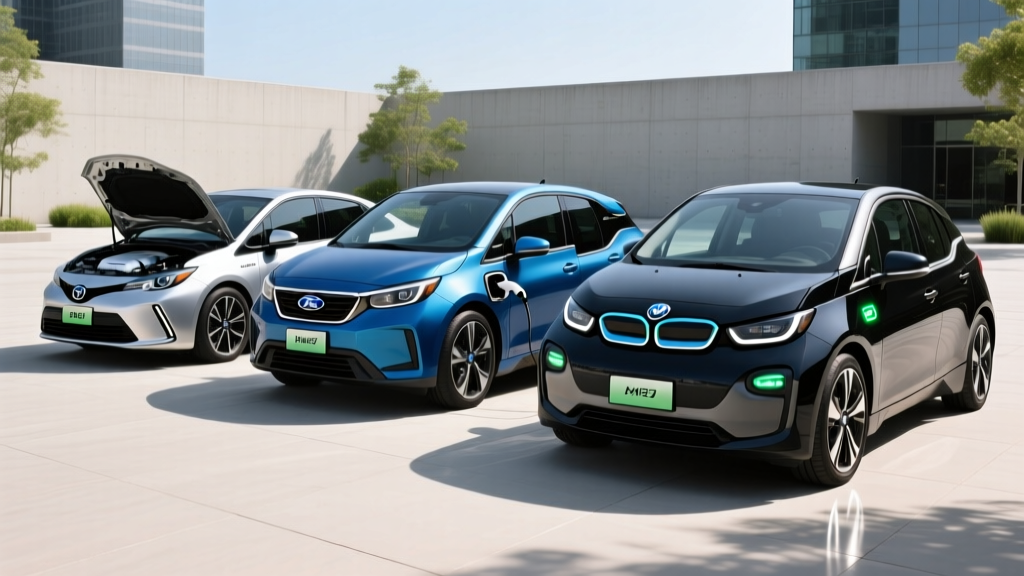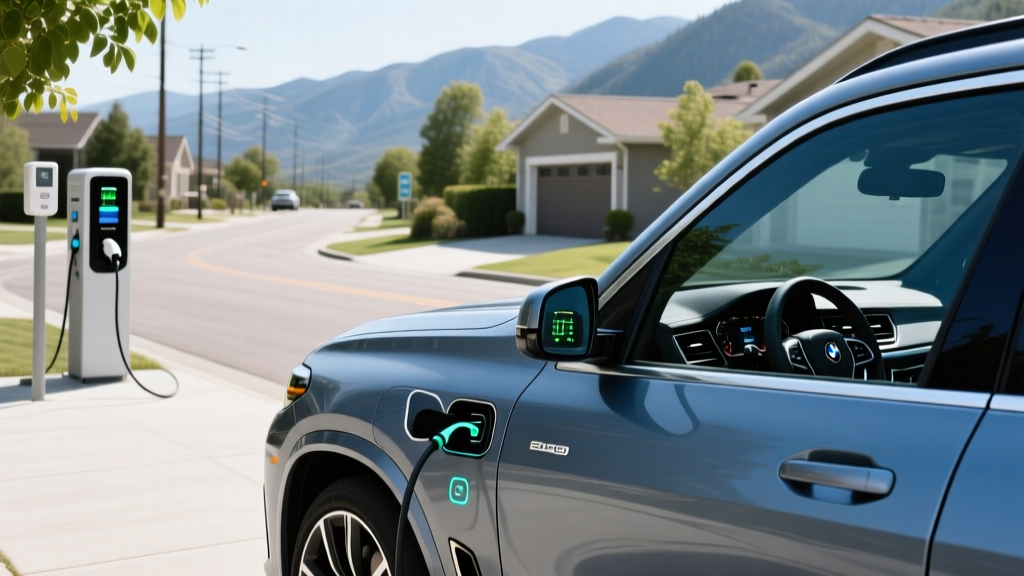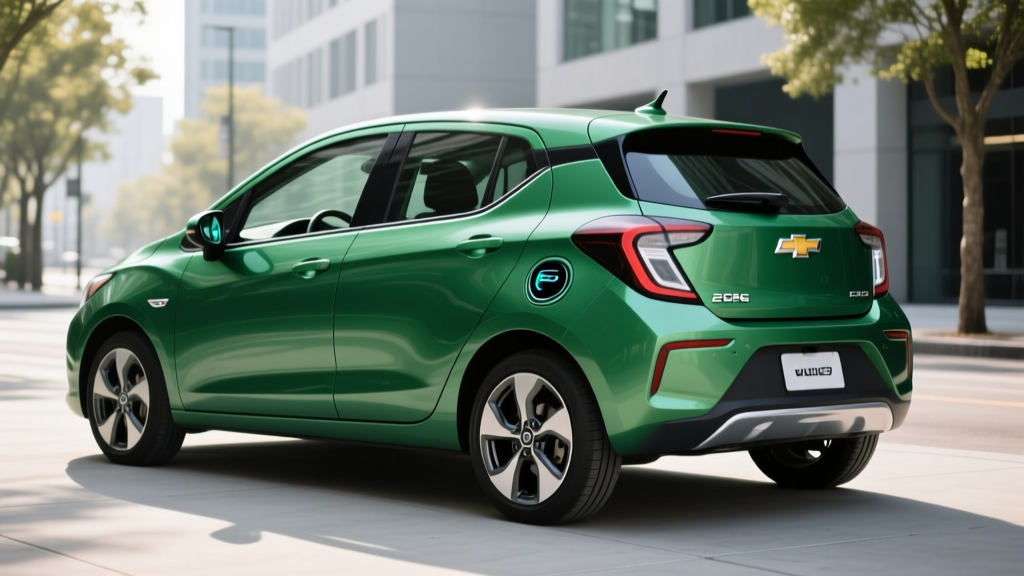
If you've been searching for fuel-efficient subcompacts on a budget, you've likely asked: is the Chevy Spark a hybrid? The short answer is no. The Chevrolet Spark was never offered as a conventional hybrid (HEV) or a plug-in hybrid (PHEV) during its entire U.S. production run. It existed in two distinct forms: a gasoline-powered micro car (2013–2022) and a battery-electric vehicle called the Spark EV (2014–2016). Chevrolet discontinued the Spark entirely after the 2022 model year, meaning there is no 2026 Chevy Spark on sale today.
That said, the Spark's story is useful for understanding the hybrid and EV landscape. Below, we break down exactly what the Spark was, what its efficiency numbers looked like, and which current Chevrolet models — or competitors — fill the gap for buyers who wanted a Spark hybrid that never existed.
Chevy Spark Powertrain History: Gas, Electric, but Never Hybrid
The fourth-generation Chevrolet Spark (2016–2022) came with a single powertrain: a 1.4-liter inline-4 gasoline engine producing 98 horsepower and 94 lb-ft of torque, paired with either a 5-speed manual or a continuously variable transmission (CVT). There was no electric motor, no regenerative braking system, and no hybrid battery pack. It was a straightforward, lightweight gas car designed for urban commuting at a rock-bottom price.
Before that, the Spark EV (2014–2016) was a fully electric variant with a 19 kWh battery (later 18.4 kWh usable) and a 130-hp electric motor. It delivered an EPA-estimated 82 miles of range — respectable for its era but well short of modern EVs. The Spark EV was Chevrolet's compliance car for California's zero-emission vehicle mandate and was only sold in select states.
Chevy Spark MPG: EPA Fuel Economy Breakdown
For the final-generation gas-powered Spark with the CVT (the most common configuration), here are the official EPA figures from fueleconomy.gov:
| Metric | Value |
|---|---|
| City MPG | 29 |
| Highway MPG | 38 |
| Combined MPG | 33 |
| Fuel Tank Capacity | 9.0 gallons |
| Total Range (est.) | ~297 miles |
Real-world MPG vs. EPA: The Spark's light weight (around 2,300 lbs) and small engine meant it could actually exceed its EPA city rating in stop-and-go traffic, with some owners reporting 32–35 MPG in urban driving. However, sustained highway speeds above 70 mph and hilly terrain dropped efficiency below the 38 MPG highway sticker, sometimes into the low 30s. The tiny 9-gallon tank also meant frequent fill-ups despite reasonable MPG — a practical limitation that frustrated road-trippers.
Why Chevrolet Never Built a Spark Hybrid
Adding hybrid hardware — an electric motor, inverter, and battery pack — to a car with a base MSRP that started around $14,000 in its final year would have pushed the Spark into price territory where buyers expected more vehicle. Hybrid systems add roughly $1,500–$3,000 in component cost, and Chevrolet's hybrid strategy focused on higher-volume, higher-margin models like the Malibu Hybrid (discontinued) and, more recently, the Equinox and Blazer lines.
Instead of a Spark hybrid, Chevrolet invested in the Bolt EV (and later the Bolt EUV), which offered 259 miles of EPA range at a sub-$30,000 price point — effectively leapfrogging the hybrid segment entirely for budget-minded electrification seekers. The Bolt itself was temporarily discontinued after 2023 but returned for the 2026 model year on GM's updated Ultium platform.
What to Buy Instead: 2026 Hybrids, PHEVs, and EVs for Spark Shoppers
If you wanted a Spark hybrid for its combination of low price, small footprint, and high fuel economy, here are the 2026 models that best match those priorities:
| Model | Type | Combined MPG / MPGe | EV Range (mi) | Base MSRP |
|---|---|---|---|---|
| Toyota Prius (LE) | HEV | 57 MPG | — | $29,445 |
| Toyota Prius Prime (SE) | PHEV | 52 MPG / 127 MPGe | 44 | $34,395 |
| Hyundai Elantra Hybrid | HEV | 54 MPG | — | $26,500 |
| Chevrolet Bolt EV (2026) | BEV | 120 MPGe | ~260 | $28,400 |
| Mitsubishi Mirage (gas) | ICE | 39 MPG | — | $18,495 |
The Toyota Prius is the closest spiritual successor to what a Spark hybrid might have been: a compact, highly efficient hatchback with proven hybrid reliability. The Prius Prime adds plug-in capability with 44 miles of electric-only range — enough for most commutes without using a drop of gas. For buyers ready to skip the gas station entirely, the returning 2026 Chevrolet Bolt EV stays within reach of Spark cross-shoppers while offering dramatically lower per-mile energy costs.
HEV vs PHEV vs EV: Which Powertrain Fits Your Life?
Conventional Hybrid (HEV)
No plug required. A small battery (1–2 kWh) captures energy from regenerative braking and assists the gas engine. You refuel at gas stations only. Best for: drivers without home charging access who want better MPG with zero behavior change.
Examples: Toyota Prius, Hyundai Elantra Hybrid, Honda Accord Hybrid
Plug-In Hybrid (PHEV)
Plug in for 25–44 miles electric-only, then the gas engine takes over seamlessly. Larger battery (10–20 kWh). Best for: commuters with home charging and a short daily drive who also need road-trip range without planning charging stops.
Examples: Toyota Prius Prime, Jeep Wrangler 4xe, Chrysler Pacifica Hybrid
Battery Electric (BEV)
No gas engine at all. Large battery (60–100+ kWh), 200–400+ miles of range. Lowest per-mile fuel cost but requires charging access. Best for: drivers with reliable home or workplace charging who want minimal maintenance and zero tailpipe emissions.
Examples: Chevrolet Bolt EV, Tesla Model 3, Hyundai Ioniq 5
Tax Credits: Does Any Spark Alternative Qualify?
The original Chevy Spark (gas or EV) is no longer in production, so new-vehicle credits don't apply. For used Spark EVs purchased in 2026, the IRS §25E used clean vehicle credit offers up to $4,000 or 30% of the sale price (whichever is less), subject to income caps ($75,000 single / $150,000 joint) and a sale price cap of $25,000. See the IRS used vehicle credit page for full eligibility rules.
For new alternatives in 2026:
- HEVs (Prius, Elantra Hybrid): Conventional hybrids do not qualify for the §30D new clean vehicle credit. That credit is reserved for plug-in vehicles (PHEVs and BEVs) with sufficient battery capacity.
- PHEVs (Prius Prime): May qualify for up to $7,500 under §30D, but eligibility depends on battery component sourcing, critical mineral requirements, buyer income caps ($150,000 single / $300,000 joint), and MSRP caps ($55,000 for sedans). The point-of-sale transfer option lets you apply the credit as a down-payment reduction at the dealer. Always verify current eligibility on the IRS qualifying vehicles list, as sourcing rules shift frequently.
- BEVs (Bolt EV): The Bolt has historically qualified for the full $7,500 credit due to its U.S. battery assembly. Confirm 2026 model-year eligibility before purchase, as battery sourcing requirements tighten annually.
Reliability, Battery Warranty, and Replacement Costs
Since the Spark was never a hybrid, there's no hybrid battery to worry about on gas models. For the Spark EV, the high-voltage battery was covered under Chevrolet's standard EV warranty: 8 years / 100,000 miles (with a capacity retention threshold of 60%). Given that the newest Spark EVs are now a decade old, many are approaching or exceeding that warranty window.
- HEV batteries (Prius, Elantra Hybrid): Typically warranted 10 years / 150,000 miles in CARB states, 8 years / 100,000 miles federally. Replacement cost: $2,000–$4,000.
- PHEV batteries (Prius Prime): 10 years / 150,000 miles (CARB) or 8 years / 100,000 miles (federal). Replacement cost: $4,000–$7,000.
- BEV batteries (Bolt EV): 8 years / 100,000 miles minimum federally. Replacement cost: $8,000–$16,000 depending on pack size, though full replacements are rare — individual module repairs are often possible.
Real-world degradation data shows most modern hybrid and EV batteries retain 85–92% capacity after 100,000 miles. Complete failures before warranty expiry are uncommon. Source: NHTSA and manufacturer warranty documentation.
For used Spark buyers: the gas Spark's 1.4L engine is simple and generally reliable, with common issues limited to minor electrical gremlins and CVT shudder at higher mileages. The Spark EV's battery has held up reasonably well in owner reports, but any 10-year-old EV battery carries replacement risk that should factor into your purchase price negotiation.
The Verdict: The Spark Hybrid Never Existed — Here's What to Do
✓ What the Spark Did Well
- Ultra-low entry price (~$14K new)
- Tiny footprint for city parking
- Surprisingly peppy around town (98 hp in 2,300 lbs)
- Simple, cheap-to-insure transportation
✗ Where the Spark Fell Short
- No hybrid option — 33 MPG combined is modest today
- 9-gallon tank limited highway range to ~297 miles
- Cramped rear seats, minimal cargo space
- Discontinued — no new models, no warranty support
- No advanced safety features in base trims
The Spark served its purpose as America's cheapest new car, but the market has moved on. If fuel economy is your priority and you don't have charging access, a used Toyota Prius or new Hyundai Elantra Hybrid delivers 50+ MPG with modern safety tech. If you can charge at home, the 2026 Chevy Bolt EV costs roughly the same as a late-model Spark on the used market (after the $7,500 credit) and eliminates fuel costs entirely.
Frequently Asked Questions
Was the Chevy Spark ever a hybrid?
No. The Chevrolet Spark was produced as a gasoline-only car (2013–2022) and as a fully electric vehicle called the Spark EV (2014–2016). Chevrolet never offered a hybrid (HEV) or plug-in hybrid (PHEV) version. The Spark nameplate was discontinued after the 2022 model year.
How many MPG did the Chevy Spark get?
The 2022 Chevrolet Spark with the CVT transmission was EPA-rated at 29 city / 38 highway / 33 combined MPG. Real-world city driving sometimes exceeded the EPA city figure thanks to the car's light weight, but highway efficiency at 75+ mph often fell below the sticker number.
What was the Chevy Spark EV's range?
The Spark EV (2014–2016) had an EPA-estimated 82 miles of range from its 19 kWh battery pack (18.4 kWh usable). It featured a 130-hp electric motor and could DC fast charge to 80% in about 20 minutes using a CCS connector at up to 50 kW — adequate for its time but far below modern EV standards.
Is there a 2026 Chevy Spark?
No. Chevrolet discontinued the Spark after the 2022 model year with no announced successor under that nameplate. The closest current equivalent in Chevrolet's 2026 lineup is the Bolt EV, which starts around $28,400 and offers approximately 260 miles of electric range.
What's the cheapest hybrid I can buy in 2026?
The 2026 Hyundai Elantra Hybrid starts around $26,500 and delivers 54 MPG combined. The Toyota Prius LE starts at $29,445 with 57 MPG combined. Both are significantly more efficient than the gas Spark's 33 MPG and come with modern safety suites and 10-year hybrid battery warranties.
Do conventional hybrids qualify for federal tax credits?
No. The IRS §30D new clean vehicle credit requires a plug-in vehicle with a battery capacity of at least 7 kWh. Conventional hybrids (HEVs) like the Prius and Elantra Hybrid do not plug in and have batteries too small to qualify. Only PHEVs and BEVs are eligible, subject to income, MSRP, and battery-sourcing requirements.