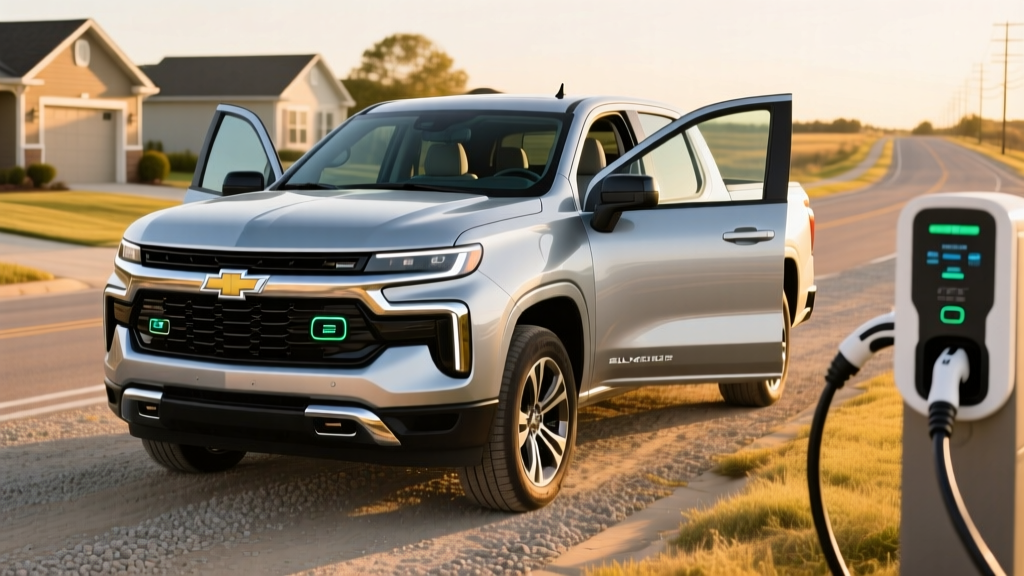
If you've been searching for a chevy truck hybrid, the 2026 lineup requires some careful navigation. Chevrolet does not currently sell a conventional hybrid (HEV) or plug-in hybrid (PHEV) version of the Silverado 1500 in the United States. The last Silverado Hybrid was discontinued after the 2013 model year, and despite recurring rumors, GM has not reintroduced a hybridized Silverado for 2026. What Chevy does offer is the Silverado EV — a fully electric truck — and a turbocharged gas lineup with a mild-hybrid-style stop/start system that does not function as a true hybrid.
For truck buyers committed to the Chevy badge who want electrified efficiency, the real decision in 2026 comes down to three paths: the Silverado EV (full battery-electric), the Silverado gas with the 2.7L TurboMax (the most efficient gas option), or looking cross-shop at the Ford F-150 PowerBoost Hybrid — the only full hybrid pickup currently on the market from a major American automaker. This guide breaks down every option with real numbers.
HEV vs PHEV vs EV: What Chevy Truck Buyers Actually Get in 2026
Before evaluating specific models, it's essential to understand the three electrified powertrain types — because marketing language often blurs them.
| Powertrain | How It Works | Needs a Plug? | Electric-Only Range | Chevy Truck Available? |
|---|---|---|---|---|
| HEV (Conventional Hybrid) | Gas engine + electric motor; battery recharges via regenerative braking and the engine | No | 0–1 mi (low-speed assist only) | No (discontinued after 2013) |
| PHEV (Plug-In Hybrid) | Larger battery + motor; can drive on electricity alone, then switches to hybrid mode | Yes (Level 1 or 2) | Typically 20–50 mi | No (no Chevy truck PHEV exists) |
| BEV (Battery Electric) | Battery + electric motor(s) only; no gas engine | Yes (Level 2 + DC fast) | Full range (250–400+ mi) | Yes — Silverado EV |
The Silverado's standard 2.7L TurboMax four-cylinder includes an automatic engine stop/start system that shuts the engine off at idle. This is not a hybrid system — the electric motor does not propel the vehicle. It simply reduces fuel consumption during stops.
2026 Silverado EV: The Electrified Chevy Truck You Can Actually Buy
For 2026, the Chevrolet Silverado EV is the only electrified Silverado available. Built on GM's Ultium platform, it's offered in multiple trims with two battery sizes. Here are the critical specs buyers need:
| Spec | Silverado EV 4WT (Work Truck) | Silverado EV RST |
|---|---|---|
| EPA Range | ~380 mi (max battery) | ~440 mi (max battery) |
| Battery Capacity | ~200 kWh (usable, Ultium NMC) | ~200 kWh (usable, Ultium NMC) |
| Combined Horsepower | 510 hp | 664 hp (with Wide Open Watts mode) |
| 0–60 mph | ~5.5 sec | ~4.5 sec |
| Max DC Fast Charge | 350 kW peak | 350 kW peak |
| 10–80% DC Charge Time | ~35 min (curve tapers significantly above 80%) | ~35 min |
| Level 2 Home Charging | 19.2 kW onboard (adds ~52 mi/hr) | 19.2 kW onboard |
| Towing Capacity | Up to 10,000 lbs (12,000 lbs w/ max trailering pkg) | Up to 10,000 lbs |
| Starting MSRP | ~$55,000 | ~$87,000 |
Real-World Range Reality: The EPA estimates ~380–440 miles depending on trim and battery. In real-world highway driving at 70+ mph, expect roughly 280–340 miles. In cold weather (below 30°F), range can drop 15–25% due to battery chemistry limitations and cabin heating demands. Towing a 7,000 lb trailer cuts range roughly in half — to approximately 180–220 miles.
Fuel Economy: Silverado Gas vs Silverado EV vs Ford F-150 Hybrid
Since there's no Chevy truck hybrid, the meaningful comparison is between the most efficient gas Silverado, the Silverado EV, and the cross-shop alternative — the Ford F-150 PowerBoost, which is a true full hybrid (HEV).
| Truck | Powertrain | EPA City | EPA Highway | EPA Combined | Real-World Note |
|---|---|---|---|---|---|
| 2026 Silverado 1500 2.7L TurboMax 2WD | Gas (turbo 4-cyl) | 19 mpg | 22 mpg | 20 mpg | Unloaded highway driving can reach 23–24 mpg; city often matches or slightly exceeds EPA due to turbo efficiency at low load |
| 2026 Silverado 1500 5.3L V8 4WD | Gas (V8) | 15 mpg | 20 mpg | 17 mpg | Heavy towing drops to 10–12 mpg |
| 2026 Silverado EV 4WT | BEV | ~62 MPGe | ~56 MPGe | ~59 MPGe | Efficiency measured in MPGe; actual energy use ~55–60 kWh/100mi depending on conditions |
| 2026 Ford F-150 PowerBoost Hybrid 4WD | HEV (3.5L V6 + electric motor) | 23 mpg | 24 mpg | 23 mpg | City driving often exceeds EPA — regenerative braking and electric assist shine in stop-and-go; expect 24–26 mpg city in practice |
Key takeaway: The Ford F-150 PowerBoost delivers roughly 15–20% better combined fuel economy than the gas Silverado 2.7L while offering comparable towing (up to 11,000 lbs). For buyers who want a hybrid truck today, Ford is the only domestic option. The Silverado EV offers dramatically lower per-mile energy costs but requires charging infrastructure.
Charging the Silverado EV: Home and Public Infrastructure
If you're considering the Silverado EV over a hybrid, charging logistics are the defining ownership factor.
| Charging Level | Power (kW) | Miles Added Per Hour | Typical Use Case |
|---|---|---|---|
| Level 1 (120V standard outlet) | 1.4 kW | ~3–4 mi/hr | Emergency/trickle only; full charge takes days |
| Level 2 (240V home charger) | 11.5–19.2 kW | ~30–52 mi/hr | Daily home charging; overnight full charge in 8–12 hours |
| DC Fast Charging (public) | Up to 350 kW peak | ~600+ mi/hr at peak | Road trips; 10–80% in ~35 min (curve tapers above 80%) |
Home installation cost reality: A Level 2 home charger (like the ChargePoint Home Flex or Emporia Level 2) costs $500–$700 for the unit. Professional installation by a licensed electrician typically runs $800–$2,500, depending on panel proximity and whether your electrical panel needs an upgrade (a 200-amp panel upgrade can add $1,500–$3,000). Total: expect $1,300–$3,200 for a complete home charging setup.
The Silverado EV uses the NACS (North American Charging Standard) connector natively, giving it direct access to Tesla Superchargers — the most reliable DC fast-charging network in the US — without an adapter.
Tax Credits and Incentives: What Applies in 2026
Tax credit eligibility is one of the most confusing aspects of buying an electrified vehicle. Here's the current landscape for 2026:
Federal §30D Tax Credit Requirements (2026):
- Vehicle type: Must be a new plug-in EV or PHEV with ≥7 kWh battery. Conventional hybrids (HEVs) do not qualify.
- MSRP caps: Trucks/SUVs/vans must have an MSRP ≤ $80,000. The Silverado EV RST (~$87,000) exceeds this cap and does not qualify. The Silverado EV 4WT (~$55,000) is under the cap.
- Buyer income caps: Modified AGI ≤ $150,000 (single), $225,000 (head of household), $300,000 (married filing jointly).
- Battery sourcing: Increasingly strict critical-mineral and battery-component requirements must be met. Check the IRS qualified vehicle list at irs.gov before purchasing.
- Point-of-sale transfer: Eligible buyers can transfer the credit to the dealer for an upfront price reduction rather than waiting to claim it on their tax return.
Bottom line for Chevy truck buyers: The Silverado EV 4WT (base work truck) may qualify for up to $7,500 in federal tax credits if all sourcing and income requirements are met. Higher trims like the RST exceed the MSRP cap. The Ford F-150 PowerBoost Hybrid, being a conventional HEV (not a plug-in), does not qualify for the §30D federal credit. Always verify current eligibility on the IRS website or with a tax professional, as battery sourcing rules tighten annually.
Battery Warranty and Long-Term Reliability
Battery longevity is a top concern for any electrified truck buyer. Here's how warranties stack up:
| Vehicle | Battery Type | Warranty | Capacity Retention Threshold | Estimated Replacement Cost |
|---|---|---|---|---|
| Silverado EV | Ultium NMC lithium-ion (~200 kWh) | 8 years / 100,000 miles | Typically 60–70% of original capacity | $20,000–$30,000+ (full pack, out of warranty) |
| Ford F-150 PowerBoost Hybrid | ~1.5 kWh lithium-ion (HEV) | 8 years / 100,000 miles (hybrid components) | N/A (small battery, regenerative cycling) | $2,000–$4,000 (much smaller, less expensive pack) |
| Silverado Gas (conventional) | 12V lead-acid (starter) | 3 years / 36,000 miles bumper-to-bumper | N/A | $150–$300 |
GM's Ultium battery platform is relatively new (launched 2022–2023 across multiple models), so long-term degradation data beyond 3–4 years is still emerging. Early data from Cadillac Lyriq and GMC Hummer EV owners suggests moderate degradation of 3–5% in the first 30,000 miles, which is within industry norms for NMC chemistry. The Ford F-150 PowerBoost's small hybrid battery has proven robust — Ford has been building hybrid powertrains since the early 2000s, and replacement rates remain low.
For hybrid batteries specifically, modern designs use sophisticated thermal management and shallow charge/discharge cycles (the battery rarely goes below 40% or above 80% state of charge) to maximize lifespan. Many hybrid batteries last well beyond their warranty period, often reaching 150,000–200,000 miles before significant degradation.
Total Cost of Ownership: Gas vs Electric Truck Over 5 Years
| Cost Factor (5 yr / 75,000 mi) | Silverado 2.7L Gas | Silverado EV 4WT | Ford F-150 PowerBoost HEV |
|---|---|---|---|
| Purchase Price (base MSRP) | ~$38,000 | ~$55,000 | ~$58,000 |
| Fed. Tax Credit | $0 | Up to –$7,500 (if eligible) | $0 |
| Fuel/Energy Cost | ~$11,250 (at $3.50/gal, 20 mpg) | ~$4,500 (at $0.15/kWh home charging) | ~$9,450 (at $3.50/gal, 24 mpg) |
| Maintenance | ~$3,500 | ~$1,500 (no oil changes, fewer moving parts) | ~$3,200 |
| Insurance (est.) | ~$7,500 | ~$9,500 (EV premiums typically 15–25% higher) | ~$8,000 |
| Est. Depreciation | ~$17,000 | ~$22,000 (EV depreciation still steeper) | ~$20,000 |
| Approx. 5-Year Total | ~$80,750 | ~$85,000 | ~$98,650 |
Note: These are rough estimates. Actual costs vary by location, driving patterns, electricity rates, gas prices, insurance provider, and incentive eligibility. Source: EPA fueleconomy.gov data and industry averages.
Who Should Choose Which Chevy Truck — Or Cross-Shop?
Choose the Silverado EV if:
- You have reliable home charging (garage or driveway with 240V access)
- Your daily driving is under 250 miles and most trips are local or regional
- You want the lowest per-mile energy cost and minimal maintenance
- You qualify for the federal tax credit (income under caps, buying a trim under $80K MSRP)
- You value instant torque and a quiet, smooth powertrain
Choose the gas Silverado 2.7L TurboMax if:
- You don't have home charging access and public infrastructure in your area is sparse
- You regularly tow heavy loads over long distances (towing crushes EV range)
- Upfront budget is a priority — the gas Silverado starts ~$17,000 lower than the EV
- You drive in extreme cold frequently and need consistent range without weather penalty
Cross-shop the Ford F-150 PowerBoost Hybrid if:
- You want hybrid fuel savings without plugging in or changing your fueling habits
- You need strong towing capacity (11,000 lbs) with better city MPG
- You want a proven hybrid powertrain with a long reliability track record
- You can't wait for a Chevy truck hybrid that may never come
Frequently Asked Questions
Does Chevy make a hybrid Silverado in 2026?
No. Chevrolet does not offer a conventional hybrid (HEV) or plug-in hybrid (PHEV) Silverado for 2026. The only electrified Silverado available is the fully electric Silverado EV. The last Silverado Hybrid was discontinued after the 2013 model year.
How many MPG does the 2026 Chevy Silverado get?
The 2026 Silverado 1500 with the 2.7L TurboMax 2WD gets an EPA-estimated 19 city / 22 highway / 20 combined mpg. The 5.3L V8 4WD drops to 15 city / 20 highway / 17 combined. The Silverado EV doesn't use gas at all and achieves approximately 59 MPGe combined.
Will Chevy ever release a Silverado hybrid?
GM has not announced a Silverado HEV or PHEV. The company's public electrification strategy focuses on full battery-electric vehicles built on the Ultium platform. If a hybrid Silverado arrives, it would likely be a future model year announcement — nothing is confirmed as of 2026.
Is the Silverado EV battery reliable and what does replacement cost?
The Ultium battery is covered by an 8-year/100,000-mile warranty. Early degradation data (3–5% over the first 30,000 miles) is within normal range for NMC chemistry. Full out-of-warranty battery replacement is estimated at $20,000–$30,000+, though most owners will never need this within typical ownership periods.
Does the Silverado EV qualify for the $7,500 federal tax credit?
It depends on the trim and your income. The Silverado EV 4WT (~$55,000 MSRP) falls under the $80,000 truck MSRP cap and may qualify if you meet income limits (≤$150K single / $300K married filing jointly) and the vehicle meets battery sourcing requirements. The RST trim (~$87,000) exceeds the MSRP cap and does not qualify. Verify current eligibility at irs.gov.
Should I buy a Silverado EV or wait for a Chevy truck hybrid?
If you need a truck now, waiting for an unannounced hybrid is risky — there's no timeline or confirmation that one is coming. If you want hybrid efficiency today, the Ford F-150 PowerBoost is the only domestic full-hybrid truck. If you're open to full electric and have home charging, the Silverado EV offers strong range and capability. If neither fits your needs, the gas Silverado 2.7L TurboMax is the most fuel-efficient Chevy truck available.
What's the difference between the Silverado's stop/start system and a real hybrid?
The automatic stop/start system on gas Silverados simply shuts off the engine at red lights and restarts it when you press the accelerator. It saves a small amount of fuel at idle but provides zero electric propulsion. A true hybrid (like the Ford F-150 PowerBoost) uses an electric motor to actively assist the gas engine during acceleration and can recapture energy through regenerative braking — delivering measurably better MPG, especially in city driving.