Quick Verdict: The Chevy Malibu Hybrid at a Glance
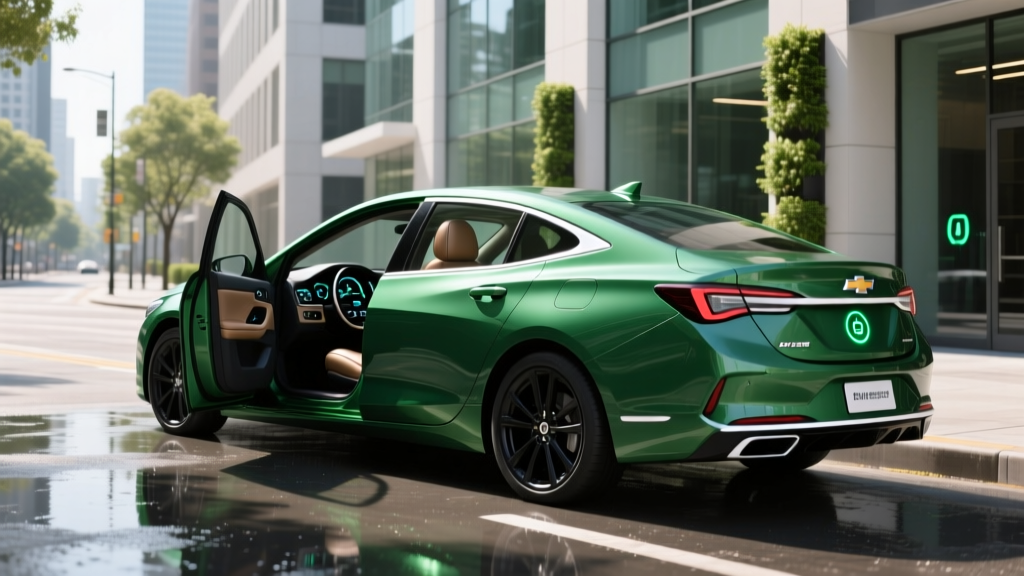
The Chevrolet Malibu Hybrid occupies a narrow but valuable lane: a midsize sedan that delivers genuine hybrid efficiency without the plug-in complexity or premium price of a PHEV. Built on GM's E2XX platform and sharing its 1.8L hybrid powertrain architecture with the Volt's engineering lineage, the Malibu Hybrid achieves an EPA-rated 49 MPG city and 43 MPG highway — numbers that hold up remarkably well in real-world driving, particularly in stop-and-go traffic where regenerative braking does the heavy lifting.
But here's the reality for 2026 buyers: GM discontinued the Malibu Hybrid after the 2019 model year as part of its broader sedan exit. That means you're looking at the used market — and that changes the calculus entirely. A well-maintained 2016–2019 Malibu Hybrid with under 80,000 miles can still deliver exceptional fuel economy at a fraction of a new EV's price, but you need to understand what you're buying, what the battery warranty covers, and whether this HEV (conventional hybrid) still makes sense versus a newer PHEV or full BEV.
| Spec | 2019 Chevy Malibu Hybrid |
|---|---|
| Powertrain | 1.8L 4-cyl + 2 electric motors (eCVT) |
| Combined Horsepower | 182 hp |
| EPA City / Highway / Combined | 49 / 43 / 46 MPG |
| Fuel Tank | 13.0 gallons |
| Total Range | ~598 miles |
| Hybrid Battery | 1.5 kWh lithium-ion (80-cell) |
| 0–60 mph | 7.5 seconds (est.) |
| Drivetrain | Front-wheel drive |
| Cargo Volume | 15.8 cu ft |
| Original MSRP (2019) | $29,195 (base) |
| Used Price Range (2026) | $14,000–$20,000 |
HEV vs PHEV: Where the Malibu Hybrid Fits
Before evaluating the Malibu Hybrid, it's critical to understand what it is — and isn't.
| Feature | Conventional Hybrid (HEV) | Plug-in Hybrid (PHEV) | Battery Electric (BEV) |
|---|---|---|---|
| Plug-in charging required? | No — charges via regen + engine | Yes — 120V or 240V | Yes — 240V or DC fast |
| Electric-only range | 0 miles (electric assist only) | 20–50 miles typical | 200–400+ miles |
| Gas engine? | Yes (primary) | Yes (backup + highway) | No |
| Fuel cost per mile | ~$0.08–$0.10 | ~$0.04–$0.08 (electric) / ~$0.10 (gas) | ~$0.03–$0.06 |
| Tax credit eligibility | None (federal) | Up to $7,500 (§30D, new only) | Up to $7,500 (§30D) |
| Example | Chevy Malibu Hybrid | Toyota Prius Prime | Tesla Model 3 |
The Malibu Hybrid is a conventional hybrid (HEV). It has a small 1.5 kWh lithium-ion battery that charges exclusively through regenerative braking and the gasoline engine. You never plug it in. The electric motors assist the 1.8L engine during acceleration, enable engine-off coasting at low speeds, and recapture energy during deceleration — but the car cannot drive on electric power alone for any meaningful distance.
This matters because many buyers searching for "Chevy Malibu Hybrid" are actually thinking of a plug-in experience. If you want electric-only commuting, you need a PHEV like the Toyota Prius Prime (44 miles electric-only) or a full BEV. The Malibu Hybrid's value proposition is simplicity: no charging infrastructure needed, no range anxiety, just significantly better MPG than a gas-only sedan.
Fuel Economy: EPA Ratings vs Real-World MPG
The EPA rates the 2019 Malibu Hybrid at 49 city / 43 highway / 46 combined MPG. These are strong numbers, but real-world results depend heavily on driving patterns.
| Driving Scenario | Expected MPG | Why |
|---|---|---|
| City stop-and-go | 47–52 MPG | Heavy regen braking recaptures energy; engine shuts off at stops |
| Suburban mixed | 44–48 MPG | Moderate regen + steady cruising |
| Highway 65–75 mph | 38–43 MPG | Less regen benefit; aero drag dominates; engine runs continuously |
| Cold weather (below 35°F) | 38–44 MPG | Engine runs longer for cabin heat; battery efficiency drops |
| Hot weather with A/C | 42–46 MPG | Compressor load reduces efficiency modestly |
The Malibu Hybrid actually tends to exceed its EPA city rating in heavy traffic — a common trait among hybrids. Owners on Fuelly report lifetime averages in the 43–47 MPG range across mixed driving, which aligns closely with the EPA combined figure. Highway-heavy commuters will see lower numbers, closer to 40 MPG, because the electric assist system provides minimal benefit at sustained high speeds.
For context, the gas-only 2019 Malibu with the 1.5L turbo gets 29 city / 36 highway / 32 combined — meaning the hybrid saves roughly 14 MPG in combined driving. At $3.25/gallon and 12,000 miles/year, that's approximately $520 in annual fuel savings.
Powertrain Deep Dive: How the Hybrid System Works
The Malibu Hybrid uses GM's Voltec-derived two-motor eCVT system — a simplified version of the architecture that powered the Chevrolet Volt. Here's how the components break down:
- 1.8L DOHC 4-cylinder engine: 122 hp, Atkinson-cycle for maximum thermal efficiency
- Two AC permanent-magnet electric motors: Combined 114 hp (integrated into the transaxle)
- System combined output: 182 hp
- 1.5 kWh lithium-ion battery pack: 80 cells, located behind the rear seat (reduces trunk space slightly vs gas model)
- eCVT transaxle: No traditional gears — uses planetary gearsets to blend engine and motor power seamlessly
The system operates in several modes automatically: pure electric assist at low speeds, blended engine-motor during acceleration, engine-only at steady highway cruising, and regenerative braking during deceleration. The transition between modes is nearly imperceptible — one of the Malibu Hybrid's strongest attributes versus competitors of its era, which often had noticeable engine engagement lurches.
Acceleration to 60 mph takes approximately 7.5 seconds, which is adequate for merging and passing but not sporty. The hybrid system prioritizes efficiency over performance, and the eCVT's drone under hard acceleration is the typical hybrid trade-off.
Battery Longevity, Warranty, and Replacement Cost
For any used hybrid purchase, battery health is the primary concern. Here's what you need to know about the Malibu Hybrid's pack:
GM Hybrid Battery Warranty (Original)
- Coverage: 8 years / 100,000 miles (whichever comes first)
- What's covered: Battery capacity loss below a defined threshold, cell failure, hybrid system components (inverter, eCVT motors)
- Transferable? Yes — the warranty follows the vehicle, not the original owner
- California/PZEV states: 10 years / 150,000 miles for emissions-related hybrid components
For a 2016–2019 model in 2026, the original 8-year/100,000-mile warranty has expired or is expiring for most examples. This means battery replacement cost becomes an out-of-pocket risk.
Battery replacement cost: A new OEM hybrid battery pack for the Malibu Hybrid runs approximately $2,500–$4,000 including labor at a dealership. Independent hybrid specialists can often source refurbished or reconditioned packs for $1,500–$2,500. Individual cell replacement (if only a few cells have degraded) can be done for $500–$1,200 by specialists.
Degradation reality: The Malibu Hybrid's 1.5 kWh pack is small and operates within a conservative state-of-charge window (roughly 20%–80%), which significantly reduces stress on the cells. Real-world reports suggest most Malibu Hybrid batteries retain 85–95% of original capacity at 100,000 miles. Complete pack failures before 150,000 miles are uncommon based on owner forum data and repair shop surveys. The bigger risk is the hybrid inverter or eCVT motor-generator, which can fail independently of the battery.
Before purchasing any used Malibu Hybrid, request a hybrid battery health report from a GM dealer or independent hybrid shop. This diagnostic reads individual cell voltages and identifies weak cells before they become a problem.
Used Market Pricing and Tax Credit Reality
As of early 2026, the Chevy Malibu Hybrid is available only on the used market. Here's the pricing landscape:
| Model Year | Mileage Range | Typical Price (2026) | Notes |
|---|---|---|---|
| 2016 | 80,000–120,000 | $12,000–$15,500 | First year of new-gen hybrid; higher miles |
| 2017 | 65,000–100,000 | $13,500–$17,000 | Minor refinements; good availability |
| 2018 | 55,000–85,000 | $15,000–$18,500 | Safety tech additions (optional) |
| 2019 | 40,000–75,000 | $16,500–$20,000 | Final model year; lowest miles available |
Tax Credit Eligibility
The Malibu Hybrid does not qualify for the federal §30D new clean vehicle credit — it was never eligible even when new, because conventional hybrids (HEVs) have never been covered under the credit. The §30D credit applies only to plug-in vehicles (PHEVs and BEVs) with sufficient battery capacity.
However, the Used Clean Vehicle Credit (§25E) offers up to $4,000 (or 30% of the sale price, whichever is less) for qualifying used EVs and PHEVs purchased from a dealer. Unfortunately, conventional hybrids like the Malibu Hybrid are excluded from §25E as well. The IRS defines eligible vehicles under §25E as those with at least 7 kWh of battery capacity and plug-in capability — the Malibu's 1.5 kWh non-plug-in pack doesn't qualify.
Some states offer their own used hybrid incentives, but these vary widely. Check your state's energy office or department of revenue for current programs.
Who Should Buy the Chevy Malibu Hybrid — and Who Shouldn't
Pros
- 46 MPG combined EPA — strong real-world fuel savings
- No plug-in charging needed — works for apartment dwellers
- Smooth, quiet hybrid system transitions
- Comfortable midsize sedan ride quality
- Lower used prices than comparable Prius or Accord Hybrid
- Proven Voltec-derived powertrain with good reliability record
Cons
- Discontinued after 2019 — no new examples available
- No federal or state tax credit eligibility
- Battery warranty expiring on most examples
- Trunk space reduced by battery placement (15.8 vs 15.7 cu ft — pass-through limited)
- Highway MPG less impressive than city (43 vs 49)
- GM sedan support and parts availability may decline long-term
The Decision Framework
Choose the Malibu Hybrid if: You want a budget-friendly used sedan with strong city MPG, you can't charge at home (no plug-in needed), and you drive 10,000–15,000 miles/year where fuel savings offset the purchase.
Choose a PHEV (e.g., Prius Prime, Hyundai Tucson PHEV) if: You have home charging access, your commute is under 40 miles round-trip, and you want electric-only daily driving with gas backup for road trips.
Choose a full BEV (e.g., Chevy Equinox EV, Tesla Model 3) if: You have reliable home Level 2 charging, you want $7,500 in tax credits (via point-of-sale transfer on qualifying new models), and you drive under 300 miles between charging stops regularly.
Stick with a gas sedan if: You drive primarily highway miles (where hybrid advantage shrinks), you want a new vehicle with full warranty coverage, or you put on very low annual mileage where fuel savings don't justify a hybrid premium.
Reliability and Ownership Costs
The Malibu Hybrid's powertrain is derived from the second-generation Voltec system, which powered over 150,000 Chevrolet Volts and has a strong reliability track record. The eCVT transaxle has no traditional friction bands or clutch packs to wear out, and the electric motors have no brushes or consumable components.
Common issues reported by owners and repair databases include:
- 12V auxiliary battery drain: Like all hybrids, the Malibu has a standard 12V battery that can die if the car sits for extended periods. Replacement cost: $150–$250.
- Brake actuator module: Some GM hybrids of this era have had recalls related to the brake booster module. Check NHTSA recall status for any specific VIN at nhtsa.gov/recalls.
- Coolant system: The hybrid system has its own cooling loop separate from the engine. Coolant should be flushed per the maintenance schedule to prevent inverter overheating.
- Regen braking feel: Not a fault, but new hybrid drivers should expect a firmer, slightly different brake pedal feel due to the blending of regenerative and friction braking.
Estimated 5-year ownership cost (assuming a 2018 model purchased at $16,500 with 65,000 miles):
| Category | 5-Year Estimate | Notes |
|---|---|---|
| Purchase price | $16,500 | 2018 model, ~65k miles |
| Fuel (12k mi/yr × 5 yrs) | $4,230 | At 46 MPG, $3.25/gal |
| Insurance | $6,500–$8,000 | Varies by state/driver |
| Maintenance | $2,500–$3,500 | Oil, tires, brakes (regen extends pad life) |
| Potential hybrid repair | $0–$4,000 | Budget for battery if out of warranty |
| Total (5-year) | $29,730–$36,230 |
Frequently Asked Questions
How many MPG does the Chevy Malibu Hybrid get?
The EPA rates the 2016–2019 Malibu Hybrid at 49 city / 43 highway / 46 combined MPG. Real-world owners report 43–52 MPG depending on driving mix, with city-heavy commutes often exceeding the EPA city rating thanks to regenerative braking.
Does the Chevy Malibu Hybrid need to be plugged in?
No. The Malibu Hybrid is a conventional hybrid (HEV), not a plug-in hybrid. Its 1.5 kWh battery charges entirely through regenerative braking and the gasoline engine. You fuel it like a normal car and never need a charger.
Is the Chevy Malibu Hybrid still being made?
No. GM discontinued the Malibu Hybrid after the 2019 model year, and the entire Malibu nameplate was discontinued after 2024 as GM exited the sedan segment. Only used examples are available.
What does a replacement hybrid battery cost?
A new OEM battery pack costs approximately $2,500–$4,000 installed at a GM dealer. Refurbished packs from independent hybrid specialists run $1,500–$2,500. Individual cell replacement (for partial degradation) can be done for $500–$1,200.
Does the Malibu Hybrid qualify for any tax credit?
No. The Malibu Hybrid does not qualify for the federal §30D new vehicle credit or the §25E used clean vehicle credit. Both credits require plug-in capability and minimum battery capacity (7+ kWh for §25E). The Malibu's 1.5 kWh non-plug-in system doesn't meet these thresholds.
Is the Chevy Malibu Hybrid reliable?
The Voltec-derived hybrid system has a strong reliability record across GM's hybrid lineup. The eCVT has fewer wear components than a traditional automatic transmission. The main long-term concern is hybrid battery degradation, though the conservative charge window keeps most packs healthy past 100,000 miles. Check for open recalls on any specific VIN via NHTSA.
How does the Malibu Hybrid compare to the Toyota Prius or Honda Accord Hybrid?
The Prius (56 MPG combined for 2024+) is more efficient but smaller and less comfortable as a midsize sedan. The Accord Hybrid (48 MPG combined) is a closer competitor in size and comfort, with slightly better highway MPG. The Malibu Hybrid's advantage on the used market is typically a lower purchase price for comparable model years.
Can I still get parts and service for a Malibu Hybrid?
Yes, as of 2026, GM continues to support the Malibu Hybrid with OEM parts through its dealer network. The hybrid-specific components (battery, inverter, eCVT) are shared with other GM Voltec vehicles, which helps parts availability. However, long-term parts support may decline as the vehicle ages past the 10-year mark.