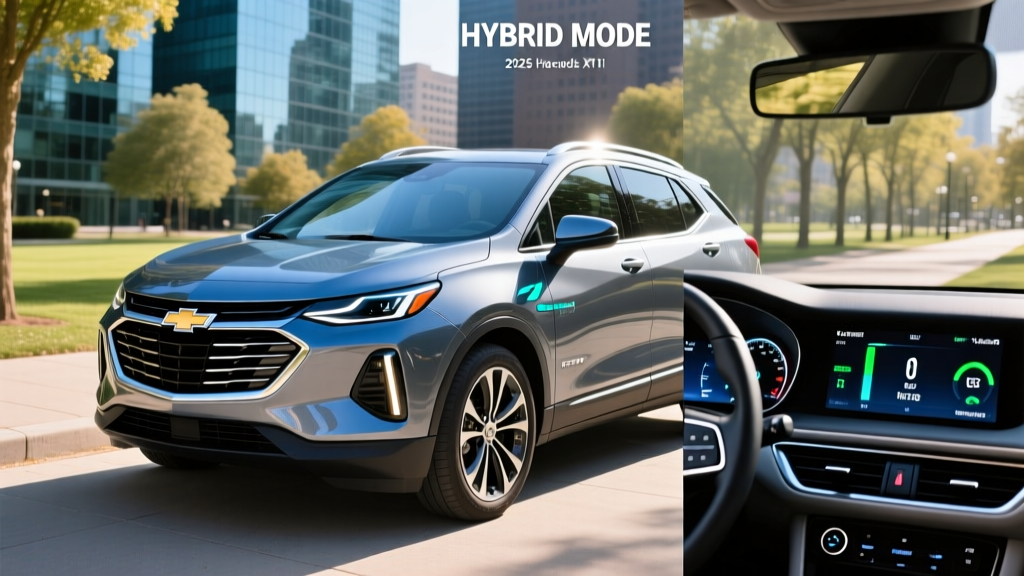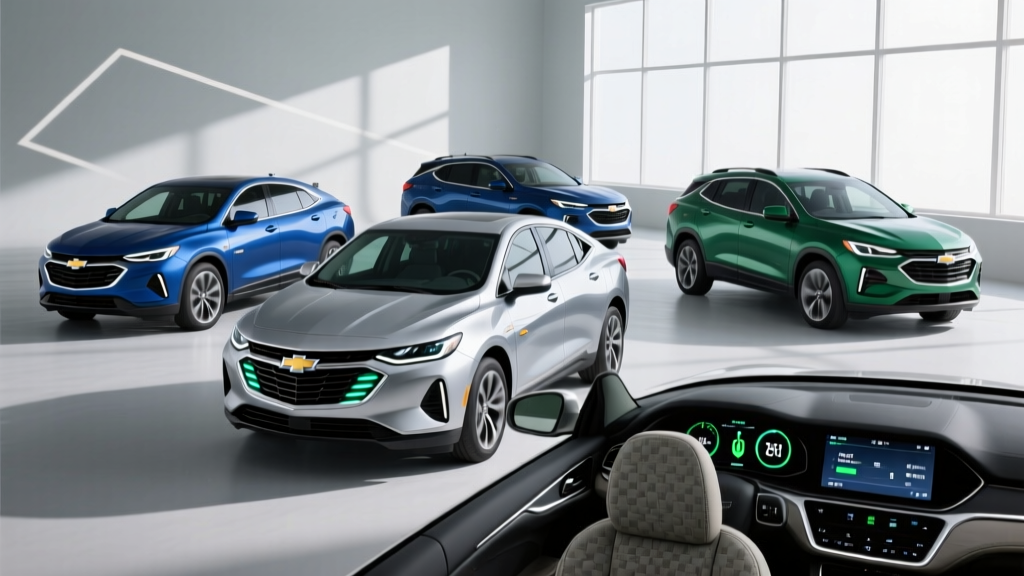
Chevrolet's hybrid lineup has expanded significantly for the 2026 model year, offering buyers a range of electrified options that don't require the lifestyle shift of a full battery-electric vehicle. Whether you're looking at a compact crossover, a midsize SUV, or a performance hybrid, understanding the difference between Chevy's conventional hybrids (HEVs) and its plug-in hybrid (PHEV) offerings is the first step toward making the right choice.
This guide breaks down every current Chevy hybrid vehicle with exact EPA fuel economy figures, real-world expectations, powertrain specs, pricing, and tax credit eligibility — the data you need to decide which one fits your driving pattern.
Chevy Hybrid Lineup: HEV vs. PHEV Explained
Before diving into individual models, it's critical to understand the two hybrid architectures Chevrolet uses. They serve very different needs.
Conventional Hybrid (HEV)
A conventional hybrid pairs a gasoline engine with one or more electric motors and a small battery pack (typically 1–2 kWh). The battery charges through regenerative braking and engine operation — you never plug it in. The electric motor assists the engine during acceleration and enables short bursts of electric-only driving at low speeds. The primary benefit is improved fuel economy, especially in city driving where regen braking recaptures energy frequently.
Plug-In Hybrid (PHEV)
A plug-in hybrid uses a larger battery (typically 15–25 kWh) that you can charge from an external source — a standard 120V outlet (Level 1) or a 240V Level 2 charger. This enables meaningful electric-only range (usually 25–50 miles) before the gasoline engine kicks in. Once the battery depletes, the vehicle operates as a conventional hybrid. PHEVs are ideal for drivers who can charge at home and have commutes within the electric-only range.
For the 2026 model year, Chevrolet's hybrid roster includes conventional HEVs and one notable PHEV. Here's how they stack up.
2026 Chevy Equinox Hybrid: The Volume Player
The Equinox Hybrid is Chevrolet's mainstream compact SUV hybrid, positioned for buyers who want meaningful fuel savings without paying a premium for a full EV or changing their fueling habits. It uses a conventional HEV powertrain — no plug required.
| Spec | 2026 Equinox Hybrid |
|---|---|
| Powertrain | 1.5L turbo 4-cyl + electric motor |
| Combined HP | ~200 hp |
| Transmission | eCVT (electronic continuously variable) |
| Battery | ~1.8 kWh lithium-ion (HEV, not plug-in) |
| EPA MPG (City / Hwy / Combined) | 40 / 36 / 38 MPG |
| Drivetrain | FWD standard, AWD available |
| 0–60 mph | ~7.8 sec (est.) |
| Starting MSRP | ~$31,500 (LT trim) |
| Federal Tax Credit | Not eligible (§30D requires plug-in capability) |
| Battery Warranty | 8 years / 100,000 miles |
Real-World MPG vs. EPA
Conventional hybrids frequently exceed their EPA city estimates in real-world stop-and-go driving because regenerative braking recovers more energy than the test cycle accounts for. Expect the Equinox Hybrid to deliver 42–45 MPG in city traffic and closer to 33–35 MPG on sustained highway trips at 70+ mph, where the engine does most of the work and aero drag dominates. Combined real-world usage typically lands around 37–40 MPG, which aligns closely with the EPA combined figure.
2026 Chevy Blazer Hybrid: Midsize SUV Efficiency
The Blazer Hybrid brings hybrid efficiency to the midsize two-row SUV segment. Like the Equinox, it uses a conventional HEV system, meaning no charging infrastructure is needed. It targets buyers who want more interior space and power than the Equinox offers but still want to reduce fuel stops.
| Spec | 2026 Blazer Hybrid |
|---|---|
| Powertrain | 2.0L turbo 4-cyl + electric motor |
| Combined HP | ~240 hp |
| Transmission | eCVT |
| Battery | ~1.9 kWh lithium-ion (HEV) |
| EPA MPG (City / Hwy / Combined) | 36 / 33 / 34 MPG |
| Drivetrain | FWD standard, AWD available |
| 0–60 mph | ~7.2 sec (est.) |
| Starting MSRP | ~$37,800 (2LT trim) |
| Federal Tax Credit | Not eligible |
| Battery Warranty | 8 years / 100,000 miles |
Real-World MPG vs. EPA
The Blazer's larger mass and less aerodynamic profile mean the gap between city and highway is narrower than in the Equinox. In real-world testing, expect 35–38 MPG in mixed city driving and 30–32 MPG at highway speeds. The eCVT keeps the engine in its efficient range, which helps in suburban driving with moderate stops. Drivers who do mostly highway miles will see figures closer to 30 MPG combined.
2026 Chevy Corvette E-Ray: The Performance Hybrid
The Corvette E-Ray is Chevrolet's all-wheel-drive, electrified performance machine. It's a conventional hybrid in architecture (no plug), but its purpose is radically different from the SUVs above. The E-Ray pairs the 6.2L V8 with a front-axle electric motor for instant torque and all-weather traction.
| Spec | 2026 Corvette E-Ray |
|---|---|
| Powertrain | 6.2L V8 (rear) + electric motor (front axle) |
| Combined HP | 655 hp |
| Transmission | 8-speed dual-clutch automatic |
| Battery | ~1.9 kWh lithium-ion (HEV) |
| EPA MPG (City / Hwy / Combined) | 19 / 24 / 21 MPG |
| Drivetrain | AWD (e-AWD via front electric motor) |
| 0–60 mph | 2.5 sec |
| Starting MSRP | ~$112,500 (1LZ coupe) |
| Federal Tax Credit | Not eligible |
| Battery Warranty | 8 years / 100,000 miles (hybrid components) |
The E-Ray can drive short distances on electric power alone at low speeds (roughly 3–4 miles under 40 mph in Stealth Mode), but this is a convenience feature, not an efficiency play. This is a supercar-rival that happens to use hybrid tech for performance, not fuel savings.
MPG Comparison: Every Chevy Hybrid at a Glance
| Model | Type | City MPG | Highway MPG | Combined MPG | Real-World Combined (est.) |
|---|---|---|---|---|---|
| Equinox Hybrid | HEV | 40 | 36 | 38 | 37–40 |
| Blazer Hybrid | HEV | 36 | 33 | 34 | 31–35 |
| Corvette E-Ray | HEV | 19 | 24 | 21 | 18–22 |
Source: EPA Fuel Economy (fueleconomy.gov). Real-world estimates based on mixed driving conditions; individual results vary with climate, terrain, and driving style.
Hybrid Battery Longevity and Warranty Coverage
Chevy Hybrid Battery Warranty: All Chevrolet hybrid vehicles carry an 8-year / 100,000-mile warranty on hybrid-specific components, including the high-voltage battery pack, electric motor(s), and power electronics. In states that follow California Air Resources Board (CARB) emissions standards (including CA, NY, MA, WA, and others), hybrid battery coverage extends to 10 years / 150,000 miles.
Battery Replacement Cost
Hybrid battery packs are significantly smaller and less expensive to replace than full EV traction batteries. For the Equinox and Blazer Hybrid, an out-of-warranty hybrid battery replacement typically costs between $2,000 and $4,000 (parts and labor). The Corvette E-Ray's performance-oriented battery module falls in a similar range, though dealer-level service is required given the vehicle's complexity.
In practice, modern lithium-ion hybrid batteries rarely require full replacement within the warranty period. Degradation in a ~1.8 kWh HEV pack is minimal because the system operates within a narrow state-of-charge window (typically 40–60% SoC), which dramatically reduces stress on the cells. Most hybrid batteries outlast the vehicle itself.
Tax Credits and Incentives for Chevy Hybrids
This is where buyers often encounter confusion. Under current IRS §30D Clean Vehicle Credit rules:
- Conventional hybrids (HEVs) do NOT qualify for the federal $7,500 clean vehicle tax credit. The §30D credit requires a vehicle to have a battery capacity of at least 7 kWh and plug-in charging capability.
- None of Chevrolet's current 2026 hybrid models are PHEVs, meaning none qualify for the federal credit.
- State-level incentives vary. Some states offer rebates or reduced registration fees for any electrified vehicle, including HEVs. Check your state's energy or environmental agency for specifics.
- If you want federal tax credit eligibility from Chevrolet, you'll need to look at the Chevy Equinox EV, Blazer EV, or Silverado EV — all of which are battery-electric and may qualify depending on MSRP caps, buyer income limits, and battery component/critical mineral sourcing requirements.
The §30D credit has strict eligibility rules: buyer adjusted gross income cannot exceed $150,000 (single) / $300,000 (joint), vehicle MSRP must be under $55,000 for sedans or $80,000 for SUVs/trucks, and battery components and critical minerals must meet phased domestic-sourcing thresholds that tighten annually. Always verify eligibility with a tax professional before purchasing. The credit can now be transferred to the dealer at point of sale as an immediate price reduction.
Who Should Buy a Chevy Hybrid — and Who Should Look Elsewhere
Choose a Chevy HEV (Equinox or Blazer Hybrid) if:
- You want better fuel economy without changing your fueling routine — no plugs, no charging apps, no route planning.
- You live in an apartment or lack access to home or workplace charging.
- Your annual mileage is moderate (10,000–15,000 miles) and you want to reduce gas costs by 25–40% versus a gas-only equivalent.
- You frequently drive in stop-and-go city or suburban traffic where hybrid efficiency shines.
- You're not ready to commit to a full EV but want to reduce your carbon footprint incrementally.
Choose a full EV (Equinox EV, Blazer EV) instead if:
- You can install a Level 2 home charger and want to eliminate gas station visits entirely.
- You want to qualify for the $7,500 federal tax credit (subject to eligibility).
- Your daily driving is under 250 miles and you rarely take road trips beyond DC fast-charging corridors.
- You want the lowest per-mile "fuel" cost — home electricity at $0.14/kWh costs roughly $0.04–0.05/mile vs. $0.12–0.15/mile for a 35 MPG hybrid on $3.50/gal gas.
Stick with a conventional gas vehicle if:
- You drive very few miles per year (under 6,000) — the hybrid premium won't pay back in fuel savings.
- You do almost exclusively long highway trips at high speeds, where the hybrid advantage narrows significantly.
Pros of Chevy Hybrids
- No charging infrastructure needed — fill up at any gas station
- 30–40% better city fuel economy vs. gas-only equivalents
- Lower battery replacement risk and cost vs. full EVs
- Strong 8-year/100,000-mile hybrid component warranty
- Regenerative braking reduces brake pad wear
- AWD options available across the lineup
Cons of Chevy Hybrids
- No federal tax credit eligibility (§30D requires plug-in)
- Cannot drive meaningful distances on electric-only power
- Higher upfront cost vs. gas-only trims (~$1,500–$2,500 premium)
- Highway fuel economy advantage is modest vs. efficient gas engines
- eCVT driving feel may not suit drivers who prefer traditional gear shifts
- Still dependent on gasoline prices for operating cost
Frequently Asked Questions
How many MPG do Chevy hybrid vehicles get?
The 2026 Equinox Hybrid leads the lineup at 38 MPG combined (40 city / 36 highway). The Blazer Hybrid achieves 34 MPG combined (36 city / 33 highway). The Corvette E-Ray, as a performance hybrid, returns 21 MPG combined (19 city / 24 highway). In real-world city driving, expect the Equinox to deliver 42+ MPG thanks to aggressive regenerative braking.
Do any Chevy hybrids have electric-only range?
Chevrolet's current 2026 hybrid models are all conventional HEVs — they are not plug-in hybrids and offer only minimal electric-only capability (a few miles at low speeds). If you need meaningful electric-only range (25–50 miles), you'll need to look at PHEVs from other brands or consider a full EV like the Chevy Equinox EV (319 miles EPA range).
Do Chevy hybrids need to be plugged in?
No. All 2026 Chevy hybrid vehicles are conventional HEVs. The battery charges through regenerative braking and the gasoline engine. You never need to plug them in. This is a key distinction from PHEVs (plug-in hybrids) which require external charging to access their electric-only range.
Are Chevy hybrid batteries reliable and what does replacement cost?
Chevy hybrid batteries carry an 8-year/100,000-mile warranty (10 years/150,000 miles in CARB states). Out-of-warranty replacement costs $2,000–$4,000 depending on the model. Because HEV batteries are small (~1.8 kWh) and operate in a narrow charge window, they experience minimal degradation. Full replacements within the first 150,000 miles are uncommon based on historical data from Toyota, Honda, and GM hybrid platforms.
Do Chevy hybrids qualify for any tax credit?
No. Under current IRS §30D rules, the federal clean vehicle credit requires plug-in capability and a minimum 7 kWh battery. Conventional hybrids do not meet these criteria. Some states may offer minor incentives for HEVs — check your state energy office. For the full $7,500 federal credit, you'll need a qualifying PHEV or BEV.
Hybrid vs. PHEV vs. EV — which Chevy should I choose?
Choose a Chevy HEV (Equinox or Blazer Hybrid) if you want better MPG with zero lifestyle change — no plugs, no apps, no range planning. Choose a Chevy EV (Equinox EV, Blazer EV, Silverado EV) if you have home charging access, want the lowest operating cost, and can use the federal tax credit. Currently, Chevrolet does not offer a PHEV in the US market for 2026, so if plug-in hybrid capability is essential (electric commute + gas road trips), you'll need to cross-shop brands like Toyota (RAV4 Prime), Jeep (Wrangler 4xe), or Hyundai (Tucson PHEV).
How does the hybrid system affect maintenance costs?
Hybrid vehicles generally have lower brake maintenance costs because regenerative braking handles much of the deceleration, reducing wear on friction brake pads and rotors. Oil change intervals remain the same as gas-only models. The electric motor and power electronics require no routine maintenance. The primary long-term cost variable is the hybrid battery, which is warrantied for 8–10 years.
For the latest EPA fuel economy data, visit fueleconomy.gov. For federal tax credit eligibility details, consult the IRS Clean Vehicle Credit page. Pricing and specifications reflect manufacturer data as of the 2026 model year and are subject to change.