The State of Chevy Hybrid Trucks in 2026
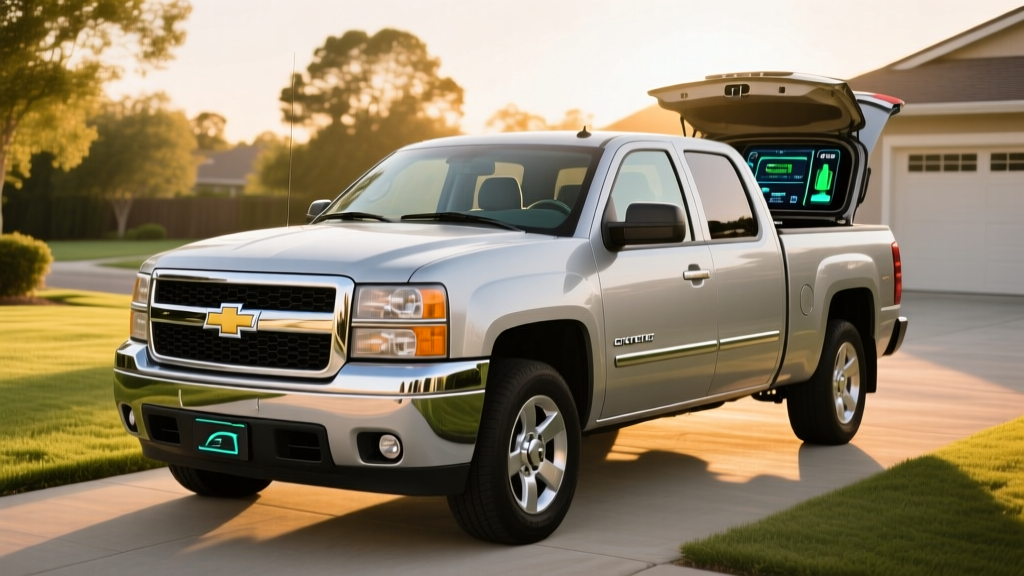
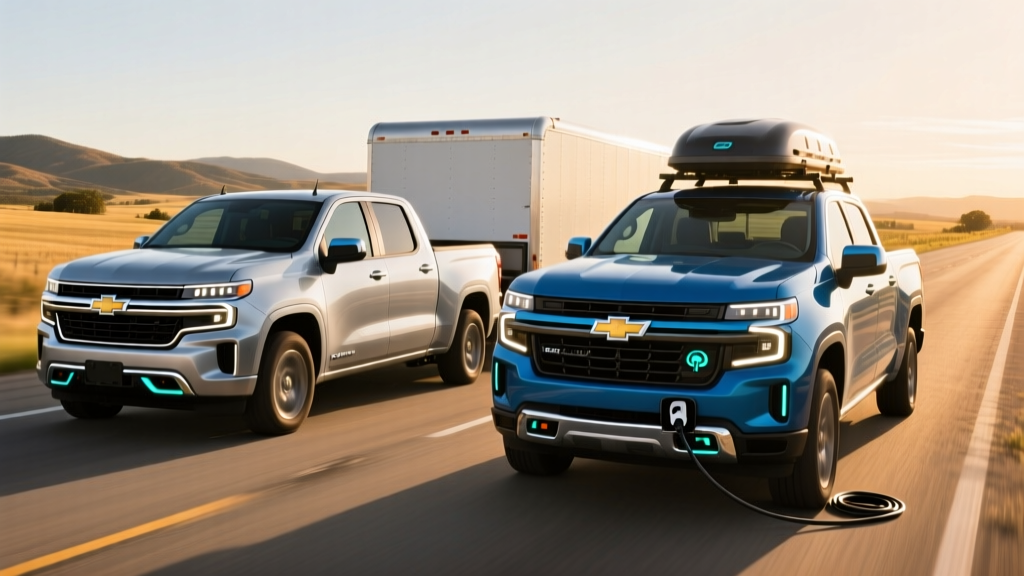
Chevrolet enters the 2026 model year with two distinct hybrid truck strategies: the full-size Silverado 1500 Hybrid running a conventional hybrid (HEV) powertrain that never needs plugging in, and the midsize Colorado PHEV, a plug-in hybrid that delivers roughly 28 miles of electric-only driving before the gas engine kicks in. Both aim to cut fuel costs for truck buyers who aren't ready — or able — to commit to a fully electric pickup like the Silverado EV.
If you've been searching for Chevy hybrid trucks and feeling confused by the options, you're not alone. The distinction between HEV and PHEV matters enormously for your daily routine, your fuel budget, and whether you'll qualify for federal tax incentives. This guide breaks down exactly what each truck delivers in real-world driving, what it costs, and which one actually fits your lifestyle.
HEV vs PHEV: What Chevy Truck Buyers Need to Know
Conventional Hybrid (HEV) — Silverado 1500 Hybrid: Uses a small battery (typically 1.5–2.0 kWh) recharged entirely by regenerative braking and the gasoline engine. You never plug it in. It improves MPG modestly over the gas-only model, especially in stop-and-go city driving.
Plug-in Hybrid (PHEV) — Colorado PHEV: Carries a larger battery pack (approximately 15–18 kWh usable) that you can charge from a wall outlet or Level 2 charger. It provides 25–30 miles of pure electric driving for daily commutes, then operates as a conventional hybrid once the battery is depleted. Total combined range exceeds 400 miles.
Silverado 1500 Hybrid: MPG, Powertrain, and Real-World Efficiency
The 2026 Silverado 1500 Hybrid pairs GM's 2.7-liter TurboMax inline-four engine with an integrated electric motor embedded in the transmission. Combined output lands at 348 horsepower and 430 lb-ft of torque, routed through a 10-speed automatic to either rear-wheel or four-wheel drive. The hybrid system recaptures energy during braking and coasting, providing seamless electric assist during acceleration and low-speed crawling.
| Config | City MPG | Highway MPG | Combined MPG |
|---|---|---|---|
| 2WD | 23 | 24 | 23 |
| 4WD | 21 | 23 | 22 |
Source: EPA Fuel Economy
Real-World MPG: What Owners Actually See
Conventional hybrids shine in city traffic, where regenerative braking constantly recharges the small battery and the engine shuts off at stops. In mixed suburban driving, owners commonly report 22–25 MPG in the 2WD Silverado Hybrid — sometimes exceeding the EPA city estimate. Highway-only driving at 75+ mph yields less benefit from the hybrid system, and real-world numbers tend to settle around 20–22 MPG for 4WD models loaded with gear or towing.
For context, the gas-only Silverado 1500 with the same 2.7L turbo achieves an EPA combined 20 MPG (4WD). The hybrid's roughly 2 MPG combined improvement translates to about 50–75 fewer gallons per year at 15,000 miles — a meaningful savings, though not transformative on its own.
Colorado PHEV: Electric-Only Range and Total Efficiency
The 2026 Colorado PHEV is the truck for buyers who want genuine electric commuting without sacrificing the ability to tow, haul, and road-trip without range anxiety. Its powertrain combines a turbocharged 2.7-liter four-cylinder engine with a more powerful electric motor and an 18.0 kWh usable battery pack (NMC chemistry).
| Spec | Value |
|---|---|
| Combined Horsepower | 325 HP |
| Combined Torque | 430 lb-ft |
| Battery (usable) | 18.0 kWh, NMC lithium-ion |
| EPA Electric-Only Range | 28 miles |
| Total Combined Range | ~450 miles |
| MPGe (electric + gas) | 62 MPGe |
| Charge-Depleting MPG (hybrid mode) | 25 combined |
| Level 1 Charge Time (120V, 1.4 kW) | ~12 hours (0–100%) |
| Level 2 Charge Time (240V, 3.6 kW) | ~5 hours (0–100%) |
| DC Fast Charging | Not available |
| Max Towing Capacity | 5,500 lbs |
| 0–60 mph | 6.8 seconds |
How Far Can the Colorado PHEV Go on Electric Only?
The EPA rates the 2026 Colorado PHEV at 28 miles of electric-only range. In real-world conditions — moderate temperatures, suburban speeds under 50 mph, minimal cargo — expect to achieve close to that number. Highway driving at 70 mph reduces electric range to roughly 20–22 miles due to aerodynamic drag. Cold weather (below 30°F) can cut electric range by 15–25% as the battery management system diverts energy to thermal conditioning.
For a commuter with a 20-mile round trip and access to Level 2 charging at home or work, the Colorado PHEV can handle most weekday driving on electricity alone, only engaging the gas engine for weekend hauls or longer trips. This is the PHEV sweet spot: you get EV-like operating costs for daily use without any range limitation on longer journeys.
Pricing, Trims, and Tax Credit Eligibility
Silverado 1500 Hybrid Pricing
The 2026 Silverado 1500 Hybrid starts at approximately $48,200 MSRP (LT trim, 2WD) and climbs to around $58,500 in the fully equipped High Country 4WD configuration. The hybrid powertrain is available across LT, RST, and High Country trims.
Colorado PHEV Pricing
The 2026 Colorado PHEV begins at $42,900 MSRP (LT trim) with the Z71 off-road package adding roughly $4,000. The top Trail Boss PHEV trim reaches approximately $49,500.
Federal Tax Credit: What Applies
Under the current IRS §30D Clean Vehicle Credit rules, the situation differs sharply between these two trucks:
- Silverado 1500 Hybrid (HEV): Does NOT qualify for the §30D federal tax credit. Conventional hybrids without plug-in capability are excluded. The credit requires a minimum 7 kWh battery and plug-in charging capability.
- Colorado PHEV: May qualify for up to $3,750 under §30D, contingent on meeting critical-mineral and battery-component sourcing requirements. The full $7,500 requires satisfying both the critical minerals requirement ($3,750) and the battery components requirement ($3,750). As of 2026, many PHEVs with partial domestic sourcing qualify for the $3,750 half-credit. Buyer income caps apply: $150,000 single / $300,000 joint AGI. MSRP must not exceed $80,000 for trucks. Point-of-sale transfer is available through registered dealers.
Always verify current eligibility on fueleconomy.gov before purchasing, as sourcing requirements and qualified-vehicle lists update throughout the year. Consult a tax professional for your specific situation.
Towing, Payload, and Work Capability
Neither hybrid system dramatically reduces truck capability, but there are differences worth noting:
| Model | Max Towing | Max Payload |
|---|---|---|
| Silverado 1500 Hybrid (4WD) | 9,300 lbs | 1,870 lbs |
| Colorado PHEV (4WD) | 5,500 lbs | 1,350 lbs |
| Silverado 1500 Gas (5.3L V8, 4WD) | 11,200 lbs | 1,970 lbs |
The Silverado Hybrid sacrifices about 1,900 lbs of max towing compared to the V8 gas model, primarily due to the smaller turbocharged four-cylinder engine rather than the hybrid system itself. For boat trailers, campers under 8,000 lbs, and typical work-site hauling, the hybrid's 9,300-lb rating is sufficient. The Colorado PHEV's 5,500-lb rating covers utility trailers, small campers, and ATV hauls — appropriate for its midsize segment.
One real-world note: towing at max capacity significantly reduces fuel economy in both models. Expect the Silverado Hybrid to drop to 13–15 MPG while towing near its limit, and the Colorado PHEV's electric-only range effectively disappears under heavy load as the system engages the gas engine immediately for adequate power.
Battery Warranty, Reliability, and Replacement Costs
Hybrid Battery Warranty Coverage
Silverado 1500 Hybrid: 8 years / 100,000 miles (whichever comes first) on the hybrid battery pack and related powertrain components. This is federally mandated minimum coverage for hybrid/emissions components.
Colorado PHEV: 8 years / 100,000 miles on the high-voltage battery pack, with a guaranteed minimum capacity retention of 70% over the warranty period. If the battery degrades below 70% of original capacity within the warranty window, Chevrolet will repair or replace it at no cost.
Long-Term Reliability Expectations
GM's hybrid systems have accumulated substantial real-world mileage data from earlier applications in the Malibu Hybrid and the previous-generation Silverado eAssist. The current TurboMax-based hybrid architecture is newer, but its core components — the electric motor, inverter, and battery management system — share lineage with proven GM hybrid designs.
For the PHEV battery specifically, NMC chemistry in the 18 kWh pack is designed for daily shallow cycling (using 60–80% of capacity rather than full 100% discharges), which extends cycle life. Real-world data from comparable PHEVs suggests 10–15 years of service life before significant degradation, with many packs lasting the vehicle's lifetime.
Battery Replacement Cost
Out-of-warranty hybrid battery replacement remains a top buyer concern. Current estimates:
- Silverado 1500 Hybrid (small HEV battery): $2,500–$4,000 including labor. The smaller pack is less expensive to replace.
- Colorado PHEV (18 kWh pack): $6,000–$9,000 including labor. Larger capacity and NMC chemistry drive higher cost.
These are worst-case scenarios. Most hybrid batteries outlast the vehicle, and individual module replacement (rather than the full pack) can reduce costs by 40–60% at specialized hybrid repair shops.
Hybrid vs PHEV vs Full EV: Which Chevy Truck Fits You?
Choose the Silverado 1500 Hybrid (HEV) if:
- You tow over 7,000 lbs regularly and need full-size truck capability
- You have no access to home or workplace charging
- You want better MPG without changing any habits — no plugging in, no route planning
- Your budget is above $48,000 and you don't need a federal tax credit
Choose the Colorado PHEV if:
- Your daily commute is under 30 miles round-trip and you can charge at home (Level 1 or Level 2)
- You want EV-like daily driving costs with the freedom to road-trip on gas
- Midsize truck capability (5,500-lb towing) meets your needs
- You want to offset some purchase cost with the potential $3,750 federal tax credit
Choose a Full EV (Silverado EV / Rivian R1T) if:
- You have reliable Level 2 home charging and access to DC fast chargers for road trips
- You want maximum fuel savings and minimal maintenance (no oil changes, no spark plugs)
- Your daily range needs are under 300 miles, or you're willing to plan charging stops on longer trips
- You qualify for the full $7,500 federal tax credit and want the lowest total cost of ownership over 5 years
5-Year Cost of Ownership Snapshot
| Cost Factor | Silverado Hybrid | Colorado PHEV | Silverado Gas V8 |
|---|---|---|---|
| Fuel (gas + electric) | $9,800 | $5,400* | $11,200 |
| Maintenance | $3,200 | $2,800 | $3,500 |
| Insurance (avg) | $8,500 | $7,200 | $8,000 |
| Depreciation (est.) | $18,000 | $16,500 | $17,000 |
| Total (before tax credit) | $39,500 | $31,900 | $39,700 |
*Colorado PHEV fuel cost assumes 60% of miles driven in electric mode with home Level 2 charging at $0.14/kWh national average. Actual costs vary by electricity rate and driving pattern. Source: fueleconomy.gov and AAA Your Driving Costs methodology.
Pros and Cons at a Glance
Silverado 1500 Hybrid — Pros
- No plug-in required — zero habit change
- 9,300-lb towing capacity for full-size truck work
- 2–3 MPG improvement over gas equivalent, best in city driving
- 8-year/100,000-mile hybrid battery warranty
- Regenerative braking reduces brake wear
Silverado 1500 Hybrid — Cons
- No federal tax credit eligibility
- Modest MPG gain may not justify price premium over gas model
- Smaller turbo-4 engine less refined than V8 under heavy load
- Still burns 100% gasoline — no electric-only driving option
Colorado PHEV — Pros
- 28 miles electric-only covers most daily commutes
- Potential $3,750 federal tax credit reduces effective price
- 62 MPGe when regularly charged — lowest operating cost
- 450+ miles total range eliminates range anxiety on road trips
- Level 2 charging fully replenishes overnight in ~5 hours
Colorado PHEV — Cons
- Requires home charging access to realize fuel savings
- No DC fast charging — long road trips run entirely on gas
- 5,500-lb towing may be insufficient for larger trailers
- Electric range drops significantly in cold weather and under load
- Heavier than gas-only Colorado, slightly reducing payload
Frequently Asked Questions
How many MPG does the Chevy Silverado Hybrid get?
The 2026 Silverado 1500 Hybrid achieves an EPA-estimated 23 MPG combined (2WD) or 22 MPG combined (4WD). In real-world city driving with frequent stops, the hybrid system's regenerative braking can push actual MPG slightly above the EPA city estimate — owners commonly report 22–25 MPG in mixed suburban use. Highway-only driving yields lower returns from the hybrid system, closer to 20–22 MPG.
How far can the Colorado PHEV go on electric only?
The EPA rates the 2026 Colorado PHEV at 28 miles of electric-only range. Real-world results vary: gentle suburban driving in mild temperatures can match or slightly exceed 28 miles, while highway speeds above 65 mph reduce it to around 20–22 miles. Cold weather (below 30°F) can drop electric range by 15–25%. Once the battery depletes, the truck switches seamlessly to hybrid mode at 25 MPG combined.
Do Chevy hybrid trucks need to be plugged in?
The Silverado 1500 Hybrid (HEV) never needs plugging in — its small battery recharges through regenerative braking and the gas engine. The Colorado PHEV can be plugged in to a standard 120V outlet or a 240V Level 2 charger to replenish its larger battery for electric-only driving. While the Colorado PHEV will function without plugging in (operating as a conventional hybrid), you forfeit the electric-range benefit and most of the fuel savings if you never charge it.
Does the Silverado Hybrid or Colorado PHEV qualify for a tax credit?
The Silverado 1500 Hybrid does not qualify for the federal §30D Clean Vehicle Credit — it is a conventional hybrid without plug-in capability. The Colorado PHEV may qualify for up to $3,750 depending on battery-sourcing compliance, buyer income (under $150K single / $300K joint), and MSRP (under $80K for trucks). Always check the current qualified vehicle list on fueleconomy.gov and consult a tax professional.
Is the hybrid battery reliable and what does replacement cost?
Both trucks carry an 8-year/100,000-mile hybrid battery warranty. GM's hybrid systems have proven durable in prior applications, and modern battery management systems prevent the deep discharges that accelerated degradation in older hybrid designs. Out-of-warranty replacement costs are estimated at $2,500–$4,000 for the Silverado Hybrid's smaller battery and $6,000–$9,000 for the Colorado PHEV's 18 kWh pack. Most hybrid batteries outlast the vehicle's useful life.
Can I tow with the Colorado PHEV in electric mode?
Technically yes, but practically the system will engage the gas engine almost immediately under towing load. The electric motor alone cannot provide sufficient torque for trailer acceleration at highway speeds. Expect electric-only range to drop to near zero when towing, with the truck operating primarily in hybrid mode at roughly 18–20 MPG while pulling a trailer near its 5,500-lb maximum.
Which is better: a Chevy hybrid truck or a full EV pickup?
It depends on your charging access and driving patterns. If you can install a Level 2 home charger, drive under 300 miles daily, and want the lowest operating cost with minimal maintenance, a full EV like the Silverado EV (EPA range up to 440 miles) delivers greater long-term savings. If you lack reliable charging, regularly tow heavy loads, or frequently drive to areas with sparse charging infrastructure, a hybrid or PHEV eliminates range anxiety while still reducing fuel consumption. The Colorado PHEV is the best middle ground for drivers who can charge at home but need gas-engine flexibility.