The Current Chevy Hybrid Lineup at a Glance
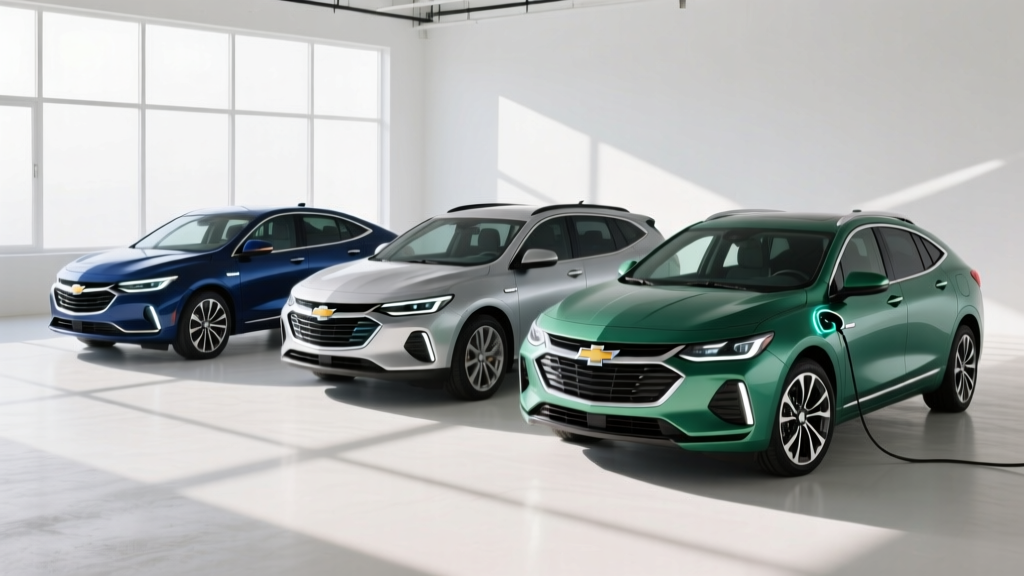
Chevrolet's 2026 hybrid strategy focuses on three distinct vehicle segments: compact SUV, midsize sedan, and full-size pickup. Unlike Toyota's sprawling hybrid catalog, Chevy keeps its offerings targeted — each model uses a different hybrid architecture tuned to its vehicle class. Before diving into specifics, it's essential to understand that Chevy sells both conventional hybrids (HEVs) and one mild hybrid (eAssist) system. As of the 2026 model year, Chevrolet does not offer a plug-in hybrid (PHEV) in the U.S. market following the discontinuation of the Volt and the Clarity competitor gaps.
HEV vs PHEV — What Chevy Buyers Need to Know
| Feature | Conventional Hybrid (HEV) | Plug-In Hybrid (PHEV) |
|---|---|---|
| Plug in to charge? | No — charges via regen & engine | Yes — has larger battery with charge port |
| Electric-only range | 0 miles (motor assists engine) | Typically 20–50 miles |
| Battery size | 1.0–2.0 kWh | 13–25 kWh |
| Federal tax credit | Not eligible (§30D requires plug-in) | Up to $7,500 (subject to sourcing/income rules) |
| Chevy availability 2026 | Equinox Hybrid, Malibu Hybrid | None currently offered |
If you need electric-only commuting, you'll need to look at a PHEV from another brand or a full BEV like the Chevy Equinox EV. Chevy's hybrids are gas-and-go — no plug required.
2026 Chevy Equinox Hybrid: MPG, Specs & Real-World Efficiency
The Equinox Hybrid pairs a turbocharged 1.5L four-cylinder engine with an electric motor integrated into a continuously variable transmission (eCVT). Combined output sits at 175 horsepower, which is adequate for daily commuting and merging but won't thrill anyone pulling onto a fast-moving freeway. The 1.8 kWh lithium-ion battery pack is small by PHEV standards — it exists to smooth stop-start traffic and recapture braking energy, not to propel the car electrically for meaningful distances.
| Spec | Value |
|---|---|
| Powertrain | 1.5L turbo I-4 + electric motor (eCVT) |
| Combined HP | 175 hp |
| Battery | 1.8 kWh lithium-ion |
| EPA MPG (City / Hwy / Combined) | 41 / 38 / 40 MPG |
| Real-world observed (mixed driving) | 37–43 MPG |
| Fuel tank | 14.0 gal |
| Total range (est.) | ~560 miles |
| 0-60 mph | ~7.8 seconds |
| Starting MSRP | $33,400 (LT trim) |
| Federal tax credit | Not eligible |
Real-world MPG reality check: The EPA's 40 MPG combined figure is achievable in suburban driving with moderate stop-and-go. In heavy city traffic where regenerative braking shines, owners frequently report 42–44 MPG. On sustained highway runs at 75+ mph, expect the number to dip to 35–37 MPG — aerodynamic drag dominates at speed, and the hybrid system has less braking energy to recapture. Cold weather (below 30°F) knocks efficiency down 5–10% as the engine runs more frequently for cabin heat.
2026 Chevy Malibu Hybrid: The Last Efficient Sedan Standing
With most American automakers abandoning sedans, the Malibu Hybrid occupies a rare niche: a midsize hybrid sedan from a domestic brand. Its 1.8L four-cylinder paired with a two-motor electric drive unit produces 182 combined horsepower. The architecture is a traditional series-parallel hybrid — at low speeds the car can creep on electric power alone for short distances (think: rolling through a parking lot), but the engine fires up well before you'd call it "electric driving."
| Driving Condition | EPA MPG | Real-World Expectation |
|---|---|---|
| City | 49 MPG | 47–52 MPG (regen-heavy routes can exceed EPA) |
| Highway | 43 MPG | 39–44 MPG |
| Combined | 46 MPG | 43–48 MPG |
That 49 MPG city figure is the standout number here. Hybrids always favor city driving because every stoplight becomes a regenerative charging opportunity, and the engine shuts off at idle. If your commute involves surface streets, school drop-off lines, and suburban errands, the Malibu Hybrid will spend significant time in electric assist mode, burning very little fuel.
Pricing: The 2026 Malibu Hybrid starts at $29,600 for the base LS Hybrid, making it one of the most affordable hybrid vehicles available from any brand. The loaded Premier trim reaches approximately $34,200. No federal tax credit applies — the IRS §30D credit is exclusively for plug-in vehicles with batteries of at least 7 kWh.
2026 Chevy Silverado Hybrid: eAssist Mild Hybrid Explained
The Silverado Hybrid uses a fundamentally different system than the Equinox or Malibu. Chevrolet's eAssist is a mild-hybrid setup — a small belt-driven motor-generator replaces the traditional alternator and provides modest torque assist to the 5.3L V8. This is not a full hybrid system. You cannot drive on electric power alone. The system's job is to enable smoother stop-start, slightly reduce fuel consumption during acceleration, and power accessories when the engine shuts off at idle.
| Spec | Value |
|---|---|
| Powertrain | 5.3L V8 + belt-driven motor-generator |
| Combined HP | 355 hp (motor adds ~13 hp assist) |
| Battery | 0.45 kWh lithium-ion |
| EPA MPG (City / Hwy / Combined) | 18 / 23 / 20 MPG |
| Non-hybrid Silverado 5.3L V8 | 16 / 21 / 18 MPG |
| MPG improvement from eAssist | ~2 MPG combined |
| Towing capacity | Up to 9,300 lbs |
| Starting MSRP (LT Trail Boss w/ eAssist) | $54,800 |
Let's be direct: eAssist saves you about 2 MPG compared to the standard 5.3L V8. Over 15,000 miles per year at $3.40/gallon, that's roughly $170 in annual fuel savings. This is not a system you buy for fuel economy — it's a refinement upgrade that smooths the stop-start experience and provides a small electrical buffer for the truck's increasingly power-hungry accessory load.
Hybrid Battery Warranty & Longevity: What Chevy Covers
Chevrolet Hybrid Battery Warranty Terms (2026 Models)
- Coverage: 8 years / 100,000 miles (whichever comes first)
- Applies to: Hybrid battery pack, electric drive motor, power electronics, eCVT transmission
- Defect coverage: Full replacement if battery capacity drops below functional threshold due to defect
- Transferable: Yes — warranty follows the vehicle to subsequent owners
- California/PZEV states: 10 years / 150,000 miles on hybrid components
Source: Chevrolet limited warranty documentation. Always confirm specific terms with your dealer at purchase.
Real-world battery lifespan: Modern lithium-ion hybrid batteries from GM have demonstrated strong longevity. The small pack sizes (1.8 kWh in the Equinox, ~1.5 kWh in the Malibu) mean the cells are rarely stressed to extremes — the battery management system keeps state of charge in a narrow, healthy window. Toyota Prius batteries from the early 2000s routinely lasted 150,000+ miles; Chevy's current-generation chemistry and thermal management should meet or exceed that benchmark.
Replacement cost if out of warranty: Based on current parts pricing and independent hybrid shop data, a Chevy Equinox or Malibu hybrid battery replacement runs $2,500–$4,000 including labor. The Silverado eAssist battery is smaller and simpler — approximately $1,200–$1,800. These costs may decline as the hybrid repair aftermarket matures. Some shops offer reconditioned packs for 30–40% less.
Hybrid vs PHEV vs Full EV: Which Chevy Buyer Profile Fits You?
Choosing between powertrains isn't about which is "best" in the abstract — it's about matching the vehicle to your driving pattern, charging access, and budget. Here's a practical decision framework based on the 2026 Chevy lineup and competitive alternatives:
Choose a Chevy HEV (Equinox/Malibu Hybrid) if:
- You don't have access to home charging (apartment, street parking, no garage)
- Your annual mileage is 10,000–18,000 miles and you want to reduce fuel cost without behavior change
- You take frequent road trips exceeding 300 miles and don't want to plan around chargers
- Your budget is $28,000–$36,000 and you want maximum MPG per dollar
- You live in an extreme climate (very cold or very hot) where EV range loss is a concern
Consider a PHEV from another brand if:
- You have Level 2 home charging and a commute under 40 miles round-trip
- You want electric-only daily driving but gas flexibility for road trips
- You qualify for the §30D federal tax credit (income and sourcing dependent — see IRS guidelines)
- Look at: Toyota RAV4 Prime (42 mi EV), Hyundai Tucson PHEV (33 mi EV), Jeep Wrangler 4xe (22 mi EV)
Choose a full EV (like the Chevy Equinox EV) if:
- You have reliable home Level 2 charging
- Your daily driving is under 250 miles and you can plan road-trip charging
- You want to eliminate oil changes, spark plugs, and transmission fluid
- The Equinox EV offers 319 miles EPA range starting at ~$33,600 (before credits)
- You qualify for the full $7,500 §30D credit, effectively dropping the price below the hybrid
Pricing Breakdown: Total Cost of Ownership Over 5 Years
Sticker price tells only part of the story. Here's a 5-year / 75,000-mile ownership cost comparison for the key Chevy hybrid models versus their gas-only counterparts and the Equinox EV:
| Model | MSRP | Fuel/Energy | Maintenance | Insurance (est.) | Total 5-Yr |
|---|---|---|---|---|---|
| Malibu Hybrid ($29,600) | $29,600 | $5,470 | $3,200 | $7,800 | $46,070 |
| Malibu Gas 1.5T ($26,400) | $26,400 | $8,520 | $3,600 | $7,500 | $46,020 |
| Equinox Hybrid ($33,400) | $33,400 | $5,870 | $3,400 | $8,200 | $50,870 |
| Equinox Gas 1.5T ($30,200) | $30,200 | $9,180 | $3,600 | $7,900 | $50,880 |
| Equinox EV 2LT ($36,400*) | $36,400 | $3,150 | $2,100 | $8,600 | $50,250 |
*Equinox EV price shown before any §30D tax credit. With full $7,500 point-of-sale credit, the EV's 5-year cost drops to ~$42,750 — the clear winner if you qualify and have home charging. Credit eligibility depends on income caps ($150K single / $300K joint), MSRP caps ($55K SUVs), and battery sourcing requirements. Verify at fueleconomy.gov.
The hybrid vs. gas comparison reveals a critical insight: the hybrid's fuel savings almost exactly offset its higher purchase price over 5 years. The real payoff comes after year 5, in years 6–10 of ownership when you're still saving $600–$800/year on fuel with no additional upfront cost. If you plan to keep your vehicle 8+ years, the hybrid is the clear financial winner.
Pros, Cons & The Bottom Line on Chevy Hybrids
Pros
- No charging infrastructure needed — works with existing gas stations
- 40–49 MPG combined (Equinox/Malibu) cuts fuel cost 35–45% vs gas equivalents
- 8-year / 100,000-mile hybrid component warranty provides peace of mind
- Malibu Hybrid at $29,600 is one of the cheapest hybrid vehicles available
- Regenerative braking extends brake pad life (often 80,000+ miles)
- No range anxiety in extreme cold — engine provides cabin heat efficiently
Cons
- No PHEV option — can't do electric-only commuting
- No federal tax credit eligibility (§30D requires plug-in capability)
- Silverado eAssist provides negligible fuel savings (~2 MPG) for the price premium
- eCVT transmission feel is smooth but unengaging for driving enthusiasts
- Equinox Hybrid's 175 hp feels underpowered for highway passing
- Limited hybrid trim availability — not all Chevy models offer a hybrid variant
Frequently Asked Questions
How many MPG do Chevy hybrids get?
The 2026 Malibu Hybrid achieves 46 MPG combined (49 city / 43 highway). The Equinox Hybrid delivers 40 MPG combined (41 city / 38 highway). The Silverado eAssist mild hybrid gets 20 MPG combined — a modest 2 MPG improvement over the non-hybrid V8. Real-world MPG for the Malibu and Equinox often exceeds EPA estimates in city driving thanks to aggressive regenerative braking.
Do Chevy hybrids need to be plugged in?
No. All current Chevy hybrid models are conventional hybrids (HEVs) or mild hybrids. They charge their batteries entirely through regenerative braking and the gasoline engine. There is no plug, no charging cable, and no need for any charging infrastructure. You fuel them exactly like a gas car.
How far can a Chevy hybrid go on electric only?
Effectively zero miles. Chevy's current hybrids cannot drive on electric power alone for any meaningful distance. The electric motor assists the gas engine during acceleration and powers the car at very low speeds (parking lot crawling), but the engine engages almost immediately under normal driving. If electric-only range is a priority, you need a PHEV from another manufacturer or a full EV.
Are Chevy hybrids reliable? What does a battery replacement cost?
Chevy's hybrid systems have demonstrated strong reliability, with the 8-year/100,000-mile hybrid warranty covering the battery, electric motor, and power electronics. Out-of-warranty battery replacement costs approximately $2,500–$4,000 for the Equinox and Malibu, and $1,200–$1,800 for the Silverado eAssist. The small battery packs in these vehicles experience less stress than EV batteries, and real-world data from GM's hybrid fleet suggests 150,000+ mile lifespans are typical.
Does any Chevy hybrid qualify for a tax credit?
No current Chevy hybrid qualifies for the federal §30D new clean vehicle credit. This credit requires a plug-in vehicle with a battery capacity of at least 7 kWh, subject to MSRP caps, buyer income limits, and battery component/critical mineral sourcing requirements. The IRS maintains the official eligibility list. Some states offer separate hybrid incentives — check your state energy office for current programs.
Should I buy a Chevy hybrid or the Equinox EV?
If you have Level 2 home charging and qualify for the $7,500 federal credit, the Equinox EV (319 mi EPA range, ~$28,900 after credit) is the better long-term value — lower fuel cost, lower maintenance, and instant torque. If you lack home charging, drive 400+ miles regularly, or live in extreme cold, the Equinox Hybrid ($33,400, 40 MPG, no plug needed) is the practical choice. The hybrid removes all charging logistics at the cost of higher ongoing fuel expense.