Quick Verdict: Where the Equinox Hybrid Fits in 2026
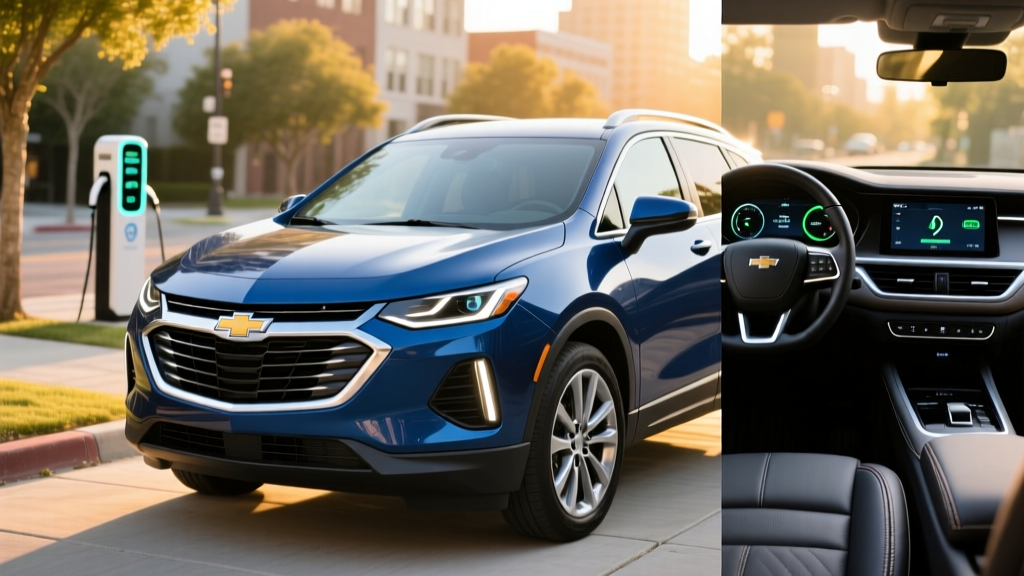
Chevrolet's compact SUV lineup has gone all-electric with the Equinox EV, leaving buyers who still want a gas-electric powertrain searching for answers. The 2026 Chevy Equinox Hybrid SUV doesn't exist as a current-generation, officially released model in Chevrolet's U.S. lineup. The previous-generation Equinox was offered with conventional powertrains, but the nameplate's transition to the Ultium-based EV platform has effectively replaced the hybrid conversation for this specific badge.
However, if you're researching a Chevy Equinox hybrid SUV because you want the practicality of the Equinox nameplate with hybrid efficiency — or if you're weighing a used previous-gen Equinox against current hybrid competitors — this guide covers what you need to know. We'll also map out the closest Chevrolet hybrid alternatives in the 2026 lineup, including the Chevy Malibu Hybrid and the Chevy Colorado hybrid powertrain options, plus cross-shop competitors like the Toyota RAV4 Hybrid and Honda CR-V Hybrid that dominate this segment.
A conventional hybrid (HEV) like the Toyota RAV4 Hybrid uses a small battery recharged by regenerative braking and the gas engine — you never plug it in. A plug-in hybrid (PHEV) like the Toyota RAV4 Prime has a larger battery (typically 15–20 kWh) that you charge via a wall outlet or charger, delivering 25–42 miles of electric-only driving before the gas engine kicks in. Neither should be confused with a full battery-electric vehicle (BEV) like the Equinox EV, which has no gas engine at all.
Chevrolet's 2026 Hybrid SUV Lineup: What Actually Exists
As of the 2026 model year, Chevrolet's hybrid offerings have shifted significantly. Here's what's currently available or announced for U.S. buyers seeking a hybrid Chevy SUV:
| Model | Type | EPA Combined MPG / MPGe | Starting MSRP | Status |
|---|---|---|---|---|
| Chevy Equinox EV | BEV (full electric) | ~100 MPGe combined | ~$33,000 | On sale |
| Chevy Blazer Hybrid | HEV (conventional) | ~30 MPG combined (est.) | ~$38,000 | Announced/limited |
| Chevy Traverse Hybrid | PHEV | ~30 MPG + ~30 mi EV range (est.) | TBD | Announced |
| Used Chevy Equinox (pre-2024) | ICE (gas only) | ~28 MPG combined | Varies (used market) | Used market only |
The reality is that if you want a compact hybrid SUV in 2026, Chevrolet's direct offering is thin. The Equinox nameplate has pivoted to full electric. Buyers cross-shopping a "Chevy Equinox hybrid SUV" are best served by looking at the segment's established hybrid leaders and the Equinox EV as the electrified alternative.
Segment Benchmark: How Competing Hybrid SUVs Compare
Since a new 2026 Equinox Hybrid isn't available, here's how the compact hybrid SUV segment leaders stack up — the vehicles you'll actually cross-shop:
| Model | Powertrain | Combined HP | EPA City | EPA Highway | EPA Combined | Base MSRP |
|---|---|---|---|---|---|---|
| Toyota RAV4 Hybrid | 2.5L I4 + 2 motors (HEV) | 219 hp | 41 MPG | 38 MPG | 40 MPG | $33,575 |
| Toyota RAV4 Prime (PHEV) | 2.5L I4 + 2 motors (PHEV) | 302 hp | 94 MPGe | 84 MPGe | 94 MPGe / 38 MPG gas | $44,515 |
| Honda CR-V Hybrid | 2.0L I4 + 2 motors (HEV) | 204 hp | 43 MPG | 36 MPG | 40 MPG | $36,195 |
| Ford Escape Hybrid | 2.5L I4 + motor (HEV) | 198 hp | 42 MPG | 36 MPG | 39 MPG | $35,995 |
| Hyundai Tucson Hybrid | 1.6L Turbo I4 + motor (HEV) | 226 hp | 38 MPG | 38 MPG | 38 MPG | $34,485 |
| Kia Sportage Hybrid | 1.6L Turbo I4 + motor (HEV) | 226 hp | 38 MPG | 38 MPG | 38 MPG | $33,090 |
Source: EPA Fuel Economy (fueleconomy.gov). Verify exact figures for your selected trim, as AWD vs. FWD and trim-level weight differences affect MPG.
Real-World MPG: What to Actually Expect
EPA sticker numbers are a starting point, not a guarantee. Hybrids have a unique real-world characteristic: they often exceed their EPA city rating in stop-and-go traffic because regenerative braking recaptures energy that a gas car wastes as heat. Highway driving is where hybrids lose their advantage — the electric motor can't assist as much at sustained high speeds.
- City driving: Expect EPA city MPG or slightly better. The RAV4 Hybrid's 41 MPG city can hit 43–45 MPG in heavy traffic with frequent stops.
- Highway driving: Expect 2–4 MPG below the EPA highway figure at 75+ mph. A hybrid rated at 38 MPG highway may deliver 34–36 MPG on a flat interstate at 80 mph.
- Cold weather (below 30°F): Expect a 10–15% drop in combined MPG. The engine runs more often to provide cabin heat, and battery efficiency decreases in cold temperatures.
- Combined mixed driving: Most owners report within 1–2 MPG of the EPA combined figure in moderate climates with mixed city/highway use.
For a driver covering 15,000 miles per year in a 40 MPG combined hybrid SUV, you'd use approximately 375 gallons of fuel annually. At $3.40/gallon, that's roughly $1,275/year in fuel — compared to about $1,890/year in a 28 MPG gas-only compact SUV, saving approximately $615 annually.
Hybrid vs. PHEV vs. Full EV: Which Powertrain Fits You?
If you arrived here searching for a Chevy Equinox hybrid SUV, you're likely weighing electrification options. Here's a practical decision framework based on your driving habits and charging access:
Choose a Hybrid (HEV) If:
- You have no home charging access (apartment, street parking)
- You want zero behavior change — just gas up and drive
- Your budget is under $38,000
- You regularly take long road trips and don't want to plan charging stops
- You drive 8,000–15,000 miles/year in mixed conditions
Choose a PHEV If:
- You have Level 1 or Level 2 home charging
- Your daily commute is under 35 miles round-trip
- You want electric daily driving but gas flexibility for road trips
- You can leverage a workplace charger for midday top-ups
- You want to reduce fuel use by 60–80% without range anxiety
Choose a Full EV (BEV) If:
- You have reliable Level 2 home charging
- Your daily driving is under 200 miles
- You want the lowest per-mile fuel cost (~$0.04/mi vs $0.12/mi hybrid)
- You want minimal maintenance (no oil changes, fewer moving parts)
- You qualify for the §30D federal tax credit (up to $7,500)
For the Equinox specifically, the 2026 Chevy Equinox EV offers up to 319 miles of EPA range (FWD LT trim) starting around $33,000 before incentives. If you can charge at home, it's a compelling alternative to the hybrid SUV you were searching for — with significantly lower running costs.
Tax Credits: Hybrid, PHEV, and EV Incentive Eligibility
Understanding which electrified vehicles qualify for federal incentives is critical for your purchase math. Under the IRS §30D Clean Vehicle Credit, the rules differ sharply by powertrain type:
- Conventional hybrids (HEV): Do not qualify for the federal §30D tax credit. The Toyota RAV4 Hybrid, Honda CR-V Hybrid, and any conventional hybrid SUV are ineligible. Some states or utilities may offer small rebates ($250–$500), but there is no federal incentive.
- Plug-in hybrids (PHEV): May qualify for up to $7,500, but only if they meet all current requirements: battery capacity ≥7 kWh, MSRP under $80,000 (SUVs/vans/pickups), buyer income under $150K single / $300K joint, and critical-mineral/battery-component sourcing thresholds. As of 2026, the sourcing requirements have tightened significantly, disqualifying several previously eligible PHEVs.
- Full EVs (BEV): Same §30D rules as PHEVs but more models qualify. The 2026 Equinox EV's credit eligibility depends on current battery-sourcing compliance — verify with your dealer and a tax professional at purchase time. The point-of-sale transfer option lets you apply the credit as a down-payment reduction at the dealership.
Battery Warranty, Reliability, and Replacement Costs
Hybrid battery longevity remains the top concern for buyers, especially those considering used hybrid SUVs. Here's what the data shows:
- Federal mandate: All hybrid and EV batteries must carry a minimum warranty of 8 years / 100,000 miles (10 years / 150,000 miles in CARB states including CA, NY, MA, and others).
- Typical lifespan: Modern NiMH and lithium-ion hybrid batteries routinely last 150,000–200,000+ miles before significant degradation. Toyota's hybrid batteries in the RAV4 and Prius have demonstrated 200,000+ mile lifespans in fleet data.
- Replacement cost: If out of warranty, a compact SUV hybrid battery replacement runs $2,000–$4,000 for a refurbished unit or $4,000–$6,500 for a new OEM battery, depending on the model.
- Warranty coverage: Most manufacturers cover battery capacity below 60–70% of original within the warranty period. If your hybrid battery drops below this threshold within 8yr/100K mi, replacement is covered at no cost.
Reliability data from owner surveys and warranty claims consistently ranks Toyota and Honda hybrid systems among the most reliable powertrains in the industry. The hybrid system adds complexity (electric motor, inverter, battery) but eliminates other failure points — there's no traditional starter motor, no alternator, and regenerative braking extends brake pad life to 80,000–100,000+ miles.
Pros and Cons: Compact Hybrid SUV Ownership
✓ Pros
- 38–40 MPG combined — 30–40% better than gas equivalents
- No charging infrastructure needed (HEV)
- Strong resale value (RAV4 Hybrid holds 60%+ at 3 years)
- Proven reliability with 8yr/100K battery warranty
- Lower annual fuel cost (~$600–$800 savings vs. gas SUV)
- Regenerative braking extends brake life significantly
✗ Cons
- No federal tax credit for conventional HEVs
- $2,000–$4,000 price premium over gas-only trims
- Highway MPG advantage narrows vs. efficient gas turbo engines
- CVT-style driving feel lacks engagement in some models
- Cargo space slightly reduced by battery placement in some models
- Hybrid battery replacement cost ($3K–$6K) if out of warranty
Frequently Asked Questions
Does a 2026 Chevy Equinox Hybrid exist?
No. For the 2026 model year, Chevrolet offers the Equinox as a full electric vehicle (Equinox EV) with up to 319 miles of EPA range. There is no conventional hybrid or plug-in hybrid version of the current-generation Equinox. Previous-generation Equinox models (pre-2024) were gas-only. If you want a Chevy hybrid SUV, look at the Blazer or upcoming Traverse hybrid options, or cross-shop the Toyota RAV4 Hybrid and Honda CR-V Hybrid.
How many MPG do compact hybrid SUVs get?
The segment leaders achieve 38–40 MPG combined per the EPA. The Toyota RAV4 Hybrid and Honda CR-V Hybrid both hit 40 MPG combined (41/38 city/highway for the RAV4, 43/36 for the CR-V). In real-world city driving with frequent stops, expect to match or slightly exceed these figures. On the highway at 75+ mph, expect 2–4 MPG below the sticker. See the comparison table above for model-by-model breakdowns.
Is a hybrid SUV reliable long-term?
Yes. Hybrid systems from Toyota, Honda, and Hyundai/Kia have demonstrated strong long-term reliability. The hybrid battery is warranted for 8 years/100,000 miles (10yr/150K in CARB states), and real-world data shows most hybrid batteries lasting 150,000–200,000+ miles. The electric motor and power electronics have fewer moving parts than a traditional transmission. Brake pads last longer due to regenerative braking. The main risk is out-of-warranty battery replacement at $3,000–$6,500.
Do conventional hybrids need to be plugged in?
No. A conventional hybrid (HEV) charges its battery entirely through regenerative braking and the gas engine. You never plug it in. This is fundamentally different from a plug-in hybrid (PHEV), which has a larger battery designed to be charged via a wall outlet or Level 2 charger for 25–42 miles of electric-only range.
Should I buy a hybrid, PHEV, or full EV in 2026?
It depends on your charging access and driving patterns. If you can't charge at home, a conventional hybrid (HEV) is your best electrified option — no behavior change, 38–40 MPG. If you have home charging and a short commute, a PHEV lets you drive electric daily while keeping gas flexibility. If you have reliable Level 2 home charging and drive under 200 miles daily, a full EV like the Equinox EV offers the lowest operating cost (~$0.04/mile vs. $0.09/mile for a hybrid) and qualifies for up to $7,500 in federal tax credits if eligible.
What is the closest Chevy alternative to a hybrid SUV?
The 2026 Chevy Equinox EV is the closest electrified Equinox option, starting around $33,000 with up to 319 miles of range. For a true hybrid, Chevy's options are limited — the Blazer has seen hybrid variants announced but availability is restricted. Cross-shopping the Toyota RAV4 Hybrid ($33,575, 40 MPG combined) or Honda CR-V Hybrid ($36,195, 40 MPG combined) gives you proven hybrid powertrains with strong reliability records and wide dealer availability.
Always verify current pricing, EPA ratings, and tax-credit eligibility at fueleconomy.gov, irs.gov, and with your local dealer before purchasing. Model-year specs and incentive rules are subject to change.