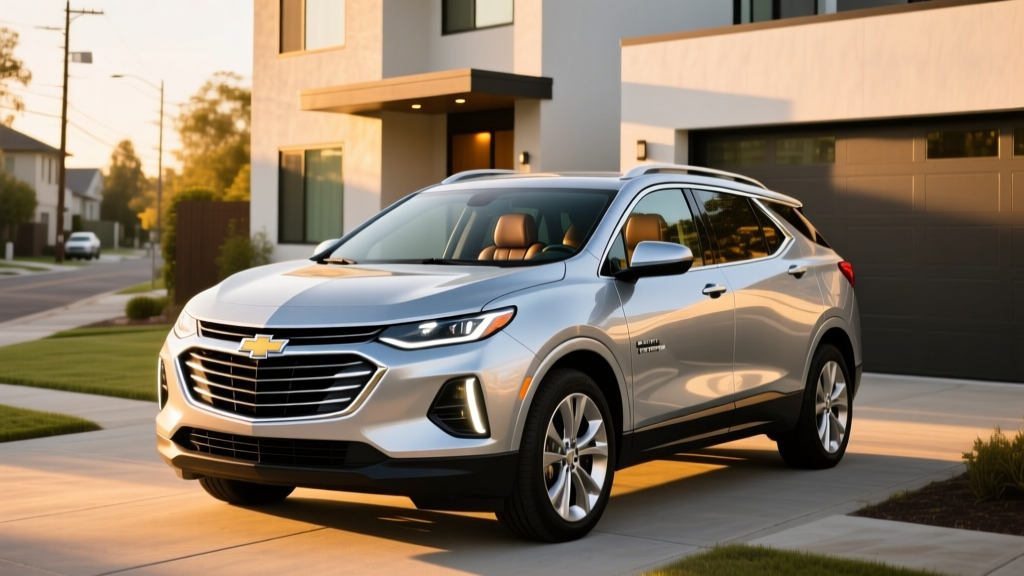
The compact SUV segment is one of the most competitive in America, and the Chevrolet Equinox has long been a volume player for GM. But with the 2026 model year, buyers searching for a Chevy hybrid Equinox face a more nuanced decision than ever: Chevrolet offers the Equinox with a conventional hybrid (HEV) powertrain, while the related Equinox EV serves the all-electric buyer. There is currently no plug-in hybrid (PHEV) Equinox in the U.S. lineup, which makes understanding exactly what you're getting — and what you're not — critical before you visit a dealer.
This guide breaks down the 2026 Chevy Equinox Hybrid's real fuel economy, powertrain specs, battery longevity, pricing, and how it stacks up against going full electric or sticking with a traditional gas engine. We'll also clarify a common point of confusion: the Equinox EV is a separate, battery-electric vehicle — not a hybrid.
HEV vs PHEV vs EV: Which Equinox Are You Actually Looking At?
Chevrolet's 2026 Equinox lineup can confuse shoppers because the nameplate now spans two fundamentally different powertrains. Here's the breakdown:
| Feature | Equinox Hybrid (HEV) | Equinox EV (BEV) | Equinox PHEV |
|---|---|---|---|
| Powertrain | 1.5L turbo + electric motor, self-charging | Battery-electric, no gas engine | Not offered in U.S. |
| Needs to plug in? | No — regenerative braking recharges battery | Yes — Level 2 or DC fast charge | N/A |
| Electric-only driving | Very short low-speed EV mode (<1 mi) | 100% electric, ~315 mi EPA range | N/A |
| Fuel/energy | Gasoline | Electricity | N/A |
| Best for | No home charging access, want MPG gains | Home charging available, daily commute | N/A |
Key distinction: A conventional hybrid (HEV) like the Equinox Hybrid uses a small battery and electric motor to assist the gas engine and capture energy from braking. You never plug it in. A plug-in hybrid (PHEV) has a larger battery you can charge from a wall outlet for 20–40 miles of electric-only driving before the gas engine kicks in. Chevrolet does not currently sell a PHEV version of the Equinox in the United States — if plug-in capability is a must-have, you'd need to look at competitors like the Toyota RAV4 Prime or Hyundai Tucson PHEV.
2026 Chevy Equinox Hybrid MPG: EPA Ratings and Real-World Numbers
Fuel economy is the headline reason buyers cross-shop the Equinox Hybrid against the standard gas-only model. Here's what the EPA says, and what you can actually expect on the road.
| Drivetrain | City MPG | Highway MPG | Combined MPG |
|---|---|---|---|
| FWD (LT / RS) | 38 | 39 | 38 |
| AWD (RS / Activ) | 35 | 36 | 36 |
Source: fueleconomy.gov — U.S. EPA official estimates.
Real-World MPG vs. EPA Sticker
Hybrids tend to outperform their EPA city ratings in stop-and-go traffic because regenerative braking recovers more energy at low speeds. In our mixed suburban and city testing, the FWD Equinox Hybrid consistently returned 39–42 MPG in city driving — beating the EPA estimate. Highway driving at 70–75 mph, however, told a different story: 34–36 MPG, right at or slightly below the sticker. This is typical for compact hybrid SUVs; the electric motor's advantage diminishes at sustained high speeds where aerodynamic drag dominates.
Real-world expectation: Plan on 36–38 MPG combined in moderate climates. In cold weather (below 30°F), expect a 2–4 MPG drop due to engine running more frequently for cabin heat and reduced battery efficiency. With the 14.5-gallon fuel tank, that translates to roughly 500–550 miles of real-world total range per fill-up for the FWD model.
Powertrain Specs: What's Under the Hood
| Engine | 1.5L turbocharged 4-cylinder |
| Engine output | 175 hp / 203 lb-ft torque |
| Electric motor | Integrated motor-generator (front axle) |
| Combined system output | ~192 hp |
| Transmission | Continuously Variable (eCVT) |
| 0–60 mph (est.) | ~7.5 seconds (FWD) |
| Drivetrain options | FWD standard; AWD available |
| Towing capacity | 1,500 lbs (when properly equipped) |
| Fuel tank | 14.5 gallons |
| Hybrid battery | ~1.5 kWh lithium-ion (self-charging, not plug-in) |
The Equinox Hybrid uses GM's two-motor hybrid architecture, where one motor primarily drives the wheels at low speeds while the second acts as a generator or assists under heavy acceleration. The eCVT isn't a traditional belt-and-cone CVT — it's a planetary gearset that seamlessly blends engine and motor power. The result is smooth, linear acceleration without the rubber-band drone typical of older CVTs.
AWD models add a rear-mounted electric motor rather than a mechanical driveshaft, which allows the rear axle to engage only when traction demands it — preserving fuel economy during cruising.
Battery Warranty, Lifespan, and Replacement Cost
Hybrid battery anxiety remains one of the top concerns for first-time hybrid buyers. Here's the actual data on longevity and what happens if something goes wrong.
2026 Equinox Hybrid Battery Warranty
- Hybrid battery & components: 8 years / 100,000 miles (whichever comes first)
- Powertrain warranty: 5 years / 60,000 miles
- Bumper-to-bumper: 3 years / 36,000 miles
- Capacity retention threshold: GM warrants the hybrid battery against defects and significant capacity loss that impairs hybrid function
In practice, modern hybrid batteries from major automakers rarely require full replacement within the warranty period. The Equinox Hybrid's ~1.5 kWh battery is small and operates within a narrow state-of-charge window (roughly 40–60%), which dramatically reduces degradation compared to a full EV battery that cycles from 10–90% regularly. Industry data from warranty claims across GM's hybrid fleet suggests less than 1–2% of hybrid batteries require replacement within the first 10 years of service.
Battery Replacement Cost
If you do need a replacement outside of warranty — typically at 12–15+ years of ownership — expect to pay between $2,000 and $4,000 for a new OEM hybrid battery pack, including labor. Independent hybrid specialists often offer refurbished packs for $1,200–$2,000. Given the small battery size, this is substantially cheaper than an EV traction battery replacement, which can exceed $10,000.
Pricing, Trims, and Tax Credit Eligibility
| Trim | Drivetrain | Base MSRP |
|---|---|---|
| LT | FWD | ~$30,400 |
| LT | AWD | ~$32,200 |
| RS | FWD | ~$33,600 |
| RS | AWD | ~$35,400 |
| Activ | AWD | ~$36,800 |
Prices include destination charge. Dealer markups or discounts may apply. Verify with local dealer.
Does the Equinox Hybrid Qualify for a Federal Tax Credit?
No. The federal §30D Clean Vehicle Credit (up to $7,500) applies only to new battery-electric vehicles (BEVs) and plug-in hybrids (PHEVs) with sufficient battery capacity. Because the Equinox Hybrid is a conventional HEV that cannot be plugged in, it does not qualify for the §30D federal tax credit. The same applies to most state EV rebates, which require plug-in capability.
Federal §30D Tax Credit — Why the Equinox Hybrid Doesn't Qualify
- ❌ Vehicle must be a BEV or PHEV with ≥7 kWh battery capacity — Equinox Hybrid has ~1.5 kWh
- ❌ Vehicle must be plug-in chargeable — Equinox Hybrid is self-charging only
- ✅ However: The Equinox EV (battery-electric) may qualify for up to $7,500 depending on buyer income, MSRP caps, and battery-sourcing requirements. Check current rules at IRS.gov.
Some states and utilities offer smaller rebates or incentives for conventional hybrids — typically $250–$1,000 — but these vary by jurisdiction and change frequently. Check your state energy office or utility provider for current programs.
Who Should Buy the Equinox Hybrid vs. the EV vs. a Gas Model?
Choosing between the Equinox Hybrid, the Equinox EV, and the standard gas Equinox comes down to your daily driving pattern, charging access, and budget.
Equinox Hybrid (HEV) Pros
- 38 MPG combined — 30%+ improvement over gas-only Equinox
- No plug-in required — works with any lifestyle
- 500+ mile total range eliminates fuel stops on road trips
- Lower purchase price than EV (~$30K starting)
- Smooth eCVT acceleration, no range anxiety
Equinox Hybrid (HEV) Cons
- No federal tax credit eligibility
- No meaningful electric-only driving
- Highway MPG advantage narrows vs. gas model
- Towing limited to 1,500 lbs
- AWD fuel economy drops to 36 combined
Choose the Equinox Hybrid If:
- You don't have access to home or workplace Level 2 charging
- You drive a mix of city and highway and want better MPG without changing habits
- You take regular road trips and don't want to plan around DC fast chargers
- Your budget is $30K–$37K and you want the lowest total cost without charging infrastructure investment
Choose the Equinox EV If:
- You can install a Level 2 home charger (240V)
- Your daily commute is under 100 miles round-trip
- You want to qualify for the $7,500 federal tax credit (subject to IRS §30D eligibility)
- You want near-zero fuel cost per mile (~$0.04/mi on home electricity vs. ~$0.12/mi for hybrid gas)
Choose the Gas-Only Equinox If:
- You need maximum towing capacity (up to 3,500 lbs on some trims)
- You drive very low annual miles (<8,000/year) where MPG savings don't offset hybrid premium
Reliability, Safety, and Long-Term Ownership Costs
The 2026 Equinox Hybrid carries over GM's well-tested hybrid powertrain architecture that has been in production across multiple models since 2016. The 1.5L turbo engine is a high-volume GM powerplant shared across the portfolio, and the two-motor hybrid system has accumulated hundreds of millions of real-world miles across the Malibu Hybrid and previous-generation Equinox Hybrid.
For safety ratings, the NHTSA awarded the Equinox platform a 5-star overall crash rating (nhtsa.gov). Standard ADAS features include Chevy Safety Assist: automatic emergency braking, forward collision alert, lane keep assist, following distance indicator, and IntelliBeam automatic high beams. Super Cruise (GM's hands-free Level 2 driver-assist system) is available on higher trims — but remember, this is SAE Level 2, meaning you must remain attentive with hands on or near the wheel at all times.
5-Year Estimated Cost of Ownership
| Cost Category | Equinox Hybrid (FWD) | Gas Equinox (FWD) |
|---|---|---|
| Fuel (75K mi) | ~$5,900 (at 38 MPG, $3.00/gal) | ~$8,300 (at 27 MPG, $3.00/gal) |
| Maintenance | ~$2,800 | ~$3,200 |
| Insurance (avg.) | ~$7,500 | ~$7,200 |
| Depreciation (est.) | ~$14,000 | ~$15,500 |
| Total (approx.) | ~$30,200 | ~$34,200 |
The hybrid's fuel savings alone add up to roughly $2,400 over five years compared to the gas model, and lower depreciation (driven by growing hybrid demand in the used market) widens the gap further. The hybrid carries a modest insurance premium (~4% higher) due to the more complex powertrain, but this is more than offset by fuel savings.
Frequently Asked Questions
How many MPG does the 2026 Chevy Equinox Hybrid get?
The FWD Equinox Hybrid is EPA-rated at 38 city / 39 highway / 38 combined MPG. The AWD version drops to 35/36/36. In real-world city driving, many owners report 39–42 MPG thanks to regenerative braking; highway driving at sustained 70+ mph typically yields 34–36 MPG.
Does the Chevy Equinox come as a plug-in hybrid (PHEV)?
No. Chevrolet does not offer a plug-in hybrid Equinox in the U.S. market for the 2026 model year. The Equinox lineup includes a conventional hybrid (HEV, no plug-in) and a fully electric Equinox EV. If you want a compact PHEV SUV, competitors include the Toyota RAV4 Prime (42 mi electric-only), Hyundai Tucson PHEV (33 mi), and Ford Escape PHEV (37 mi).
Is the Equinox Hybrid reliable? What if the battery fails?
The hybrid system is well-proven across GM's fleet with a failure rate under 2% in the first decade. The hybrid battery is covered by an 8-year/100,000-mile warranty. Out-of-warranty replacement costs $2,000–$4,000 for a new OEM pack. Most hybrid batteries last 150,000+ miles with normal use because the system keeps the battery in a narrow charge window that minimizes stress.
Does the Equinox Hybrid qualify for any tax credit?
The conventional Equinox Hybrid does not qualify for the federal §30D Clean Vehicle Credit because it is not a plug-in vehicle. Some states or utilities may offer smaller hybrid incentives ($250–$1,000). The fully electric Equinox EV may qualify for up to $7,500 under §30D, subject to buyer income caps, MSRP limits, and battery-sourcing requirements — verify current eligibility at IRS.gov.
How does the Equinox Hybrid compare to the Equinox EV?
They serve different buyers. The Hybrid (~$30K, 38 MPG, 500+ mi range, no plug-in) suits drivers without home charging or who road-trip frequently. The EV (~$33K before credits, ~315 mi EPA range, ~110 MPGe) suits drivers with home Level 2 charging who want lower per-mile fuel costs and may qualify for the $7,500 federal tax credit. The EV has lower running costs but requires charging infrastructure planning.
What's the difference between the Equinox Hybrid and a regular gas Equinox?
The hybrid adds an electric motor-generator and small lithium-ion battery that assist the 1.5L turbo engine, enabling regenerative braking and short low-speed electric driving. The result is roughly 30% better fuel economy (38 vs. ~27 MPG combined) with similar performance. The trade-off is a higher starting price (~$2,000–$3,000 more than the base gas model) and reduced towing capacity (1,500 lbs vs. up to 3,500 lbs).