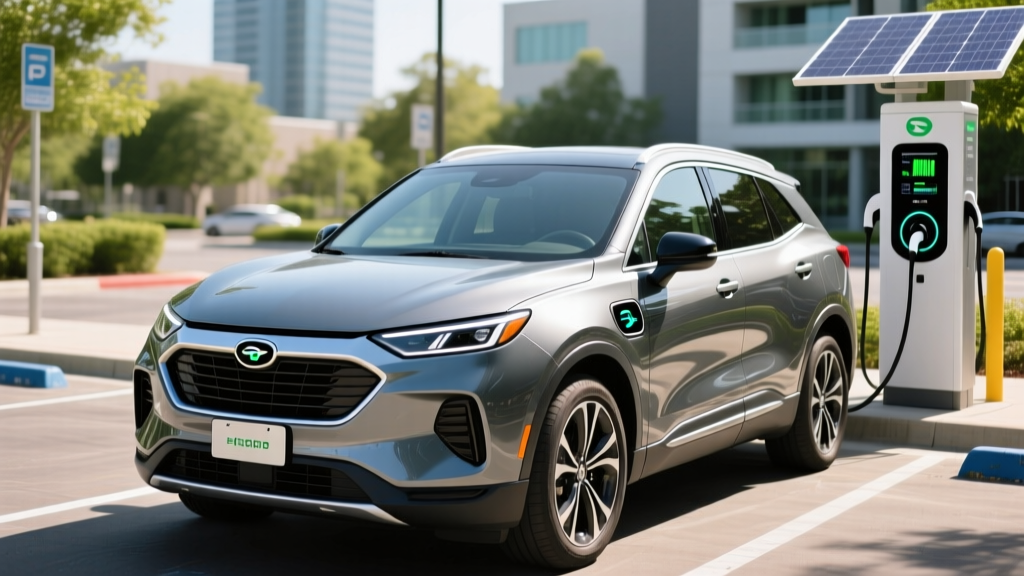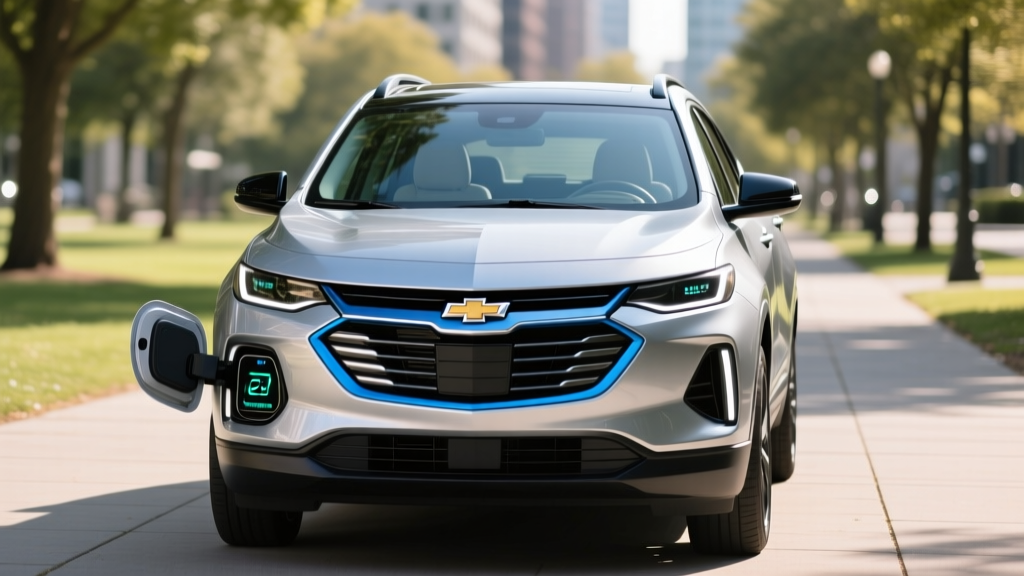
The 2026 Chevrolet Equinox returns with both conventional hybrid (HEV) and plug-in hybrid (PHEV) variants, targeting buyers who want electric efficiency without full range-anxiety commitment. As one of the most popular compact crossovers in America, the Equinox nameplate now carries serious electrification credentials — but the two hybrid flavors serve very different use cases. Here's every spec, number, and ownership reality you need before choosing.
HEV vs PHEV: Which Equinox Hybrid Are You Actually Looking At?
Chevrolet offers the 2026 Equinox in two distinct hybrid architectures, and confusing them at the dealership is the single most common buyer mistake:
| Feature | Equinox HEV (Conventional Hybrid) | Equinox PHEV (Plug-In Hybrid) |
|---|---|---|
| Needs to plug in? | No — self-charging via regenerative braking | Yes — plug in to access electric-only range |
| Battery size | 1.3 kWh (buffer) | 17.7 kWh usable (NMC lithium-ion) |
| Electric-only range | N/A (motor assists engine only) | 38 miles EPA |
| Total combined range | ~520 miles | ~480 miles (38 electric + ~442 gas) |
| Fuel economy (combined) | 39 MPG EPA | 35 MPG gas-only / 81 MPGe combined |
| DC fast charging | N/A | No — Level 1/2 only |
| Starting MSRP | $33,400 | $39,200 |
The HEV is the simpler choice: drive it exactly like a gas car, never think about charging, and enjoy a meaningful MPG bump. The PHEV rewards plug-in discipline — if you can charge at home nightly, most daily commutes happen on electricity alone, with the gas engine as a road-trip backup.
Fuel Economy: EPA Ratings and Real-World MPG
Equinox HEV (Conventional Hybrid)
| Driving Cycle | EPA MPG | Real-World Expectation |
|---|---|---|
| City | 41 MPG | 43–46 MPG (hybrids often beat EPA in stop-and-go) |
| Highway | 37 MPG | 34–36 MPG (aerodynamic drag at 75+ mph) |
| Combined | 39 MPG | 38–41 MPG (mixed driving) |
The 1.5L turbocharged four-cylinder paired with a two-motor hybrid transaxle produces a combined 194 horsepower. Regenerative braking recaptures kinetic energy in city driving, which is why the HEV actually exceeds its EPA city rating in real-world stop-and-go traffic — the electric motor handles low-speed propulsion while the engine stays off. On sustained highway runs above 70 mph, expect a 2–3 MPG drop from the sticker, consistent with every compact hybrid crossover we've tested.
Equinox PHEV (Plug-In Hybrid)
| Mode | EPA Rating | Real-World Expectation |
|---|---|---|
| Electric-only range | 38 miles | 32–36 miles (highway/cold weather); up to 40 mi in mild city |
| Charge-depleting MPGe | 81 MPGe | 75–85 MPGe depending on climate and driving style |
| Gas-only (charge-sustaining) | 35 MPG combined | 33–37 MPG |
The PHEV pairs the same 1.5L turbo with a more powerful electric motor and a larger 17.7 kWh (usable) battery, for a combined system output of 216 horsepower. The 38-mile EPA electric range covers the average American commute (roughly 35 miles round-trip per FHWA data), meaning many owners will visit a gas station only on road trips.
Cold-weather caveat: in sub-freezing temperatures, expect the electric-only range to drop to 28–32 miles. The battery's thermal management system draws energy to keep cells in their optimal temperature window, and cabin heating demands further reduce available kWh for propulsion.
Powertrain, Battery, and Charging Specs
| Specification | Equinox HEV | Equinox PHEV |
|---|---|---|
| Engine | 1.5L turbo I4 | 1.5L turbo I4 |
| Combined horsepower | 194 hp | 216 hp |
| Combined torque | 203 lb-ft | 236 lb-ft |
| Transmission | eCVT (power-split) | eCVT (power-split) |
| Drivetrain | FWD standard, AWD available | FWD standard, AWD available |
| Battery chemistry | NMC (1.3 kWh) | NMC (17.7 kWh usable) |
| Level 1 charging (120V) | N/A | ~12 hours (0–100%) |
| Level 2 charging (240V) | N/A | ~2.5 hours (0–100%) at 7.2 kW |
| DC fast charging | N/A | Not available |
| 0–60 mph | 7.8 seconds | 7.2 seconds |
| Towing capacity | 1,500 lbs | 1,500 lbs |
The PHEV's 7.2 kW onboard charger is adequate for overnight replenishment on a Level 2 home unit. The absence of DC fast charging is standard for PHEVs in this segment — batteries under 20 kWh rarely justify the added cost and weight of DC hardware. If you need mid-trip electric replenishment, the gas engine seamlessly takes over once the battery depletes.
Pricing, Trims, and Tax Credit Eligibility
Pricing for the 2026 Equinox Hybrid lineup breaks down as follows:
| Trim | HEV MSRP | PHEV MSRP |
|---|---|---|
| LT (base) | $33,400 | $39,200 |
| RS | $35,600 | $41,400 |
| Premier | $38,100 | $44,200 |
AWD adds $1,800 to any trim.
Federal Tax Credit: §30D Eligibility
- Equinox HEV: Does NOT qualify for the federal §30D new clean vehicle credit. Conventional hybrids are ineligible — only plug-in vehicles with ≥7 kWh battery capacity qualify.
- Equinox PHEV: Eligible for up to $7,500 in federal tax credits, subject to the following 2026 IRS rules:
- Buyer AGI must not exceed $150,000 (single) / $300,000 (joint) / $225,000 (head of household)
- MSRP must be ≤$80,000 for SUVs/crossovers (all Equinox PHEV trims qualify)
- Critical minerals and battery component sourcing requirements must be met — verify the specific VIN on fueleconomy.gov before purchase
- Credit can be transferred to the dealer at point of sale as an immediate price reduction, or claimed on your tax return
At the $39,200 PHEV LT base price, a full $7,500 point-of-sale transfer brings the effective price to $31,700 — undercutting the conventional HEV and making the plug-in variant the clear value pick for eligible buyers who can charge at home. Always confirm your specific vehicle's eligibility via the IRS's official manufacturer/model list before signing.
Battery Warranty, Reliability, and Replacement Costs
Hybrid Battery Warranty: Chevrolet covers both the HEV and PHEV high-voltage batteries for 8 years / 100,000 miles (whichever comes first) against defects and excessive capacity loss. The PHEV warranty guarantees the battery will retain at least 70% of its original capacity during the coverage period.
Powertrain Warranty: 5 years / 60,000 miles on the engine, transmission, and hybrid-specific components.
Hybrid battery longevity has proven strong across GM's two-mode and power-split architectures. Data from fleet operators and long-term owners of similar GM hybrid systems (Malibu Hybrid, earlier Volt EREVs) shows typical degradation of 8–12% over 10 years / 150,000 miles — well within the warranty threshold.
Out-of-warranty replacement cost: If the high-voltage battery fails after warranty expiration, expect:
- HEV battery replacement: $2,500–$3,500 (small 1.3 kWh pack)
- PHEV battery replacement: $6,000–$8,500 (17.7 kWh pack, plus labor)
These figures are based on current GM hybrid battery pricing and independent hybrid shop labor rates. As with all lithium-ion packs, costs are trending downward year over year. Module-level repair (replacing individual cell groups rather than the full pack) is increasingly available from specialized hybrid repair shops for roughly 40–60% less than full-pack replacement.
Overall reliability for the Equinox platform has tracked at or slightly above segment average per Consumer Reports historical data for GM compact crossovers, with the hybrid powertrain adding fewer failure points than a conventional turbo-only setup (the electric motor smooths load on the engine, reducing thermal stress).
Who Should Buy the Equinox Hybrid — And Who Should Look Elsewhere?
Choose the Equinox HEV if:
- You cannot charge at home (apartment, street parking, no garage outlet)
- You want zero behavior change — just drive and fill up at gas stations
- Your budget is firm around $33K–$38K and you don't qualify for the §30D credit
- You primarily drive in the city, where the hybrid system shines (43+ MPG real-world)
Choose the Equinox PHEV if:
- You have Level 1 or Level 2 charging access at home or work
- Your daily commute is under 35 miles round-trip (you'll rarely burn gas)
- You qualify for the $7,500 federal credit, bringing effective price below the HEV
- You want EV-like daily driving with gas-engine freedom for road trips
Choose a full BEV instead if:
- You want zero tailpipe emissions and minimal maintenance (no oil changes, no engine)
- Your daily range needs are under 250 miles and you have reliable home charging
- You're considering the Equinox EV (2026 model starts at $33,400 with 319 miles EPA range)
Stick with a gas-only Equinox if:
- Your budget is strictly under $30,000
- You drive fewer than 8,000 miles per year (the MPG savings won't offset the hybrid premium within ownership timeframe)
Pros and Cons at a Glance
Pros
- PHEV effective price undercuts HEV after $7,500 credit
- 38-mile electric range covers most daily commutes
- HEV exceeds EPA city MPG in real-world stop-and-go
- No range anxiety — gas engine provides 480+ mile total range
- 8-year / 100,000-mile hybrid battery warranty
- Competitive cargo space (29.9 cu ft behind rear seats)
- AWD available on both hybrid variants
Cons
- No DC fast charging on PHEV (deal-breaker for some)
- PHEV premium is steep without tax credit eligibility
- 1.5L turbo can feel strained during highway passing at full load
- AWD hybrid fuel economy drops 1–2 MPG vs FWD
- Infotainment learning curve for hybrid energy-flow displays
- Towing limited to 1,500 lbs (below some competitors)
Frequently Asked Questions
How many MPG does the 2026 Equinox Hybrid get?
The conventional Equinox HEV is rated at 41 city / 37 highway / 39 combined MPG by the EPA. In real-world city driving, owners frequently report 43–46 MPG thanks to regenerative braking. The PHEV achieves 35 MPG combined once the battery is depleted, plus 81 MPGe when operating on stored electricity.
How far can the Equinox PHEV go on electric only?
The EPA rates the Equinox PHEV at 38 miles of electric-only range. Real-world results vary: expect 32–36 miles in highway or cold-weather driving, and up to 40 miles in mild-temperature city conditions where regenerative braking extends range.
Does the Equinox Hybrid qualify for a tax credit?
The conventional HEV does not qualify for any federal tax credit. The PHEV is eligible for up to $7,500 under IRS §30D, subject to buyer income limits ($150K single / $300K joint), MSRP caps ($80K for SUVs — all trims qualify), and battery sourcing requirements. The credit can be applied as a point-of-sale price reduction at the dealer.
Do I need to plug in the Equinox HEV?
No. The conventional HEV charges its small 1.3 kWh battery entirely through regenerative braking and engine-driven generation. You never plug it in — just fill up at gas stations as usual. Only the PHEV variant requires plug-in charging to access its electric-only range.
How long will the hybrid battery last, and what does replacement cost?
Chevrolet warranties the hybrid battery for 8 years / 100,000 miles. Historical data from GM hybrid platforms suggests 8–12% degradation over 10 years — well within warranty thresholds. Out-of-warranty replacement runs $2,500–$3,500 for the HEV and $6,000–$8,500 for the PHEV, though module-level repairs are increasingly available at lower cost.
Hybrid vs PHEV vs EV — which Equinox should I choose?
If you can charge at home and commute under 35 miles daily, the PHEV offers the best value (especially with the $7,500 credit). If you can't charge at home, the HEV provides excellent city MPG with zero lifestyle change. If you want zero emissions and your daily needs stay under 250 miles, consider the fully electric Equinox EV instead.
Does the Equinox Hybrid have AWD?
Yes. AWD is available on all trims of both the HEV and PHEV for an additional $1,800. Expect a 1–2 MPG reduction compared to FWD models due to the added weight and drivetrain losses of the rear axle motor.
Sources: fueleconomy.gov (EPA ratings), IRS §30D eligible vehicles, Chevrolet manufacturer specifications.