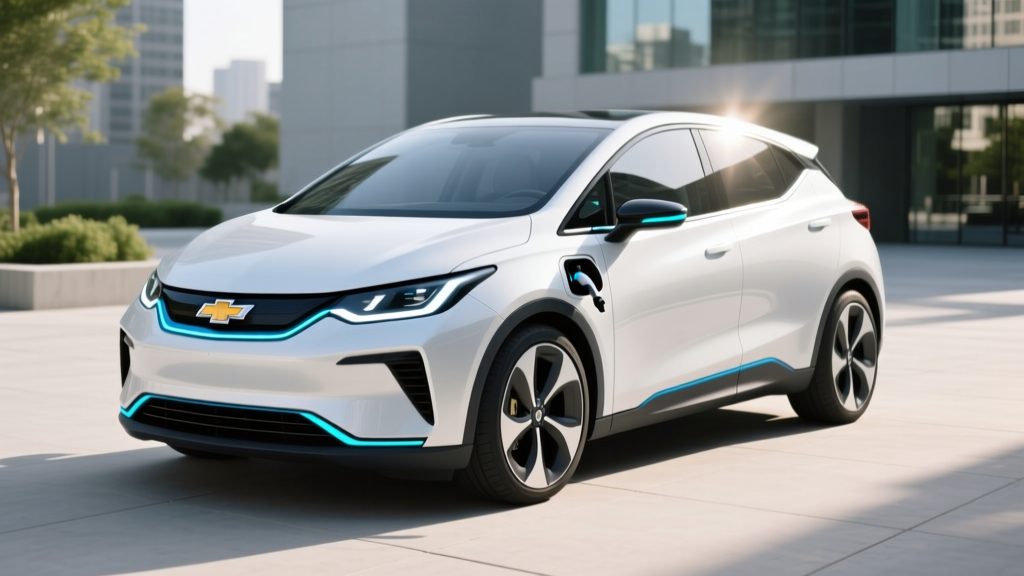
If you've been searching for a Chevy Bolt hybrid, you're not alone — the Bolt EV and Bolt EUV have been among the most popular affordable electric vehicles in the U.S. for years. But here's the critical fact up front: Chevrolet does not currently produce a hybrid or plug-in hybrid version of the Bolt. The Bolt lineup is fully electric (BEV), meaning it runs exclusively on battery power with no gasoline engine.
That said, the confusion is understandable. Chevrolet's broader lineup includes several hybrid and PHEV models, and the Bolt name is so closely associated with electrification that shoppers often assume a hybrid variant exists. This guide clears up exactly what's available in 2026, explores the real hybrid alternatives in Chevy's garage, and helps you decide whether a BEV, PHEV, or conventional hybrid fits your driving life.
HEV vs. PHEV vs. BEV: Where the Bolt Fits
| Powertrain | How It Works | Plugs In? | Chevy Example (2026) |
|---|---|---|---|
| HEV (Conventional Hybrid) | Small battery + gas engine; regenerative braking recharges | No | Chevy Malibu Hybrid (if available) |
| PHEV (Plug-In Hybrid) | Larger battery for electric-only driving + gas engine backup | Yes (Level 1/2) | Chevrolet Equinox PHEV |
| BEV (Battery Electric) | Large battery, electric motor(s) only — no gas engine | Yes (Level 1/2/DC) | Chevrolet Bolt EV / Bolt EUV |
The Bolt is a BEV through and through. If you want the Bolt's compact footprint, peppy acceleration, and low running costs but need a gasoline backup for long road trips or unreliable charging access, you'll need to look at a different model — either within Chevy's lineup or from another brand.
The 2026 Chevy Bolt EV: What You Actually Get
Rather than a hybrid, the 2026 Chevrolet Bolt EV (and the slightly longer Bolt EUV) remains a pure battery-electric hatchback. Here's what the current specs look like:
| Spec | 2026 Bolt EV | 2026 Bolt EUV |
|---|---|---|
| EPA Range | ~259 mi | ~247 mi |
| Battery Capacity | ~65 kWh (usable), NMC | ~65 kWh (usable), NMC |
| Motor Output | 200 hp / 266 lb-ft | 200 hp / 266 lb-ft |
| 0–60 mph | ~6.5 sec | ~7.0 sec |
| DC Fast Charge (peak) | ~55 kW (CCS) | ~55 kW (CCS) |
| 10–80% DC Charge | ~45 min | ~45 min |
| Level 2 Charge Rate | 11.5 kW | 11.5 kW |
| Base MSRP | ~$26,500 | ~$28,200 |
| EPA Efficiency | ~120 MPGe combined | ~115 MPGe combined |
Source: fueleconomy.gov and Chevrolet specifications.
Real-World Range Reality: The EPA's 259-mile estimate is achievable in mixed city/suburban driving at moderate temperatures. Expect roughly 220–235 miles on sustained highway runs at 70+ mph, and potentially as low as 180–200 miles in sub-freezing winter conditions where cabin heating and battery resistance take a toll.
Chevy's Actual Hybrid and PHEV Alternatives
If you specifically want a Chevy with both electric and gasoline capability, here are the legitimate options in the 2026 lineup:
Chevrolet Equinox PHEV (Plug-In Hybrid)
The Equinox PHEV offers a meaningful electric-only range for daily commuting with a turbocharged gas engine for longer trips.
| Metric | Value |
|---|---|
| Electric-Only Range | ~35–40 miles (EPA est.) |
| Battery Size | ~17–19 kWh (NMC) |
| Combined MPG (gas mode) | ~38 MPG combined |
| City / Highway | ~40 city / 36 highway |
| Total Combined Range | ~400+ miles |
| Combined HP | ~225 hp (engine + motor) |
| Level 2 Charge Time | ~2.5 hours (0–100%) |
| DC Fast Charge | Not available |
| Base MSRP | ~$35,000–$38,000 |
Chevrolet Malibu Hybrid (HEV)
If a conventional hybrid sedan fits your needs, the Malibu Hybrid requires no plug-in routine and delivers strong fuel economy:
- EPA Combined: ~46 MPG
- City / Highway: ~49 city / 43 highway
- Combined HP: ~182 hp
- Battery: ~1.5 kWh (regenerative only, no plug)
- Base MSRP: ~$30,000
Neither the Malibu Hybrid nor the Equinox PHEV carries the Bolt's bargain pricing or its pure-electric driving experience, but they solve the "what if I can't charge?" problem that keeps some buyers from going full BEV.
Hybrid vs. PHEV vs. EV — Which Should You Choose?
Choose the Bolt EV (BEV) if:
- You have reliable Level 2 home charging (garage or driveway with a 240V outlet)
- Your daily commute is under 100 miles round-trip
- You want the lowest cost per mile (~$0.04–$0.06/mi on home electricity vs. ~$0.12–$0.15/mi for gas)
- You rarely drive more than 200 miles in a single day without overnight stops
Choose a PHEV (like the Equinox PHEV) if:
- You can charge at home but also take frequent 300+ mile road trips
- You want electric-only commuting (35–40 mi) without range anxiety on longer drives
- Your household has only one vehicle and it must do everything
- You live in an area with sparse public DC fast-charging infrastructure
Choose a conventional hybrid (HEV) if:
- You cannot install a home charger (apartment, street parking, no garage)
- You want better fuel economy with zero behavior change — just gas up and go
- You drive high annual miles and want proven, simple reliability
Tax Credit Eligibility: Bolt EV vs. Chevy PHEVs
Under the IRS §30D Clean Vehicle Credit, eligibility hinges on MSRP caps, buyer income limits, battery component sourcing, and critical mineral requirements. Here's where things stand for 2026:
- MSRP Cap: SUVs/Pickups/Vans ≤ $80,000; Sedans/Hatchbacks ≤ $55,000
- Income Cap: $150K single / $225K head of household / $300K joint filers
- Battery Sourcing: Requires phased-in percentages of North American–manufactured components and critical minerals from FTA countries
- Point-of-Sale Transfer: Eligible buyers can apply the credit as a down-payment reduction at the dealer
- Used EV Credit (§25E): Up to $4,000 on qualified pre-owned EVs under $25,000, with lower income caps
The Bolt EV at ~$26,500 sits well under the $55,000 hatchback cap and has historically qualified for partial or full credit depending on the model year's battery sourcing compliance. Always verify current eligibility on the fueleconomy.gov tax credit page and consult a tax professional — rules shift annually.
The Equinox PHEV qualifies under the $80,000 SUV cap, but its credit amount depends on the same sourcing requirements. PHEVs must also meet a minimum battery capacity threshold (≥ 7 kWh), which the Equinox clears.
Conventional hybrids (HEVs) like the Malibu Hybrid do not qualify for the §30D credit, as they cannot be plugged in and lack sufficient battery capacity.
Battery Reliability, Warranty, and Replacement Costs
Chevrolet Bolt EV Battery Warranty: 8 years / 100,000 miles, covering defects and capacity loss below 60% of original capacity. The NMC battery pack is liquid-cooled, which helps manage degradation over time.
For Chevy's hybrid and PHEV models, the hybrid battery components are similarly covered under an 8-year / 100,000-mile warranty (10 years / 150,000 miles in CARB states like California, New York, and others that follow California emissions standards).
What Does Replacement Cost?
If you're buying used and the battery is out of warranty:
- Bolt EV battery replacement: $14,000–$16,000 (full pack, parts and labor)
- PHEV battery replacement (Equinox-type): $6,000–$9,000 (smaller pack)
- HEV battery replacement (Malibu-type): $2,000–$4,000 (smallest pack)
In practice, modern lithium-ion traction batteries are lasting well beyond their warranty periods. Data from fleet operators and Geotab's long-term battery health study shows average degradation of roughly 1.8–2.3% per year under normal conditions, meaning a Bolt battery at 10 years old might retain 78–82% of original capacity — far above the 60% warranty threshold.
Is the Bolt Reliable?
The Bolt's powertrain is mechanically simple — a single permanent-magnet motor, single-speed reduction gear, and no internal combustion components. The main historical concern was the 2021–2022 battery recall (fire risk from manufacturing defects in LG Chem cells), which GM addressed through complete battery pack replacement on affected vehicles. Post-recall Bolt EVs with replacement packs have shown strong reliability. The NHTSA and IIHS ratings should be checked for the specific model year you're considering.
Pros and Cons: Bolt EV vs. Going Hybrid
Bolt EV (BEV) — Pros
- Lowest MSRP in the EV market (~$26,500)
- 259 miles EPA range — practical for most drivers
- Instant torque, smooth and quiet driving
- Minimal maintenance (no oil, spark plugs, or exhaust)
- Federal tax credit eligible (verify yearly)
- ~$0.05/mile fuel cost on home charging
Bolt EV (BEV) — Cons
- No gasoline backup — range is finite
- DC fast charging capped at ~55 kW (slow vs. competitors at 150–250 kW)
- 10–80% charge takes ~45 min on DC (road trips require patience)
- No hybrid/PHEV variant exists from Chevy
- Cold-weather range loss of 20–30%
PHEV Alternative (e.g., Equinox PHEV) — Pros
- 35–40 mi electric-only for daily commute
- Gas engine eliminates range anxiety on trips
- No dependence on public charging infrastructure
- Total range exceeds 400 miles
PHEV Alternative — Cons
- Higher MSRP (~$35,000+)
- Two systems to maintain (engine + electric drivetrain)
- Requires oil changes, spark plugs, exhaust service
- Electric-only range insufficient for some commutes
- No DC fast charging on most PHEVs
Frequently Asked Questions
Does a Chevy Bolt hybrid exist?
No. As of 2026, Chevrolet produces the Bolt EV and Bolt EUV only as battery-electric vehicles (BEVs). There is no hybrid or plug-in hybrid Bolt variant. If you want a Chevy with both electric and gasoline power, look at the Equinox PHEV or Malibu Hybrid.
How many MPG does the Bolt get?
The Bolt EV doesn't use MPG — it's rated in MPGe (miles per gallon equivalent). The 2026 Bolt EV achieves approximately 120 MPGe combined (city/highway). In terms of electricity cost, that translates to roughly $0.04–$0.06 per mile on residential electricity rates, far cheaper than any hybrid's gasoline cost.
How far can the Bolt go on a single charge?
The 2026 Bolt EV is EPA-rated at 259 miles. In real-world highway driving at 70+ mph, expect 220–235 miles. In freezing temperatures with cabin heat, plan for 180–200 miles. The Bolt EUV is rated slightly lower at ~247 miles EPA due to its larger, heavier body.
Hybrid vs. PHEV vs. EV — which fits me?
If you have home charging and drive under 100 miles daily, the Bolt BEV offers the lowest running costs. If you need one vehicle for commuting and 400-mile road trips without planning charging stops, a PHEV like the Equinox PHEV bridges both worlds. If you can't charge at home at all, a conventional HEV like the Malibu Hybrid gives you better MPG with zero lifestyle change.
Is the Bolt EV reliable, and what does a battery replacement cost?
Post-recall Bolt EVs have demonstrated solid reliability. The electric powertrain has far fewer moving parts than any hybrid or gas car. The battery is warrantied for 8 years/100,000 miles (down to 60% capacity). Out-of-warranty replacement runs $14,000–$16,000, but real-world degradation data suggests most packs retain 78–82% capacity at 10 years — well above the warranty floor.
Does the Bolt EV qualify for a tax credit?
The Bolt EV may qualify for up to $7,500 under the §30D federal credit, depending on the model year's battery sourcing compliance, your income level, and the MSRP cap ($55,000 for hatchbacks). Point-of-sale transfer is available so you can apply it as a down payment. Always verify current eligibility at fueleconomy.gov and consult a tax professional, as sourcing requirements tighten annually.
Can I convert a Bolt to a hybrid?
No. There is no aftermarket kit or factory option to add a gasoline engine or range-extender to the Bolt. It was engineered from the ground up as a BEV on GM's BEV2 platform. If you need gasoline backup, you need a different vehicle.
The Bottom Line
The Chevy Bolt hybrid doesn't exist — and given GM's investment in the Ultium battery platform and its all-electric direction, it's unlikely to ever exist. The Bolt remains one of the best value propositions in pure electric driving: 259 miles of range for under $27,000 before incentives, with the lowest per-mile operating costs in the Chevy lineup.
If your driving pattern and charging access support a BEV, the Bolt is a compelling choice. If you need the safety net of a gasoline engine, Chevy's PHEV and hybrid options in the Equinox and Malibu lines are legitimate alternatives — just expect to pay more upfront and maintain two powertrains instead of one.