Why the Chevrolet Volt Hybrid Still Matters in the Used Market
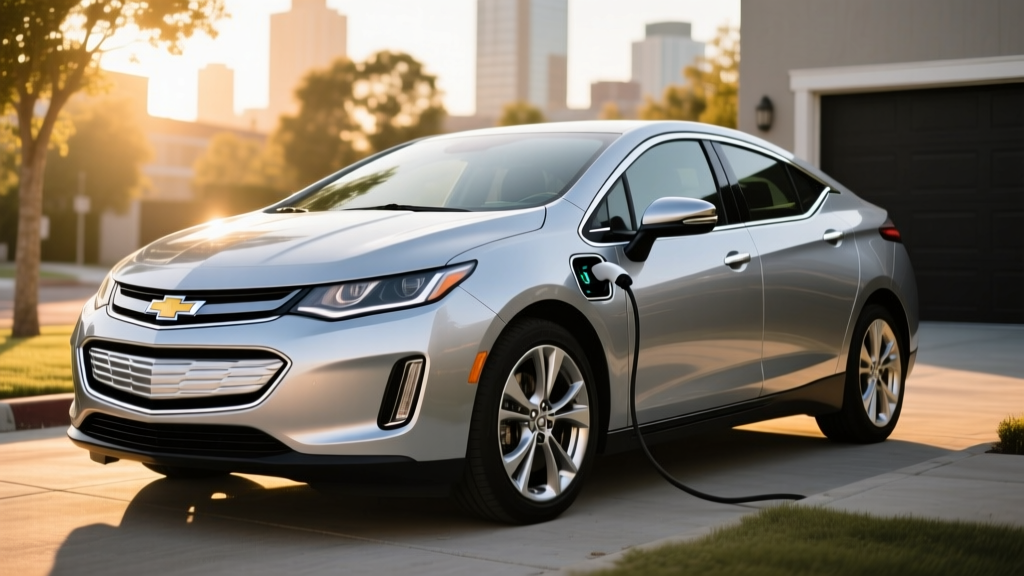
The Chevrolet Volt was discontinued after the 2019 model year, but it remains one of the most compelling used plug-in hybrid electric vehicles (PHEVs) on the market. Unlike a conventional hybrid that only uses regenerative braking and engine power to charge its battery, the Volt is a true PHEV: you plug it in, drive up to 53 miles on electricity alone, and then the gasoline engine kicks in seamlessly for another 367 miles of range. For buyers who want electric commuting without range anxiety — and who aren't ready to commit to a full battery electric vehicle (BEV) — a used Volt is a data-backed bargain.
This guide covers the second-generation Volt (2016–2019), which is the version most used-car shoppers should target. We'll break down exact EPA figures, real-world efficiency, battery longevity, replacement costs, and whether this PHEV still fits your daily driving in 2026.
Chevrolet Volt Specs at a Glance
| Specification | 2016–2019 Chevrolet Volt (Gen 2) |
|---|---|
| Vehicle Type | Plug-in Hybrid Electric Vehicle (PHEV) |
| Electric-Only Range (EPA) | 53 miles |
| Total Combined Range | ~420 miles (electric + gas) |
| Gas-Only MPG (EPA Combined) | 42 MPG |
| MPGe (Electric Mode) | 106 MPGe |
| Battery Capacity | 18.4 kWh total / ~14.0 kWh usable (NMC lithium-ion) |
| Combined System Power | 149 hp / 294 lb-ft torque |
| Gas Engine | 1.5L 4-cylinder range extender (101 hp) |
| Electric Motors | Two motor/generators (primary: 117 hp) |
| 0–60 mph | ~8.4 seconds (electric mode) |
| Level 1 Charging (120V) | ~13 hours (full charge) |
| Level 2 Charging (240V, 3.6 kW) | ~4.5 hours (full charge) |
| DC Fast Charging | Not supported |
| Fuel Tank | 8.9 gallons (regular unleaded) |
| Cargo Volume | 10.6 cu ft |
| Battery Warranty (Original) | 8 years / 100,000 miles (60% capacity retention) |
| Original MSRP (2019 LT) | $34,395 (before incentives) |
| Used Price Range (2026) | $12,000–$20,000 depending on year, mileage, and battery health |
Fuel Economy: EPA Ratings vs Real-World MPG
The Volt's dual-mode efficiency is where it shines — but the numbers depend heavily on how you drive and whether you charge regularly.
| Mode | City | Highway | Combined |
|---|---|---|---|
| Electric (MPGe) | 113 MPGe | 99 MPGe | 106 MPGe |
| Gas Only (MPG) | 43 MPG | 42 MPG | 42 MPG |
Source: EPA fueleconomy.gov
Real-World MPG: What Owners Actually Report
The EPA numbers above assume you deplete the battery first, then switch to gas. In practice, Volt owners who charge nightly and commute under 50 miles often use zero gasoline for weeks. On forums like Volt Forum and Fuelly tracking data, many owners report lifetime averages of 80–200+ MPG because the gas engine rarely runs.
However, if you never plug in and drive it like a conventional hybrid, expect roughly 38–44 MPG combined — right in line with the EPA's 42 MPG gas-only rating. Highway driving at 75+ mph will drop this to 36–38 MPG. In cold weather (below 30°F), the gas engine may activate sooner to provide cabin heat, reducing your electric-only range to 35–40 miles instead of the rated 53.
Battery Health, Degradation, and Replacement Cost
This is the single most important consideration when buying a used Volt. The Gen 2 Volt uses an 18.4 kWh total capacity LG Chem NMC (nickel-manganese-cobalt) lithium-ion pack, but the vehicle's software only allows access to approximately 14.0 kWh — the rest is a protective buffer at the top and bottom of the state-of-charge window. This generous buffer is a key reason Volt batteries have shown excellent longevity.
Degradation Data
Based on owner-reported data across Volt forums and fleet tracking, a typical Gen 2 Volt battery at 100,000 miles retains roughly 80–90% of its original usable capacity. That translates to approximately 42–48 miles of electric range at 100K miles, down from the original 53. This is notably better than many early BEVs because the Volt's large buffer prevents the cells from experiencing extreme states of charge.
When shopping for a used Volt, ask the seller to display the battery's "Range Remaining" at a full charge. If it reads below 40 miles on a full charge, the pack has experienced above-average degradation and should factor into your price negotiation.
Battery Replacement Cost
If the battery does fail outside warranty, a replacement pack from a Chevrolet dealer typically runs $3,500–$6,000 for the battery module assembly, plus $500–$1,200 in labor. Independent EV repair shops may offer refurbished packs for $2,500–$4,000. However, catastrophic battery failures on the Gen 2 Volt are rare — most high-mileage Volts still run on their original packs with only moderate range loss.
Charging the Volt: Level 1 and Level 2 Only
The Volt uses a standard J1772 connector for AC charging. It does not support DC fast charging (no CCS or CHAdeMO capability). This is a deliberate design choice — with an 18.4 kWh battery, the use case is overnight home charging, not highway fast-charging stops.
| Charging Level | Power (kW) | Full Charge Time | Miles of Range per Hour |
|---|---|---|---|
| Level 1 (120V, 12A) | ~1.4 kW | ~13 hours | ~4 miles/hr |
| Level 2 (240V, 16A) | 3.6 kW | ~4.5 hours | ~12 miles/hr |
| DC Fast Charge | N/A | N/A | Not supported |
A critical note on the Volt's onboard charger: the Gen 2 Volt comes standard with a 3.6 kW onboard charger. An optional 7.2 kW onboard charger was available on 2019 models (Premier trim and as an option on LT), cutting Level 2 charge time to roughly 2.3 hours. If fast home charging matters to you, verify whether a used 2019 Volt has the upgraded charger — it's indicated on the window sticker or can be confirmed via the vehicle's charge settings screen.
For most owners, Level 1 charging from a standard 120V outlet is sufficient: plug in when you get home, and 13 hours later (overnight) the battery is full. If your daily commute is under 40 miles, Level 1 alone may be all you need — no Level 2 installation required.
Tax Credits and Incentives for the Used Volt
When new, the Chevrolet Volt qualified for the full $7,500 federal tax credit under the pre-2023 rules. That original credit is no longer available for new purchases since the Volt was discontinued. However, used Volt buyers may qualify for the Used Clean Vehicle Credit under IRS §25E.
Used EV Tax Credit (§25E) — Key Rules for 2026
- Credit Amount: 30% of the sale price, up to a maximum of $4,000
- Vehicle Price Cap: The sale price must be $25,000 or less (most used Volts qualify)
- Vehicle Age: Must be at least 2 model years old (all Volts qualify, as the newest is a 2019)
- Buyer Income Limits: Adjusted gross income must not exceed $75,000 (single), $112,500 (head of household), or $150,000 (joint filers)
- Dealer Requirement: Must be purchased from a licensed dealer (private-party sales do not qualify)
- One-Time Use: You can only claim this credit once every 3 years
- Point-of-Sale Transfer: The credit can be transferred to the dealer at purchase, reducing your out-of-pocket cost immediately
Source: IRS.gov — Used Clean Vehicle Credit. Eligibility rules are subject to change; consult a tax professional before relying on credit availability.
At a typical used Volt price of $15,000–$18,000, the 30% credit would max out at $4,000, bringing your effective cost down to $11,000–$14,000 — exceptional value for a vehicle with this much electric range and technology.
Who Should Buy the Volt — and Who Shouldn't
Pros
- 53 miles electric covers most daily commutes gas-free
- 42 MPG gas-only when battery is depleted — no range anxiety
- Total 420-mile range eliminates charging dependency on road trips
- Can charge on a standard 120V outlet — no Level 2 install needed
- Strong reliability record; battery degradation is moderate
- Used prices ($12K–$20K) make it one of the most affordable PHEVs
- Potential $4,000 used-EV tax credit further reduces cost
- Smooth, quiet electric driving with instant torque (294 lb-ft)
Cons
- Discontinued — no new models, limited dealer support long-term
- No DC fast charging — not ideal for frequent long road trips
- 10.6 cu ft cargo space is tight (battery T-shape intrudes into rear)
- Seating for 4 only (no 5th seat due to center battery tunnel)
- Infotainment and ADAS tech is dated vs. 2026 vehicles
- Factory warranty expiring or expired on most examples
- Electric range drops significantly in cold weather (30–40 mi)
- 3.6 kW onboard charger is slow for public Level 2 stations
Volt vs Full EV vs Conventional Hybrid: Which Is Right for You?
| Factor | Used Volt (PHEV) | Full EV (e.g., Bolt EV) | Conventional Hybrid (HEV) |
|---|---|---|---|
| Plug In Required? | Yes (for max benefit) | Yes (mandatory) | No |
| Electric Range | 53 mi | 200–350 mi | 0–2 mi (assist only) |
| Gas Backup? | Yes — 42 MPG | No | Yes — primary |
| Road Trip Friendly? | Excellent (gas stations) | Requires DC charging planning | Excellent |
| Home Charging Needed? | 120V outlet sufficient | 240V Level 2 strongly recommended | None |
| Used Price (2026) | $12K–$20K | $14K–$28K | $15K–$30K |
| Maintenance | Low (engine runs less) | Very low (no engine) | Moderate (standard ICE) |
Decision Framework
Choose the used Volt if: Your daily commute is under 50 miles, you can charge at home (even just a 120V outlet), you take occasional road trips and don't want to plan around charging stations, and you want to spend under $20K on a reliable, efficient vehicle.
Choose a full EV if: You have reliable home Level 2 charging, your daily driving is under 250 miles, you rarely take road trips over 300 miles (or are comfortable with DC fast-charging stops), and you want zero gasoline expenses and minimal maintenance.
Choose a conventional hybrid (HEV) if: You cannot charge at home (apartment, street parking), you want a new vehicle with a full warranty, or you simply want better MPG without changing any habits. A Prius or Prius Prime (PHEV) may be better if you want current-year tech and warranty coverage.
Reliability and What to Watch For
The Gen 2 Volt has a strong reliability reputation. The Voltec powertrain — which uses the gas engine as a range extender and sometimes as a mechanical drive assist at highway speeds — has proven durable well past 150,000 miles in fleet and owner reports. Common issues to check on a used Volt include:
- Charge port door latch: Some owners report the motorized charge port door failing to open or close. Repair is ~$200–$400.
- Coolant loss: The Volt has multiple coolant loops (battery, power electronics, engine). Check for low coolant levels and signs of leaks, particularly at the battery coolant reservoir.
- 12V auxiliary battery: Like all EVs and PHEVs, the Volt has a 12V battery that powers accessories. These typically last 3–5 years and cost ~$200 to replace. A dead 12V battery will prevent the car from starting even if the main traction battery is full.
- Brake actuator: Some 2016–2017 models had reports of brake booster issues. Check for any open recalls via NHTSA.gov using the VIN.
Overall, the Volt's powertrain simplicity — the engine runs far less than in a conventional car, reducing wear — means lower long-term maintenance costs than a typical gasoline vehicle, though higher complexity than a pure BEV.
Frequently Asked Questions
How many MPG does the Chevrolet Volt hybrid get?
The Volt is rated at 42 MPG combined when running on gasoline after the battery is depleted. In electric mode, it achieves 106 MPGe combined. Real-world gas-only MPG ranges from 36–44 depending on speed, terrain, and temperature. Owners who charge regularly often see effective lifetime averages well over 100 MPG because the gas engine runs infrequently.
How far can the Volt go on electric only?
The EPA rates the Gen 2 Volt at 53 miles of electric-only range. In warm weather at moderate speeds, expect 45–53 miles. At highway speeds (70+ mph), expect 35–42 miles. In cold weather with cabin heating, plan for 30–40 miles. Once the battery is depleted, the gas engine provides an additional ~350–380 miles of range.
Does the Chevrolet Volt qualify for any tax credit in 2026?
The Volt no longer qualifies for the new-vehicle §30D credit since it's discontinued. However, used Volt buyers may qualify for the §25E Used Clean Vehicle Credit: up to $4,000 (30% of sale price) if you buy from a dealer, the sale price is under $25,000, and your income is within limits ($75K single / $150K joint). Always verify current rules on IRS.gov and consult a tax professional.
Is the Volt battery reliable and what does replacement cost?
The Volt's 18.4 kWh NMC battery has shown excellent longevity, with most packs retaining 80–90% capacity at 100,000 miles thanks to the large charge buffer. Factory warranty was 8 years / 100,000 miles (60% capacity threshold). A replacement battery pack costs approximately $3,500–$6,000 from a dealer, or $2,500–$4,000 from an independent EV shop. Catastrophic failures are rare.
Can I charge the Volt at a DC fast charger?
No. The Chevrolet Volt does not support DC fast charging. It is limited to AC charging via a J1772 connector: Level 1 (120V, ~1.4 kW) or Level 2 (240V, 3.6 kW standard / 7.2 kW optional on 2019 models). This is typical for PHEVs with smaller batteries — the use case is overnight home charging, not highway fast-charging.
Is the Volt a conventional hybrid or a plug-in hybrid?
The Volt is exclusively a plug-in hybrid (PHEV). It must be plugged in to achieve its 53-mile electric-only range. Unlike a conventional hybrid (HEV) such as the Toyota Prius, the Volt has a large battery you charge from the grid. You can drive it without plugging in — it will function like a 42 MPG hybrid — but you'll miss the entire electric-driving benefit.
Should I buy a Volt or just get a full EV?
If you can charge at home and your daily driving is under 50 miles, a full EV will eliminate gasoline entirely and has even lower maintenance. But if you take regular road trips, lack reliable charging on your routes, or want the safety net of a gas engine for under $20K, the Volt's PHEV flexibility is hard to beat at its current used pricing. The Volt is the bridge vehicle — electric for daily driving, gas for everything else.