The Chevrolet Trax Hybrid Question: What's Actually Available?
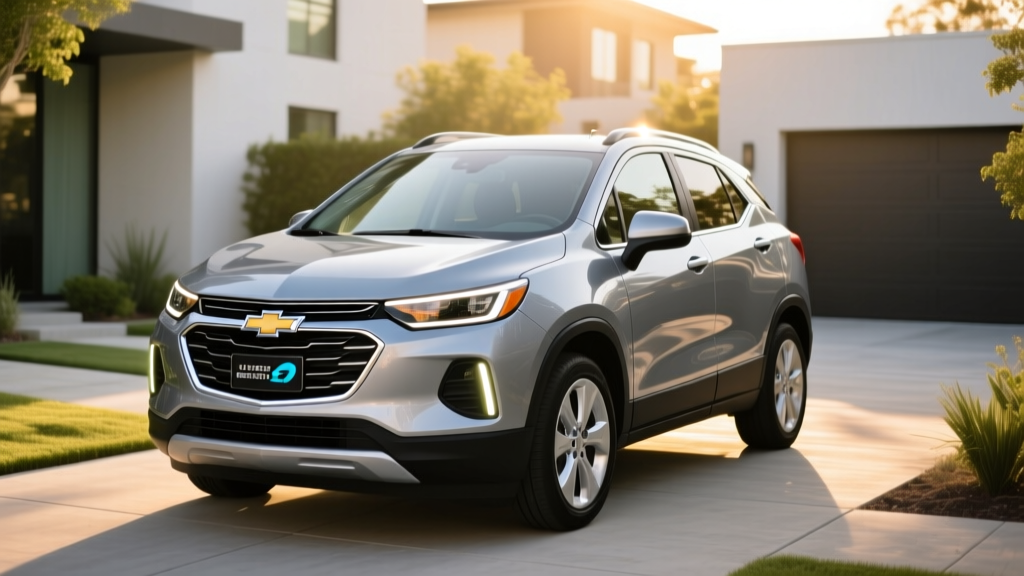
If you've been searching for a Chevrolet Trax hybrid, you're not alone — the query reflects a genuine gap in Chevrolet's current subcompact SUV lineup. As of early 2026, the Chevrolet Trax is sold exclusively with a turbocharged 1.2-liter three-cylinder gasoline engine. There is no factory hybrid (HEV) or plug-in hybrid (PHEV) variant of the Trax currently in production or officially announced by General Motors.
That said, the compact and subcompact hybrid SUV segment is expanding rapidly, and GM has been investing heavily in electrification across its portfolio. This guide addresses what buyers are actually looking for when they search for a Chevrolet Trax hybrid, what the current Trax delivers, which GM alternatives offer electrified powertrains, and how to evaluate whether a conventional hybrid (HEV), plug-in hybrid (PHEV), or full battery electric vehicle (BEV) is the right move for your next purchase.
Understanding the Hybrid Landscape: HEV vs. PHEV vs. BEV
Before evaluating any specific model, it's critical to understand the three flavors of electrified vehicles — because they serve very different use cases and budgets.
HEV vs. PHEV vs. BEV at a Glance
| Feature | Conventional Hybrid (HEV) | Plug-In Hybrid (PHEV) | Battery Electric (BEV) |
|---|---|---|---|
| Needs to plug in? | No — charges via regenerative braking and engine | Yes, for electric-only range; also runs on gas | Yes — 100% electric, no gas engine |
| Electric-only range | None (electric motor assists only) | Typically 20–45 miles | 200–400+ miles |
| Fuel economy | 40–55 MPG combined typical | Gas engine MPG + electric-only miles | 100–130 MPGe |
| Federal tax credit (§30D) | No | Up to $7,500 (with sourcing/income/MSRP rules) | Up to $7,500 (with sourcing/income/MSRP rules) |
| Home charging needed? | No | Strongly recommended to capture EV range | Essential |
A conventional hybrid (HEV) never plugs in. It uses a small battery (typically 1–2 kWh) and an electric motor to assist the gas engine, capturing energy during braking. You simply fill it with gas and drive — but you get significantly better fuel economy, especially in stop-and-go city traffic where the electric motor does more of the work.
A plug-in hybrid (PHEV) has a larger battery (typically 12–20 kWh) that you charge from an outlet. This gives you 20–45 miles of pure electric driving for daily commutes, with the gas engine as a backup for longer trips. If you don't plug it in, it operates like a conventional hybrid — but you're carrying extra battery weight and missing the point of the PHEV premium.
Current 2026 Chevrolet Trax: Gas-Only Specs
To understand what a hypothetical Trax hybrid would improve upon, here's what the current gasoline-only 2026 Trax delivers:
2026 Chevrolet Trax — Current Gas Powertrain
| Engine | 1.2L turbocharged 3-cylinder |
| Horsepower | 137 hp @ 5,000 rpm |
| Torque | 162 lb-ft @ 2,500 rpm |
| Transmission | 6-speed automatic |
| EPA MPG (city/hwy/combined) | 28 / 32 / 30 MPG |
| Fuel tank | 13.2 gallons |
| Total range | ~396 miles |
| Drivetrain | Front-wheel drive only |
| Base MSRP (1LS) | ~$22,200 |
| Powertrain warranty | 5 years / 60,000 miles |
Source: fueleconomy.gov and Chevrolet specifications. Verify current pricing with your dealer.
At 30 MPG combined, the gas Trax is adequate for a subcompact crossover but falls well short of what hybrid competitors deliver. The Toyota Corolla Cross Hybrid, for example, achieves an EPA-estimated 42 MPG combined — a 40% improvement that translates directly into fewer fuel stops and lower annual fuel costs.
What a Chevrolet Trax Hybrid Could Look Like
While Chevrolet has not announced a Trax hybrid, GM does have hybrid technology in its portfolio. If a Trax HEV or PHEV were to arrive, here's what realistic projections based on GM's existing hybrid systems and segment competitors would suggest:
Projected Trax HEV (Conventional Hybrid)
A conventional hybrid Trax would likely pair the 1.2L turbo with a mild-hybrid system or adopt a dedicated hybrid powertrain similar to what GM has used in other models. Based on segment benchmarks:
- Projected EPA MPG: 38–45 combined (city-heavy driving could push higher)
- Combined output: ~140–160 hp with electric motor assist
- Battery: ~1.0–1.5 kWh lithium-ion (not plug-in; charged via regen braking)
- Price premium over gas model: Typically $1,500–$2,500
- Federal tax credit: None — HEVs do not qualify under IRS §30D
Projected Trax PHEV (Plug-In Hybrid)
A PHEV variant would be a bigger engineering commitment, requiring a larger battery and plug-in capability:
- Projected electric-only range: 25–35 miles (EPA estimate)
- Battery size: ~14–18 kWh usable
- Level 2 charging time (240V): ~2.5–4 hours for a full charge
- DC fast charging: Unlikely in a subcompact PHEV — most in this class are Level 2 only
- Combined gas+electric range: ~400–450 miles total
- Combined output: ~160–190 hp
- Price premium: Typically $5,000–$8,000 over gas model
- Federal tax credit: Potentially up to $7,500 under §30D, subject to battery sourcing, MSRP caps, and buyer income limits
GM Alternatives: Where You Can Get Electrified Today
If you're committed to the Chevrolet brand and want an electrified vehicle, here are the closest current options in GM's 2026 lineup:
Chevrolet Equinox EV (BEV)
The Equinox EV is a fully electric compact SUV — one segment larger than the Trax — with an EPA-estimated range of up to 319 miles (3LT with FWD). Starting MSRP is approximately $33,000 before incentives, and it may qualify for the full $7,500 federal tax credit depending on your income, the vehicle's battery sourcing compliance, and the MSRP cap. Visit IRS.gov §30D guidelines to verify eligibility.
Chevrolet Equinox (Gas — No Hybrid Available)
Like the Trax, the gas Equinox currently lacks a hybrid variant. GM has focused its electrification strategy on full BEVs rather than HEVs for its crossover lineup.
Competitor Hybrids Worth Considering
If a subcompact hybrid SUV is what you need, the strongest options in 2026 include:
| Model | City MPG | Highway MPG | Combined MPG | Base MSRP |
|---|---|---|---|---|
| Toyota Corolla Cross Hybrid | 45 | 38 | 42 | ~$29,500 |
| Kia Niro Hybrid | 53 | 45 | 49 | ~$28,400 |
| Honda HR-V (gas, for comparison) | 26 | 32 | 28 | ~$25,400 |
| Chevrolet Trax (gas, current) | 28 | 32 | 30 | ~$22,200 |
Source: fueleconomy.gov EPA estimates. Actual mileage will vary. MSRP approximate — verify with dealer.
Hybrid Battery Reliability and Warranty: What to Expect
One of the top concerns for hybrid buyers is battery longevity. This is an area where the data is reassuring.
Hybrid Battery Facts
- Federal mandate: Hybrid and PHEV battery packs must carry a minimum warranty of 8 years / 100,000 miles (10 years / 150,000 miles in CARB states including California, New York, Massachusetts, and others).
- Real-world lifespan: Modern hybrid batteries (both NiMH and lithium-ion) routinely last 150,000–200,000+ miles before significant degradation. Toyota's hybrid systems, in particular, have proven to last the life of the vehicle in most cases.
- Replacement cost: If a hybrid battery does fail out of warranty, replacement typically costs $2,000–$4,000 for a conventional HEV battery, and $4,000–$8,000+ for a PHEV battery, depending on the model and whether you choose OEM or refurbished.
- Degradation pattern: Hybrid batteries don't typically "die" suddenly — they gradually lose capacity, which manifests as slightly reduced fuel economy over many years.
For context, a conventional hybrid battery is much smaller and less expensive to replace than a full EV traction battery. The 1–2 kWh pack in an HEV is a fraction of the cost of a 60–100 kWh BEV battery. And because HEVs never deeply discharge or charge the battery (the system keeps it in a narrow state-of-charge window), stress on the cells is minimal.
Hybrid vs. PHEV vs. EV: Which Should You Choose?
Your ideal powertrain depends on three practical factors: your daily driving pattern, your access to charging, and your budget.
Decision Framework
Choose a conventional hybrid (HEV) if:
- You don't have access to home or workplace charging
- You want better fuel economy with zero behavior change — just fill up with gas
- You drive 10,000–15,000 miles/year and want to save $400–$800/year on fuel
- Your budget is tight and you can't absorb a PHEV or EV price premium
Choose a plug-in hybrid (PHEV) if:
- You have reliable Level 2 charging at home or work
- Your daily commute is under 30 miles round-trip (so you can drive mostly on electricity)
- You take occasional road trips and don't want range anxiety on the highway
- You want to reduce fuel consumption by 60–80% without going fully electric
Choose a full EV (BEV) if:
- You have reliable home Level 2 charging
- Your daily driving is well within the vehicle's EPA range
- You want the lowest per-mile fuel cost (electricity at $0.12/kWh ≈ $3.50–$4.50 per "gallon equivalent")
- You want to eliminate oil changes and reduce maintenance costs
- The available federal and state incentives bring the effective price into your budget
Tax Credits and Incentives: What Applies to Hybrids?
This is a common area of confusion, so let's be precise about current 2026 rules under IRS §30D:
- Conventional hybrids (HEVs): Do NOT qualify for the federal §30D clean vehicle credit. There is no federal tax credit for non-plug-in hybrids.
- Plug-in hybrids (PHEVs): May qualify for up to $7,500, but eligibility depends on multiple criteria including buyer income caps (adjusted gross income limits apply), vehicle MSRP caps ($80,000 for SUVs, $55,000 for sedans), and critical mineral and battery component sourcing requirements that have tightened significantly since 2023. Many previously eligible PHEVs have lost partial or full credit eligibility as sourcing rules phase in.
- Point-of-sale transfer: As of 2024, qualifying buyers can transfer the credit to the dealer at purchase, reducing the sale price directly rather than waiting for a tax refund. This applies to eligible PHEVs and BEVs.
- State incentives: Vary widely by jurisdiction. Some states (California, Colorado, New York, among others) offer additional rebates for PHEVs and BEVs. Check your state's energy office or DMV for current programs.
Always verify current eligibility at IRS.gov and consult a tax professional for your specific situation.
Real-World MPG: What Hybrids Actually Deliver
One of the pleasant surprises of hybrid ownership is that real-world fuel economy often exceeds the EPA combined estimate in city driving. Here's why:
The EPA test cycle includes both city and highway segments. Hybrids shine in city traffic because regenerative braking recaptures energy at every stop, and the electric motor handles low-speed driving where gas engines are least efficient. On the highway, where steady-state driving favors efficient gas engines, hybrids lose their advantage — and sometimes fall slightly below their EPA highway estimate due to the extra weight of the hybrid system.
For a subcompact hybrid SUV in the Trax's class, expect:
- City driving: 5–10% above EPA city estimate (more stops = more regen)
- Highway driving: 0–5% below EPA highway estimate
- Cold weather (below 30°F): 10–15% reduction in MPG due to engine running more for cabin heat and reduced battery efficiency
- Combined real-world: Generally within ±3 MPG of the EPA combined figure for mixed driving
Pros: Why Buyers Want a Trax Hybrid
- Significantly lower fuel costs vs. gas-only Trax
- Reduced emissions without charging infrastructure
- No range anxiety — gas stations everywhere
- Proven hybrid reliability across the industry
- Strong resale value (hybrids hold value well)
Cons: Why It Doesn't Exist (Yet)
- GM has prioritized full BEVs over hybrids
- Higher upfront cost vs. gas-only Trax
- No federal tax credit for conventional HEVs
- Trax's low base price makes hybrid premium harder to justify
- Strong hybrid competitors already dominate the segment
Frequently Asked Questions
How many MPG does the Chevrolet Trax hybrid get?
As of 2026, there is no Chevrolet Trax hybrid. The gas-only Trax achieves an EPA-estimated 28 city / 32 highway / 30 combined MPG. A hypothetical Trax HEV, based on segment competitors, would likely deliver 38–45 MPG combined.
For a PHEV version, how far could it go on electric only?
No Trax PHEV exists. However, comparable subcompact PHEVs in the market typically offer 25–35 miles of electric-only range on a full charge, which covers most daily commutes without using gasoline.
Hybrid vs. PHEV vs. EV — which fits my lifestyle?
If you lack home charging, a conventional HEV is the simplest upgrade. If you have Level 2 charging and a short commute, a PHEV lets you drive mostly electric while keeping gas for road trips. If you have reliable charging and want the lowest operating cost, a full BEV like the Chevrolet Equinox EV may be the better long-term choice.
Are hybrid batteries reliable, and what does replacement cost?
Hybrid batteries are among the most reliable components in modern vehicles. Federal law mandates an 8-year/100,000-mile hybrid battery warranty. Real-world data shows most hybrid batteries last 150,000–200,000+ miles. Out-of-warranty replacement for a conventional HEV battery typically costs $2,000–$4,000.
Does a hybrid qualify for any tax credit?
Conventional hybrids (HEVs) do not qualify for the federal §30D tax credit. Only plug-in vehicles (PHEVs and BEVs) are eligible, and even then, eligibility depends on buyer income, vehicle MSRP, and battery sourcing requirements. Check IRS.gov for current rules.
Will Chevrolet ever make a Trax hybrid?
GM has not announced a Trax hybrid as of 2026. The company's electrification strategy has focused on full battery-electric vehicles (BEVs) using its Ultium platform. However, as hybrid demand remains strong and some markets slow EV adoption, GM could revisit hybrid powertrains for high-volume models. Monitor Chevrolet's official announcements for updates.