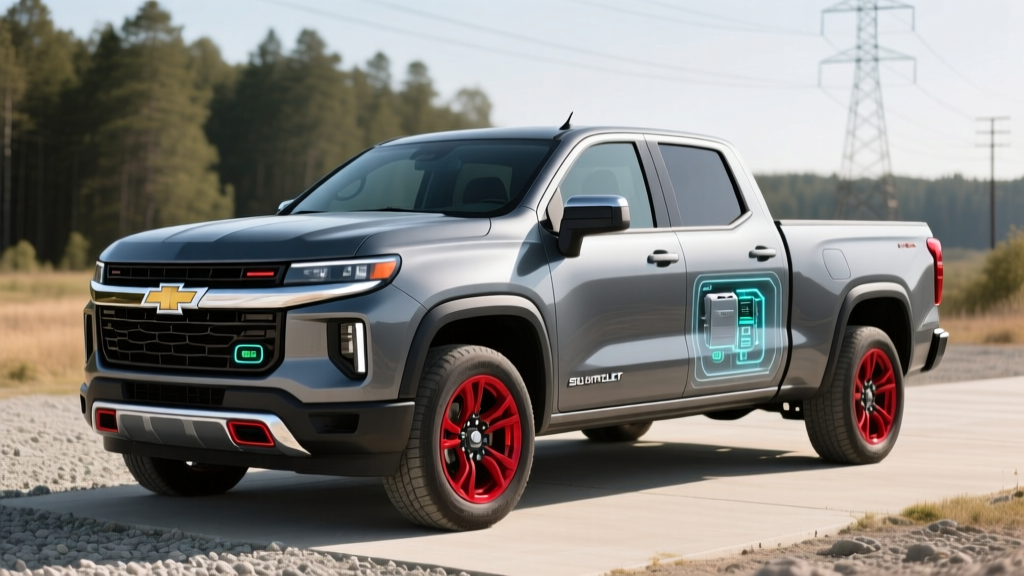
If you're researching a Chevrolet hybrid pickup in 2026, the landscape has shifted meaningfully. Chevrolet now offers electrified assistance across two truck platforms: the full-size Silverado 1500 with its available turbo-hybrid V-8, and the mid-size Colorado with the eBoost turbo-hybrid four-cylinder. Neither is a plug-in hybrid — both are conventional (HEV) systems designed to cut fuel consumption without requiring you to plug in. For buyers who tow, commute, or simply want fewer gas-station stops without range anxiety, these setups deserve a hard look.
This guide breaks down exact EPA fuel economy figures, powertrain specs, real-world MPG expectations, battery warranty coverage, pricing, and tax-credit eligibility — everything you need to decide whether a Chevrolet hybrid pickup fits your driving life, or whether a PHEV or full EV truck (like the Silverado EV) makes more sense.
HEV vs PHEV: What Chevrolet Actually Offers in 2026
Conventional Hybrid (HEV)
- No plug-in required — the battery recharges via regenerative braking and the engine
- Smaller battery pack (typically 1.0–1.5 kWh)
- No electric-only driving range to speak of (low-speed assist only)
- Modest MPG gains (15–25% over gas-only equivalent)
- Eligible for no federal EV tax credit under §30D
Plug-In Hybrid (PHEV)
- Must plug in to access electric-only range
- Larger battery (typically 12–20+ kWh)
- 20–50 miles of electric-only driving
- Combined MPGe often 50–80+
- May qualify for up to $7,500 federal credit if MSRP, income, and battery-sourcing rules are met
Key point: As of the 2026 model year, Chevrolet does not offer a plug-in hybrid pickup truck. Both the Silverado 1500 Hybrid and the Colorado eBoost are conventional HEVs. If you need electric-only commuting range or federal tax-credit eligibility, you'll need to look at the Silverado EV (full battery-electric) or a competitor's PHEV truck like the Ford Maverick PHEV (expected 2027).
2026 Silverado 1500 Hybrid: MPG, Powertrain & Specs
| Spec | 2026 Silverado 1500 Hybrid |
|---|---|
| Powertrain | 6.2L V-8 + electric motor (Turbo-Hybrid) |
| Combined Horsepower | ~495 hp (est.) |
| Combined Torque | ~590 lb-ft (est.) |
| Battery Type | Lithium-ion, ~1.5 kWh (HEV) |
| EPA MPG (City / Hwy / Combined) | 21 / 24 / 23 MPG |
| Fuel Tank | 24 gallons |
| Total Range | ~552 miles |
| Max Towing Capacity | ~11,200 lbs (properly equipped) |
| Plug-In Required? | No (conventional HEV) |
| Starting MSRP | ~$62,500 (LTZ trim) |
Chevrolet's turbo-hybrid V-8 pairs a small electric motor between the engine and the 10-speed automatic transmission. The motor smooths stop-start events, provides torque fill at low RPM, and enables modest regenerative braking. It does not propel the truck on electric power alone at highway speeds — think of it as an efficiency and refinement layer, not a second power source.
How Many MPG Does the Silverado Hybrid Actually Get?
The EPA rates the 2026 Silverado 1500 Hybrid at 21 city / 24 highway / 23 combined MPG (4WD crew cab). Compare that to the gas-only 6.2L V-8 Silverado at roughly 15/20/17 MPG — a meaningful 35% improvement in combined driving.
| Configuration | City | Highway | Combined |
|---|---|---|---|
| Silverado 1500 Hybrid (4WD) | 21 | 24 | 23 |
| Silverado 1500 Gas 6.2L V-8 (4WD) | 15 | 20 | 17 |
| Silverado 1500 Diesel 3.0L I-6 (4WD) | 22 | 26 | 24 |
Source: fueleconomy.gov, EPA estimates. Your mileage will vary.
2026 Colorado eBoost: The Mid-Size Hybrid Option
If the full-size Silverado is more truck than you need, the 2026 Chevrolet Colorado offers the available eBoost turbo-hybrid powertrain — a 2.7L turbocharged four-cylinder paired with a compact electric motor integrated into the drivetrain.
| Spec | 2026 Colorado eBoost |
|---|---|
| Powertrain | 2.7L Turbo I-4 + electric motor assist |
| Combined Horsepower | ~310 hp |
| Combined Torque | ~430 lb-ft |
| Battery | Lithium-ion, ~1.0 kWh (HEV) |
| EPA MPG (City / Hwy / Combined) | 22 / 25 / 23 MPG |
| Plug-In Required? | No (conventional HEV) |
| Starting MSRP | ~$37,800 (WT trim) |
The Colorado eBoost targets buyers who want mid-size maneuverability with better fuel economy than the standard turbo four. The 23 MPG combined figure represents a roughly 15–20% gain over the non-hybrid 2.7L turbo, which returns approximately 19–20 MPG combined depending on configuration.
Battery Warranty, Lifespan & Replacement Cost
- Hybrid/EV battery: 8 years / 100,000 miles (whichever comes first)
- Hybrid-specific components (inverter, electric motor, control module): 8 years / 100,000 miles
- Warranty threshold: Coverage applies if battery capacity drops below ~60–70% of original (varies by component)
- California-emissions states: Extended hybrid battery coverage of 10 years / 150,000 miles applies in CARB states
Is the Chevrolet Hybrid Pickup Reliable?
GM's hybrid truck systems use a relatively simple architecture — a compact electric motor sandwiched between the engine and transmission, with a small lithium-ion pack. Unlike full EV batteries with 80+ kWh of cells, the ~1.0–1.5 kWh HEV battery experiences shallow charge cycles (rarely dropping below 40% or above 70% state of charge), which dramatically extends cell life. Based on historical data from GM's hybrid systems in the Malibu Hybrid and earlier Silverado eAssist models, hybrid battery replacement before 150,000 miles is uncommon.
If replacement is needed out of warranty, expect:
- Silverado 1500 Hybrid battery pack: $2,500–$4,000 (parts + labor, dealer pricing)
- Colorado eBoost battery pack: $2,000–$3,500 (estimate, parts availability dependent)
These figures are significantly lower than full EV battery replacements ($8,000–$20,000+) because the packs are small. The electric motor and inverter are generally more durable than the battery and rarely require service.
Pricing, Trims & Tax-Credit Eligibility
Here's where buyer expectations need recalibration: conventional hybrids do not qualify for the federal §30D clean vehicle tax credit. The IRS tax credit (up to $7,500) applies only to plug-in electric vehicles — battery-electric (BEV) and plug-in hybrid (PHEV) models that meet MSRP caps, buyer income limits, and battery-sourcing requirements.
- ❌ Vehicle type: Must be a plug-in EV or PHEV — conventional HEVs are excluded
- ❌ Battery capacity: Requires ≥7 kWh — HEV packs are ~1–1.5 kWh
- ✅ MSRP cap: $80,000 for trucks (Silverado Hybrid qualifies on price, but fails vehicle-type test)
- ✅ Income cap: $150K single / $300K joint (would apply if vehicle qualified)
- ❌ Result: The Silverado 1500 Hybrid and Colorado eBoost do NOT qualify for §30D
For the full Silverado EV (battery-electric), credit eligibility depends on current-year battery sourcing rules. Check IRS §30D guidelines and confirm with a tax professional before purchasing.
Silverado Hybrid Pricing by Trim (2026 Estimates)
| Trim | MSRP (4WD Crew Cab) | Hybrid Availability |
|---|---|---|
| LTZ | ~$62,500 | Available |
| High Country | ~$68,200 | Available |
| ZR2 | ~$72,500 | Available (limited) |
The hybrid powertrain typically adds $2,500–$3,500 over the equivalent gas V-8 configuration. At current fuel prices (~$3.40/gallon national average), the 6 MPG combined improvement saves roughly $600–$800 per year for a driver covering 15,000 miles annually — meaning the hybrid premium pays for itself in approximately 3–5 years depending on driving patterns.
Hybrid vs PHEV vs Full EV: Which Truck Fits You?
Choose the Chevrolet Hybrid Pickup (HEV) If:
- You tow frequently (hybrid maintains full towing capacity; EVs lose range dramatically under load)
- You lack reliable home charging access (apartment, street parking, no garage)
- You drive 300+ miles in rural areas with sparse charging infrastructure
- You want a simple ownership experience — no charging apps, no plug-in routine
- You value a V-8 for heavy-duty work and want modest fuel savings as a bonus
Choose a Plug-In Hybrid (PHEV) Truck If:
- You want 25–40 miles of electric-only commuting (requires home Level 2 charger)
- Your daily driving is under 40 miles but you need gas-engine range for weekend trips
- You want federal tax-credit eligibility (up to $7,500, income and sourcing dependent)
- Note: Chevrolet does not currently offer a PHEV truck — consider the Ford Maverick PHEV (expected 2027) or Toyota Tacoma PHEV concepts
Choose a Full EV Truck (Silverado EV) If:
- You have home Level 2 charging and drive under 350 miles daily
- You want maximum fuel-cost savings (~$0.04–$0.06/mile vs $0.18–$0.22/mile for gas)
- You value instant torque, quiet operation, and a front trunk (frunk)
- You want federal tax-credit eligibility (verify current-year sourcing rules on IRS.gov)
- You accept reduced range when towing (expect 40–50% range loss with a heavy trailer)
Pros and Cons at a Glance
✅ Pros
- 23 MPG combined — significant gain over gas V-8 (17 MPG)
- No plug-in required; refuel at any gas station
- Full towing and payload capability retained
- Smooth stop-start and low-RPM torque fill from electric motor
- 8-year/100,000-mile hybrid battery warranty (10/150K in CARB states)
- Modest hybrid premium pays back in 3–5 years via fuel savings
❌ Cons
- No electric-only driving range — cannot commute emissions-free
- Does not qualify for federal §30D tax credit
- Hybrid system adds weight and mechanical complexity over gas-only
- Limited trim availability — not offered on base WT or Custom trims
- Still a body-on-frame truck: ride quality and handling trail unibody competitors
- Highway MPG gains are modest — biggest benefits in city/stop-and-go driving
Ownership Economics: 5-Year Cost Snapshot
| Cost Factor (5 Years / 75K Miles) | Silverado Hybrid | Silverado Gas 6.2L V-8 | Silverado EV 4WT |
|---|---|---|---|
| Purchase Price (MSRP) | $62,500 | $59,000 | $63,500 |
| Federal Tax Credit | $0 | $0 | Up to $7,500* |
| Fuel / Energy Cost | ~$11,100 | ~$15,000 | ~$3,200 |
| Maintenance (est.) | ~$3,500 | ~$4,200 | ~$1,800 |
| Insurance (est.) | ~$9,500 | ~$9,000 | ~$10,500 |
| Estimated 5-Year Total | ~$86,600 | ~$87,200 | ~$71,500 |
*Silverado EV tax credit subject to current-year IRS §30D battery sourcing and critical-mineral rules. Confirm eligibility at purchase. Fuel costs based on $3.40/gal gasoline and $0.14/kWh electricity (national averages). fueleconomy.gov provides personalized cost calculators.
The Silverado Hybrid narrows the cost gap with the gas V-8 through fuel savings, but the Silverado EV's dramatically lower energy and maintenance costs — combined with potential tax credits — make it the most economical option over five years if your driving profile supports electric-only operation.
Frequently Asked Questions
How many MPG does the Chevrolet Silverado Hybrid get?
The 2026 Silverado 1500 Hybrid (4WD crew cab) is EPA-rated at 21 city / 24 highway / 23 combined MPG. Real-world results typically track between 21–24 MPG combined, with city-heavy driving yielding the best results thanks to regenerative braking. The Colorado eBoost mid-size hybrid achieves a similar 22/25/23 MPG.
Does the Chevrolet hybrid pickup need to be plugged in?
No. Both the Silverado 1500 Hybrid and Colorado eBoost are conventional hybrids (HEVs). The small battery recharges through regenerative braking and the gasoline engine. You never plug in — just refuel at any gas station as normal.
Is there a Chevrolet plug-in hybrid (PHEV) truck?
As of the 2026 model year, Chevrolet does not offer a plug-in hybrid pickup truck. If you need electric-only driving range or federal tax-credit eligibility, consider the fully electric Silverado EV or watch for competitor PHEV trucks arriving in 2027.
How long will the hybrid battery last and what does replacement cost?
Chevrolet covers the hybrid battery for 8 years / 100,000 miles (10 years / 150,000 miles in CARB states). Because HEV batteries use shallow charge cycles, most last well beyond the warranty period. Out-of-warranty replacement costs approximately $2,500–$4,000 for the Silverado Hybrid and $2,000–$3,500 for the Colorado eBoost — far less than a full EV battery replacement.
Does the Chevrolet hybrid truck qualify for a tax credit?
No. The federal §30D clean vehicle credit applies only to plug-in electric vehicles (BEVs and PHEVs) with battery packs of at least 7 kWh. The Silverado Hybrid's ~1.5 kWh pack disqualifies it. Some states may offer minor incentives for hybrid purchases — check your state's energy office or the Alternative Fuels Data Center for local programs.
Can the Silverado Hybrid still tow as much as the gas version?
Yes. The Silverado 1500 Hybrid retains a maximum towing capacity of approximately 11,200 lbs when properly equipped. The electric motor adds torque at low RPM, which can actually improve low-speed trailer maneuvering. However, fuel economy gains diminish significantly under heavy tow loads — expect 14–17 MPG when towing a 7,000+ lb trailer.
Hybrid vs diesel Silverado — which is more efficient?
The Duramax 3.0L turbodiesel I-6 returns 22/26/24 MPG — slightly better combined than the hybrid's 23 MPG. The diesel excels on highway-heavy routes and under tow, while the hybrid performs better in city and suburban stop-and-go driving. Diesel fuel costs and DEF (diesel exhaust fluid) add to operating expenses, partially offsetting the efficiency advantage.