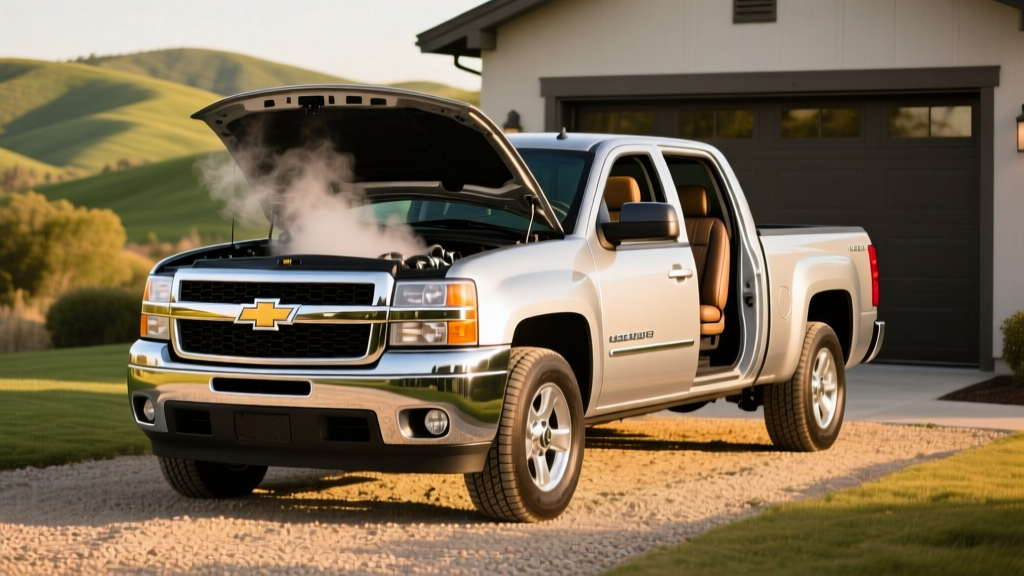
The 2010 Chevrolet Silverado Hybrid was one of the first full-size pickup trucks to pair a V8 engine with an electric hybrid system, promising better fuel economy without sacrificing towing capability. Over 15 years later, it remains a niche option on the used market for buyers who want truck utility with modest efficiency gains. This guide covers everything a prospective used buyer needs to know — real-world MPG, the two-mode hybrid powertrain, battery longevity, and whether this aging hybrid still makes sense in 2026.
HEV vs PHEV: What the 2010 Silverado Hybrid Actually Is
Before evaluating this truck, it is critical to understand what type of hybrid it is, because the terminology gets confused frequently in the used-truck market.
Conventional Hybrid (HEV)
This is what the 2010 Silverado Hybrid is.
- No plug — the battery charges via regenerative braking and the gas engine
- Small battery pack (~2.5 kWh, nickel-metal hydride)
- Electric motor assists the engine; cannot drive on electric power alone at highway speeds
- Zero electric-only range for practical purposes (brief low-speed EV mode only)
- No federal tax credit eligibility (new or used)
Plug-In Hybrid (PHEV)
The 2010 Silverado Hybrid is NOT this.
- Plugs into a wall outlet or charger to charge a larger battery
- Larger battery (typically 10-20+ kWh in modern PHEVs)
- Can drive 20-50 miles on electric power alone before the engine starts
- Examples: Ford F-150 PowerBoost (HEV), Toyota RAV4 Prime (PHEV)
- May qualify for federal or state incentives
The Silverado's Two-Mode Hybrid system, co-developed with GM, BMW, and the former DaimlerChrysler, uses two electric motors integrated into a specially designed automatic transmission. It can operate in electric-only mode at very low speeds (under ~25 mph in stop-and-go traffic), but this is measured in fractions of a mile, not meaningful electric-only range. The system's primary benefit is reducing fuel consumption during city driving by shutting off the V8 at stops and supplementing acceleration with electric torque.
Fuel Economy: EPA MPG and Real-World Numbers
| Metric | EPA Rating | Real-World Expectation |
|---|---|---|
| City MPG | 21 MPG | 19-22 MPG |
| Highway MPG | 22 MPG | 19-21 MPG |
| Combined MPG | 21 MPG | 19-21 MPG |
| Fuel Tank | 26 gallons | — |
| Total Range | ~546 miles | ~475-546 miles |
Real-world context: The EPA rates the 2010 Silverado Hybrid at 21 MPG across the board, which is unusual — most vehicles show a city/highway split. This flat rating reflects the two-mode system's design: it helps in both city stop-and-go (electric assist, engine shut-off) and highway cruising (cylinder deactivation via Active Fuel Management, which drops the 6.0L V8 to four cylinders under light load).
Compared to the gas-only 2010 Silverado 1500 with the 5.3L V8 (rated at roughly 15 city / 21 highway / 17 combined per fueleconomy.gov), the hybrid delivers a roughly 24% improvement in combined fuel economy. In city driving, the gap widens: 21 MPG hybrid vs. 15 MPG gas — a 40% city improvement.
Owner reports on forums and fuel-tracking sites like Fuelly suggest real-world averages cluster around 18-20 MPG for mixed driving, with some owners achieving 22+ MPG on highway-heavy commutes. Towing or hauling heavy loads will drop economy to 12-14 MPG, similar to the gas version under load.
Powertrain Specs: 6.0L V8 + Two Electric Motors
| Specification | Detail |
|---|---|
| Engine | 6.0L Vortec V8 (LFA), Atkinson-cycle variant |
| Engine HP | 332 hp @ 5,100 rpm |
| Engine Torque | 367 lb-ft @ 4,100 rpm |
| Electric Motors | Two AC permanent-magnet motors (integrated in transmission) |
| Combined System HP | 379 hp |
| Transmission | 2-mode CVT (electronically variable) |
| Drivetrain | Rear-wheel drive or 4WD (depending on configuration) |
| Hybrid Battery | ~2.5 kWh, Nickel-Metal Hydride (NiMH), under rear seat |
| 0-60 mph | ~7.8 seconds (est.) |
| Max Towing | 6,100 lbs (properly equipped) |
| Payload | ~1,400 lbs |
The 6.0L V8 in the hybrid runs an Atkinson-cycle variant (late intake valve closing), which sacrifices some low-end torque for greater thermal efficiency. The two electric motors compensate for this by providing instant torque fill during acceleration. The result is a truck that pulls confidently from a stop — the combined 379 hp actually exceeds the gas-only 5.3L V8's 315 hp.
The two-mode transmission is a sophisticated piece of engineering. Mode 1 handles low-speed driving (city, stop-and-go) and allows pure electric creep. Mode 2 engages at higher speeds and under load (towing, highway merging), where the electric motors assist the engine through a different gear ratio. This dual-mode approach is why the Silverado Hybrid maintains reasonable efficiency both in town and on the highway, unlike simpler hybrid systems that favor one or the other.
Battery Health, Warranty, and Replacement Cost
Battery chemistry and longevity: The Silverado Hybrid uses a nickel-metal hydride (NiMH) pack, not the lithium-ion chemistry found in modern EVs and PHEVs. NiMH batteries are generally robust and degrade more gradually than early lithium-ion packs. Many Toyota Prius and GM Two-Mode Hybrid owners report NiMH packs lasting 150,000-200,000 miles before significant capacity loss.
However, a 2010 model is now 16 years old. Even with low mileage, NiMH cells can develop voltage imbalances or individual cell failures over time, especially in hot climates. Signs of hybrid battery trouble include:
- Reduced fuel economy (the system stops using electric assist effectively)
- A "Check Hybrid System" or "Service Hybrid System" warning on the dash
- The engine running more frequently at stops (loss of auto-stop capability)
- Reduced regenerative braking feel
| Option | Estimated Cost | Notes |
|---|---|---|
| New OEM battery (GM) | $3,000 - $4,500 | May be discontinued for 2010 MY |
| Remanufactured battery | $1,500 - $2,800 | Common option; 1-3 year warranty typical |
| Individual cell replacement | $500 - $1,200 | Requires hybrid-savvy shop; not all shops offer |
| Junkyard/salvage pack | $300 - $800 | High risk — unknown remaining life |
Key buyer advice: Before purchasing, have the hybrid battery's state of health (SoH) checked with a scan tool that can read hybrid battery voltage delta across modules. A healthy pack should show less than 0.3V difference between the highest and lowest cell blocks under load. Budget $2,000-$3,000 for a potential battery replacement in your purchase calculus.
Tax Credits and Incentives: What Applies in 2026?
The 2010 Chevrolet Silverado Hybrid does not qualify for any federal tax credit under current IRS rules. Here is why:
- Federal §30D New EV Credit: Applies only to new plug-in electric vehicles (BEVs and PHEVs with ≥7 kWh battery). The Silverado Hybrid is a conventional HEV with a ~2.5 kWh NiMH pack and no plug. It never qualified, even when new.
- Federal Used EV Credit (§25E): Up to $4,000 for used plug-in vehicles meeting battery capacity and price thresholds. Again, HEVs are excluded — the vehicle must be a BEV or PHEV.
- Original hybrid tax credit: When the Silverado Hybrid was new, it did qualify for a modest federal hybrid tax credit (roughly $1,250-$2,200 depending on the tax year and GM's cumulative hybrid sales phase-out). That credit expired for GM vehicles after 2010 and is irrelevant to used purchases.
- State incentives: A handful of states offer rebates or HOV lane access for hybrids, but these programs almost universally require new purchases. Check your state's current rules, but expect no incentives for a 16-year-old used HEV.
For current federal credit rules, refer to the IRS clean vehicle credits page.
Reliability, Common Issues, and Ownership Costs
The 2010 Silverado Hybrid shares the GMT900 platform with the standard Silverado 1500, which is generally regarded as one of GM's more durable truck generations. The hybrid-specific components add complexity, but the system proved reasonably reliable in fleet and consumer use.
Common issues reported by owners and mechanics:
- Hybrid battery degradation (discussed above — the #1 concern)
- Hybrid inverter coolant pump failure — a known issue that can trigger hybrid system warnings; replacement runs $400-$800
- 36V auxiliary battery — the Silverado Hybrid uses a 36-volt auxiliary battery (separate from the 12V and the main hybrid pack) that can fail and cause starting issues; ~$200-$350 replacement
- Standard GMT900 issues — exhaust manifold bolts breaking, power window regulators failing, transmission cooler line leaks (on 4WD models)
- Active Fuel Management lifter failure — the cylinder-deactivation system can cause lifter collapse at higher mileages (120K+); a known GM V8 issue
Insurance and maintenance: Expect insurance costs comparable to a gas V8 Silverado of the same year. Maintenance costs are slightly higher due to hybrid-specific components, but the electric motors themselves are essentially maintenance-free. The transmission fluid should be changed on schedule (every 50,000-60,000 miles) as the two-mode transmission is expensive to replace ($4,000-$6,000).
Used Pricing in 2026: What to Expect
The 2010 Silverado Hybrid was originally priced around $39,000-$43,000 MSRP depending on configuration (it was offered only in crew cab, short bed, with either 2WD or 4WD). Depreciation has been steep, as is typical for 16-year-old trucks with hybrid complexity.
| Condition / Mileage | Estimated Price Range |
|---|---|
| High mileage (150K+), fair condition | $5,000 - $8,000 |
| Average mileage (100K-150K), good condition | $8,000 - $12,000 |
| Lower mileage (under 100K), excellent condition | $12,000 - $16,000 |
These trucks are uncommon — GM produced the Two-Mode Hybrid Silverado in limited numbers from 2009-2013 (the system was discontinued after the 2013 model year). Finding one in your area may require a wide search radius.
Who Should Buy This Hybrid — And Who Shouldn't
Choose the 2010 Silverado Hybrid If:
- You need a full-size truck for occasional towing/hauling but want better daily-driver fuel economy
- Your driving is city-heavy, where the hybrid system provides maximum benefit (21 vs 15 MPG)
- You have access to a hybrid-qualified mechanic for potential battery or inverter issues
- You can budget $2,000-$3,000 for a potential battery replacement
- You want a crew cab V8 truck under $12,000
Skip It and Consider Alternatives If:
- You want plug-in electric driving — this truck has no EV range and no charging port
- You drive primarily highway miles — the hybrid advantage narrows significantly at sustained speed
- You're risk-averse about out-of-warranty hybrid components on a 16-year-old vehicle
- You tow near the truck's max rating regularly — hybrid fuel savings vanish under heavy load
- You want modern safety tech (blind spot, auto emergency braking) — the 2010 model has none
Hybrid vs PHEV vs Full EV: Which Truck Fits You?
If you're shopping for an electrified truck in 2026, the landscape looks very different than it did in 2010. Here is how the options compare:
| Factor | 2010 Silverado Hybrid (HEV) | Ford F-150 PowerBoost (HEV) | Ford F-150 Lightning / Chevy Silverado EV (BEV) |
|---|---|---|---|
| Type | Conventional Hybrid | Conventional Hybrid | Battery Electric |
| Combined MPG / MPGe | 21 MPG | ~24 MPG | ~70-77 MPGe |
| Electric-Only Range | None (creep only) | None (assist only) | 230-400 miles |
| Plugs In? | No | No | Yes |
| Federal Tax Credit | None | None | Up to $7,500 (if eligible) |
| Used Price (2026) | $5K-$16K | $35K-$55K | $35K-$70K+ |
| Towing | 6,100 lbs | ~12,700 lbs | 7,700-10,000 lbs |
The bottom line: The 2010 Silverado Hybrid occupies a narrow niche — it's the cheapest way to get a V8 crew cab with better-than-average fuel economy. If you can afford a newer hybrid truck (F-150 PowerBoost, ~24 MPG, far more modern) or have home charging for a full EV, those are objectively better choices. But for budget-conscious truck buyers who need capability and want to save a few hundred dollars a year on fuel, a well-maintained 2010 Silverado Hybrid at $8,000-$12,000 can still make financial sense.
Frequently Asked Questions
How many MPG does the 2010 Chevrolet Silverado Hybrid get?
The EPA rates it at 21 MPG city, 22 MPG highway, and 21 MPG combined. Real-world owners typically report 18-21 MPG in mixed driving, with city driving often reaching or exceeding the EPA estimate thanks to the hybrid system's stop-start and regenerative braking benefits.
Can the 2010 Silverado Hybrid drive on electric power alone?
Only at very low speeds (under ~25 mph) for short distances — essentially creeping through parking lots or stop-and-go traffic. It has no meaningful electric-only range and no plug to charge from. This is a conventional hybrid, not a plug-in.
Is the 2010 Silverado Hybrid reliable?
The underlying GMT900 truck platform is durable, and the two-mode hybrid system proved reasonably reliable in service. The main risk at 16 years old is the NiMH hybrid battery pack, which is out of warranty and may need replacement ($1,500-$4,500 depending on the repair path). The hybrid inverter coolant pump and 36V auxiliary battery are also known wear items.
What does it cost to replace the hybrid battery?
A remanufactured NiMH battery pack typically costs $1,500-$2,800 installed. A new OEM pack (if still available from GM) would run $3,000-$4,500. Individual cell-level repairs can be done for $500-$1,200 at a hybrid-specialist shop.
Does the 2010 Silverado Hybrid qualify for any tax credit?
No. It is a conventional hybrid (HEV), not a plug-in vehicle. Federal tax credits under §30D (new) and §25E (used) apply only to plug-in electric vehicles (BEVs and PHEVs). The modest hybrid credit that existed when the truck was new expired over a decade ago and applied only to the original purchaser.
How does it compare to the gas-only 2010 Silverado?
The hybrid gets about 24% better combined fuel economy (21 vs 17 MPG), produces more combined horsepower (379 vs 315 hp), but tows less (6,100 lbs vs up to ~10,700 lbs for properly equipped gas models). It was also only available in crew cab configuration and carried a significant price premium when new.
Is the 2010 Silverado Hybrid a good buy in 2026?
It can be, at the right price ($8,000-$12,000 for a well-maintained example) and with a pre-purchase hybrid battery health check. It offers genuine fuel savings for city-heavy truck drivers. However, factor in a potential $2,000-$3,000 battery replacement reserve, and be aware that it lacks modern safety features, infotainment, and any plug-in capability.