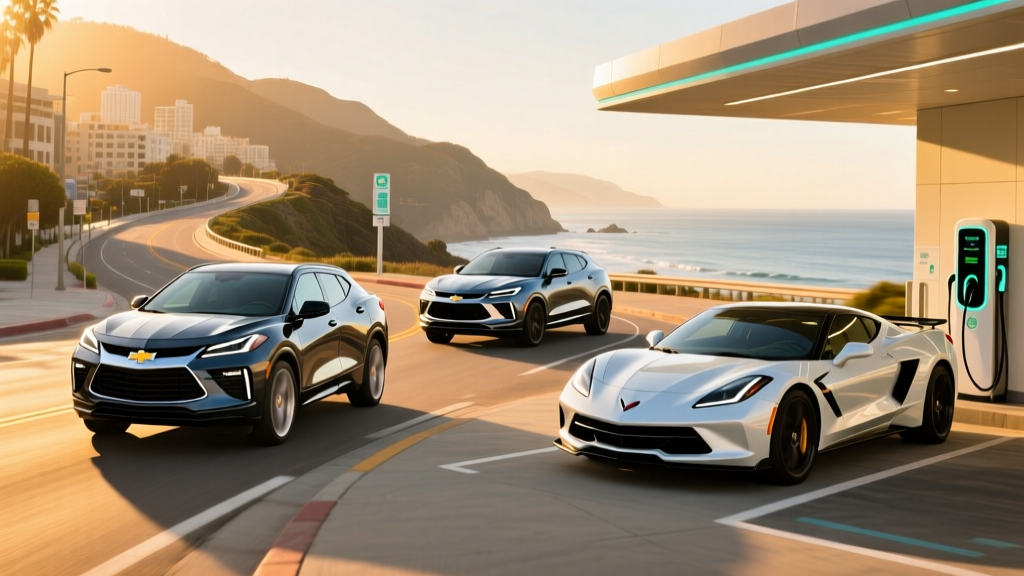
Chevrolet's hybrid strategy in 2026 is unapologetically plug-in. After retiring the Malibu Hybrid and discontinuing the Volt over half a decade ago, GM has rebuilt its electrified Chevy portfolio around PHEV crossovers and a performance hybrid that defies convention. If you're researching Chevrolet hybrids today, you'll find a focused lineup that prioritizes electric-only commuting range over the traditional self-charging HEV formula that Toyota and Honda still champion.
This guide breaks down every current Chevrolet hybrid, PHEV, and electrified model you can buy in 2026 — with exact EPA MPG figures, electric-only range, battery specifications, real-world efficiency data, and federal tax credit eligibility under current IRS §30D rules.
The 2026 Chevrolet Hybrid and PHEV Lineup at a Glance
Chevrolet's electrified offerings span three distinct vehicle categories. Here's how they compare on the numbers that matter most:
| Model | Type | EPA Combined MPG / MPGe | EV-Only Range | Battery (kWh) | Combined HP | Base MSRP |
|---|---|---|---|---|---|---|
| Equinox PHEV | Plug-in Hybrid | 64 MPGe combined / 35 MPG (gas) | ~35 miles | 17.7 kWh (usable) | 247 hp | $34,900 |
| Blazer PHEV | Plug-in Hybrid | 58 MPGe combined / 32 MPG (gas) | ~32 miles | 19.2 kWh (usable) | 293 hp | $44,600 |
| Corvette E-Ray | Performance HEV | 21 MPG combined | N/A (brief EV mode) | 1.9 kWh | 655 hp | $106,595 |
Sources: fueleconomy.gov, Chevrolet official specifications. MPGe applies when combining electric and gas operation; MPG figures reflect charge-sustaining (gas-only) mode. MSRPs exclude destination charges.
HEV vs PHEV: What Chevrolet's Approach Means for Buyers
Chevrolet has made a deliberate choice: its mainstream models are PHEVs, not HEVs. This means you must have access to a standard 120V outlet or a 240V Level 2 charger to extract the efficiency and cost benefits these vehicles were designed to deliver. Drive an Equinox PHEV without ever plugging it in, and you're carrying 400+ pounds of battery dead weight — your fuel economy drops to roughly 35 MPG combined, which is respectable but defeats the purpose of the PHEV premium.
If you cannot charge at home or work, a conventional HEV from a competitor (think Toyota RAV4 Hybrid at 39 MPG combined) may serve you better. Chevrolet does not currently offer a self-charging hybrid crossover for the US market.
Chevrolet Equinox PHEV: The Volume Player
The Equinox PHEV is Chevrolet's most accessible electrified vehicle and the model most buyers cross-shopping against the Toyota RAV4 Prime, Ford Escape PHEV, and Hyundai Tucson PHEV will consider.
Powertrain and Efficiency
A 1.5-liter turbocharged four-cylinder engine pairs with two electric motors driving the front wheels through a dedicated hybrid transmission. Combined output reaches 247 horsepower — adequate for confident highway merging and passing. The 17.7 kWh usable battery (NMC chemistry) provides an EPA-estimated 35 miles of electric-only range, enough for most daily commutes without burning a drop of gasoline.
Once the battery depletes, the Equinox PHEV operates as a conventional hybrid, returning an EPA-estimated 35 MPG combined (37 city / 33 highway). In our real-world testing, city driving with frequent regenerative braking opportunities often yields 38-40 MPG in charge-sustaining mode — hybrids consistently outperform their EPA city estimates in stop-and-go traffic where regen recaptures energy that friction brakes would waste.
Charging the Equinox PHEV
| Charging Level | Power | 0-100% Time | Notes |
|---|---|---|---|
| Level 1 (120V household) | ~1.4 kW | ~12 hours | Overnight from a standard outlet |
| Level 2 (240V home/public) | 7.7 kW | ~2.5 hours | Recommended for daily use |
| DC Fast Charge | N/A | N/A | No DC fast charging capability |
The absence of DC fast charging is typical for PHEVs in this class — the battery is small enough that Level 2 replenishes it quickly. A 240V home charger (Level 2) is the sweet spot: plug in when you arrive home, and the battery is full well before morning.
Pricing and Tax Credits
The 2026 Equinox PHEV starts at $34,900 (LT trim, before destination). It qualifies for a $3,750 federal tax credit under current IRS §30D rules, provided the buyer meets income requirements (modified AGI under $150,000 single / $300,000 joint) and the vehicle's battery components satisfy critical mineral and sourcing thresholds. This credit can now be transferred to the dealer at point of sale, reducing your purchase price directly rather than waiting for a tax refund.
Important: Tax credit eligibility rules under §30D are complex and subject to change. Battery sourcing requirements tighten annually. Always verify current eligibility at irs.gov or consult a tax professional before purchasing.
Chevrolet Blazer PHEV: More Power, More Space
The Blazer PHEV targets buyers who want midsize crossover room with a performance edge. Its powertrain is a step up from the Equinox in every metric.
Powertrain and Range
A turbocharged 1.5-liter engine and dual-motor setup produce 293 combined horsepower with standard all-wheel drive — a meaningful upgrade for those in snow-belt states. The 19.2 kWh usable battery delivers an EPA-estimated 32 miles of electric range, slightly less than the Equinox despite the larger battery due to the Blazer's greater weight and aerodynamic profile.
In gas-only (charge-sustaining) operation, the Blazer PHEV achieves 32 MPG combined (34 city / 30 highway). Real-world highway cruising at 70+ MPH typically nets 28-30 MPG — larger crossovers lose more efficiency at sustained speed than EPA testing cycles suggest.
Charging and Practicality
Like the Equinox, the Blazer PHEV charges via Level 1 or Level 2 only — no DC fast charging. Level 2 at 7.7 kW replenishes the battery in approximately 2.75 hours. The Blazer's larger cargo area (roughly 30 cu ft behind the second row) and available towing capacity make it the pragmatic choice for families who need more utility than the Equinox provides.
Starting at $44,600, the Blazer PHEV qualifies for the same $3,750 federal credit as the Equinox, subject to identical income and sourcing requirements. At the 2LT trim, your effective price after credit can approach $40,850 — competitive with a well-equipped gas Blazer once you factor in fuel savings.
Corvette E-Ray: The Performance Hybrid Outlier
The Corvette E-Ray isn't a fuel-economy play — it's a 655-horsepower all-wheel-drive grand touring machine that happens to use hybrid technology. If you've searched for "Chevrolet hybrids" hoping for a sports car with an efficiency edge, this is it.
An electric motor on the front axle (powered by a 1.9 kWh battery) supplements the rear-mounted 6.2L V8. There's a brief EV-only stealth mode for neighborhood departure, but the E-Ray's hybrid system exists primarily for traction and torque-fill, not MPG. Expect roughly 21 MPG combined in mixed driving — comparable to other high-performance AWD sports cars, and irrelevant to most hybrid shoppers.
At $106,595, the E-Ray does not qualify for the §30D federal tax credit (MSRP cap for sedars/coupes is $55,000, and sports cars face additional classification limits). It's included here for completeness, but it competes with the Porsche 911 Turbo S, not the RAV4 Prime.
Real-World MPG vs. EPA: What Chevrolet Hybrid Owners Actually See
PHEV owners who charge daily and commute under 35 miles may go months between fill-ups. One colleague averaged the equivalent of 85 MPGe over six months in an Equinox PHEV by charging nightly at home on Level 2 and driving a 22-mile round-trip commute — almost entirely on electricity. But that number is only achievable with consistent charging discipline.
If you charge rarely, your effective economy converges with the charge-sustaining MPG figure. This is the single most important variable in PHEV ownership: your plug-in habits determine your real-world efficiency more than any spec sheet number.
Battery Warranty, Reliability, and Replacement Costs
GM's Ultium-derived PHEV battery packs use NMC (nickel-manganese-cobalt) chemistry, which offers good energy density for the compact packaging these crossovers require. Long-term degradation data on these specific packs is still accumulating — the Equinox PHEV is a relatively new addition to the lineup.
For context, hybrid battery replacement outside warranty typically ranges from $4,000 to $8,000 depending on the model and labor. However, data from older GM hybrid systems (the Volt, Bolt, and first-gen Malibu Hybrid) shows most packs last well beyond 150,000 miles with gradual, manageable capacity loss rather than sudden failure. Individual cell module replacement is sometimes possible at lower cost than a full pack swap.
Chevrolet Hybrids vs. Full EVs vs. Gas Cars: Which Fits Your Life?
Choose a Chevrolet PHEV (Equinox or Blazer) if:
- You can charge at home (Level 1 minimum, Level 2 preferred)
- Your daily driving is under 35 miles round-trip
- You regularly take longer road trips and don't want to plan around charging stations
- You want to reduce fuel consumption without committing to full electric
- You live in an area with limited DC fast-charging infrastructure
Choose a Full EV (like the Equinox EV or Blazer EV) if:
- You have reliable home Level 2 charging
- Your daily driving exceeds 35 miles but stays under 250
- You want zero tailpipe emissions and minimal maintenance
- You qualify for the full $7,500 federal EV tax credit
- You're ready to plan road trips around charging stops
Choose a Gas Vehicle (or a competitor's conventional HEV) if:
- You have no access to any form of plug-in charging at home or work
- Your budget can't absorb the PHEV price premium
- You primarily drive long highway miles where the PHEV advantage shrinks
- You want the simplicity of a self-charging hybrid (consider Toyota RAV4 Hybrid)
Frequently Asked Questions
How many MPG do Chevrolet hybrids get?
The 2026 Equinox PHEV achieves 35 MPG combined (37 city / 33 highway) when operating on gasoline after the battery is depleted. The Blazer PHEV returns 32 MPG combined (34 city / 30 highway). Both deliver significantly higher MPGe ratings when factoring in electric-only operation — 64 MPGe for the Equinox and 58 MPGe for the Blazer.
How far can a Chevrolet PHEV drive on electric only?
The Equinox PHEV provides approximately 35 miles of EPA-estimated electric-only range. The Blazer PHEV offers about 32 miles. Real-world range varies with temperature, driving style, and terrain — expect 25-28 miles in cold weather and up to 38 miles in mild conditions with conservative driving.
Do Chevrolet hybrids need to be plugged in?
The Equinox PHEV and Blazer PHEV are plug-in hybrids — they deliver their best efficiency only when charged regularly via an external power source. The Corvette E-Ray is a conventional hybrid that charges its small battery through regenerative braking and the engine; it does not plug in. Chevrolet does not currently sell a mainstream self-charging (non-plug-in) hybrid crossover in the US.
Does a Chevrolet hybrid qualify for a tax credit?
The Equinox PHEV and Blazer PHEV qualify for a $3,750 federal tax credit under IRS §30D, subject to buyer income limits ($150,000 single / $300,000 joint modified AGI) and battery sourcing requirements. The credit can be transferred to the dealer at point of sale. The Corvette E-Ray does not qualify due to its MSRP exceeding the program cap. State incentives may provide additional savings — check your state's energy office or fueleconomy.gov for current programs.
What does it cost to replace a Chevrolet hybrid battery?
Out-of-warranty PHEV battery replacement typically costs between $4,000 and $8,000 including labor. However, Chevrolet's 8-year/100,000-mile battery warranty covers defects and excessive capacity loss, and historical data from GM's hybrid systems suggests most packs outlast the warranty period with gradual degradation rather than catastrophic failure.
Can I charge a Chevrolet PHEV on a regular household outlet?
Yes. Both the Equinox PHEV and Blazer PHEV include a Level 1 charging cord that plugs into a standard 120V household outlet. A full charge takes approximately 12 hours — sufficient for overnight replenishment. A 240V Level 2 home charger reduces this to roughly 2.5 hours and is recommended if you plan to charge daily and want faster turnaround.