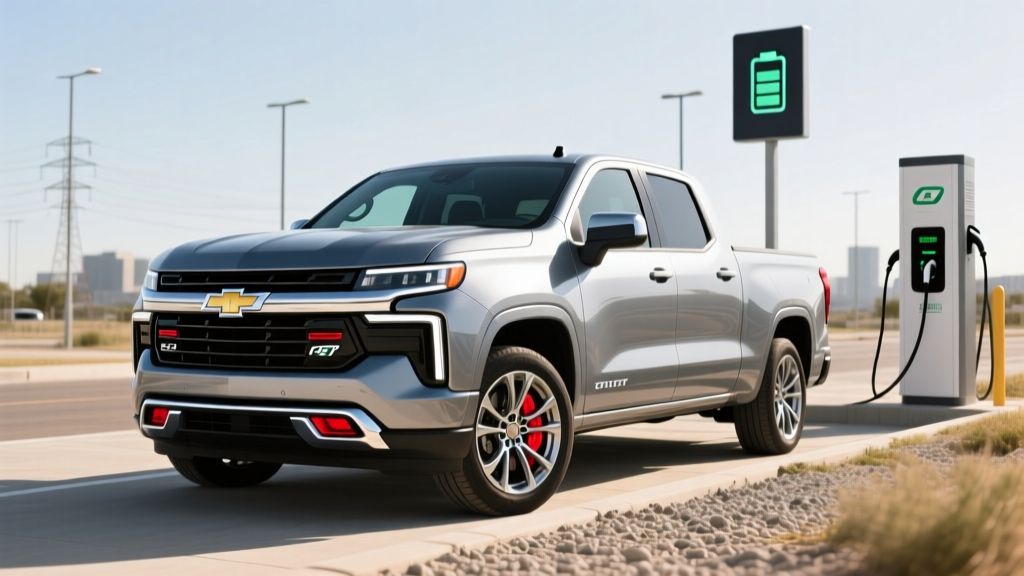
If you have been searching for a Chevrolet hybrid truck, you have likely noticed a frustrating reality: Chevrolet's current half-ton pickup lineup does not include a traditional gas-electric hybrid the way Ford offers the F-150 PowerBoost or Toyota offers the Tundra i-FORCE MAX. For 2026, the Silverado 1500 remains available with turbo-four, V-8, and diesel powertrains — plus the fully electric Silverado EV — but no factory HEV or PHEV variant has been released.
That said, Chevrolet has confirmed that hybrid technology is part of its future truck roadmap, and the broader GM Ultium-based platform architecture supports hybrid integration. This guide breaks down what exists today in the Chevrolet truck lineup, what hybrid and plug-in hybrid (PHEV) options are realistic, and how to decide whether to wait, look at a competitor hybrid, or jump to the Silverado EV.
The Current Chevrolet Truck Landscape: Where Hybrids Fit
Chevrolet sells three truck categories in the U.S. for the 2026 model year:
- Silverado 1500 — Full-size half-ton pickup (ICE only; no HEV/PHEV trim)
- Silverado EV — Fully electric full-size pickup (BEV, not a hybrid)
- Colorado — Mid-size pickup (ICE only; turbo-four standard)
None of these carry a conventional hybrid (HEV) or plug-in hybrid (PHEV) badge as of this writing. If a Chevrolet hybrid truck arrives, the Silverado 1500 is the most logical candidate, given the competitive pressure from Ford's F-150 PowerBoost hybrid (which delivers an EPA-estimated 25 MPG combined) and Toyota's Tundra i-FORCE MAX hybrid (22 MPG combined).
HEV vs. PHEV: What's the Difference?
Conventional Hybrid (HEV): Uses a small battery (typically 1–2 kWh) charged by regenerative braking and the gas engine. You never plug it in. It improves fuel economy 20–40% over a gas-only equivalent, especially in city driving. Example: Ford F-150 PowerBoost.
Plug-in Hybrid (PHEV): Carries a larger battery (typically 10–20 kWh) that you plug in to charge. Offers 20–50 miles of electric-only driving before the gas engine takes over. After the battery depletes, it operates like a conventional hybrid. Example: Toyota RAV4 Prime (though not available in a full-size truck yet).
Full EV (BEV): No gas engine. Runs entirely on battery power. Example: Chevrolet Silverado EV.
Silverado 1500 Gas Models: MPG Baseline for Hybrid Comparison
To understand the value a Chevrolet hybrid truck would deliver, here is what the current 2026 Silverado 1500 gas powertrains return, according to EPA estimates on fueleconomy.gov:
| Powertrain | City MPG | Highway MPG | Combined MPG | Horsepower |
|---|---|---|---|---|
| 2.7L TurboMax I4 | 19 | 23 | 20 | 310 hp |
| 5.3L EcoTec3 V8 | 16 | 21 | 18 | 355 hp |
| 6.2L EcoTec3 V8 | 15 | 20 | 17 | 420 hp |
| 3.0L Duramax Turbo-Diesel I6 | 23 | 29 | 25 | 305 hp |
The Duramax diesel matches or exceeds what a hybrid Silverado might deliver on the highway, but at a higher upfront cost (the diesel package adds roughly $2,500–$3,000 to MSRP). A true hybrid would close the gap in city driving, where regenerative braking and electric assist shine — and where the current gas V-8 returns a dismal 15–16 MPG.
Competitor Hybrid Trucks: What Chevy Is Up Against
If you need a hybrid full-size truck today, two proven options exist from rival brands:
| Spec | Ford F-150 PowerBoost (HEV) | Toyota Tundra i-FORCE MAX (HEV) |
|---|---|---|
| Type | Conventional Hybrid | Conventional Hybrid |
| Engine + Motor | 3.5L V6 + 47-hp electric motor | 3.4L Twin-Turbo V6 + 48-hp motor |
| Combined HP / Torque | 430 hp / 570 lb-ft | 437 hp / 583 lb-ft |
| EPA Combined MPG | 25 (2WD) / 23 (4WD) | 22 (2WD) / 20 (4WD) |
| Max Towing | 12,700 lbs | 12,000 lbs |
| Starting MSRP (2026) | ~$56,000 | ~$57,500 |
| Battery Warranty | 8 yr / 100,000 mi | 10 yr / 150,000 mi |
Both are conventional hybrids — no plug-in required. The Ford's 1.5 kWh lithium-ion battery and the Toyota's 1.87 kWh nickel-metal-hydride pack are small enough that they charge entirely through regenerative braking and the engine. Neither qualifies for the federal §30D EV tax credit, which applies only to plug-in vehicles with sufficient battery capacity.
Silverado EV: The Electrified Chevy Truck You Can Buy Now
If your goal is an electrified Chevrolet truck — and you have access to home charging — the 2026 Silverado EV is the actual product in showrooms. It is a full battery-electric vehicle (BEV), not a hybrid, but it addresses many of the same buyer motivations: lower fuel cost, instant torque, and reduced tailpipe emissions.
| Spec | Silverado EV 4WT (Work Truck) | Silverado EV RST (Range) |
|---|---|---|
| EPA Range | ~380 mi | ~440 mi |
| Battery (usable) | ~200 kWh (NMC, Ultium) | ~200 kWh (NMC, Ultium) |
| DC Fast Charge (peak) | 350 kW | 350 kW |
| 10–80% DC Charge Time | ~45 min | ~45 min |
| Horsepower | 510 hp | 754 hp |
| 0–60 mph | ~5.5 sec | ~4.5 sec |
| Max Towing | 10,000 lbs | 10,000 lbs |
| Starting MSRP | ~$55,000 | ~$87,000 |
| Battery Warranty | 8 yr / 100,000 mi | 8 yr / 100,000 mi |
⚡ Real-World Range Expectations
The Silverado EV's EPA range figures assume moderate temperatures and mixed driving. In real-world highway testing at 70+ mph, expect roughly 80–85% of the sticker range (~300–375 miles depending on trim). In cold weather (below 30°F), range can drop 20–30% due to battery resistance and cabin heating demands. If you tow, range drops further — often by 40–50% at highway speeds with a loaded trailer.
Tax Credit Eligibility: Hybrids vs. PHEVs vs. Full EVs
A common question for Chevrolet hybrid truck shoppers is whether any electrified Chevy truck qualifies for federal tax incentives. Here is how the rules break down under current IRS §30D guidelines:
- Conventional Hybrids (HEV): Do NOT qualify. The §30D credit requires a plug-in vehicle with at least 7 kWh of battery capacity. HEVs like the F-150 PowerBoost and Tundra i-FORCE MAX are ineligible.
- Plug-in Hybrids (PHEV): May qualify for up to $7,500 if they meet battery-sourcing, critical-mineral, MSRP cap ($80,000 for trucks/vans/SUVs), and buyer income limits ($300,000 joint / $150,000 single). As of 2026, no Chevrolet PHEV truck exists.
- Silverado EV (BEV): Eligibility varies by trim and buyer. The 4WT (~$55,000 MSRP) may qualify for a partial or full credit depending on battery-component and critical-mineral sourcing compliance. The RST (~$87,000) exceeds the $80,000 truck MSRP cap and is ineligible regardless of buyer income. Always verify current-year sourcing requirements on the IRS site before purchasing.
- Point-of-sale transfer: For 2026, qualifying buyers can transfer the credit to the dealer at purchase, reducing the out-of-pocket cost immediately rather than waiting for tax filing.
Bottom line: if a Chevrolet hybrid truck (HEV) launches in the future, it will not qualify for the federal EV tax credit. Only a PHEV or BEV variant would. Consult a tax professional for your specific situation.
Battery Reliability and Replacement Costs
Hybrid battery longevity is a top concern for truck buyers who plan to hold their vehicles for 150,000+ miles. Here is what the data shows:
Hybrid Battery Warranty Standards
By federal mandate, hybrid battery packs must carry a minimum warranty of 8 years / 100,000 miles (in California-emissions states, this extends to 10 years / 150,000 miles). Toyota backs the Tundra hybrid battery for 10 years / 150,000 miles nationwide. Ford covers the F-150 PowerBoost battery for 8 years / 100,000 miles.
Real-world degradation data: Toyota's hybrid systems have the longest track record. Data from fleet operators and owner surveys indicates that Toyota hybrid batteries typically retain 85–90% of original capacity at 150,000 miles. Ford's PowerBoost system, introduced for the 2021 model year, has less long-term data, but early reports from high-mileage fleet use show no systemic failure patterns.
Replacement cost if out of warranty:
- Ford F-150 PowerBoost hybrid battery: ~$3,500–$5,000 (parts + labor)
- Toyota Tundra i-FORCE MAX hybrid battery: ~$4,000–$6,000 (parts + labor)
- Silverado EV Ultium battery (BEV, for comparison): $15,000–$25,000+ depending on pack configuration — a significantly higher risk exposure than a small hybrid battery
The takeaway: hybrid batteries are relatively small, relatively cheap to replace, and rarely fail within the warranty period. Full EV batteries carry much higher replacement costs but come with similar 8-year/100,000-mile coverage.
Who Should Buy What: Decision Framework
Which Truck Fits Your Situation?
Choose a competitor hybrid truck (F-150 PowerBoost or Tundra i-FORCE MAX) if:
- You want a hybrid Chevy truck specifically but cannot wait for an unannounced product
- You drive mostly city/suburban miles where hybrid efficiency gains are largest
- You want zero plug-in infrastructure requirements
- You tow regularly and want proven hybrid-towing reliability data
Choose the Silverado EV if:
- You have reliable Level 2 home charging (240V, 40–80 amp circuit)
- Your daily driving is under 250 miles and you rarely tow long distances
- You want maximum torque (up to 754 hp on the RST) and the lowest per-mile fuel cost
- You may qualify for the §30D tax credit on an eligible trim
Choose a gas Silverado 1500 (or Duramax diesel) if:
- You need maximum towing (up to 13,300 lbs on certain gas trims, vs. 10,000 lbs on the EV)
- You regularly drive in extreme cold or remote areas with no charging infrastructure
- You want the lowest purchase price (gas Silverado starts under $38,000)
- The Duramax diesel's 25 MPG combined meets your efficiency goals without hybrid complexity
Will Chevrolet Release a Hybrid Silverado?
GM executives have acknowledged that hybrid powertrains are under evaluation for future Silverado models, potentially leveraging the company's next-generation small-block V-8 paired with an electric motor module. However, as of early 2026, no official announcement with a model year or pricing has been made.
Industry analysts suggest a hybrid Silverado could arrive in the 2027–2028 timeframe as a response to sustained competitive pressure from Ford and Toyota. If it follows the F-150 PowerBoost formula, expect:
- A V-6 or V-8 engine paired with a 35–50 hp electric motor integrated into the transmission
- A 1.5–2.0 kWh lithium-ion battery pack (self-charging, no plug-in)
- Combined output in the 400–450 hp range
- EPA combined MPG of 22–26 depending on 2WD/4WD configuration
- A price premium of $2,500–$4,000 over the equivalent gas-only trim
These are projected figures based on competitor benchmarks, not confirmed GM specifications. We will update this guide when official details are released.
Frequently Asked Questions
How many MPG does a Chevrolet hybrid truck get?
As of 2026, Chevrolet does not sell a hybrid Silverado or Colorado. The most efficient gas Silverado 1500 is the 3.0L Duramax diesel at 25 MPG combined. For comparison, the Ford F-150 PowerBoost hybrid returns 25 MPG combined (2WD) and the Toyota Tundra i-FORCE MAX returns 22 MPG combined (2WD).
Does the Silverado EV qualify for the $7,500 federal tax credit?
It depends on the trim and your income. The Silverado EV 4WT (~$55,000 MSRP) may qualify if it meets battery-sourcing and critical-mineral requirements under current IRS §30D rules. The RST trim (~$87,000) exceeds the $80,000 MSRP cap for trucks and is ineligible. Buyer income must be under $300,000 (joint) or $150,000 (single). Verify current-year eligibility before purchasing.
Is a hybrid truck reliable for towing?
Yes, within rated limits. The Ford F-150 PowerBoost tows up to 12,700 lbs and the Toyota Tundra hybrid tows up to 12,000 lbs — both competitive with their gas-only counterparts. Hybrid systems add low-end torque from the electric motor, which can improve trailer launch feel. However, towing significantly reduces fuel economy gains; expect hybrid MPG to drop to 15–18 when pulling a heavy trailer at highway speeds.
What is the battery replacement cost for a hybrid truck?
For current competitor hybrid trucks, out-of-warranty battery replacement runs $3,500–$6,000 including labor. Hybrid batteries are covered for at least 8 years / 100,000 miles by federal mandate (longer in some states). Real-world data from Toyota shows hybrid batteries lasting 150,000+ miles with minimal degradation in most cases.
Can I convert a gas Silverado to a hybrid?
No. There are no EPA-certified aftermarket hybrid conversion kits for the Silverado 1500. Such a conversion would void the powertrain warranty, likely not pass emissions certification, and cost more than the fuel savings it would generate. If you want an electrified Chevy truck today, the Silverado EV is the only factory option.
Hybrid vs. PHEV vs. EV — which should I choose for a truck?
Hybrid (HEV) is best if you want better MPG with zero lifestyle change — no charging, no range planning. PHEV is ideal if you can charge at home and want 20–40 miles of electric commuting with gas-engine backup for road trips — but no full-size PHEV pickup exists yet. Full EV makes sense if you have home charging, drive under 300 miles daily, and want the lowest operating cost and highest torque.
✓ Reasons to Want a Chevy Hybrid Truck
- 20–30% MPG improvement in city driving over gas V-8
- No plug-in charging required (HEV)
- Added low-end torque from electric motor assist
- Lower battery replacement cost vs. full EV
- Proven hybrid reliability from competitor benchmarks
✗ Current Limitations
- No Chevrolet hybrid truck available as of 2026
- Must choose Ford or Toyota for a hybrid full-size pickup
- HEVs do not qualify for the federal §30D tax credit
- Hybrid premium adds $2,500–$4,000 to MSRP
- Highway MPG gains are smaller than city gains