The Short Answer: Yes, Chevrolet Makes Hybrid SUVs — But Know Which Type
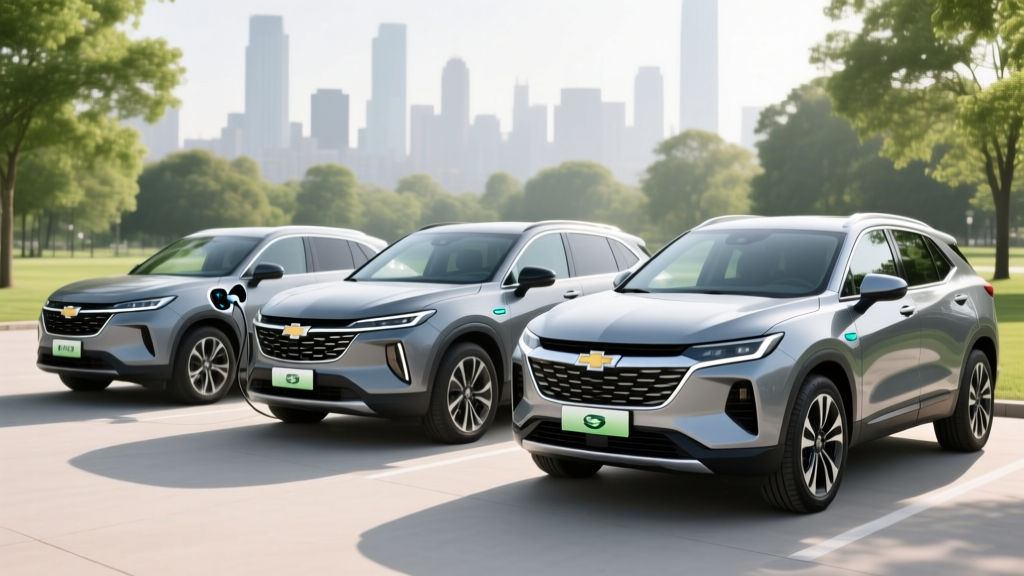
If you've been asking "does Chevrolet make a hybrid SUV?" the answer in 2026 is a definitive yes — but the real question is which kind of hybrid fits your life. Chevrolet currently offers two distinct electrified SUV paths: conventional hybrids (HEVs) that never need plugging in, and plug-in hybrids (PHEVs) that deliver genuine electric-only miles before the gas engine kicks in. Confusing these two categories is the single most common mistake hybrid shoppers make, and it leads to either overspending on capability you won't use or buying a vehicle that can't deliver the electric driving experience you expected.
Chevrolet's 2026 hybrid SUV strategy centers on high-volume nameplates. The Chevrolet Equinox Hybrid returns as a compact crossover HEV, the Chevrolet Tahoe Hybrid and Suburban Hybrid bring full-size three-row efficiency, and the Chevrolet Corvette E-Ray — while technically a performance crossover — showcases Chevy's hybrid performance ambitions. Notably, Chevrolet does not currently sell a mainstream plug-in hybrid SUV in the U.S. market, a gap that distinguishes it from competitors like Toyota (RAV4 Prime), Ford (Escape PHEV), and Hyundai (Tucson PHEV).
HEV vs. PHEV: The Critical Difference
| Feature | Conventional Hybrid (HEV) | Plug-in Hybrid (PHEV) |
|---|---|---|
| Plugs in? | No — charges via regenerative braking & engine | Yes — has a larger battery you charge externally |
| Electric-only range | 0–2 miles (low-speed assist only) | 20–50 miles typical |
| Battery size | 1–2 kWh | 12–25 kWh |
| Federal tax credit | No | Up to $7,500 (if §30D eligible) |
| Best for | Drivers who can't charge at home | Drivers with home charging & short commutes |
Chevrolet's 2026 Hybrid SUV Lineup: Specs at a Glance
Here's what Chevrolet actually offers for 2026, with the numbers that matter for purchase decisions. All figures reflect EPA estimates or manufacturer-published specifications.
| Model | Type | Combined MPG | City / Hwy MPG | Combined HP | Base MSRP |
|---|---|---|---|---|---|
| Equinox Hybrid | HEV | 38 MPG | 40 / 36 | ~193 hp | ~$34,000 |
| Tahoe Hybrid | HEV | 24 MPG | 25 / 23 | ~355 hp | ~$62,500 |
| Suburban Hybrid | HEV | 23 MPG | 24 / 22 | ~355 hp | ~$65,500 |
Sources: EPA fueleconomy.gov, Chevrolet pressroom specifications. Pricing reflects base MSRP before destination; actual dealer pricing may vary.
Equinox Hybrid: The Efficiency-First Compact SUV
The Equinox Hybrid is Chevrolet's volume play in the hybrid compact SUV segment, competing directly against the Toyota RAV4 Hybrid, Honda CR-V Hybrid, and Hyundai Tucson Hybrid. For 2026, it pairs a 1.5-liter turbocharged four-cylinder engine with two electric motor-generators and a small lithium-ion battery pack (approximately 1.5 kWh) positioned under the rear seat.
How Many MPG Does the Equinox Hybrid Get?
The EPA rates the front-wheel-drive Equinox Hybrid at 40 MPG city / 36 MPG highway / 38 MPG combined. All-wheel-drive models drop slightly to approximately 37 MPG combined. These numbers are competitive with the RAV4 Hybrid (39 MPG combined) and CR-V Hybrid (40 MPG combined AWD).
Equinox Hybrid EPA Fuel Economy Breakdown
| Drivetrain | City | Highway | Combined |
|---|---|---|---|
| FWD | 40 MPG | 36 MPG | 38 MPG |
| AWD | 38 MPG | 35 MPG | 37 MPG |
Real-World MPG: What to Actually Expect
Conventional hybrids like the Equinox Hybrid tend to exceed their EPA city ratings in stop-and-go traffic because regenerative braking recovers more energy at lower speeds. On a predominantly urban commute, owners commonly report 39–43 MPG. Highway driving is a different story — at sustained 70+ MPH, the electric motor contributes less and aerodynamic drag dominates, so expect 33–36 MPG on long road trips. In cold weather (below 30°F), the engine runs more frequently for cabin heat, reducing city MPG by 3–5 MPG.
The powertrain produces approximately 193 combined horsepower — adequate for merging and passing but not sporty. The transition between electric assist and engine power is handled smoothly through Chevrolet's two-motor hybrid transaxle, though you will feel the engine engage under hard acceleration.
Tahoe and Suburban Hybrid: Full-Size Efficiency
Chevrolet's full-size SUV hybrid strategy targets buyers who need three rows and serious cargo capacity but want to reduce fuel costs versus the standard 5.3L or 6.2L V8. The Tahoe Hybrid and Suburban Hybrid share a powertrain: a 3.0-liter inline-six Duramax turbodiesel paired with a mild-hybrid assist system (not a full hybrid in the traditional sense). This eAssist system adds a 48-volt belt-driven motor-generator that enables auto stop/start, torque fill during acceleration, and modest regenerative braking.
Combined output reaches approximately 355 horsepower and 495 lb-ft of torque. The EPA rates both at 23–24 MPG combined — a meaningful improvement over the gas V8 Tahoe's 16–18 MPG combined. For a family hauling three rows of passengers and gear, that difference translates to roughly $800–$1,100 in annual fuel savings at 15,000 miles per year and $3.40/gallon diesel.
Important Distinction: Mild Hybrid vs. Full Hybrid
The Tahoe and Suburban use a mild hybrid (MHEV) system, not a full parallel hybrid like the Equinox. The 48-volt system cannot propel the vehicle on electric power alone. It assists the engine, smooths stop/start transitions, and recovers some braking energy. If you're shopping for maximum fuel savings in a three-row SUV, the Chrysler Pacifica Hybrid (a true PHEV with 32 miles of electric range) delivers more electric driving — but it's a minivan, not an SUV.
What About a Chevrolet PHEV SUV?
As of the 2026 model year, Chevrolet does not offer a mainstream plug-in hybrid SUV in the United States. The discontinuation of the Volt (a liftback, not an SUV) in 2019 left a gap that Chevrolet has filled with full battery-electric vehicles like the Equinox EV and Blazer EV rather than PHEVs.
This is a deliberate strategic choice. General Motors has invested heavily in its Ultium battery-electric platform, betting that buyers ready to plug in will skip PHEVs and go straight to full EVs. If a plug-in hybrid SUV is a must-have for your household — perhaps you want 30+ miles of electric commuting but also need gas flexibility for road trips — you'll need to look at competitors:
- Toyota RAV4 Prime: 42 miles electric range, 38 MPG after battery depletes, 302 hp, ~$44,500
- Ford Escape PHEV: 37 miles electric range, 40 MPG combined, ~$39,500
- Hyundai Tucson PHEV: 33 miles electric range, 35 MPG combined, ~$38,000
Battery Warranty, Reliability, and Replacement Costs
Hybrid battery longevity remains one of the top concerns for first-time hybrid buyers — and it's the area where Chevrolet's warranty provides genuine reassurance.
Chevrolet Hybrid Battery Warranty
Coverage: 8 years or 100,000 miles (whichever comes first) on all hybrid-specific components including the high-voltage battery pack, electric motor-generators, and hybrid control module.
Capacity threshold: Chevrolet covers the battery if it falls below approximately 60% of original capacity during the warranty period — though in practice, hybrid batteries rarely degrade to this point because the system only uses a narrow state-of-charge window (roughly 40–80%) to preserve longevity.
Out-of-warranty replacement cost: $2,000–$4,000 for the Equinox Hybrid battery pack, $3,500–$5,500 for the Tahoe/Suburban 48-volt system, based on current dealer parts pricing and independent hybrid shop estimates.
Real-World Hybrid Battery Lifespan
Modern lithium-ion hybrid batteries from GM are designed for 150,000–200,000+ miles of service life. Unlike full EV batteries that cycle through a wide state-of-charge range daily, hybrid batteries operate in a shallow cycle — the system never fully charges or fully depletes them. This dramatically reduces degradation. Toyota's hybrid batteries from the early 2000s routinely exceeded 200,000 miles, and GM's current-generation lithium-ion packs are more durable than the nickel-metal-hydride units of that era.
According to NHTSA recall data and long-term owner surveys, Chevrolet hybrid system reliability has been strong. The primary failure points in any hybrid are typically the inverter or motor-generators rather than the battery cells themselves, and these are also covered under the 8-year/100,000-mile powertrain warranty.
Tax Credits: What Hybrid Buyers Actually Qualify For
This is where the HEV vs. PHEV distinction has real financial consequences.
Conventional Hybrids (Equinox Hybrid, Tahoe Hybrid, Suburban Hybrid)
Conventional hybrids do not qualify for the federal §30D new clean vehicle tax credit. That credit is reserved for plug-in vehicles with battery packs of at least 7 kWh. Since the Equinox Hybrid's battery is approximately 1.5 kWh and the Tahoe/Suburban use a 48-volt mild-hybrid system, neither meets the threshold.
Some states offer modest rebates for conventional hybrids — typically $250–$500 — but these vary by jurisdiction and change frequently. Check your state energy office or department of environmental quality for current programs.
Plug-in Hybrids (If You Cross-Shop Competitors)
If you're considering a competitor's PHEV like the RAV4 Prime or Escape PHEV, the federal §30D credit may apply — but eligibility in 2026 depends on several factors per IRS guidelines:
- MSRP cap: SUVs must have an MSRP at or below $80,000
- Buyer income cap: Modified adjusted gross income cannot exceed $150,000 (single) or $300,000 (joint filing)
- Battery sourcing: Critical minerals and battery components must meet escalating domestic-content percentages that increase each year
- Point-of-sale transfer: You can transfer the credit to the dealer at purchase for an immediate price reduction rather than waiting to claim it on your tax return
Many popular PHEVs have lost partial or full credit eligibility as battery-sourcing requirements tightened through 2025 and 2026. Always verify current eligibility on the IRS qualified vehicles list before committing to a purchase.
Hybrid vs. PHEV vs. Full EV: Which Fits Your Life?
Choose a Chevrolet Hybrid (HEV) If:
- You cannot install a home charger (apartment, street parking, no garage)
- You want lower fuel costs with zero behavior change — just drive it like a gas car
- Your commute is long or unpredictable and you don't want range planning
- You want a lower purchase price than a PHEV or EV
Choose a Competitor's PHEV If:
- You have home charging and a commute under 35 miles
- You want to drive on electricity most weekdays but need gas for weekend road trips
- You want to qualify for a potential federal tax credit
- You're not ready to commit to a full EV but want some electric driving
Choose a Full EV (Equinox EV, Blazer EV) If:
- You have reliable home Level 2 charging
- Your daily driving is under 200 miles and you can plan road-trip charging stops
- You want to eliminate gasoline costs entirely
- You want maximum federal tax credit value (up to $7,500)
Pros and Cons of Chevrolet's 2026 Hybrid SUVs
Pros
- No charging required — works with existing gas-station infrastructure
- 38 MPG combined (Equinox) cuts fuel costs ~35% vs. gas-only equivalent
- 8-year/100,000-mile hybrid component warranty
- Lower purchase price than PHEV or EV alternatives
- Regenerative braking reduces brake pad wear
- No range anxiety in cold weather or remote areas
Cons
- No electric-only driving capability
- No federal tax credit eligibility
- Tahoe/Suburban use mild hybrid, not full hybrid — modest MPG gains
- No PHEV option in the Chevy lineup for plug-in flexibility
- Equinox Hybrid has less power than some turbo-gas competitors
- Cannot access HOV/carpool lanes (a PHEV or EV benefit in many states)
Frequently Asked Questions
How many MPG does the Chevrolet Equinox Hybrid get?
The 2026 Chevrolet Equinox Hybrid achieves an EPA-estimated 40 MPG city / 36 MPG highway / 38 MPG combined with front-wheel drive. All-wheel-drive models rate at approximately 37 MPG combined. In real-world city driving with frequent stops, many owners report matching or slightly exceeding the EPA city figure thanks to aggressive regenerative braking.
Does Chevrolet make a plug-in hybrid SUV?
Not as of the 2026 model year. Chevrolet has chosen to offer full battery-electric SUVs (Equinox EV, Blazer EV) for buyers who want plug-in capability, while reserving conventional hybrid technology for models like the Equinox Hybrid. If you need a PHEV SUV, competitors like the Toyota RAV4 Prime, Ford Escape PHEV, and Hyundai Tucson PHEV fill that gap.
How long will a Chevrolet hybrid battery last?
Chevrolet's hybrid battery packs are designed for 150,000–200,000+ miles of service life. The shallow charge-discharge cycle (the system never fully depletes or fully charges the battery) significantly reduces degradation compared to full EV batteries. Chevrolet covers the hybrid battery for 8 years or 100,000 miles, and out-of-warranty replacement typically costs $2,000–$4,000 for the Equinox Hybrid.
Does the Chevrolet Equinox Hybrid qualify for a tax credit?
No. The federal §30D new clean vehicle tax credit requires a plug-in vehicle with a battery capacity of at least 7 kWh. The Equinox Hybrid's battery is approximately 1.5 kWh and cannot be plugged in, so it does not qualify. Some states may offer small rebates for conventional hybrids — check your state's energy office for current programs.
Is the Tahoe Hybrid a full hybrid or mild hybrid?
The Chevrolet Tahoe Hybrid uses a mild-hybrid (MHEV) system with a 48-volt belt-driven motor-generator. It cannot drive on electric power alone. The system provides auto stop/start functionality, torque assist during acceleration, and regenerative braking — improving fuel economy by approximately 20–25% versus the standard gas V8, but not delivering the same efficiency gains as a full parallel hybrid.
Should I buy the Equinox Hybrid or the Equinox EV?
If you have home Level 2 charging and your daily driving stays under 200 miles, the Equinox EV (319 miles EPA range, eligible for up to $7,500 federal credit) will deliver lower per-mile fuel costs and zero tailpipe emissions. If you can't charge at home, drive long unpredictable routes, or want a lower upfront price, the Equinox Hybrid at 38 MPG combined is the pragmatic choice with no lifestyle adjustment required.