Why Cheap Hybrid Vehicles Still Make Sense in 2026
If you want to cut fuel costs without committing to a plug, a conventional hybrid (HEV) or an affordable plug-in hybrid (PHEV) remains one of the smartest purchases on the market. The best cheap hybrid vehicles deliver 50+ MPG in city driving, require zero lifestyle changes, and cost thousands less than a comparable battery-electric vehicle. For 2026, several models start under $30,000 before any incentives — and a few PHEVs can even qualify for up to $3,750 under the federal §30D tax credit.
This guide breaks down five of the most affordable, efficient hybrids available in the US for the 2026 model year. We cover real-world MPG versus EPA estimates, battery warranty coverage, powertrain specs, and who should pick a hybrid over a full EV or a gas-only car.
HEV vs. PHEV: Know What You're Buying
Before comparing models, it's critical to understand the two hybrid categories — they serve different drivers and have different costs.
| Feature | Conventional Hybrid (HEV) | Plug-In Hybrid (PHEV) |
|---|---|---|
| Plugs in? | No — charges via regenerative braking and engine | Yes — requires Level 1 or Level 2 charging for EV range |
| Electric-only range | ~1 mile or less at low speed | 25–45 miles on battery alone (model dependent) |
| Battery size | 0.6–1.6 kWh (small, lightweight) | 11–20 kWh (larger, heavier) |
| Federal tax credit | None (no plug) | Up to $3,750 under §30D (income/MSRP/sourcing limits apply) |
| Best for | Drivers without home charging; want max simplicity | Drivers with home charging and short commutes |
| Price premium over gas | ~$1,000–$2,500 | ~$4,000–$8,000 |
Neither type requires you to change your driving habits. A conventional hybrid operates exactly like a gas car — you just fill up less often. A PHEV gives you an electric commute most days, then runs on gas for longer trips, eliminating range anxiety entirely.
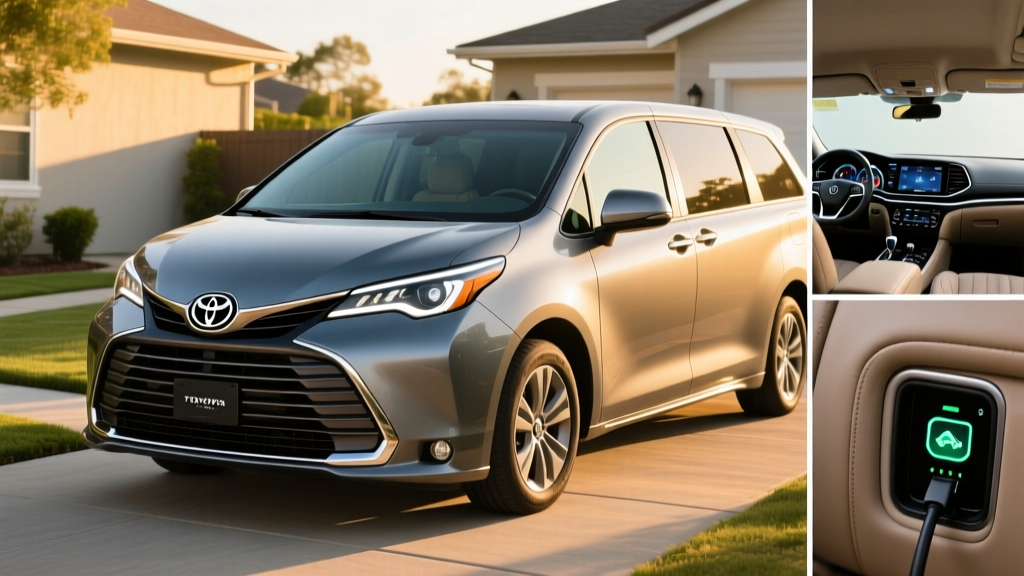
2026 Toyota Prius (HEV): The MPG Benchmark
| Spec | 2026 Prius LE FWD | 2026 Prius XLE AWD |
|---|---|---|
| EPA Combined MPG | 57 MPG | 54 MPG |
| City / Highway MPG | 57 / 56 | 53 / 54 |
| Combined Horsepower | 194 HP | 196 HP (AWD) |
| Engine | 2.0L 4-cyl + electric motor | 2.0L 4-cyl + 2 motors (AWD) |
| 0–60 mph | 7.0 seconds | 7.0 seconds |
| Starting MSRP | $29,445 | $33,445 |
| Battery Warranty | 10 yr / 150,000 mi | 10 yr / 150,000 mi |
| Federal Tax Credit | None (HEV) | None (HEV) |
The redesigned Prius has shed its econobox reputation. The 2026 model is genuinely quick, handles well, and the LE FWD trim delivers an EPA-estimated 57 MPG combined — the highest of any non-plug-in vehicle sold in the US.
Real-world MPG: Hybrid efficiency thrives in stop-and-go city traffic where regenerative braking recovers energy. Many Prius owners report 60+ MPG in urban driving, while sustained highway speeds above 75 mph can drop figures to 48–50 MPG. In cold weather (below 30°F), expect a 5–8% efficiency dip as the engine runs more frequently for cabin heat.
Pros
- Class-leading 57 MPG combined
- Sporty handling, 0–60 in 7.0s
- Strong reliability record (Toyota hybrid system, 5th gen)
- 10-year / 150k-mile hybrid battery warranty
Cons
- Tight rear seat headroom
- Cargo space (23.8 cu ft) trails some crossovers
- AWD trims sacrifice ~3 MPG
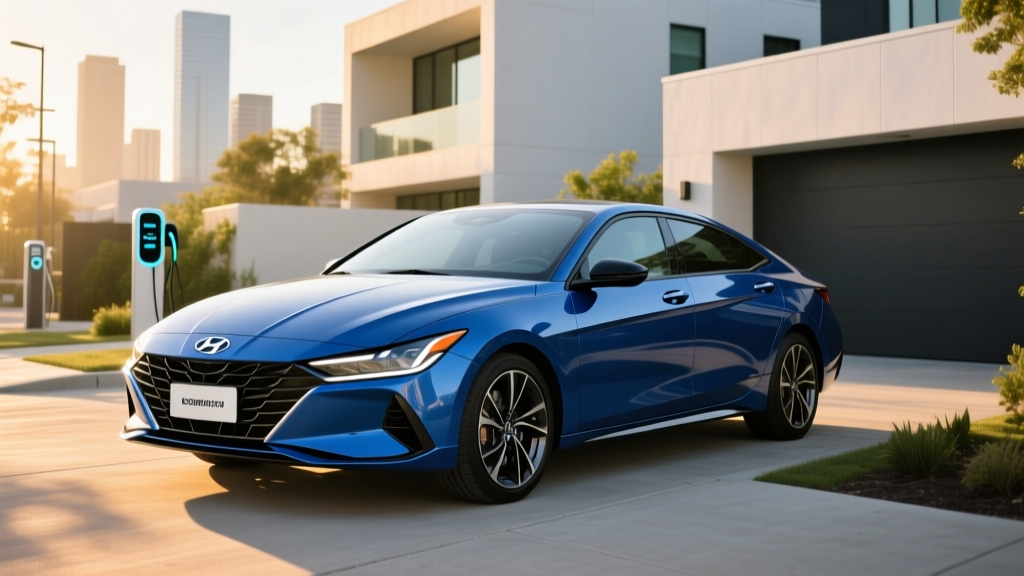
2026 Hyundai Elantra Hybrid: Best Value Sedan
| Spec | 2026 Elantra Hybrid Blue | 2026 Elantra Hybrid Limited |
|---|---|---|
| EPA Combined MPG | 54 MPG | 50 MPG |
| City / Highway MPG | 51 / 58 | 47 / 52 |
| Combined Horsepower | 139 HP | 139 HP |
| Engine | 1.6L 4-cyl + electric motor | 1.6L 4-cyl + electric motor |
| 0–60 mph | ~8.2 seconds | ~8.2 seconds |
| Starting MSRP | $26,400 | $30,100 |
| Battery Warranty | 10 yr / 100,000 mi | 10 yr / 100,000 mi |
| Federal Tax Credit | None (HEV) | None (HEV) |
The Elantra Hybrid undercuts the Prius by roughly $3,000 at the base Blue trim while still delivering 54 MPG combined. It uses a 1.6-liter engine paired with a 32 kW electric motor and a 6-speed dual-clutch automatic — no CVT drone here.
Real-world MPG: Hyundai's EPA highway number (58 MPG for Blue trim) is conservative. On flat terrain at 65 mph, owners frequently see 60–62 MPG. City driving with moderate traffic yields 48–52 MPG. The Limited trim's larger wheels and added weight cost it about 4 MPG combined in practice.
2026 Toyota Prius Prime (PHEV): Best Budget Plug-In
| Spec | 2026 Prius Prime SE | 2026 Prius Prime XSE |
|---|---|---|
| Electric-Only Range | 44 miles | 40 miles |
| Total Combined Range | ~440 miles | ~410 miles |
| MPGe (electric mode) | 127 MPGe | 117 MPGe |
| Gas-Only MPG (after battery depletes) | 52 MPG combined | 48 MPG combined |
| Battery Capacity | 13.6 kWh (lithium-ion) | 13.6 kWh (lithium-ion) |
| Level 2 Charge Time (0–100%) | ~4 hours (3.3 kW onboard) | ~4 hours (3.3 kW onboard) |
| DC Fast Charge? | No | No |
| Combined Horsepower | 220 HP | 220 HP |
| 0–60 mph | 6.6 seconds | 6.6 seconds |
| Starting MSRP | $34,115 | $37,415 |
| Battery Warranty | 10 yr / 150,000 mi | 10 yr / 150,000 mi |
| Federal Tax Credit (§30D) | Up to $3,750* | Up to $3,750* |
*The Prius Prime may qualify for a partial §30D credit (up to $3,750) depending on battery critical-mineral and component sourcing requirements. Full $7,500 eligibility is unlikely under current IRS rules. Income caps ($150k single / $300k joint) and the $55,000 MSRP cap for sedans also apply. The credit can be transferred to the dealer at point of sale to reduce your purchase price.
The Prius Prime is the standout among cheap hybrid vehicles with a plug. Its 44-mile EV range covers most commutes entirely on electricity, and when the battery depletes, you still get 52 MPG from the hybrid system — far better than most PHEVs after their electric range runs out.
Real-world EV range: Expect 38–42 miles in mild weather, dropping to 30–35 miles in winter (below freezing). Highway driving at 70+ mph in EV mode will reduce range to roughly 32–35 miles. The 3.3 kW onboard charger means Level 2 charging is slow — overnight replenishment is the intended use case, not quick top-ups.
Hybrid Battery Warranty: What You Need to Know
Toyota covers its hybrid batteries for 10 years or 150,000 miles (whichever comes first) on 2026 models — among the longest in the industry. Hyundai provides 10 years or 100,000 miles. For context, most hybrid batteries last 150,000–200,000+ miles before significant degradation. Out-of-warranty replacement for a Prius hybrid battery runs approximately $2,500–$4,000 (parts and labor) at a dealership, or $1,500–$2,500 through independent hybrid specialists using refurbished cells. PHEV batteries (larger capacity) cost more to replace — roughly $4,000–$7,000 for a Prius Prime pack.
2026 Kia Niro Hybrid: Practical Crossover Efficiency
| Spec | 2026 Niro HEV LX | 2026 Niro PHEV EX |
|---|---|---|
| EPA Combined MPG (HEV) / MPGe (PHEV) | 53 MPG | 108 MPGe (EV) / 48 MPG (gas) |
| City / Highway MPG (HEV) | 53 / 52 | N/A (see PHEV note) |
| Electric-Only Range (PHEV) | — | 33 miles |
| Battery Capacity (PHEV) | — | 11.1 kWh |
| Combined Horsepower | 139 HP | 180 HP |
| Starting MSRP | $28,290 | $35,590 |
| Battery Warranty | 10 yr / 100,000 mi | 10 yr / 100,000 mi |
| Federal Tax Credit | None (HEV) | Up to $3,750* (varies by sourcing) |
The Niro is the only dedicated hybrid crossover on this list, offering more cargo room (22.8 cu ft behind rear seats, 63.7 cu ft folded) than the sedan alternatives. The HEV version is straightforward — no plug, just excellent efficiency. The PHEV version adds 33 miles of EV range for commuters who can charge at home.
Real-world MPG (HEV): City drivers report 50–55 MPG. Highway cruising at 70 mph yields around 47–50 MPG. The Niro PHEV's gas-only mode (after battery depletion) returns about 43–46 MPG in mixed driving — solid but behind the Prius Prime's 52 MPG.
2026 Honda Accord Hybrid: Midsize Room, Hybrid Efficiency
| Spec | 2026 Accord Hybrid Sport | 2026 Accord Hybrid Touring |
|---|---|---|
| EPA Combined MPG | 44 MPG | 43 MPG |
| City / Highway MPG | 50 / 40 | 48 / 39 |
| Combined Horsepower | 204 HP | 204 HP |
| Engine | 2.0L 4-cyl + 2 electric motors | 2.0L 4-cyl + 2 electric motors |
| 0–60 mph | ~7.3 seconds | ~7.3 seconds |
| Starting MSRP | $34,390 | $40,090 |
| Battery Warranty | 8 yr / 100,000 mi | 8 yr / 100,000 mi |
| Federal Tax Credit | None (HEV) | None (HEV) |
The Accord Hybrid uses Honda's two-motor system, which operates primarily as a series hybrid at low speeds (the engine generates electricity, the motor drives the wheels) and switches to direct engine drive at highway speeds. The result: 50 MPG city, a number that routinely beats the EPA estimate in real-world urban commuting.
Real-world MPG: City drivers consistently report 48–54 MPG. Highway efficiency drops more noticeably than in the Prius — expect 37–40 MPG at 70–75 mph. Overall mixed driving typically lands at 42–46 MPG. Honda's hybrid system is proven across multiple model generations with strong IIHS safety ratings.
Side-by-Side: MPG, Price, and Cost Per Mile
| Model | Type | EPA Combined | Real-World Est. | Base MSRP | Est. Annual Fuel Cost† |
|---|---|---|---|---|---|
| Prius LE FWD | HEV | 57 MPG | 50–58 MPG | $29,445 | $740 |
| Elantra Hybrid Blue | HEV | 54 MPG | 48–60 MPG | $26,400 | $780 |
| Prius Prime SE | PHEV | 127 MPGe / 52 MPG | 38–44 mi EV, then ~50 | $34,115 | $380–$700‡ |
| Niro HEV LX | HEV | 53 MPG | 47–55 MPG | $28,290 | $800 |
| Accord Hybrid Sport | HEV | 44 MPG | 42–48 MPG | $34,390 | $960 |
†Based on 12,000 miles/year, $3.50/gal regular unleaded, EPA combined figure. ‡PHEV fuel cost varies dramatically based on how often you charge and your electricity rate. Assumes $0.14/kWh home charging for EV miles.
Tax Credits and Incentives for Cheap Hybrid Vehicles
Conventional hybrids (HEVs) do not qualify for the federal §30D Clean Vehicle Credit — that incentive is reserved for plug-in vehicles with at least 7 kWh of battery capacity. However, PHEVs on this list may qualify:
- Prius Prime: Up to $3,750 partial credit (critical minerals requirement met; battery component sourcing may limit to half-credit). Check current fueleconomy.gov tax credit listings for exact eligibility at time of purchase.
- Niro PHEV: Credit availability varies by model year and sourcing compliance — confirm with your dealer.
- Income caps: Adjusted gross income must not exceed $150,000 (single) or $300,000 (married filing jointly).
- MSRP cap: Sedans must have an MSRP at or below $55,000; SUVs, vans, and trucks up to $80,000.
- Point-of-sale transfer: Eligible buyers can transfer the credit to the dealer, reducing the purchase price at signing rather than waiting for a tax refund.
Some states offer additional rebates for PHEVs (California's CVRP, for example). Check your state energy office for current programs, as these vary by jurisdiction and funding availability.
Hybrid vs. PHEV vs. EV: Which Fits You?
Choose a conventional hybrid (HEV) if:
- You don't have access to home or workplace charging
- You want the lowest purchase price and zero plug-in hassle
- You drive more than 15,000 miles/year and want proven reliability
- Your budget is under $30,000
Choose a plug-in hybrid (PHEV) if:
- You can install a Level 2 charger at home (or have reliable workplace charging)
- Your daily commute is under 40 miles round-trip
- You want EV-like daily driving but need gas flexibility for road trips
- You want to reduce (not eliminate) fuel costs and emissions
Choose a full EV if:
- You have home charging and your daily driving is under 250 miles
- You want the lowest per-mile fuel cost (~$0.04–$0.06/mi vs. $0.10–$0.14/mi for hybrids)
- You want to eliminate oil changes and engine maintenance
- You qualify for the full $7,500 federal tax credit on a qualifying EV
Reliability and Battery Longevity
Hybrid battery longevity is one of the most common buyer concerns, and the data is reassuring. Toyota's hybrid system — now in its fifth generation — has an extensive track record. The original Prius fleet (2001–2003) showed that most hybrid batteries lasted 150,000–200,000 miles before requiring replacement. Modern lithium-ion packs are more durable and better thermally managed.
Key reliability points:
- Toyota: 10 yr / 150,000 mi hybrid battery warranty. Consumer Reports consistently rates Toyota hybrids among the most reliable vehicles across all powertrain types.
- Hyundai/Kia: 10 yr / 100,000 mi hybrid battery warranty. Strong track record on the Ioniq and Niro platforms.
- Honda: 8 yr / 100,000 mi hybrid battery warranty. The two-motor system has fewer mechanical failure points than traditional transmissions.
Out-of-warranty replacement costs for hybrid batteries range from $2,500–$4,000 for HEVs and $4,000–$7,000 for PHEVs. Independent hybrid shops often offer refurbished battery installations for 40–50% less than dealer pricing. Given that most hybrid owners keep their vehicles 8–12 years and sell before battery replacement is needed, this is rarely a practical concern.
Frequently Asked Questions
How many MPG do cheap hybrid vehicles actually get?
The 2026 Toyota Prius LE leads at 57 MPG combined (EPA). The Hyundai Elantra Hybrid Blue achieves 54 MPG combined, and the Kia Niro HEV gets 53 MPG combined. In real-world driving, hybrids often exceed their EPA city numbers thanks to regenerative braking but fall short of EPA highway estimates at speeds above 70 mph. Expect ±5 MPG from the combined sticker in typical mixed driving.
How far can the Prius Prime go on electric only?
The 2026 Prius Prime SE has an EPA-rated 44 miles of electric-only range. Real-world range is typically 38–42 miles in mild weather and 30–35 miles in freezing temperatures or at sustained highway speeds. The Niro PHEV offers 33 miles EPA-rated (roughly 28–30 real-world).
Do conventional hybrids need to be plugged in?
No. Conventional hybrids (HEVs) charge their small battery entirely through regenerative braking and the gasoline engine. You never plug them in. Only plug-in hybrids (PHEVs) require charging to access their electric-only range — and even PHEVs operate as normal hybrids if you never plug them in (you just lose the EV efficiency benefit).
Is a hybrid battery expensive to replace?
Out-of-warranty hybrid battery replacement costs $2,500–$4,000 for a conventional hybrid (Prius, Elantra, Niro HEV) and $4,000–$7,000 for a PHEV (Prius Prime, Niro PHEV). However, modern hybrid batteries typically last 150,000–200,000+ miles, and all manufacturers cover them for at least 8–10 years. Most original owners never need a replacement.
Do any cheap hybrid vehicles qualify for a tax credit?
Only plug-in hybrids (PHEVs) with batteries of 7 kWh or larger qualify for the federal §30D credit. The 2026 Prius Prime may qualify for up to $3,750 (partial credit based on battery sourcing). Conventional hybrids do not qualify for the federal credit but may be eligible for certain state or local incentives. Always verify current eligibility on irs.gov before purchasing.
Hybrid vs. gas car: how much do I actually save?
At 12,000 miles/year and $3.50/gallon, a 55 MPG hybrid uses ~218 gallons/year ($763) versus a 28 MPG gas car using ~429 gallons ($1,500). That's roughly $737 in annual fuel savings. Over a 10-year ownership period, you'd save approximately $7,370 in fuel — easily covering the hybrid premium on most models.