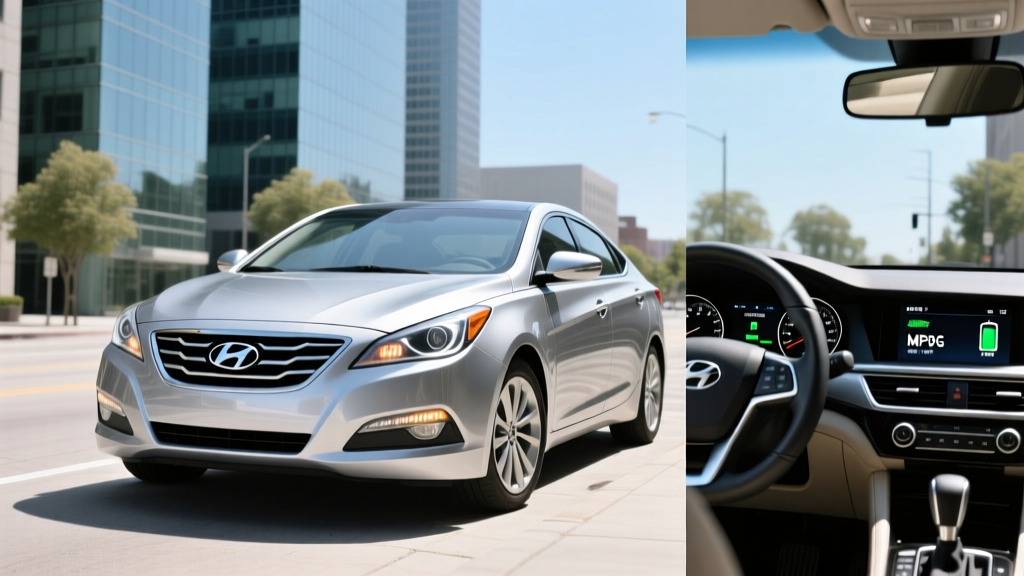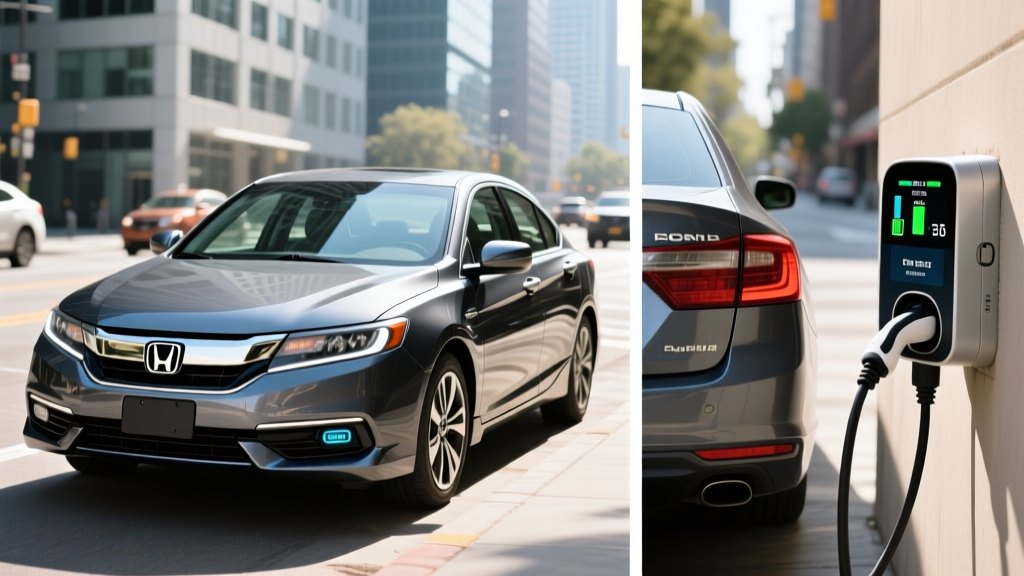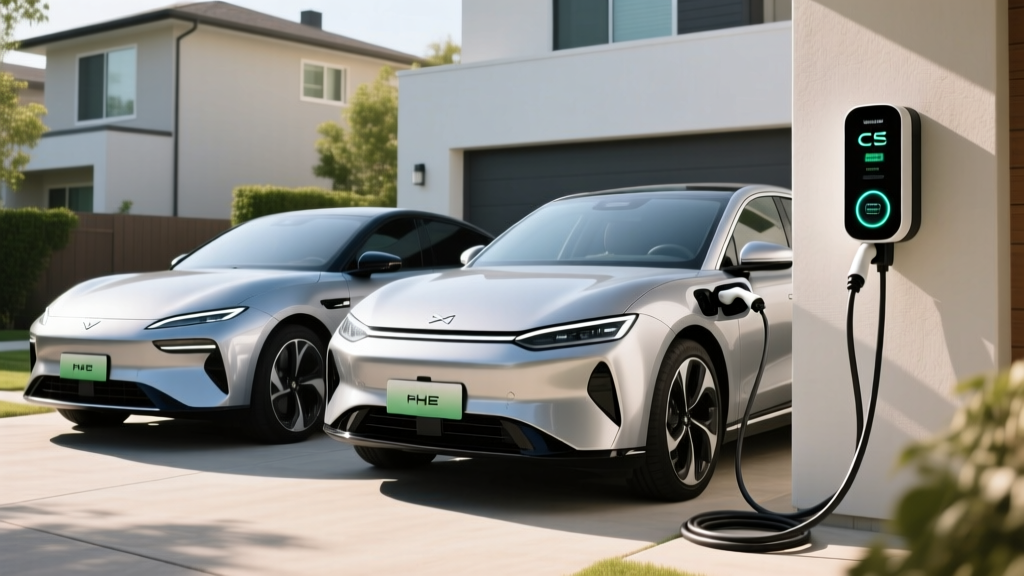
If you're shopping for a hybrid, one of the first questions is practical: can you charge a hybrid car at home? The answer depends entirely on which type of hybrid you choose. Conventional hybrids (HEVs) never plug in — they generate electricity internally. Plug-in hybrids (PHEVs), on the other hand, have larger batteries designed to be charged from an outlet or home charger, giving you electric-only driving before the gas engine kicks in.
This guide breaks down exactly how home charging works for each hybrid type, what equipment you need, what it costs, and how to decide between an HEV, a PHEV, or a full battery-electric vehicle (BEV). We'll use current 2026 model-year examples with exact EPA data so you can plan your purchase and your electrical setup with confidence.
HEV vs PHEV: The Critical Charging Difference
Before discussing home charging, you need to understand the fundamental split in the hybrid market. A conventional hybrid (HEV) like the Toyota Prius or Honda Accord Hybrid uses a small battery (typically 1–2 kWh) that recharges through regenerative braking and the gasoline engine. You never plug it in. It simply reduces fuel consumption by supplementing the engine with electric assist.
A plug-in hybrid (PHEV) like the Toyota RAV4 Prime or Jeep Wrangler 4xe carries a much larger battery (typically 12–25 kWh) and comes with a charging port. You plug it in at home (or at a public station) to unlock 20–50 miles of electric-only range. Once that electric range is depleted, it operates as a conventional hybrid.
HEV vs PHEV at a Glance
| Feature | Conventional Hybrid (HEV) | Plug-in Hybrid (PHEV) |
|---|---|---|
| Plugs in? | No — never | Yes — at home or public chargers |
| Battery size | 1–2 kWh | 12–25 kWh |
| Electric-only range | 0 miles (EV assist only) | 20–50 miles EPA |
| Home charging needed | None | Level 1 (120V) or Level 2 (240V) |
| Federal tax credit | None | Up to $7,500 (§30D, if eligible) |
| Example (2026) | Toyota Prius LE | Toyota RAV4 Prime |
The takeaway: if you're asking whether you need to charge a hybrid at home, the answer is no for an HEV and yes (for maximum benefit) for a PHEV. Running a PHEV without plugging it in is like buying a smartphone and never charging it — it still works, but you're missing the point.
How to Charge a PHEV at Home: Level 1 vs Level 2
Every PHEV sold in the U.S. ships with a Level 1 charging cable that plugs into a standard 120V household outlet. For many PHEV owners, that's all they need. Here's why the math works differently than it does for full EVs:
A typical PHEV battery holds 15–20 kWh of energy. At Level 1 (120V, 12 amps), you get roughly 1.4 kW of charging power, which adds about 4–5 miles of electric range per hour. An overnight session of 10 hours delivers 14 kWh — enough to fully recharge most PHEV batteries.
A Level 2 home charger (240V, typically 32–48 amps) delivers 7.7–11.5 kW and can fully recharge a PHEV battery in 2–3 hours. For PHEV owners, Level 2 is a convenience upgrade, not a necessity — unlike full EVs where Level 2 is practically mandatory.
| Charging Level | Voltage / Amps | Power (kW) | Miles of Range per Hour | Full PHEV Charge Time |
|---|---|---|---|---|
| Level 1 (standard outlet) | 120V / 12A | ~1.4 kW | 4–5 mi/hr | 8–14 hours |
| Level 2 (home charger) | 240V / 32A | ~7.7 kW | 25–30 mi/hr | 2–3 hours |
| Level 2 (48A circuit) | 240V / 48A | ~11.5 kW | 35–40 mi/hr | 1.5–2 hours |
Important distinction — kW vs kWh: kW (kilowatts) measures the rate of charging, like water flowing through a hose. kWh (kilowatt-hours) measures the total energy stored in your battery, like gallons in a tank. A 7.7 kW Level 2 charger fills a 18 kWh battery in roughly 2.3 hours (18 ÷ 7.7 = ~2.3).
Do PHEVs Support DC Fast Charging?
Most PHEVs do not support DC fast charging. The batteries are too small to absorb high charge rates without excessive heat, and manufacturers have opted to keep costs down. Notable exceptions include the Mitsubishi Outlander PHEV (which supports CHAdeMO DC fast charging at up to ~22 kW, reaching 80% in about 38 minutes) and the newer Jeep Wrangler 4xe, which added optional DC fast-charge capability. For the vast majority of PHEVs, home Level 1 or Level 2 is the primary charging method.
Home Charging Setup: What It Costs
If you choose a PHEV, here's what to budget for home charging infrastructure.
Level 1: Essentially Free
Use the included cable and a standard 120V outlet on a dedicated 15- or 20-amp circuit. No electrician needed if you have an accessible outlet near your parking spot. The only caveat: make sure the outlet isn't shared with heavy-draw appliances, and avoid extension cords (fire risk and voltage drop).
Level 2: Equipment + Installation
If you want the faster Level 2 convenience — or if you also plan to own a full EV in the future — here's the typical cost breakdown:
| Item | Low Estimate | High Estimate | Notes |
|---|---|---|---|
| Level 2 charger (hardware) | $200 | $700 | Emporia, ChargePoint, Wallbox, Tesla Universal |
| Electrician (240V circuit install) | $500 | $2,000 | Depends on panel proximity, conduit run length |
| Electrical panel upgrade (if needed) | $1,500 | $4,000 | Only if upgrading from 100A to 200A service |
| Permit / inspection | $50 | $300 | Varies by municipality |
| Total (no panel upgrade) | $750 | $3,000 | Most common scenario |
| Total (with panel upgrade) | $2,250 | $7,000 | Older homes with 100A service |
For PHEV-only owners, Level 1 is usually sufficient and the Level 2 investment is optional. But if you anticipate buying a full BEV within a few years, installing a Level 2 circuit now future-proofs your garage.
2026 PHEV Examples: Range, MPG, and Charging Specs
Let's look at three popular 2026 PHEVs with exact figures from fueleconomy.gov and manufacturer specifications.
| Spec | Toyota RAV4 Prime | Jeep Wrangler 4xe | Hyundai Tucson PHEV |
|---|---|---|---|
| Electric-only range (EPA) | 42 miles | 21 miles | 33 miles |
| Battery (usable kWh) | 18.1 kWh (NMC) | 17.3 kWh (NMC) | 13.8 kWh (NMC) |
| Combined MPG (gas, after battery depleted) | 38 MPG | 20 MPG | 35 MPG |
| MPGe (electric + gas combined) | 94 MPGe | 49 MPGe | 80 MPGe |
| Combined horsepower | 302 HP | 375 HP | 261 HP |
| Onboard charger (Level 2) | 6.6 kW | 7.2 kW | 7.2 kW |
| Full charge time (Level 2) | ~2.5 hours | ~2.5 hours | ~2 hours |
| DC fast charging | No | Optional | No |
| Base MSRP (2026) | ~$44,500 | ~$52,000 | ~$39,500 |
| Powertrain | 2.5L 4-cyl + 2 motors | 2.0L turbo + 2 motors | 1.6L turbo + 1 motor |
Real-world range note: EPA electric-range figures assume moderate temperatures and mixed driving. In practice, expect 15–25% less electric range in cold weather (below 40°F) due to battery chemistry and cabin heating demands. Highway-only driving at 75+ mph also reduces electric range. The RAV4 Prime's 42-mile EPA figure typically delivers 32–36 real-world electric miles in winter conditions.
2026 HEV Examples: MPG Without Plugging In
If you don't have access to home charging — say you live in an apartment or park on the street — a conventional HEV gives you excellent fuel economy with zero behavioral change.
| Model | City MPG | Highway MPG | Combined MPG | Combined HP | Base MSRP |
|---|---|---|---|---|---|
| Toyota Prius LE | 57 | 56 | 57 | 196 | ~$29,500 |
| Honda Accord Hybrid | 51 | 44 | 48 | 204 | ~$34,000 |
| Toyota Camry Hybrid | 53 | 50 | 52 | 225 | ~$33,000 |
| Hyundai Sonata Hybrid | 44 | 51 | 47 | 192 | ~$32,500 |
Source: fueleconomy.gov, EPA estimates. Your mileage will vary.
Real-world MPG reality check: Hybrids often exceed EPA city estimates because stop-and-go driving maximizes regenerative braking. On the highway, however, many hybrids fall 3–5 MPG short of their sticker because the engine runs continuously and the electric motor provides minimal assist at steady speed. The Prius LE is a notable exception, achieving near-EPA figures across the board thanks to its aerodynamic design and efficient series-parallel system.
Federal Tax Credits: Do Hybrids Qualify?
This is where the HEV vs PHEV distinction matters financially.
§30D Federal Tax Credit Rules (2026)
Under the IRS Clean Vehicle Credit (§30D), only plug-in hybrids and full EVs qualify. Conventional HEVs do not qualify for any federal purchase credit.
- Maximum credit: Up to $7,500 (split: $3,750 for battery components + $3,750 for critical minerals)
- MSRP cap: Vans/SUVs/pickups ≤ $80,000; sedans ≤ $55,000
- Buyer income cap: AGI ≤ $300K (joint), $225K (head of household), $150K (single)
- Battery sourcing: Must meet increasing domestic content and critical mineral thresholds each year
- Point-of-sale transfer: Eligible buyers can apply the credit as an immediate dealer discount
Caveat: Battery sourcing rules tighten annually. Always verify current-year eligibility on the IRS website or with a tax professional before relying on the credit in your purchase decision. Not every PHEV qualifies for the full $7,500 — some receive $3,750 or nothing at all depending on where their battery minerals and components originate.
Among the PHEVs listed above, the RAV4 Prime (an SUV under the $80K cap) and the Tucson PHEV have historically qualified for at least partial credits, but exact 2026 eligibility depends on the latest critical-mineral sourcing requirements. The Wrangler 4xe's qualification has varied by model year. Always check the current IRS list before purchasing.
Battery Reliability, Warranty, and Replacement Costs
Hybrid battery longevity is one of the top concerns for buyers. Here's what the data shows:
Hybrid Battery Warranty Standards
Federal law mandates that hybrid and EV battery systems carry a minimum warranty of 8 years / 100,000 miles. In California Air Resources Board (CARB) states — including CA, NY, MA, WA, OR, CO, and others — the requirement extends to 10 years / 150,000 miles.
Most manufacturers match or exceed these minimums:
- Toyota: 10 years / 150,000 miles (all states, on hybrid batteries since 2020 model year)
- Hyundai/Kia: 10 years / 100,000 miles
- Honda: 8 years / 100,000 miles (10/150K in CARB states)
- Ford: 8 years / 100,000 miles
How Long Do Hybrid Batteries Actually Last?
Real-world data from Toyota Prius fleets and consumer reports indicates that most hybrid batteries last 12–15 years or 150,000–200,000 miles before significant degradation. The Prius, in production since 2001, has the longest track record: many first-generation units exceeded 200,000 miles on original batteries.
PHEV batteries face harder duty cycles (deeper discharge cycles, frequent full charges), so they may degrade slightly faster than HEV batteries. However, manufacturers build in a buffer — typically 10–15% of gross capacity is hidden from the user to prevent deep discharge damage.
Battery Replacement Cost
If your hybrid battery does fail outside warranty:
- HEV battery replacement: $2,000–$4,000 (Toyota Prius: ~$2,500–$3,500 at a dealer)
- PHEV battery replacement: $5,000–$10,000+ (larger pack, higher parts cost)
- Refurbished/aftermarket options: $1,000–$2,000 for common HEV models (Prius, Camry)
These are worst-case scenarios. Most hybrid owners will sell or trade the vehicle before battery replacement becomes necessary.
Hybrid vs PHEV vs Full EV: Which Should You Choose?
Decision Framework
Choose a conventional HEV if:
- You can't charge at home (apartment, street parking, no garage)
- You want maximum simplicity — no cables, no apps, no charging planning
- Your priority is reducing fuel cost without changing any habits
- You drive mostly city miles where hybrid efficiency shines
Choose a PHEV if:
- You have home charging access and a commute under 40 miles round-trip
- You want electric daily driving but gas flexibility for road trips
- You're not ready to commit to a full EV but want to reduce emissions
- You qualify for the §30D tax credit, narrowing the price gap
Choose a full BEV if:
- You have reliable home Level 2 charging
- Your daily driving is under 250 miles and you can plan road-trip charging
- You want the lowest per-mile energy cost and minimal maintenance
- You're ready to fully eliminate gasoline from your transportation budget
The Cost-per-Mile Comparison
To make this concrete, here's a simplified fuel-cost comparison assuming $3.50/gallon gas and $0.16/kWh electricity (national averages):
- Gas car (30 MPG combined): $0.117/mile
- HEV (50 MPG combined): $0.070/mile
- PHEV (electric mode, 3 mi/kWh): $0.053/mile
- PHEV (gas mode, 35 MPG): $0.100/mile
- Full BEV (3.5 mi/kWh): $0.046/mile
A PHEV owner who charges nightly and drives 30 miles/day could spend roughly $480/year on electricity for commuting, vs $1,050/year on gas in a 30-MPG car — a savings of ~$570/year. But that savings only materializes if you actually plug in. A PHEV driven without charging is just a heavy, expensive hybrid.
Frequently Asked Questions
Do conventional hybrids need to be plugged in?
No. A conventional hybrid (HEV) charges its small battery entirely through regenerative braking and the gasoline engine. There is no plug and no charging cable. You fuel it like any other gas car.
How long does it take to charge a PHEV at home?
On a standard 120V outlet (Level 1), expect 8–14 hours for a full charge — easily enough overnight. On a 240V Level 2 charger, most PHEVs fully recharge in 2–3 hours. Because PHEV batteries are small (12–25 kWh), they charge much faster than full EVs.
Can I charge a PHEV with a regular household outlet?
Yes. Every PHEV comes with a Level 1 charging cable designed for standard 120V outlets. For most PHEV owners with a commute under the electric-only range, Level 1 overnight charging is perfectly adequate.
What happens if I don't charge my PHEV?
The car still drives normally — it simply operates as a conventional hybrid once the battery is depleted. However, you'll get worse fuel economy than a dedicated HEV because PHEVs carry extra weight from the larger battery. The RAV4 Prime, for example, gets 38 MPG combined on gas — good, but the lighter Prius gets 57 MPG combined.
Are hybrid batteries expensive to replace?
HEV batteries typically cost $2,000–$4,000 to replace; PHEV batteries run $5,000–$10,000+. However, most hybrid batteries last 12–15 years or more, and all are covered by a minimum 8-year/100,000-mile warranty (10/150K in CARB states). Battery failure before 150,000 miles is uncommon based on long-term fleet data.
Do hybrids qualify for any tax credits?
Conventional hybrids (HEVs) do not qualify for the federal §30D Clean Vehicle Credit. Only plug-in hybrids (PHEVs) and full EVs are eligible, for up to $7,500 depending on MSRP caps, buyer income limits, and battery sourcing requirements. Check the IRS Clean Vehicle Credit page for current eligibility details.
How many MPG does a hybrid really get in the real world?
Hybrids often exceed EPA city estimates due to regenerative braking in stop-and-go traffic, but may fall 3–5 MPG short on the highway. A Prius LE rated at 57 MPG combined typically delivers 55–62 MPG in real-world mixed driving. Highway-only trips at 80 MPH may yield 48–52 MPG. Cold weather reduces efficiency by roughly 5–10% due to increased engine warm-up time and cabin heating demands.
Advantages of Home-Charged PHEVs
- 20–50 miles of zero-gas commuting
- Gas engine eliminates range anxiety on road trips
- Level 1 outlet is sufficient — no expensive install required
- Eligible for up to $7,500 federal tax credit
- Lower per-mile cost than gas when charged regularly
- Strong resale demand for popular models (RAV4 Prime)
Limitations to Consider
- PHEVs cost $5,000–$10,000 more than equivalent HEVs
- Electric range drops 15–25% in cold weather
- Most PHEVs lack DC fast charging
- If you don't plug in, you're carrying dead weight — worse MPG than an HEV
- Higher maintenance complexity (two powertrains)
- Tax credit eligibility varies by model and sourcing — not guaranteed