Why the Car Hybrid Tax Credit Confuses Buyers in 2026
If you've searched for a "car hybrid tax credit" recently, you've likely hit a wall of conflicting information. Some sources say hybrids qualify for up to $7,500 off; others say they get nothing. The truth depends entirely on one distinction: whether the vehicle is a conventional hybrid (HEV) or a plug-in hybrid (PHEV). In 2026, the federal tax credit landscape under IRS §30D rewards plug-in capability, battery capacity, and domestic battery sourcing — leaving most traditional hybrids without federal incentive support but making many PHEVs significantly more affordable at the point of sale.
This guide cuts through the noise with exact eligibility rules, real-world MPG data, and a practical framework for deciding whether a hybrid, PHEV, or full EV fits your driving life.
HEV vs PHEV: The Distinction That Determines Your Tax Credit
Conventional Hybrid (HEV)
- Plugs in? No — the battery charges via regenerative braking and the gas engine
- Battery size: Typically 1.0–2.0 kWh
- Electric-only driving: Minimal (low-speed creep, typically under 1 mile)
- Federal tax credit: Not eligible under §30D
- Best for: Drivers who want better MPG without changing fueling habits
Plug-In Hybrid (PHEV)
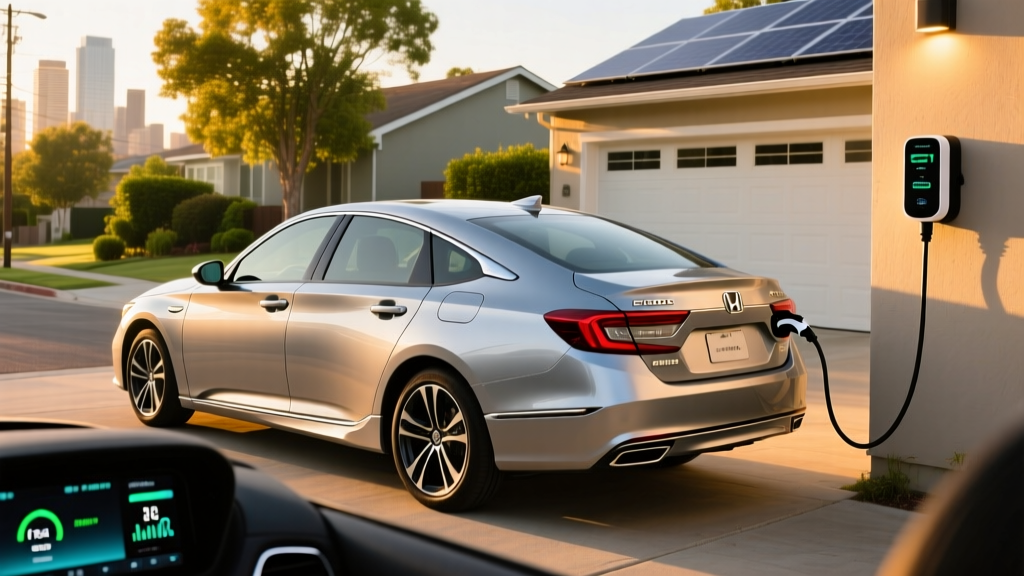
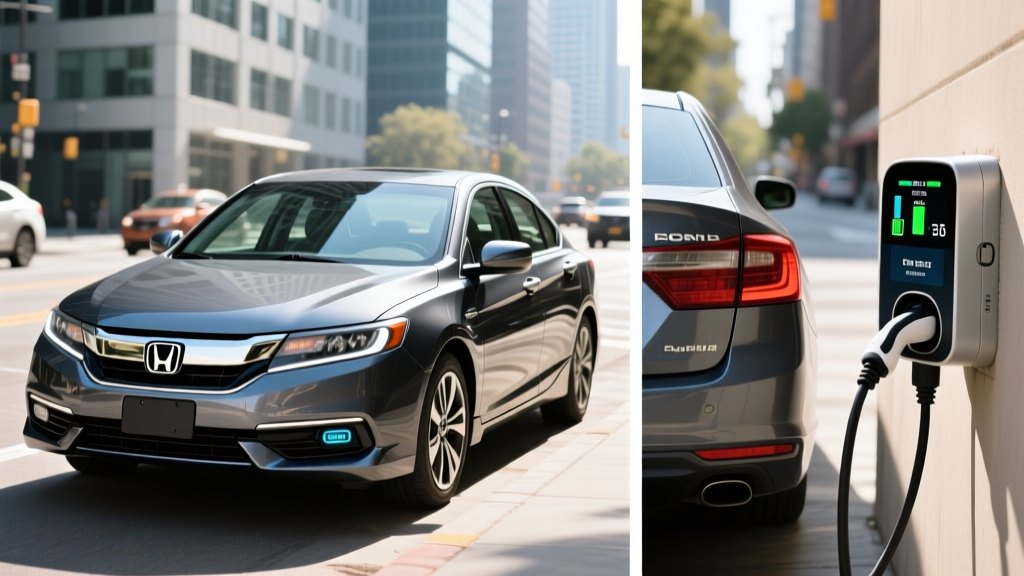
- Plugs in? Yes — Level 1 (120V) or Level 2 (240V) charging
- Battery size: Typically 12–25 kWh usable
- Electric-only driving: 25–50+ miles on most 2026 models
- Federal tax credit: Potentially up to $7,500 (subject to §30D rules)
- Best for: Drivers with home charging who want electric commuting plus gas flexibility
The key takeaway: when people say "hybrid tax credit," they almost always mean the PHEV credit. Conventional hybrids like the Toyota Prius (non-prime) or Honda CR-V Hybrid are excellent vehicles, but they do not plug in and therefore do not meet the battery-capacity threshold for §30D.
Federal Tax Credit Rules for PHEVs: The §30D Checklist
The IRS Clean Vehicle Credit (§30D) remains the primary federal incentive for PHEV buyers in 2026. However, eligibility is not automatic — every PHEV must pass multiple requirements simultaneously.
- Battery capacity: At least 7 kWh (virtually all 2026 PHEVs meet this)
- MSRP cap: Vans/SUVs/pickups ≤ $80,000; sedans ≤ $55,000
- Buyer income cap (MAGI): $300,000 joint / $225,000 head of household / $150,000 single
- Final assembly: Must occur in North America (VIN verification required)
- Battery sourcing: Critical minerals and battery components must meet escalating domestic-content thresholds — this eliminates several otherwise-qualifying models
- Point-of-sale transfer: As of 2024+, buyers can transfer the credit to the dealer for an immediate price reduction rather than waiting for tax filing
- One credit per VIN: The vehicle must be new and not previously titled
Reality check: Battery-sourcing requirements have tightened each year since 2023. Several popular PHEVs that qualified in prior model years have lost partial or full eligibility for 2026. Always verify current status on fueleconomy.gov before purchasing.
Top 2026 PHEVs That May Qualify for the Tax Credit
Below are popular 2026 plug-in hybrids with their EPA efficiency data, electric range, and general credit-eligibility status. Exact credit amounts vary by trim and battery-sourcing compliance.
| Model | EPA Electric Range | Combined MPG (gas) | Battery (kWh) | Combined HP | Base MSRP | Est. Credit |
|---|---|---|---|---|---|---|
| Toyota RAV4 Prime | 42 mi | 38 MPG | 18.1 | 302 hp | $44,900 | $3,750–$7,500 |
| Jeep Wrangler 4xe | 22 mi | 20 MPG | 17.3 | 375 hp | $51,790 | $3,750–$7,500 |
| Chrysler Pacifica Hybrid | 32 mi | 30 MPG | 16.0 | 260 hp | $51,095 | $3,750–$7,500 |
| Hyundai Tucson PHEV | 33 mi | 35 MPG | 13.8 | 261 hp | $39,400 | $3,750–$7,500 |
| Ford Escape PHEV | 37 mi | 40 MPG | 14.4 | 210 hp | $39,500 | $3,750–$7,500 |
Note: Credit estimates reflect partial ($3,750) or full ($7,500) eligibility based on battery-component and critical-mineral sourcing thresholds. Verify your specific VIN at purchase.
Real-World MPG: Where Hybrids Beat Their EPA Stickers
One of the most pleasant surprises of hybrid ownership is that real-world fuel economy often exceeds the EPA estimate — particularly in city driving. Here's why:
Hybrids recapture energy during braking and low-speed driving via regenerative braking. The EPA city cycle includes frequent stops, which is exactly where hybrid systems shine. On the highway, the gas engine does most of the work, so city MPG often exceeds highway MPG in a hybrid — the opposite of a conventional gas car.
| Model | EPA City | EPA Highway | EPA Combined | Real-World Owner Avg |
|---|---|---|---|---|
| Toyota Prius (HEV) | 57 | 56 | 57 | 54–60 MPG |
| Honda CR-V Hybrid | 43 | 36 | 40 | 38–44 MPG |
| Toyota RAV4 Hybrid | 41 | 38 | 39 | 37–42 MPG |
| Ford Maverick Hybrid | 42 | 33 | 37 | 35–40 MPG |
| Hyundai Sonata Hybrid | 44 | 51 | 47 | 44–50 MPG |
Data sourced from fueleconomy.gov and aggregated owner reports. Cold weather, heavy cargo loads, and aggressive acceleration reduce these figures by 5–15%.
PHEV Charging: What You Need to Know Before You Plug In
A PHEV's electric range is only useful if you can actually charge it. Here's the charging reality for most 2026 PHEVs:
| Level | Power (kW) | Full Charge Time (typical 15 kWh battery) | Notes |
|---|---|---|---|
| Level 1 (120V outlet) | 1.4 kW | 10–12 hours | Works for overnight top-ups; included cable |
| Level 2 (240V) | 3.3–7.2 kW | 2–4.5 hours | Recommended for daily use; requires home install |
| DC Fast Charge | Varies | Not available on most PHEVs | Only select models (e.g., RAV4 Prime with optional DC port) support it |
Critical detail: Most PHEVs do not support DC fast charging. Their batteries are small enough that Level 2 charging fully replenishes them in a few hours, which is adequate for daily commuting. If you need rapid public charging, a full BEV with CCS or NACS capability is a better fit.
Battery Longevity and Warranty: What Hybrid Buyers Actually Worry About
Standard hybrid battery warranty: 8 years / 100,000 miles (10 years / 150,000 miles in CARB states including CA, NY, MA, and others).
PHEV battery warranty: Typically 8 years / 100,000 miles, with a capacity-retention guarantee (often 60–70% of original capacity).
Real-world degradation: Toyota and Honda hybrid batteries routinely last 150,000–200,000+ miles before significant capacity loss. PHEV batteries see more cycling but benefit from active thermal management on most modern models.
Replacement cost: $2,000–$5,000 for HEV batteries; $4,000–$8,000 for PHEV packs (varies by model). Refurbished options exist at 40–60% of new-battery cost.
The anxiety around hybrid battery replacement is largely a legacy of early-2000s models. Modern nickel-metal-hydride (HEV) and lithium-ion (PHEV) packs are vastly more durable, and the federal warranty mandate means you're protected through most of the vehicle's prime ownership years.
Hybrid vs PHEV vs EV: Which Powertrain Fits You?
Choose a conventional hybrid (HEV) if:
- You cannot charge at home or work
- You want maximum MPG with zero behavior change
- Your budget is under $35,000
- You drive mostly city miles with frequent stops
Choose a plug-in hybrid (PHEV) if:
- You have Level 1 or Level 2 home charging
- Your daily commute is under 40 miles round-trip (covering most electric ranges)
- You take longer road trips and don't want to plan around charging stations
- You want to reduce gas consumption significantly but aren't ready for full EV
- You may qualify for the §30D tax credit, lowering effective purchase price
Choose a full EV (BEV) if:
- You have reliable home Level 2 charging
- Your daily driving is under 250 miles
- You want the lowest per-mile fuel cost and minimal maintenance
- You want the maximum available tax credit ($7,500 on qualifying models)
- You're comfortable with route planning on longer road trips
Pricing After the Tax Credit: The Real Cost Comparison
The sticker price of a PHEV is typically $3,000–$8,000 higher than its HEV counterpart, but the tax credit can close that gap substantially. Consider this simplified 5-year ownership scenario:
| Cost Factor | HEV (e.g., RAV4 Hybrid) | PHEV (e.g., RAV4 Prime) | BEV (e.g., Tesla Model Y) |
|---|---|---|---|
| Base MSRP | $33,000 | $44,900 | $44,990 |
| Federal Tax Credit | $0 | Up to $7,500 | Up to $7,500 |
| Effective Price | $33,000 | ~$37,400 | ~$37,490 |
| 5-Year Fuel Cost (est.) | $6,200 | $3,100 | $2,800 |
| Home Charger Install | $0 | $500–$1,500 | $500–$2,000 |
| 5-Year Maintenance (est.) | $2,500 | $2,200 | $1,200 |
The PHEV's higher MSRP is partially offset by the credit and lower fuel costs. Over 5 years, the total cost gap between HEV and PHEV narrows to roughly $1,000–$3,000 — while delivering 30–40 miles of daily electric driving.
State-Level Incentives: Beyond the Federal Credit
Several states offer additional rebates or tax credits for PHEVs that stack with federal incentives. Notable examples include:
- California: CVRP rebate (income-dependent, up to $2,000 for PHEVs, subject to funding availability)
- Colorado: State tax credit for light-duty electric and plug-in vehicles (amount varies by battery size and vehicle price)
- New York: Drive Clean Rebate (up to $2,000 point-of-sale for qualifying PHEVs)
- Massachusetts: MOR-EV rebate (income-tiered, PHEVs with 25+ mi electric range may qualify)
Check your state energy office or AFDC state law database for current program details, as funding caps and eligibility rules change frequently.
Pros and Cons: Hybrid and PHEV Ownership in 2026
Pros
- HEVs need no charging infrastructure — fill up at any gas station
- PHEVs offer 25–50 miles of zero-gas commuting with full road-trip flexibility
- Both powertrains have proven long-term reliability (150K+ miles common)
- Regenerative braking reduces brake wear significantly
- PHEVs can qualify for up to $7,500 federal credit plus state incentives
- Lower fuel costs vs. conventional gas vehicles (especially PHEVs charged regularly)
Cons
- HEVs receive no federal tax credit
- PHEVs cost $3,000–$8,000 more upfront than HEV equivalents
- PHEV electric range is insufficient for drivers with long commutes who lack workplace charging
- PHEV cargo space is sometimes reduced due to battery placement
- Most PHEVs lack DC fast charging, limiting public-charge usefulness
- Hybrid systems add mechanical complexity vs. a pure EV (two powertrains to maintain)
Frequently Asked Questions
Does a regular hybrid qualify for any federal tax credit?
No. Conventional hybrids (HEVs) like the standard Toyota Prius, Honda CR-V Hybrid, and Toyota RAV4 Hybrid do not plug in and do not meet the §30D battery-capacity threshold. They are ineligible for the federal Clean Vehicle Credit.
How do I know if a PHEV qualifies for the full $7,500 credit?
Check fueleconomy.gov for the most current list. The vehicle must meet battery-sourcing (critical minerals and component manufacturing) thresholds, be assembled in North America, fall under the MSRP cap, and you must meet income limits. Many PHEVs qualify for the partial $3,750 credit even if they don't meet both sourcing requirements.
Can I transfer the tax credit to the dealer at purchase?
Yes. Since 2024, §30D allows point-of-sale credit transfer. If the vehicle qualifies, you can apply the $3,750 or $7,500 credit as an immediate price reduction at the dealership rather than claiming it on your tax return. Your tax professional should confirm your income eligibility before you commit.
How long do hybrid batteries last?
Modern hybrid batteries typically last 150,000–200,000+ miles. Federal law mandates an 8-year/100,000-mile warranty (10 years/150,000 miles in CARB states). Replacement costs $2,000–$8,000 depending on the model, but most owners never need to replace the hybrid battery during typical ownership.
Is a PHEV worth it if I can't charge at home?
Generally no. A PHEV's value proposition depends on regular charging to maximize electric-only miles. Without home or workplace charging, you'll drive mostly on gas, and the PHEV's extra weight from the battery slightly reduces fuel economy compared to an equivalent HEV. In that scenario, a conventional hybrid is the smarter buy.
What's the difference between MPG and MPGe on a PHEV window sticker?
MPG measures fuel economy when running on gasoline. MPGe (miles per gallon equivalent) measures efficiency when running on electricity, converting kWh consumption into a gasoline-equivalent figure. For daily electric commuting, MPGe is the relevant number (often 90–110 MPGe). For road trips on gas, use the MPG figure (typically 30–40 MPG combined).