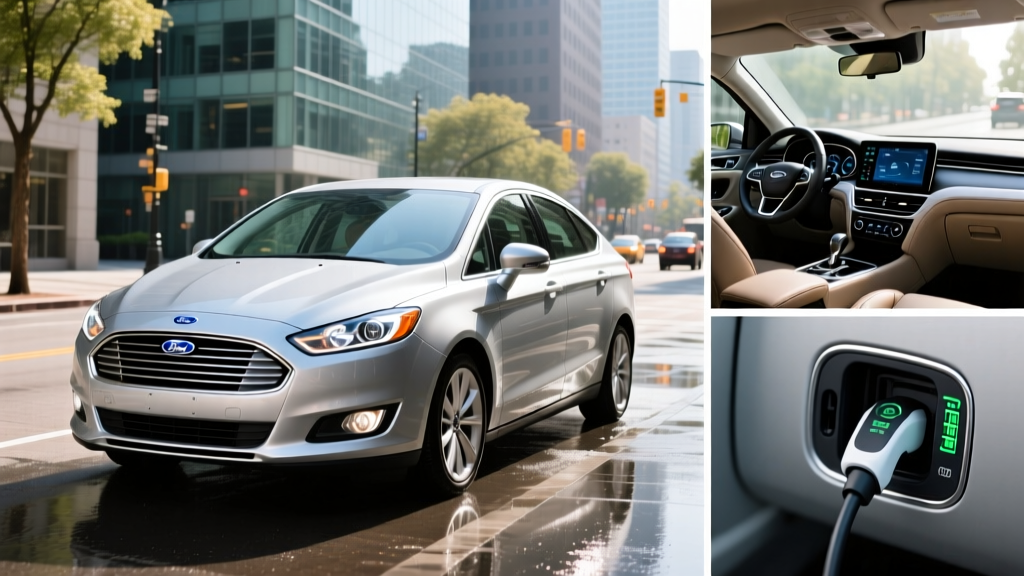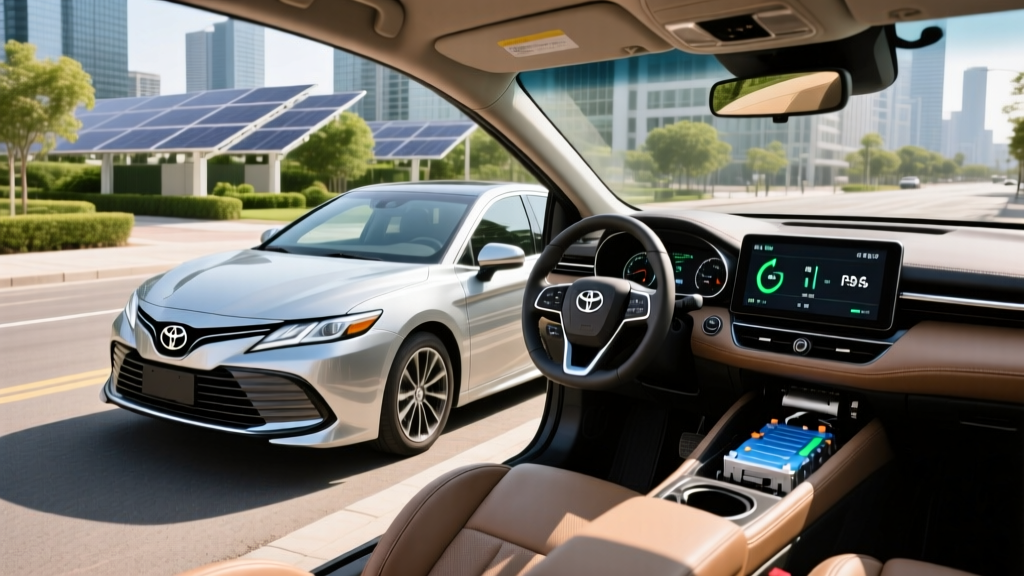
The 2026 Toyota Camry Hybrid XSE sits at an unusual crossroads in the electrified-car market. It's a conventional hybrid (HEV) — not a plug-in — yet it returns fuel economy that embarrasses many EVs on a cost-per-mile basis, while offering the sportiest chassis tuning in the Camry lineup. For buyers who want electrified efficiency without changing their fueling habits, the XSE trim adds 19-inch alloy wheels, a sport-tuned suspension, and a 225-horsepower all-wheel-drive powertrain that makes it genuinely engaging to drive.
This guide covers everything a research-heavy buyer needs: exact EPA MPG figures, real-world fuel economy data, the hybrid battery warranty and replacement outlook, pricing by trim, and whether the Camry Hybrid XSE qualifies for any federal tax incentives. We'll also compare it against PHEV and full-EV alternatives to help you decide which electrified path fits your driving life.
HEV vs PHEV vs EV: Where the Camry Hybrid XSE Fits
Before diving into specs, it's essential to understand what the Camry Hybrid XSE is — and what it isn't. The Camry Hybrid is a conventional hybrid electric vehicle (HEV). It pairs a gasoline engine with electric motor-generators and a small battery pack that recharges through regenerative braking and the engine itself. You never plug it in. There is no electric-only driving mode of any meaningful distance.
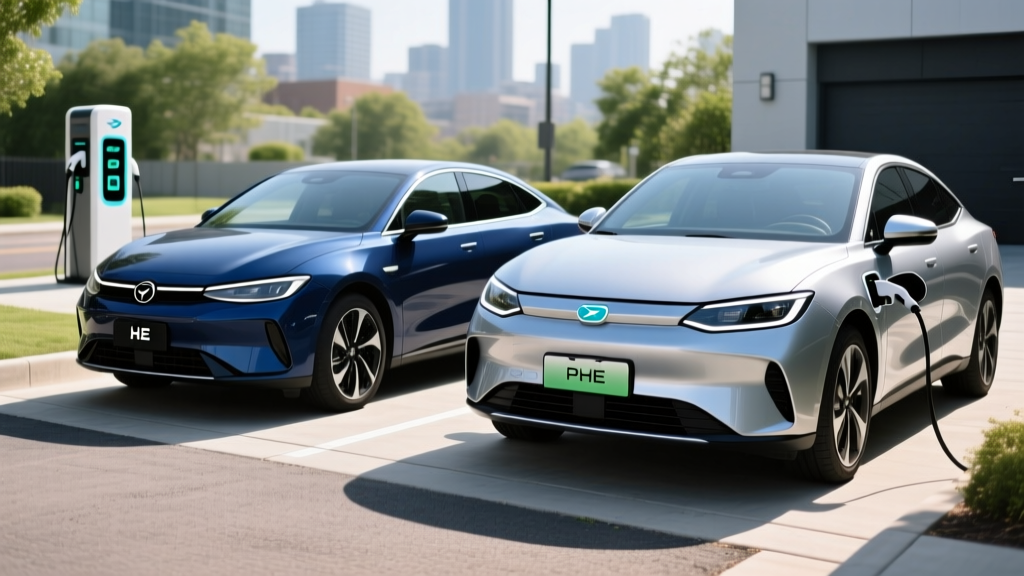
This is fundamentally different from a plug-in hybrid (PHEV) like the Toyota RAV4 Prime or a battery electric vehicle (BEV) like the Tesla Model 3. Here's how these three electrified categories compare:
| Feature | HEV (Camry Hybrid) | PHEV (e.g., RAV4 Prime) | BEV (e.g., Model 3) |
|---|---|---|---|
| Plug-in charging required? | No | Yes (for EV range) | Yes (always) |
| Electric-only range | None (assist only) | 25–42 miles typical | 250–360+ miles |
| Battery capacity | ~1.0 kWh (small buffer) | 13–18 kWh usable | 55–82 kWh usable |
| Gasoline engine? | Yes (primary + assist) | Yes (backup) | No |
| Fueling | Gas station only | Gas station + plug | Plug only |
| Federal tax credit (§30D) | Not eligible | Up to $7,500 (varies) | Up to $7,500 (varies) |
The Camry Hybrid XSE's advantage is simplicity. No charging infrastructure to install, no range planning, no cold-weather EV range loss to manage. You drive it exactly like a gas car and it simply uses dramatically less fuel.
2026 Camry Hybrid XSE: Powertrain and Performance Specs
For 2026, Toyota equips the Camry Hybrid exclusively with the fifth-generation Toyota Hybrid System (THS 5) paired with a 2.5-liter four-cylinder engine. The XSE trim comes standard with electronic all-wheel drive (AWD), which adds a rear-mounted electric motor for improved traction and cornering dynamics.
| Specification | 2026 Camry Hybrid XSE AWD |
|---|---|
| Powertrain | 2.5L I-4 + 2 electric motor-generators (front) + rear e-motor (AWD) |
| Combined horsepower | 225 hp net |
| Engine output | 184 hp / 163 lb-ft (gas engine alone) |
| Front e-motor output | 134 hp / 155 lb-ft |
| Rear e-motor output (AWD) | 40 hp / 89 lb-ft |
| Transmission | Electronically controlled CVT (eCVT) |
| Drivetrain | Electronic AWD (standard on XSE) |
| 0–60 mph (est.) | ~6.9 seconds |
| Hybrid battery | Lithium-ion, ~1.0 kWh (sealed, self-charging) |
| Base MSRP (XSE AWD) | $35,495 (est.) |
The 225 hp combined output puts the Camry Hybrid XSE in genuinely quick territory for a midsize sedan. The eCVT delivers seamless acceleration without the rubber-band feel of older CVTs, and the XSE's sport-tuned suspension with stiffer damping and a lower ride height gives it noticeably sharper handling than the SE or LE Hybrid trims. The AWD system engages the rear motor automatically during acceleration and cornering — there's no driver control for it — but it provides tangible grip advantages in rain and light snow.
Fuel Economy: EPA Ratings and Real-World MPG
This is the headline number for any hybrid buyer. The 2026 Camry Hybrid XSE AWD carries the following EPA estimates:
| Driving Cycle | EPA Estimate | Real-World Expectation |
|---|---|---|
| City | 48 MPG | 50–55 MPG (hybrids often beat EPA in city) |
| Highway | 46 MPG | 40–44 MPG (high-speed driving reduces hybrid advantage) |
| Combined | 47 MPG | 44–50 MPG (varies with driving mix) |
Why hybrids often exceed EPA city ratings: The EPA city cycle includes frequent stops and low average speeds — exactly where a hybrid's regenerative braking and electric motor assist shine. Every stoplight becomes an opportunity to recapture energy. In real-world city and suburban driving with moderate traffic, many Camry Hybrid owners report 50+ MPG over tankful averages, particularly in warm weather when the engine doesn't need to run for cabin heat.
Where you'll fall short: Sustained highway driving above 70 mph is the hybrid's weakest scenario. At high speeds, aerodynamic drag dominates and the gasoline engine carries most of the load. Expect 40–44 MPG on long interstate trips. Cold weather also reduces efficiency — the engine must run more frequently to maintain cabin heat and bring the catalytic converter to operating temperature. In sub-freezing conditions, combined MPG may drop to 38–42.
With a 13.2-gallon fuel tank, the Camry Hybrid XSE delivers a real-world driving range of approximately 550–620 miles per fill-up depending on conditions. That's two to three weeks of typical commuting between gas station visits.
Pricing, Trims, and Tax Credit Eligibility
The 2026 Camry Hybrid XSE AWD carries an estimated MSRP of $35,495 including destination. Key standard equipment includes 19-inch alloy wheels, a 12.3-inch touchscreen with wireless Apple CarPlay and Android Auto, heated front seats, synthetic leather (SofTex) upholstery, a 10-inch color head-up display, and Toyota Safety Sense 3.0 (adaptive cruise control, lane-keeping assist, automatic emergency braking, and blind-spot monitoring).
Options that push the price higher include a panoramic moonroof (~$1,400), a JBL premium audio system (~$800), and a Technology Package bundling a 360-degree camera and front cross-traffic alert (~$1,100). A fully loaded Camry Hybrid XSE can approach $39,000–$40,000.
Does the Camry Hybrid XSE qualify for a federal tax credit?
No. The IRS §30D New Clean Vehicle Credit applies only to plug-in electric vehicles — battery electric vehicles (BEVs) and plug-in hybrids (PHEVs) with battery packs of at least 7 kWh. The Camry Hybrid's ~1.0 kWh battery and conventional HEV powertrain do not meet the threshold. There is no federal income tax credit for purchasing a conventional hybrid.
Some states offer their own incentives for hybrids, though these have become rare as state programs shift toward plug-in vehicles. Check your state's energy or environmental agency website for current programs. A handful of states still offer reduced registration fees or HOV lane access for hybrid vehicles, but direct purchase rebates for HEVs are uncommon in 2026.
Hybrid Battery Warranty, Lifespan, and Replacement Cost
Hybrid battery longevity remains one of the top concerns for buyers considering their first hybrid. Toyota's track record here is among the best in the industry, with decades of real-world data from the Prius and Camry Hybrid lineages.
| Coverage Item | Toyota Warranty |
|---|---|
| Hybrid battery | 10 years / 150,000 miles (whichever comes first) |
| Hybrid system components (inverter, motor-generators, control module) | 8 years / 100,000 miles |
| Basic vehicle | 3 years / 36,000 miles |
| Powertrain (engine, transmission) | 5 years / 60,000 miles |
Real-world lifespan data: Toyota's hybrid batteries routinely last well beyond the warranty period. Fleet data and owner surveys indicate most Camry Hybrid batteries retain functional capacity past 150,000–200,000 miles. Unlike a BEV's large traction battery, the Camry Hybrid's small lithium-ion pack operates within a narrow state-of-charge window (roughly 40–80% SoC) managed by the hybrid control system, which dramatically reduces degradation stress.
Replacement cost if out of warranty: A new OEM hybrid battery for the Camry Hybrid typically costs between $2,500 and $4,000 installed at a dealership. Third-party reconditioned or refurbished battery packs are available for $1,500–$2,500 installed at independent hybrid specialists. This is a fraction of the cost of replacing a BEV's large traction battery ($8,000–$20,000+), and the need for replacement is far less frequent.
According to IIHS and long-term reliability surveys from Consumer Reports and J.D. Power, the Camry Hybrid consistently ranks at or near the top of its segment for predicted reliability, with the hybrid system being one of the least problematic components.
Camry Hybrid XSE vs. PHEV and EV Alternatives
If you're cross-shopping the Camry Hybrid XSE, you're likely also considering a plug-in hybrid sedan or a full electric vehicle. Here's how the decision framework breaks down based on real ownership scenarios:
Choose the Camry Hybrid XSE (HEV) if:
- You lack access to home or workplace charging (apartment, street parking, no garage)
- You regularly take road trips exceeding 300 miles and don't want to plan charging stops
- You live in an area with sparse public DC fast-charging infrastructure
- You want the lowest upfront price among electrified sedans
- You prefer zero change to your fueling routine
Choose a PHEV (e.g., Hyundai Sonata PHEV, Toyota Prius Prime) if:
- You can install a Level 2 charger at home and most daily driving is under 30 miles
- You want electric-only commuting but need a gas engine for occasional long trips
- You want to qualify for the §30D federal tax credit (up to $7,500, subject to IRS eligibility rules including income caps and MSRP limits)
Choose a full EV (e.g., Tesla Model 3, Hyundai Ioniq 6) if:
- You have reliable home Level 2 charging
- Your daily driving is under 250 miles and you're comfortable with road-trip charging planning
- You want the lowest per-mile fuel cost (electricity at $0.13/kWh ≈ $0.04/mile vs. gas at $3.30/gal ≈ $0.07/mile for the Camry Hybrid)
- You want zero tailpipe emissions and minimal drivetrain maintenance
Ownership Economics: Cost Per Mile and 5-Year Outlook
The Camry Hybrid XSE's value proposition is straightforward: moderate upfront cost, no charging infrastructure investment, and fuel savings that compound over every mile driven.
At 47 MPG combined and a national average regular gasoline price of approximately $3.30/gallon (2026 estimate), the Camry Hybrid XSE costs roughly $0.07 per mile in fuel. A comparable gas-only midsize sedan averaging 30 MPG combined would cost about $0.11 per mile — a difference of $400 per year at 10,000 miles driven annually, or $2,000 over five years.
Compared to a BEV charging at the national average residential electricity rate of ~$0.16/kWh and averaging 3.5 miles/kWh, the EV costs approximately $0.046 per mile — saving about $240/year over the Camry Hybrid. However, the BEV requires a home Level 2 charger installation ($500–$2,000 depending on electrical panel capacity) and may carry higher insurance premiums and a higher purchase price before tax credits.
Insurance for the Camry Hybrid XSE runs roughly $1,400–$1,800 annually depending on your profile and state — in line with other midsize sedans and typically lower than comparable EVs, which carry higher repair-cost assessments from insurers.
Pros, Cons, and Final Assessment
Pros
- 47 MPG combined EPA — exceptional for a 225-hp AWD sedan
- No plug-in charging required — zero infrastructure investment
- XSE sport suspension and 19-inch wheels provide genuine driving engagement
- Standard AWD with rear electric motor for all-weather traction
- 10-year/150,000-mile hybrid battery warranty
- 600+ mile real-world driving range per tank
- Toyota Safety Sense 3.0 standard (comprehensive ADAS suite)
- Strong resale value and proven reliability track record
Cons
- Not eligible for the §30D federal EV tax credit
- No electric-only driving mode — always uses some gasoline
- Highway MPG drops to ~40–44 at sustained 75+ mph speeds
- XSE ride is firmer than LE/SE trims — may not suit all buyers
- Cabin noise under hard acceleration (eCVT drone characteristic)
- Rear trunk space slightly reduced vs. gas-only Camry variants (battery placement)
The 2026 Camry Hybrid XSE is the rare hybrid that doesn't ask you to sacrifice anything meaningful for efficiency. You get a genuinely sporty sedan with AWD, strong acceleration, and a tech-forward cabin — while spending roughly half what a gas-only competitor spends at the pump. For buyers without home charging access, or those who simply don't want to think about plugs and charging apps, it remains one of the smartest electrified-vehicle purchases on the market.
Frequently Asked Questions
How many MPG does the 2026 Camry Hybrid XSE get?
The EPA rates the 2026 Camry Hybrid XSE AWD at 48 MPG city, 46 MPG highway, and 47 MPG combined. In real-world driving, expect to exceed the city estimate (50–55 MPG in stop-and-go traffic) and fall slightly below the highway estimate (40–44 MPG at sustained interstate speeds). Cold weather and aggressive driving reduce these figures.
Does the Camry Hybrid XSE need to be plugged in?
No. The Camry Hybrid is a conventional hybrid (HEV). Its small lithium-ion battery charges exclusively through regenerative braking and the gasoline engine. You fuel it only at gas stations, exactly like a traditional car.
Is the Camry Hybrid XSE available with front-wheel drive?
For the 2026 model year, the XSE trim comes standard with electronic AWD. The lower SE and LE Hybrid trims are available in front-wheel drive. The AWD system uses a dedicated rear electric motor and engages automatically — there is no driver-operated AWD switch.
How long will the Camry Hybrid battery last and what does replacement cost?
Toyota warranties the hybrid battery for 10 years or 150,000 miles. Real-world data shows most Camry Hybrid batteries function well past 150,000–200,000 miles. If replacement is needed out of warranty, expect $2,500–$4,000 for a new OEM battery installed, or $1,500–$2,500 for a refurbished unit at an independent shop.
Does the Camry Hybrid XSE qualify for any federal tax credit?
No. The IRS §30D New Clean Vehicle Credit requires a plug-in vehicle with a battery capacity of at least 7 kWh. The Camry Hybrid's ~1.0 kWh battery and conventional HEV powertrain do not qualify. No federal purchase incentive is available for conventional hybrids in 2026. Check your state's energy agency for any local hybrid incentives.
How does the Camry Hybrid XSE compare to the Prius Prime PHEV?
The EPA's fueleconomy.gov database shows the Prius Prime (PHEV) offers up to 44 miles of electric-only range and 50 MPG combined in hybrid mode, with eligibility for a partial federal tax credit. However, the Prius Prime has less power (220 hp combined, FWD only), a smaller cabin, and a higher starting price. The Camry Hybrid XSE trades electric-only capability for more power, AWD, a larger sedan interior, and a lower entry price.
Is the XSE trim worth the premium over the Camry Hybrid SE?
If you value driving dynamics, yes. The XSE adds 19-inch wheels, a sport-tuned suspension with stiffer dampers, paddle shifters, and unique interior/exterior styling. The trade-off is a slightly firmer ride quality on rough pavement. If comfort is your priority, the SE or LE trims offer the same powertrain and MPG with a softer ride at a lower price.